About
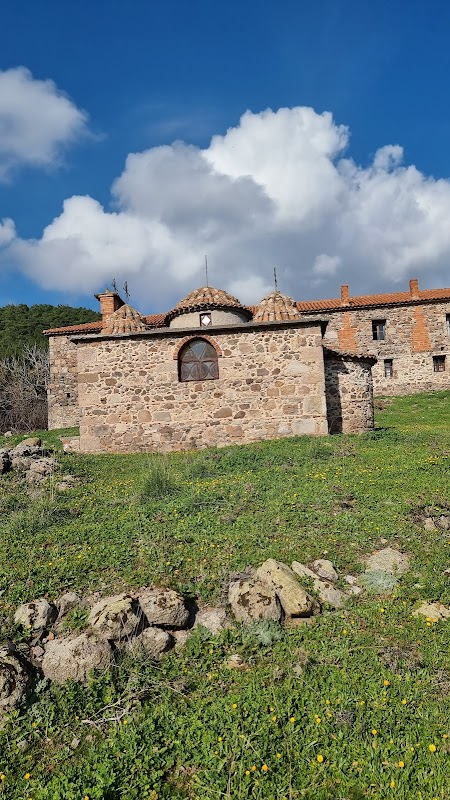
Dedicated to Saint Nicholas, one of the most venerated saints in the Greek Orthodox tradition, this small church near the village of Kerami stands as a testament to the deep religious devotion that has shaped rural Lesvos for centuries. Saint Nicholas holds a special place in the hearts of islanders across the Aegean, revered as the protector of sailors and seafarers — a fitting patron for a community surrounded by the sea. Like many of the island's rural churches, Agios Nikolaos likely dates to the Byzantine or post-Byzantine period, its whitewashed walls and terracotta-tiled roof blending naturally into the olive-covered hillsides of the eastern Lesvos landscape.
Inside, visitors typically find the intimate, candlelit atmosphere characteristic of Greek Orthodox village churches: an iconostasis screening the sanctuary, darkened oil lamps casting a warm glow over gilded icons, and the faint scent of incense lingering in the air. The church's icons, though modest in scale, carry the accumulated prayers of generations of local families who looked to Saint Nicholas for safe voyages and divine intercession. The feast day of Saint Nicholas falls on December 6th, when the church comes alive with liturgy, the ringing of bells, and the gathering of villagers from Kerami and the surrounding area.
For visitors exploring the quieter corners of Lesvos, a stop at Agios Nikolaos offers more than a glimpse of vernacular religious architecture — it is a window into the living spiritual culture of a Greek island community. The church sits within a landscape of extraordinary natural beauty, where the rolling hills and ancient olive groves of the island's interior meet the silence of the countryside. Whether you arrive during the December feast or simply pause here on a walk through the region, this modest sanctuary rewards the curious traveler with a sense of continuity and belonging that defines village life on Lesvos.
Before you go
What to expect
The whitewashed exterior appears almost abruptly among the olive groves as you approach Kerami, its terracotta roof a warm contrast against the green hillside. Inside, the space is compact and unhurried — a few icons, the flicker of oil lamps, and air carrying the faint memory of incense from years of liturgy. Locals still light candles here, giving it the quiet lived-in feel that marks an active place of worship rather than a monument.
Best time to visit
December 6th — the feast of Saint Nicholas — is when the church is most animated, with liturgy and bells drawing villagers from across the area; for a peaceful visit, a clear day in spring or autumn is ideal.
How to get there
From Mytilene, drive inland toward the central part of the island; the journey to Kerami takes roughly 45 minutes to an hour depending on the route you take.
Details
Denomination: greek_orthodox
Categories
Make a day of it
Places worth combining with your visit