


Historic Sites
208 ancient ruins, castles, and landmarks across Lesvos
126
The rugged hillsides near Larisos, in the quieter western reaches of Lesvos, bear silent witness to the island's turbulent modern history. This area is associated with the land campaigns of the First Balkan War, when Greek forces fought to liberate Lesvos from Ottoman rule in late 1912, ending nearly five centuries of Ottoman presence on the island. The western interior of Lesvos saw some of the fiercest ground engagements of that campaign, as Greek soldiers advanced through difficult terrain against entrenched defensive positions. The landscape here — steep olive-covered slopes, dry stone walls, and narrow seasonal stream beds — gives a visceral sense of how demanding such operations must have been for both sides. Standing at the site today, visitors encounter a place where the physical geography tells its own story. The elevated ground commands views over the surrounding countryside, making plain why such positions held strategic value. There are no grand monuments here, only the land itself, which lends the site an austere, contemplative quality. The nearby village of Larisos, small and unhurried, preserves the rural character of an area that has changed little in outward appearance since the early twentieth century. For those drawn to the deeper layers of Greek history, this battlefield represents a pivotal turning point for Lesvos — the moment when the island rejoined the Greek state after centuries of separation, an event that shaped the cultural and demographic identity of the island profoundly. Visiting in the context of a broader journey through western Lesvos, away from the more touristed northern and southern coasts, offers a rare and rewarding encounter with both landscape and history in their most unmediated form.
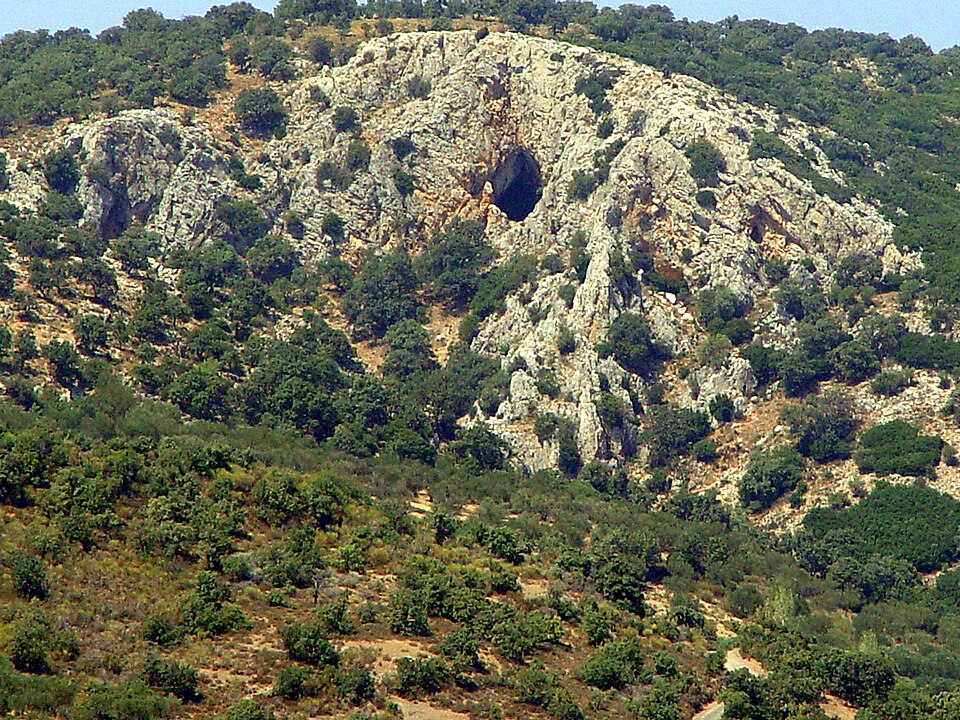
Adissa
Άντισσα
Antissa (Ancient Greek: Ἄντισσα) was a city of the island Lesbos (Lesvos), near to Cape Sigrium, the western point of Lesbos. The place had a harbour. The ruins found by Richard Pococke at Calas Limneonas, a little NE. of cape Sigri, may be those of Antissa. This place was the birthplace of Terpander, who is said to be the inventor of the seven-stringed lyre.
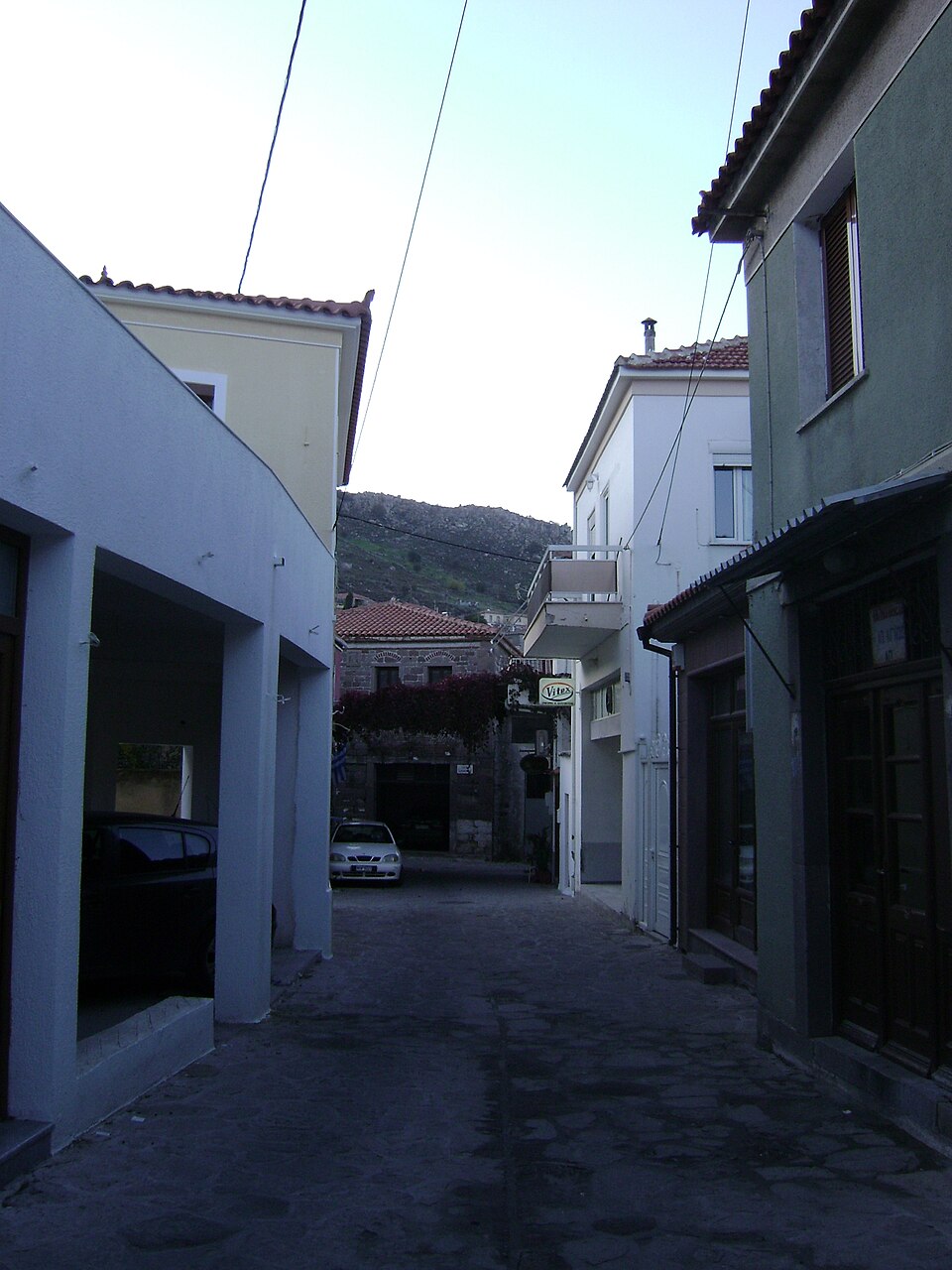
Adissa
Άντισσα
Antissa (Ancient Greek: Ἄντισσα) was a city of the island Lesbos (Lesvos), near to Cape Sigrium, the western point of Lesbos. The place had a harbour. The ruins found by Richard Pococke at Calas Limneonas, a little NE. of cape Sigri, may be those of Antissa. This place was the birthplace of Terpander, who is said to be the inventor of the seven-stringed lyre.
Ag. Georgios
Ag. Georgios is a historic site on the island of Lesvos, dedicated to Saint George, one of the most venerated saints in the Greek Orthodox tradition. Sites bearing this name are found throughout Greece and the Aegean, typically comprising a small chapel or church that has served as a focal point for local religious and communal life across generations. The name itself reflects the deep-rooted Byzantine and Orthodox heritage that shaped the cultural landscape of Lesvos over many centuries. Located at coordinates placing it in the central-western region of the island, this site likely features the characteristic architecture of rural Aegean religious buildings — whitewashed stone walls, a modest bell tower or campanile, and an interior adorned with icons and votive offerings left by the faithful over the years. Such chapels are often perched on elevated ground or at the edge of a village, chosen for their commanding views or their proximity to a spring or natural landmark held sacred by the local community. Visitors to Ag. Georgios can expect a quiet, contemplative atmosphere that offers a window into the enduring spiritual life of Lesvos. The feast day of Saint George, celebrated on April 23rd, brings local panigiri festivities to sites like this one, with music, food, and communal gathering that preserve centuries-old traditions. Even outside of feast days, the site rewards those who seek out the island's less-trafficked corners, offering a sense of timeless Aegean tranquility far from the busier tourist routes.
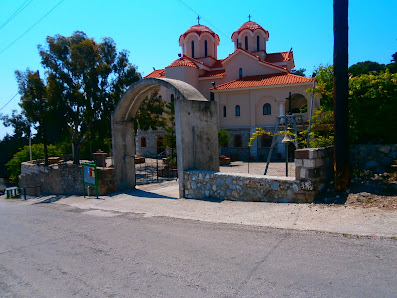
Agia Sofia
Αγία Σοφία
Tucked along the rural roads near the village of Alyfada, the wayside shrine of Agia Sofia is one of the small but quietly significant sacred markers that punctuate the Lesvos countryside. Dedicated to Holy Wisdom — Agia Sofia in Greek, the same veneration that inspired the great Byzantine basilica in Constantinople — shrines like this one reflect a centuries-old Orthodox tradition of marking the landscape with points of devotion. Whether erected in gratitude for a safe journey, in memory of a soul lost on this road, or in fulfillment of a religious vow, these proskynitaria are woven into the spiritual fabric of Greek rural life and speak to the deep continuity of faith on the island. The shrine itself is a modest roadside structure, typically a small iconostasis housing an oil lamp, an icon of the saint, and perhaps a few offerings left by passing faithful. Its setting in the gentle, olive-dotted hills of the eastern Lesvos interior places it within a landscape shaped by generations of farming and quiet devotion. The area around Alyfada is characteristic of the island's less-visited hinterland — unhurried, green, and rich in the textures of everyday Greek life that mass tourism rarely reaches. For visitors, Agia Sofia offers a moment of stillness and genuine local atmosphere. Stopping here is less about a singular historical monument and more about encountering the living religious culture of Lesvos — a place where the sacred and the everyday share the same winding road. It pairs naturally with an unhurried drive through the surrounding villages, where the rhythms of traditional Aegean life remain refreshingly intact.
Agios Theodoros
Άγιος Θεόδωρος
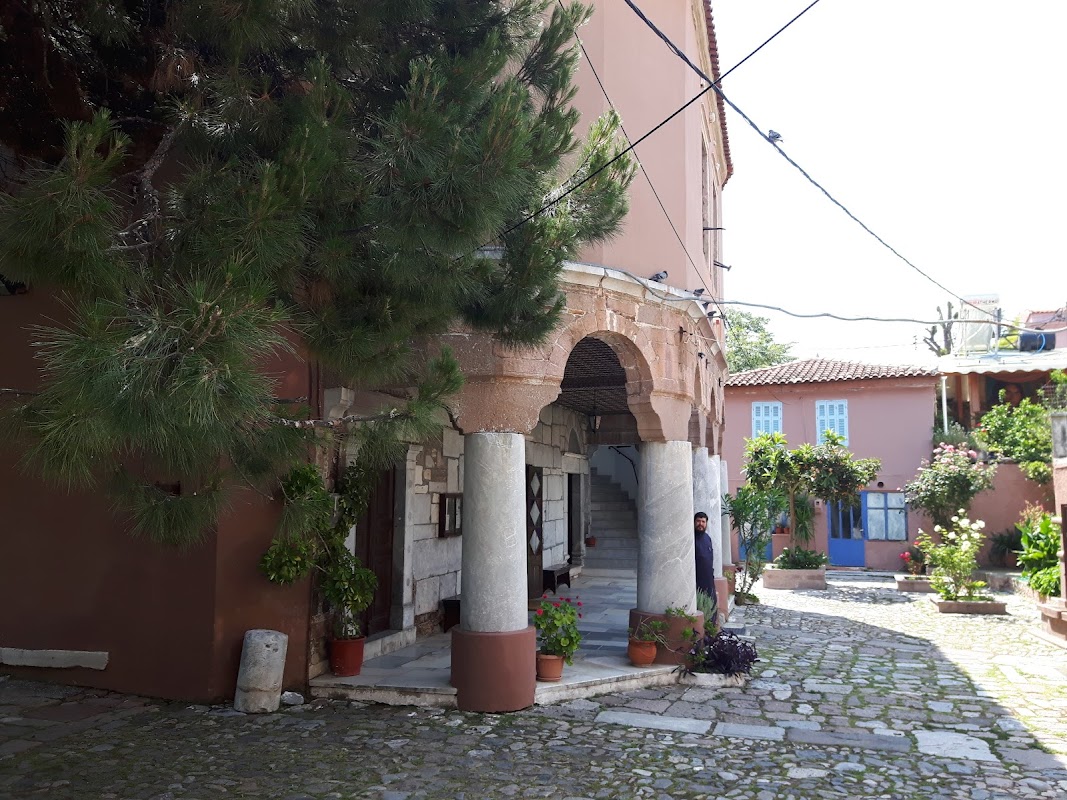
Tucked along the rural roads near the village of Alyfada, the wayside shrine of Agios Theodoros is one of the countless small sacred markers that punctuate the Lesbian landscape, each one a quiet testament to the deep interweaving of Orthodox faith and daily life on the island. These roadside shrines, known in Greek as proskynitaria, have been a constant feature of Greek rural life for centuries, erected by families to honor a saint, mark the site of a miracle or near-tragedy, or simply to offer travelers a moment of prayer and protection on their journey. Saint Theodore, venerated in the Orthodox tradition as a soldier-martyr, is a fitting patron for such a threshold place — a guardian presence at the crossroads between the human and the divine. The shrine itself reflects the vernacular religious architecture common throughout the Aegean: a small stone or rendered niche, often housing an icon of the saint, an oil lamp kept burning by devoted local hands, and perhaps a few votive offerings left by those who have paused here in gratitude or supplication. The setting near Alyfada places it within the quieter, less-visited interior of Lesvos, where olive groves and terraced hillsides define a landscape largely unchanged in its essential character for generations. Maintaining these shrines is a communal act of piety, and the care visitors will often find here — fresh flowers, a flickering kandili — speaks to the living nature of this tradition. For visitors, stopping at Agios Theodoros offers something rare in modern travel: an unmediated encounter with a centuries-old practice still vibrantly alive. There are no admission fees, no opening hours, and no crowds — only the gentle invitation to pause, observe, and perhaps light a candle. It is a place that rewards the slow traveler willing to turn off the main road, and it offers a genuine window into the spiritual geography that shapes the identity of Lesvos as profoundly as its coastlines and its olive oil.
Anaxos
Anaxos is a coastal settlement on the northwestern shore of Lesvos, situated along a sweeping bay framed by pine-covered hills and clear Aegean waters. The area carries the name of an ancient settlement — Anaxos was indeed an inhabited site in antiquity, part of the broader tapestry of early communities that dotted this fertile corner of the island during the classical and Hellenistic periods. While the ancient town no longer stands in any visible form, the landscape itself speaks to the long human story of this stretch of coastline, where generations of islanders fished, farmed, and built their lives. Today, visitors to Anaxos encounter a quiet resort village that has grown around its generous sandy beach, one of the more sheltered and family-friendly along the northwest coast. The proximity to the medieval hilltop town of Molyvos — just a few kilometers to the north — makes Anaxos a natural stopping point for those exploring the Lesvos coast, offering a calmer, less touristed alternative with the same extraordinary backdrop of sea and mountain. The shallow, calm waters attract swimmers and windsurfers, while the surrounding area invites exploration of olive groves and the rugged hinterland characteristic of this part of the island. For those with an interest in the deeper history of Lesvos, Anaxos serves as a reminder that virtually every bay and promontory on this island was once touched by ancient civilization. The northwestern coast as a whole was historically significant, lying within reach of important ancient centers and trade routes across the northern Aegean. Whether you come for the beach or the sense of layered history beneath the sand, Anaxos offers a genuinely peaceful encounter with the Lesbian landscape at its most unhurried.
Ancient Bridge Parakila
Γεφυράκι Παρακοίλων
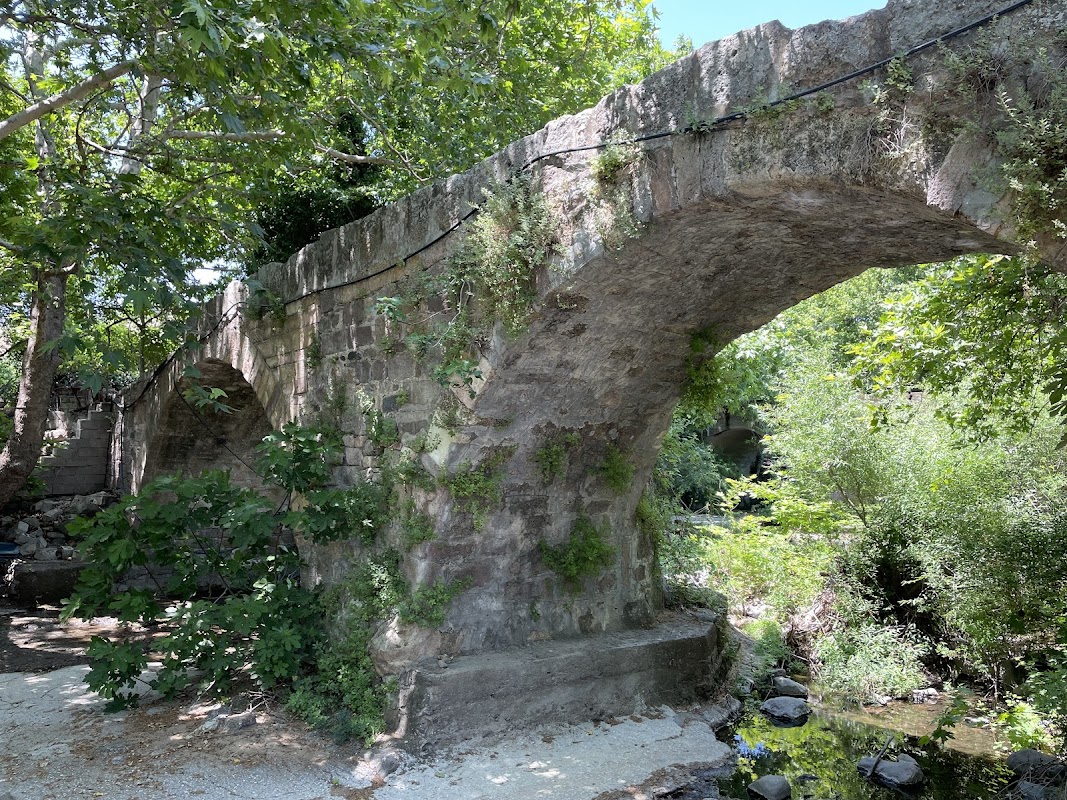
Near the quiet village of Parakoila, in the gentle rolling landscape of central Lesvos, the ruins of an ancient bridge stand as a silent testament to the island's long history of human settlement and movement. Bridges of this kind, built to span seasonal streams and connect inland communities to coastal routes, were vital arteries of life in the pre-modern Aegean. The construction style — typically featuring hand-cut stone arches and masonry fitted without mortar — reflects techniques common to both the Byzantine and Ottoman periods, when Lesvos served as a significant crossroads of eastern Mediterranean trade and culture. Whether this particular structure dates to one era or was rebuilt across successive periods is part of what gives it an air of accumulated time. Visitors who seek out the site today find themselves standing in a landscape that has changed little in centuries. The stonework, though weathered and partially collapsed, retains the graceful curvature that allowed it to bear the weight of laden animals and travelers crossing the water below. Wild herbs and scrub vegetation have reclaimed the approaches, and in spring the surrounding hillsides bloom in the muted greens and golds typical of the Lesbian interior. It is the kind of place that rewards those who venture beyond the beach — a reminder that this island's history runs far deeper than its shores. For historically minded travelers, the bridge near Parakoila offers a rare moment of unmediated contact with the past. There are no information boards or barriers, just stone and sky and the faint echo of a world where every village was connected by paths worn smooth over generations. Combining a visit here with a walk through Parakoila itself — a traditional settlement with its own architectural character — makes for a half-day excursion that captures the quieter, more contemplative side of Lesvos.
Aqueduct (39.1503, 26.3746)
Nestled in the verdant landscape near the quiet village of Lampou Mili, this stone aqueduct stands as a testament to the sophisticated water management traditions that shaped life on Lesvos across centuries. Structures of this kind were typically built or expanded during the Ottoman period, when the island's governors invested in hydraulic infrastructure to supply villages, mills, and agricultural estates with reliable water from the island's spring-fed streams and hillside sources. The engineering reflects a long lineage of knowledge stretching back through Byzantine and even ancient Greek precedents, adapted by successive inhabitants who understood that Lesvos's fertility depended as much on channeling its water as on the productivity of its olive groves. The aqueduct's arched stone construction is characteristic of the region, with locally quarried masonry fitted to carry water across the undulating terrain that defines this part of the island. The area around Lampou Mili, whose very name references the watermills that once operated here, was historically a hub of small-scale industry and agriculture, and water infrastructure like this aqueduct would have been central to that economy. The sound of flowing water and the lush vegetation that typically clings to such structures even today evoke the working landscape this aqueduct once served. Visitors who make their way to this spot are rewarded with a quiet, off-the-beaten-path encounter with Lesvos's layered history. The surrounding countryside, dotted with olive trees and bisected by seasonal streams, provides a beautiful backdrop for exploring the aqueduct's arches and stonework up close. It is the kind of site that rewards the curious traveler willing to venture beyond the island's more famous landmarks, offering a contemplative glimpse into the everyday engineering that sustained rural communities here for generations.
Archaeological Site
Lesvos has been continuously inhabited for thousands of years, and this archaeological site stands as a testament to the island's rich layered past. The island was home to several ancient city-states and saw successive waves of settlement — from prehistoric communities and Aeolian Greek colonists to Roman administrators and Byzantine rulers — each leaving traces in the landscape. Archaeological sites across Lesvos have yielded pottery shards, architectural remains, and everyday objects that illuminate how people lived, traded, and worshipped here across the millennia. Visitors to this site can observe remnants that speak to the enduring human presence on this stretch of the Aegean. Stone foundations, fragments of walls, and scattered architectural elements often survive at such locations, offering a tangible connection to the civilizations that shaped the island's character. The setting itself is typically part of the experience: Lesvos sites are frequently positioned with commanding views or near water sources, reflecting the practical wisdom of ancient settlers who understood both defense and agriculture. For anyone with an interest in the ancient world, a visit here rewards the imagination. The layers of history visible at Lesvos archaeological sites remind us that this island was never a backwater — it produced the poet Sappho, the philosopher Theophrastus, and the musician Arion, and it sat at the crossroads of Greek, Roman, and Byzantine civilization. Coming here is a chance to stand quietly on ground that has known human life far longer than any written record can fully capture.
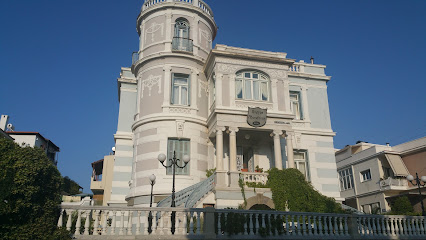
Archaeological Site (39.0951, 26.5592)
Nestled in the southern outskirts of Lesvos near the village of Vareia, this archaeological site preserves traces of the island's remarkably deep human history. The land around ancient Mytilene — whose urban core lies just a few kilometers to the north — was densely inhabited and cultivated across successive civilizations, from the Bronze Age through the Classical, Hellenistic, and Roman periods. Sites in this coastal zone often reveal the material culture of a prosperous island society: pottery sherds, foundation walls, cisterns, and agricultural infrastructure that speak to Lesvos's enduring role as a crossroads of Aegean trade and culture. The island's fertile volcanic soil and sheltered bays made this southern corridor a natural place for settlement and economic activity over millennia. Visitors to the site can observe the layered remains that archaeologists have worked to document and protect, gaining a tangible sense of how ordinary life unfolded in antiquity. Stone foundations, scattered architectural fragments, and the careful grid of excavation trenches tell a quiet but compelling story of continuity across centuries. The proximity to Vareia — itself the reputed birthplace of the poet Theophrastos and home to the Theophilos Museum — enriches the cultural context, situating the site within a stretch of coastline that has long nurtured creativity and scholarship. The sea views and the gentle Aegean light that bathes the landscape give the visit a contemplative quality that resonates with the weight of history underfoot. For travelers with an interest in the ancient world, this site offers a rewarding detour from the busier attractions of Mytilene. It rewards patience and curiosity rather than spectacle: this is archaeology in its honest, working form, where the imagination must do some of the heavy lifting. Bringing a good map and allowing time to walk the perimeter of the site is the best way to appreciate its scale and setting. The journey from central Mytilene takes only minutes, making this an accessible and enriching complement to any broader exploration of the island's remarkable heritage.
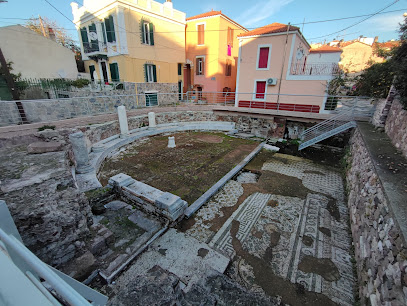
Archaeological Site (39.1083, 26.5582)
Tucked into the rolling landscape near the quiet settlement of Alyfada, this archaeological site offers a glimpse into the deep human history that has shaped Lesvos across the millennia. The island has been continuously inhabited since at least the Bronze Age, and sites scattered across its interior and coastline speak to a rich succession of civilizations — from early Aegean settlers through the classical Greek world, the Hellenistic period, and the long centuries of Roman and Byzantine rule. Surface finds and structural remains at sites like this one typically reveal the layered story of a region that was both agriculturally productive and strategically positioned along ancient sea routes connecting the Aegean to the coast of Asia Minor. Visitors approaching the site today will find a landscape where history quietly asserts itself through exposed foundation stones, ceramic scatter, and the occasional carved block. The terrain itself tells part of the story — elevated ground with good sightlines, proximity to water sources, and fertile land nearby are the hallmarks of ancient settlement logic. While the site may lack the monumental grandeur of better-known ruins, it rewards the curious traveler with an intimate sense of how ordinary life was organized in antiquity: where walls once defined homes or civic spaces, where terraces shaped the hillside for agriculture or defense. For those with an interest in Aegean archaeology, a visit here pairs naturally with the island's other historical landmarks, including the ancient city of Mytilene and the remarkable site of Thermi to the north. The Greek Ministry of Culture periodically conducts surveys and excavations across Lesvos, and sites in this region continue to yield new understanding of the island's pre-classical and classical past. Even without an active excavation underway, standing in this landscape and looking out across the Lesbian countryside toward the Aegean is its own form of historical immersion — a reminder that this island has drawn people, inspired poets, and sustained communities for thousands of unbroken years.
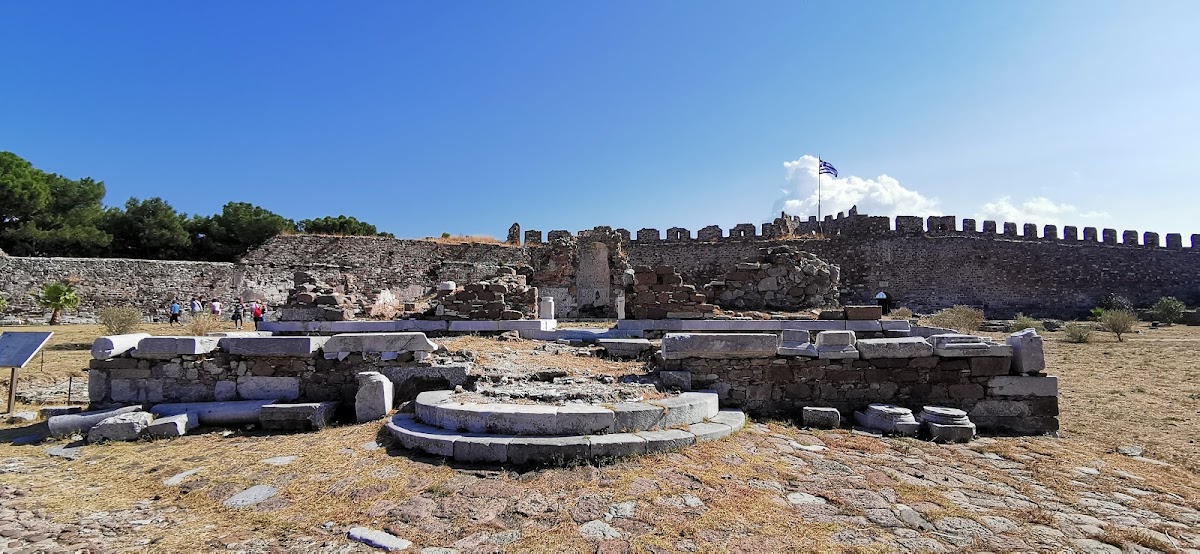
Archaeological Site (39.1114, 26.5625)
Nestled in the quiet countryside near the village of Alyfada, this archaeological site bears witness to the deep human history that runs beneath Lesvos's sun-bleached soil. Like much of the island, this area has been inhabited across successive civilizations, from the Bronze Age settlers who first recognized the island's fertile land and sheltered coves, through the classical Greek era when Lesvos flourished as a center of philosophy, poetry, and trade in the Aegean. Surface finds and structural remains at sites throughout this region of the island typically reveal occupation layers spanning centuries, reflecting the island's position as a crossroads between the Greek mainland, Anatolia, and the wider eastern Mediterranean world. Visitors to the site today can observe the characteristic remnants that define Aegean archaeological landscapes: fragmentary wall foundations cut from local stone, potsherds worked smooth by time, and the subtle topographic undulations that hint at structures long since reclaimed by earth and vegetation. The surrounding countryside — a mosaic of olive groves, dry-stone walls, and rolling hills — provides a fitting context for contemplating the continuity of rural life on the island. Lesvos has always been a place where the ancient and the everyday overlap, and sites like this one, often unmarked and quietly present, are reminders that the ground itself is an archive. For travelers with a curiosity for history beyond the major monuments, this site offers a more intimate encounter with Lesvos's past. The proximity to Alyfada means it can easily be combined with a slow drive through the island's interior, where traditional villages, Byzantine churches, and olive mills tell a layered story of human settlement stretching back thousands of years. It is the kind of place that rewards patient attention — a pause in the landscape where history asks you to look more carefully.
Archaeological Site (39.1116, 26.5563)
Nestled in the quiet countryside near the village of Alyfada, this archaeological site offers a rare window into the layered human history of eastern Lesvos. The island's strategic position in the northeastern Aegean made it a crossroads of Aegean civilizations for millennia, and sites like this one bear witness to continuous habitation stretching from the prehistoric era through the Classical, Hellenistic, and Roman periods. Aeolian Greeks settled Lesvos in antiquity, establishing a network of communities across the island's fertile plains and sheltered coves, and the landscape around Alyfada preserves traces of that long occupation beneath its sun-warmed earth. Visitors who make the journey to this site encounter the evocative atmosphere that defines Lesvos's lesser-known heritage destinations — stone foundations emerging from the hillside, fragments of ancient masonry, and the sense of stepping quietly into a past that the island's more famous landmarks can sometimes overshadow. The rural setting amplifies the experience: olive groves and the distant shimmer of the Aegean provide a backdrop that has changed little in essence since antiquity. While the site may lack the interpretive infrastructure of larger excavations, that very modesty rewards the curious traveler with an unmediated encounter with history. For those with an interest in archaeology or simply a desire to look beyond the postcard version of Greek island tourism, this site near Alyfada represents exactly the kind of discovery that makes Lesvos so compelling. The surrounding area invites unhurried exploration — nearby villages retain their traditional character, and the roads connecting them wind through a landscape that feels genuinely off the beaten path. Coming here is as much about the journey through eastern Lesvos as it is about any single ruin, and that combination of place and history is the island's quiet gift to the attentive visitor.
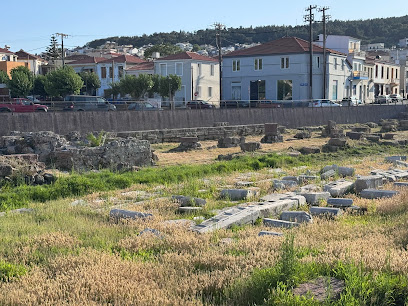
Archaeological Site (39.1124, 26.5557)
Nestled in the quieter eastern reaches of Lesvos near the small settlement of Alyfada, this archaeological site bears witness to the island's extraordinarily long human story. Lesvos has been continuously inhabited since at least the Bronze Age, and the landscape around this area reflects the successive waves of civilization that shaped the Aegean world — from prehistoric communities and ancient Greek city-states to Byzantine settlements and later Ottoman-era occupation. Sites of this nature on the island often preserve traces of ancient habitation in the form of carved stone, foundation walls, pottery sherds, and architectural fragments that have slowly emerged from the soil over centuries of cultivation and study. Visitors who make the journey to this corner of Lesvos can expect an atmosphere of quiet discovery. The site sits within a landscape typical of the island's eastern reaches — rolling hills, scattered olive groves, and views that stretch toward the Aegean. While large-scale excavation may not be ongoing, the site rewards those with an eye for history, offering a tangible sense of the communities that once organized their lives, their worship, and their trade in this very spot. Fragments visible on the surface or partially exposed by earlier investigation give a glimpse into building techniques and material culture that connect modern Lesvos to its ancient past. For travelers interested in archaeology or the deeper layers of Greek island history, this site offers something increasingly rare: an encounter with antiquity away from the crowds. The surrounding countryside near Alyfada is peaceful and largely unchanged, making a visit here feel genuinely exploratory. Combining this stop with nearby villages and coastal scenery gives a fuller picture of the northeastern part of Lesvos — a region that rewards the curious and unhurried visitor.
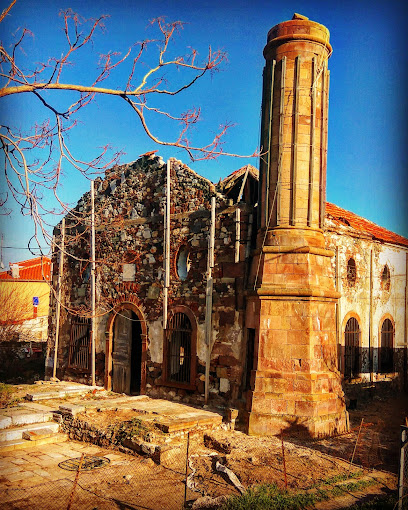
Archaeological Site (39.1125, 26.5551)
Nestled in the quiet landscape near the village of Alyfada, this archaeological site offers a window into the layered human history of Lesvos stretching back through antiquity. The island was settled continuously from the Bronze Age onward, and sites across this central region of Lesvos have yielded evidence of habitation spanning Archaic, Classical, and Hellenistic periods. Like many such places on the island, this location likely owed its importance to the combination of fertile agricultural land and proximity to water sources, factors that drew successive generations to establish communities across the Lesbian countryside long before the great city-states of Mytilene and Methymna rose to prominence. Visitors who make their way to the site can expect to encounter the atmospheric remnants that characterize rural Aegean archaeology — traces of foundations, scattered potsherds, and perhaps carved stone elements that hint at the structures once standing here. The surrounding terrain itself becomes part of the experience, as the gentle hills and olive groves of this part of Lesvos have changed relatively little in character over the millennia. Interpretation of such sites rewards patience and imagination, inviting visitors to piece together daily life in ancient Lesvos from fragmentary but evocative remains. The site sits within a broader archaeological landscape that makes Lesvos one of the more historically rich islands of the northeastern Aegean. For travelers interested in Greek antiquity beyond the famous headline sites, places like this one near Alyfada offer an unmediated encounter with the past — quiet, unhurried, and far from the crowds. Combining a visit here with exploration of nearby villages and the island's natural scenery makes for a rewarding half-day excursion into the deeper history of this remarkable island.
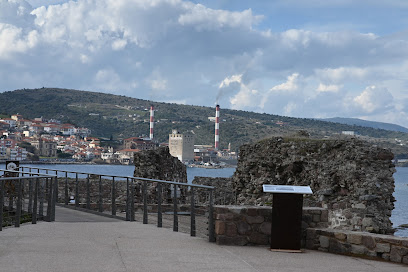
Archaeological Site (39.1129, 26.5596)
Perched in the rolling landscape near the quiet village of Alyfada in northern Lesvos, this archaeological site offers a compelling window into the island's deep human past. Lesvos has been continuously inhabited since at least the Neolithic period, and the northern reaches of the island saw successive waves of settlement — from prehistoric communities through the flourishing city-states of the Classical and Hellenistic eras. Sites in this part of the island often preserve the remains of ancient habitation, fortification walls, or rural sanctuaries that speak to a time when even the island's interior and coastal margins were densely populated and culturally active. Visitors to the site can observe the characteristic stone foundations and ceramic scatter that archaeologists use to trace the outlines of vanished communities. The terrain itself tells part of the story: elevated positions like this were favored in antiquity for their defensive advantages and commanding views across the Aegean toward the coast of Asia Minor, a reminder of Lesvos's historic role as a cultural and commercial crossroads between the Greek world and Anatolia. The landscape, dotted with olive groves and scrubland, has changed relatively little in its broad contours, lending the site an atmosphere of quiet authenticity. For those with an interest in classical antiquity, a visit here rewards contemplative exploration more than grand spectacle — there are no towering columns or monumental sculptures, but rather the subtle, honest traces of everyday ancient life. Combining a stop at this site with a walk through Alyfada itself, a traditional northern village little touched by mass tourism, makes for a genuinely off-the-beaten-path half-day that captures the understated archaeological richness Lesvos holds beyond its more famous landmarks.
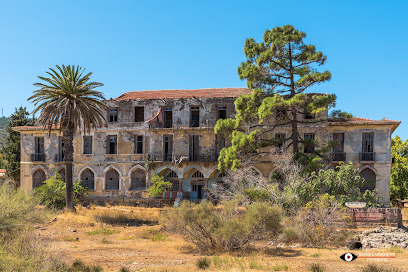
Archaeological Site (39.1813, 26.4958)
Near the tranquil coastal village of Paralia Thermis, on Lesvos's northeastern shore, lies an archaeological site of remarkable antiquity that places this corner of the island at the heart of Aegean prehistory. The site of ancient Thermi preserves the layered remains of successive Bronze Age settlements, excavated in the early twentieth century and found to contain five distinct occupation phases stretching from roughly the third millennium BCE. These strata place Thermi in remarkable chronological dialogue with the early phases of Troy across the narrow straits of the Aegean, offering evidence that this coastline was woven into the same web of trade, culture, and maritime contact that shaped the ancient world long before classical Greece arose. Visitors who come to this site step into a landscape where the past surfaces quietly through exposed stone foundations, low walls, and the subtle topography of long-buried streets and dwellings. The setting itself carries meaning: the name Thermis derives from the natural hot springs that bubble up along this stretch of coast, and those same thermal waters that drew ancient peoples seeking warmth and healing continue to flow today in the modern spa facilities nearby. The juxtaposition of prehistoric ruins and living tradition gives the place an unusual continuity — humans have gathered here for millennia, drawn by the same gifts of the earth. For history-minded travelers, the site rewards quiet contemplation even if its ruins are not dramatically monumental. What matters here is scale of time: standing among these foundations, one can sense the deep human occupation of Lesvos, an island that was never peripheral but always connected — to Anatolia, to the broader Aegean world, and to the long story of civilization that preceded the poets and philosophers for which the island would later become famous.
Archaeological Site (39.3245, 26.4164)
Nestled in the northern reaches of Lesvos near the quiet village of Palios, this archaeological site offers a window into the island's remarkably deep human past. Lesvos has been continuously inhabited since at least the Bronze Age, and the landscape around its northern coastline preserves traces of settlements, sanctuaries, and structures that speak to millennia of human activity. The area formed part of a broader network of ancient communities that thrived across the island, benefiting from fertile land, reliable springs, and proximity to maritime trade routes connecting the Aegean world. Visitors to the site can observe the characteristic remains that typify ancient habitation in this part of the eastern Aegean — worked stone foundations, ceramic fragments weathered into the earth, and the subtle contours of terracing or enclosure walls that careful eyes can trace across the hillside. The local volcanic geology, with its distinctive dark basalt and lighter limestone, gives the visible stonework a texture particular to Lesvos, distinguishing it from mainland Greek sites. The surrounding landscape of olive groves and dry-stone walls has changed little in character over the centuries, lending the site a powerful sense of continuity. What makes a visit here rewarding is less about monumental ruins and more about the contemplative experience of standing in a place where generations of islanders built their lives long before recorded history. The proximity to Palios means visitors can pair the site with a stroll through a traditional northern Lesvos village, gaining a sense of how the island's human geography has remained anchored to the same favoured spots — water, shelter, and view — across the ages. For those drawn to the quieter, less-visited corners of Greek archaeology, this site offers a genuine and unhurried encounter with the ancient world.
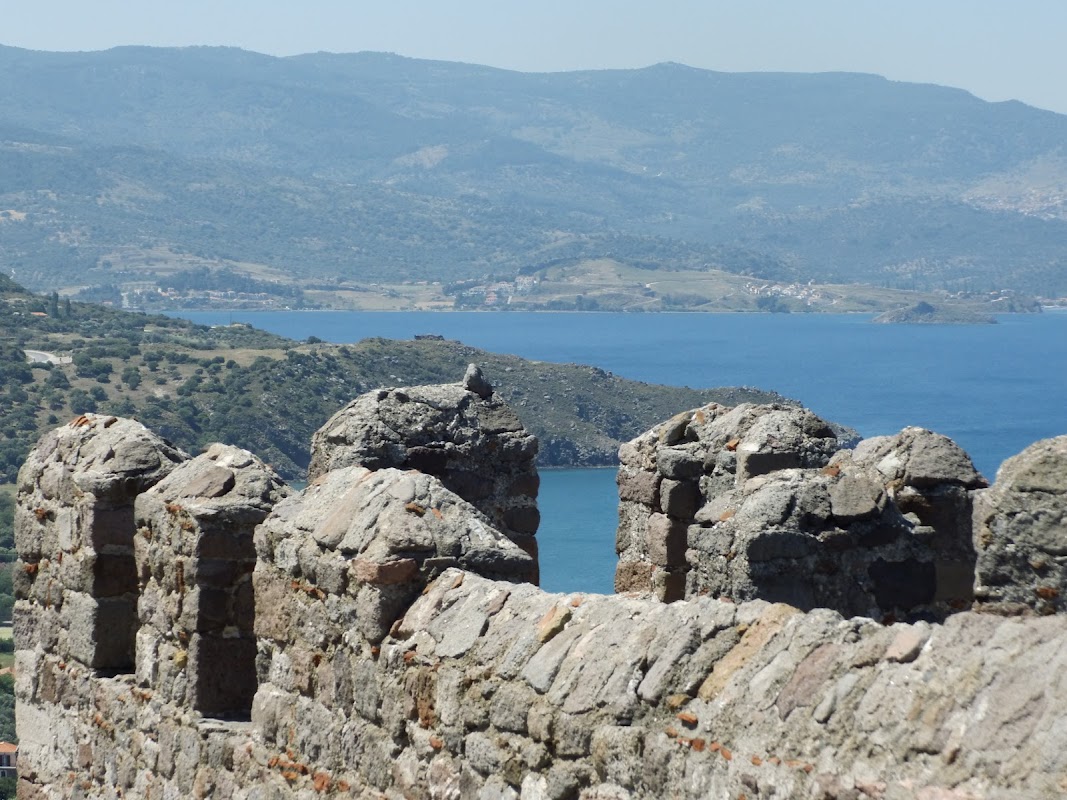
Archaeological Site (39.3657, 26.1773)
The area around Molyvos preserves traces of one of ancient Lesvos's most storied city-states: Mithymna, as the settlement was known in antiquity. Among the six rival poleis that once divided the island, Mithymna occupied a position of strategic and cultural prominence on the northern coast, its hilltop citadel commanding sweeping views across the Aegean toward the Turkish mainland. Settlement here stretches back through the Bronze Age, and layers of occupation — Greek, Roman, Byzantine, and Genoese — have left an archaeological record that continues to be studied and, in places, uncovered. Visitors exploring the site today encounter the enduring logic of the ancient city's layout, anchored by the same dramatic promontory that drew settlers millennia ago. Sections of ancient wall, column drums, and architectural fragments have been found incorporated into later Byzantine and medieval structures, most visibly in the imposing castle that crowns the hill. The site rewards those who look closely: cut stone blocks reused in later construction, the outlines of ancient terracing on the slopes, and pottery sherds that speak to centuries of continuous habitation. The interplay between ancient foundations and medieval superstructure gives the site a rare palimpsest quality, where each era built upon and partially preserved what came before. For travellers, this archaeological context transforms a visit to Molyvos from scenic sightseeing into something more resonant. Standing among the remnants of Mithymna, with the cobalt sea below and the castle rising overhead, it becomes easy to understand why this place held such importance across so many centuries. The site is best explored on foot, moving between the lower town and the castle precinct, where informational signage helps orient visitors within the broader historical narrative of ancient Lesvos.
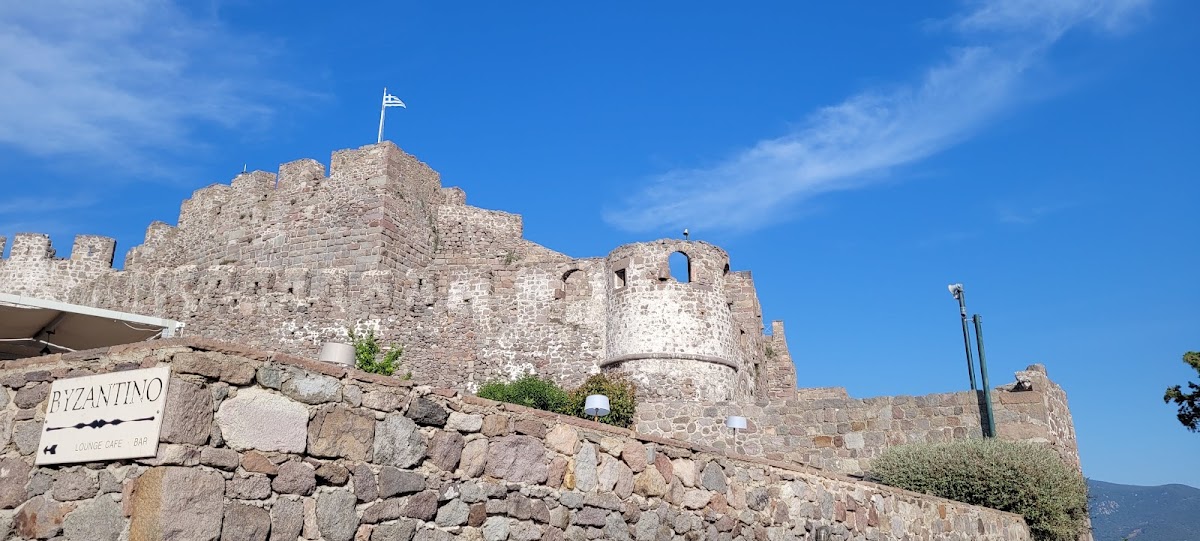
Archaeological Site (39.3660, 26.1769)
Perched in the shadow of Molyvos, this archaeological site preserves traces of ancient Mythimna, one of the six powerful city-states that dominated Lesvos throughout antiquity. Mythimna was a rival to the great city of Mytilene, and its citizens are said to have included figures celebrated in classical tradition. The settlement thrived across multiple periods, from the Bronze Age through the Hellenistic and Roman eras, leaving behind stratified remains that speak to centuries of continuous habitation. Fragments of walls, cisterns, and architectural stone hint at a community that commanded the fertile northern slopes of the island and the sea lanes running toward the Troad coast of Asia Minor. Visitors who explore the site today will find the kind of quietly evocative landscape that rewards a slow, curious pace. Scattered potsherds, worked stone blocks, and the outlines of ancient foundations emerge from the hillside vegetation, offering a tangible link to a world that pre-dates the medieval castle looming above the modern town. The topography itself tells part of the story: natural terraces and defensible ridgelines explain why successive cultures chose this ground, and views across the Aegean toward the Turkish coastline recall the dense network of trade and cultural exchange that defined ancient Lesbos. The site sits within easy reach of Molyvos village, making it a natural complement to the town's own layered history. While formal excavation has been limited and much remains beneath the surface awaiting future study, the area is recognized for its archaeological sensitivity. Walking here alongside the olive trees and wild herbs, with the stone streets of Molyvos visible nearby, gives a rare sense of how deeply the ancient and the living landscape of Lesvos are intertwined.
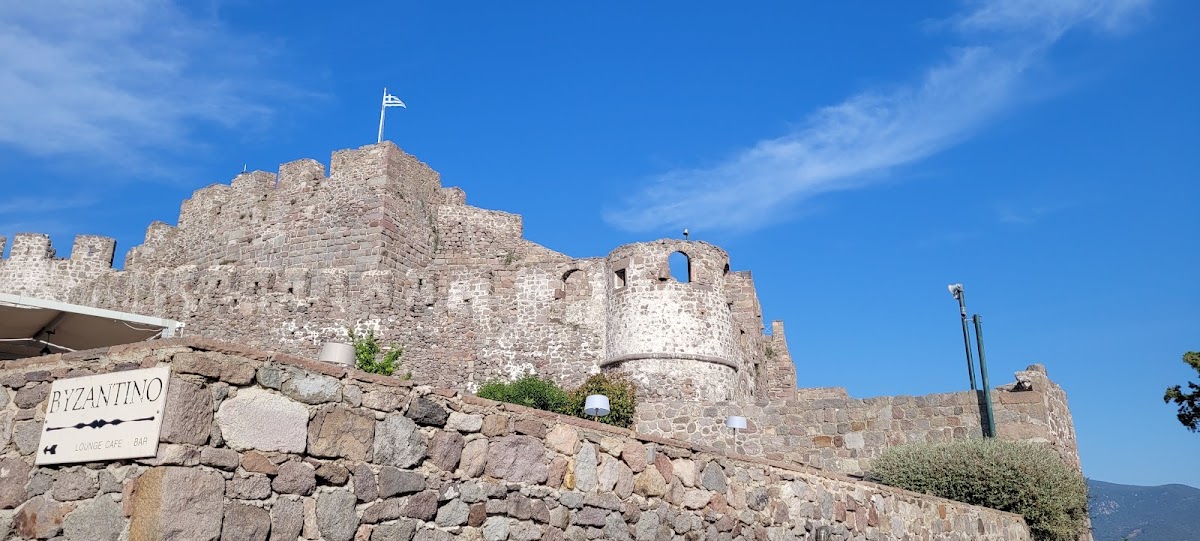
Archaeological Site (39.3662, 26.1782)
Perched in the landscape surrounding the medieval town of Molyvos, this archaeological site preserves traces of ancient Mythimna, one of the six great city-states that shaped the history of Lesvos from the early first millennium BC onward. Mythimna was a rival and neighbor to the more powerful Mytilene, and its citizens played an active role in the political and cultural currents of the Aegean world through the Archaic, Classical, and Hellenistic periods. The site offers a tangible connection to that long arc of habitation, with structural remains and scattered stonework that hint at the density of urban life once concentrated here, long before the medieval Genoese castle came to dominate the hilltop above. Visitors today can explore the visible remnants of ancient construction, including sections of walls, foundations, and carved stone elements that speak to the craftsmanship of successive generations. The landscape itself is layered with meaning: pottery sherds occasionally surface after rains, and the careful eye will notice how modern field boundaries sometimes follow lines established in antiquity. The elevated terrain offers sweeping views toward the Turkish coast and across the northern Aegean, the same vantage points that made this location strategically and commercially valuable for millennia. What makes the site particularly rewarding is not any single monumental structure but rather the sense of continuity it conveys. Lesvos has been inhabited almost without interruption from the Bronze Age to the present, and ancient Mythimna sits within that living continuum. For travelers who have already admired Molyvos from the harbor or wandered its cobbled lanes, a visit here adds depth — a reminder that beneath the picturesque Ottoman-era townscape lies one of the Aegean's oldest and most enduring human landscapes.
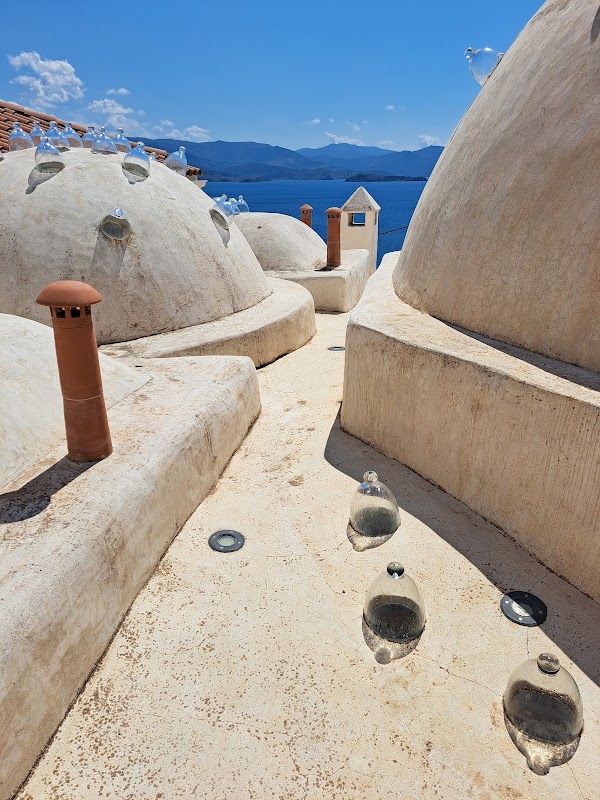
Archaeological Site (39.3694, 26.1725)
Perched in the northern reaches of Lesvos near the medieval town of Molyvos, this archaeological site stands on ground that has been inhabited since antiquity. The ancient city of Mithymna — the classical name for what is now Molyvos — was one of the most powerful city-states on the island, rivaling Mytilene for dominance in the Aegean. Settlement in this region stretches back through the Bronze Age, and successive layers of habitation have left behind traces of the many civilizations that recognized the strategic and commercial value of this dramatic coastline overlooking the northern Aegean toward the coast of Asia Minor. Visitors to the site encounter remnants that speak to centuries of continuous human presence: scattered architectural fragments, foundation outlines, and ceramic evidence that archaeologists have used to piece together the rhythms of ancient life here. The promontory setting, with commanding views across to the Turkish coast only a few kilometers distant, makes clear why ancient settlers chose this ground. Mithymna was known in antiquity as the birthplace of the lyric poet Arion, and the broader region carries the weight of a literary and cultural tradition that shaped the ancient Greek world. Today the site rewards curious visitors willing to look beyond the more immediately dramatic Genoese castle that crowns the hill above. Walking the area offers a quieter kind of discovery — the sense of standing within a landscape that has absorbed thousands of years of human story. The interplay between the ancient remains, the medieval fortifications above, and the turquoise sea below creates one of the more evocative historical atmospheres on the island, best appreciated in the gentler light of morning or late afternoon.
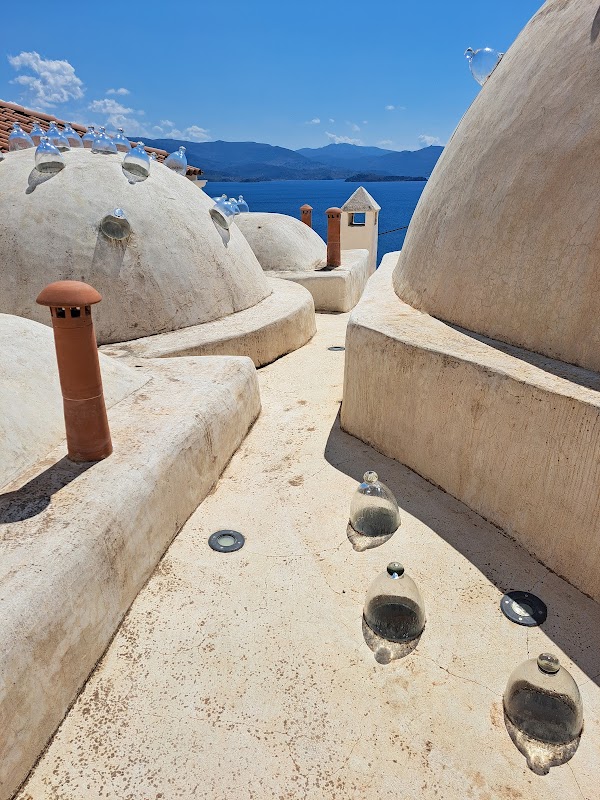
Archaeological Site (39.3697, 26.1705)
Perched in the landscape surrounding the storied village of Molyvos, this archaeological site stands as a tangible link to the ancient city of Mithymna, one of the six powerful city-states that shaped the island of Lesvos throughout antiquity. Mithymna was a rival of the dominant city of Mytilene and played its own distinct role in the broader Aegean world, producing its own coinage and participating in the cultural and political currents of classical and Hellenistic Greece. The site preserves remnants that speak to centuries of continuous habitation, from the archaic period through the Roman era, offering a rare glimpse into the layered history beneath one of the Aegean's most dramatically situated towns. Visitors to the site can observe the characteristic stonework and structural outlines that archaeologists have traced across the hillside terrain, including traces of ancient walls, foundations, and in some areas fragments of ceramic and architectural detail that point to the settlement's extent and sophistication. The natural promontory that defines this part of the northern Lesvos coastline was clearly chosen for its commanding views and defensible position, qualities that communities valued across millennia, as evidenced by the later Byzantine castle that crowns the same ridge above modern Molyvos. What makes this site especially rewarding is its setting within a landscape that has changed remarkably little in its essential character. The blue sweep of the Aegean, the outline of the Turkish coast to the northeast, and the terraced hillsides of olive and pine form an almost timeless backdrop. Even without elaborate interpretive infrastructure, standing among these ancient stones invites a genuine sense of connection to the people who built a thriving city here, fished these same waters, and looked out over the same horizon that greets visitors today.
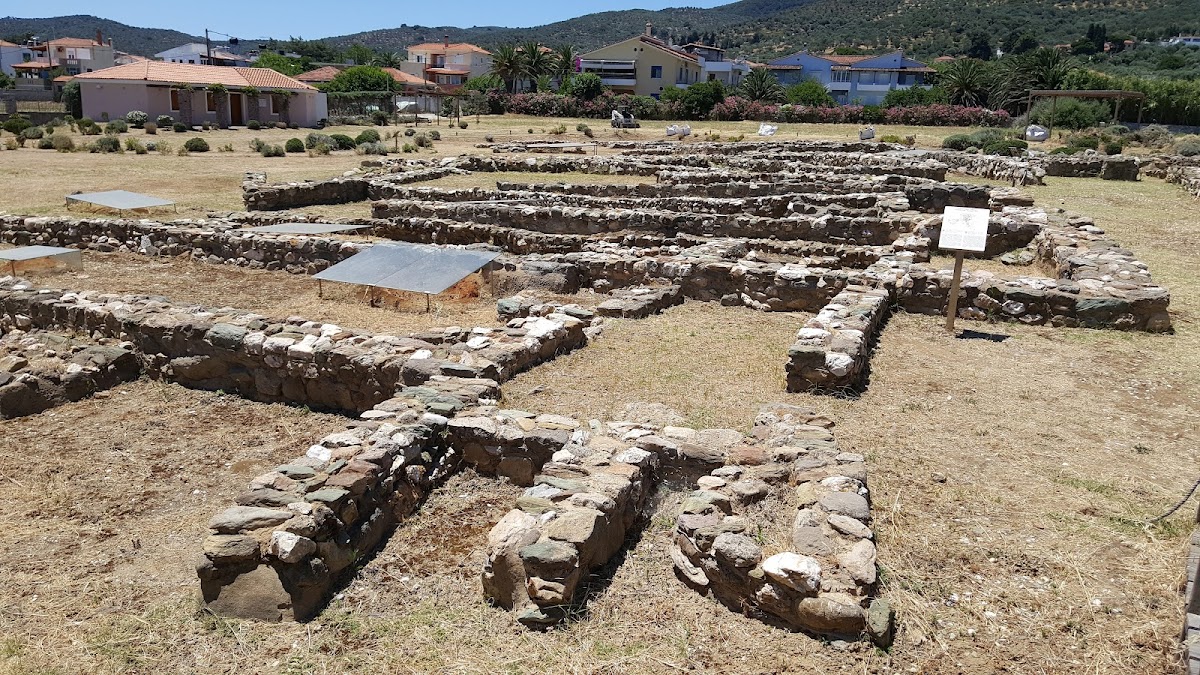
Archaeological Site Of Thermi
Αρχαιολογικός χώρος Θερμής
Nestled on a low coastal promontory near the village of Pyrgoi Thermis, the Archaeological Site of Thermi ranks among the most significant prehistoric settlements in the Aegean. Excavated in the early twentieth century by British archaeologist Winifred Lamb, the site revealed five successive Bronze Age settlements built one atop the other, spanning roughly from around 3000 to 2000 BCE. These overlapping occupation layers, known as Thermi I through V, bear striking parallels to the legendary stratified mound of Troy across the water in Anatolia, underscoring just how deeply Lesvos was woven into the broader web of early Aegean civilization. Finds from the excavations — including wheel-thrown pottery, copper tools, spindle whorls, and terracotta figurines — point to a community engaged in trade, craft production, and agriculture during an era when the Aegean world was first taking shape. Walking the site today, visitors can make out the stone foundations of rectangular houses arranged along what were once organized street plans, a level of urban order that speaks to a settled and socially complex community. The remains lie in an evocative landscape of low scrub and sea light, with the Gulf of Gera shimmering nearby and the hills of eastern Lesvos rising behind. The natural hot springs that give the broader area its name — Thermi means "hot" in Greek — have drawn people to this corner of the island since antiquity, adding another layer of continuity to a place already rich with deep time. For visitors with an interest in prehistory, Thermi offers a rare chance to stand on ground that was alive with human activity millennia before classical Greece. It is not a grand monumental ruin but rather an intimate, quietly compelling site where the outlines of early Aegean domestic life remain legible in stone. Combining a visit here with a stop at the thermal baths of Thermi and the surrounding Byzantine-era tower of Pyrgos makes for a rewarding half-day journey through some of the oldest inhabited terrain on Lesvos.
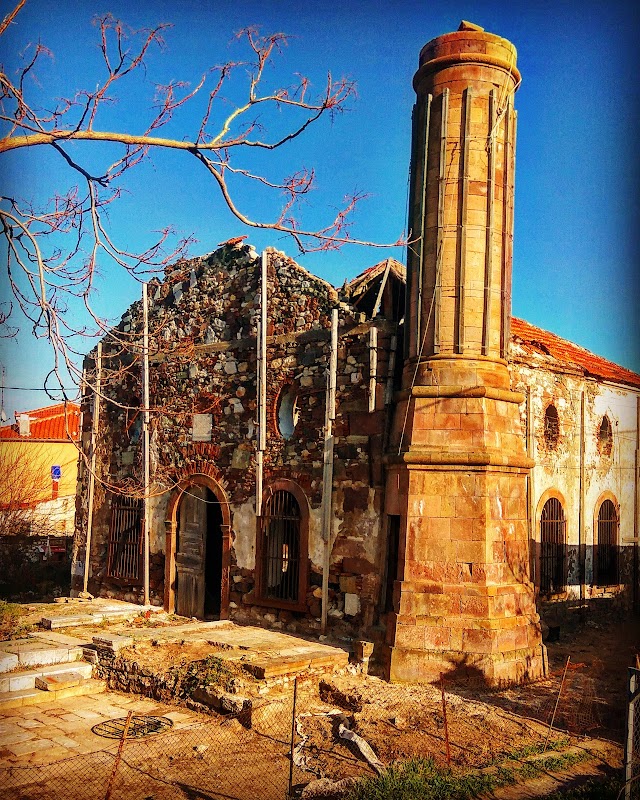
Archaeological site of Nikomedeias St.
Αρχαιολογικός χώρος οδού Νικομηδείας
Tucked into the urban fabric near the Alyfada district of Mytilini, the archaeological site on Nikomideias Street preserves the remains of a Roman-era epavli — a term the Greeks used for a substantial rural or suburban estate. Lesvos flourished under Roman rule as a favoured retreat for the empire's elite, and sites like this one bear witness to the sophisticated villa culture that took root on the island. The structural ruins here, catalogued and protected by the Greek Ministry of Culture, reflect the prosperity of Roman Mytilene, which held the rare distinction of being a free city within the empire and attracted considerable wealth and patronage over several centuries. Visitors to the site can observe surviving masonry and foundation remains that hint at the scale and craftsmanship of the original complex. Roman epavlai in this region typically combined residential quarters with working agricultural or artisanal functions, and the Nikomideias site fits into a wider pattern of Roman-period settlement that archaeology has gradually revealed across the Mytilini peninsula. The location, close to the ancient city yet on its outskirts, is characteristic of the suburban villa type favoured by wealthy provincial residents. The site is registered in Greece's official Odysseus cultural heritage database, underscoring its recognised importance in the broader archaeological landscape of Lesvos. While it lacks the dramatic grandeur of a large theatrical or temple complex, it offers a quieter and more intimate encounter with the island's layered past. For travellers curious about the everyday material world of antiquity rather than monumental architecture, a visit here rewards close attention and provides a tangible link to the centuries when Lesvos was woven into the fabric of the Roman Mediterranean world.
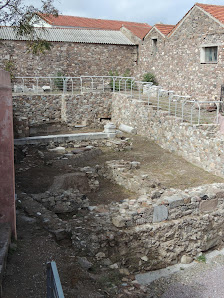
Archaeological site: Holy goddess Cybele
Among the most intriguing traces of ancient religious life on Lesvos is this archaeological site dedicated to Cybele, the great Phrygian mother goddess whose cult spread across the ancient Mediterranean world from her heartland in Anatolia. Given Lesvos's position just a few kilometers from the Anatolian coast, it is no surprise that the island became an early conduit for eastern cults making their way into the Greek world. Cybele — worshipped as mistress of wild nature, protector of cities, and mother of the gods — attracted devotees across social classes, and sanctuaries in her honor were often established in prominent natural settings: rocky outcroppings, hillsides, and liminal spaces between the cultivated and the wild. Sites of Cybele worship in the Greek world typically feature rock-cut niches designed to hold cult images of the goddess, votive deposits of terracotta figurines, and sometimes carved relief representations of Cybele enthroned between lions, her most recognizable attribute. This site on Lesvos follows that tradition, offering a tangible link to the island's deep entanglement with Anatolian religious culture during the archaic and classical periods. The location underscores how the Aegean sea served not as a barrier but as a bridge between Greek and Near Eastern civilizations. Visitors today can experience the quiet power of a place that once drew ancient worshippers seeking the goddess's protection and favor. The surrounding landscape retains much of the character that made such spots sacred to ancient eyes — open sky, stone, and a sense of standing at the edge of something older than the classical world. For those interested in the syncretism of ancient religions and Lesvos's role as a crossroads of cultures, this site is a rewarding and thought-provoking stop.
Archaia Issa
Αρχαία Ίσσα
Archaia Issa, the remains of an ancient settlement nestled in the quiet landscape near the village of Parakoila, offers a window into the layered prehistoric and classical past of Lesvos. Though less celebrated than the island's five great ancient city-states — Mytilene, Methymna, Antissa, Eresos, and Pyrrha — Issa stands as evidence of how densely inhabited this fertile island was in antiquity. The site dates to periods stretching across the Bronze Age through the classical era, when the hills and coastal plains of Lesvos supported numerous communities engaged in agriculture, trade, and the rich cultural life for which the island became renowned throughout the ancient Greek world. Visitors who make the short journey from Parakoila encounter the quiet dignity of an archaeological landscape where foundations, scattered stonework, and earthworks speak to a settlement that once held real significance for its inhabitants. The surrounding terrain — rolling hills overlooking the Gulf of Kalloni — gives a sense of why this location was chosen: good land, a commanding view, and proximity to the waterways that were the arteries of ancient trade. Potsherds and architectural traces found in the area suggest sustained occupation and the rhythms of ordinary ancient life rather than the monumental grandeur of a major city. Archaia Issa rewards the curious traveler who is willing to engage with subtlety. There are no towering columns or grand temples here, but the site possesses an atmosphere of genuine antiquity, away from tourist crowds, in a landscape that has changed little in its essential character over millennia. Combined with a visit to the nearby village of Parakoila and the broader riches of the Kalloni basin, it makes for a quietly memorable encounter with the deep human history of Lesvos.
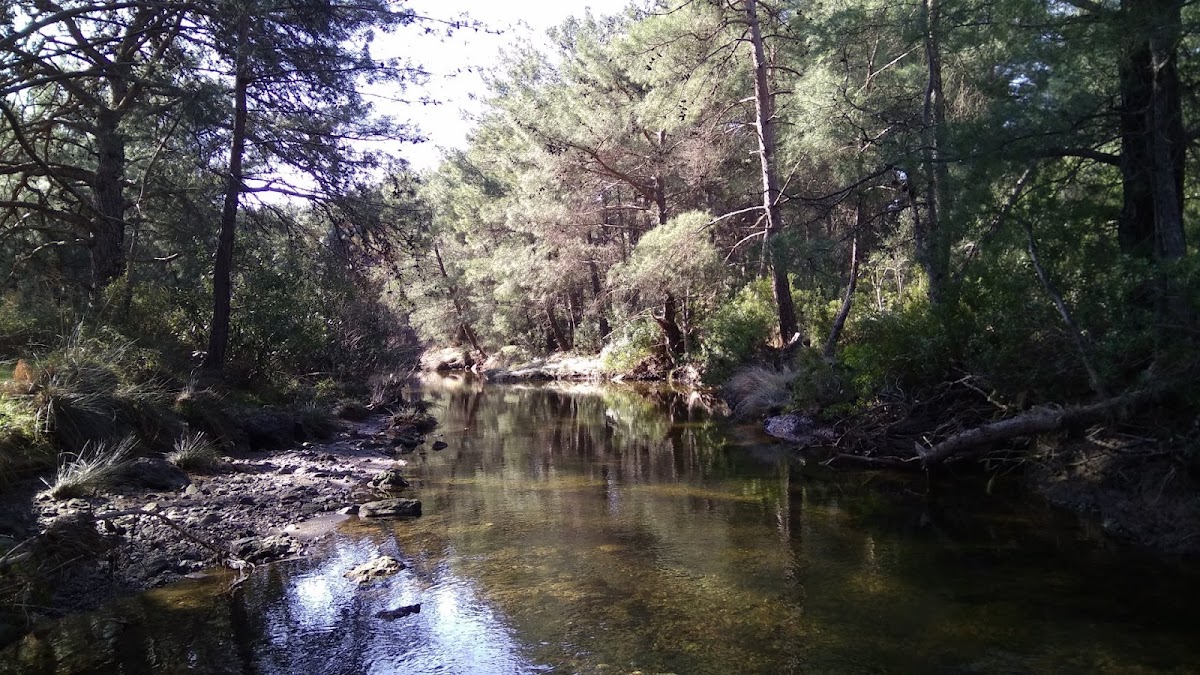
Archaia Pyrra
Αρχαία Πύρρα
Pyrrha or Pyrra (Ancient Greek: Πύρρα) was a town on the coast of the deep bay on the west of the island of Lesbos, which had so narrow an entrance that it was called the Euripus of Pyrrha. It was situated at a distance of 80 stadia from Mytilene and 100 from Cape Malea. In the Lesbian revolt the town sided with Mytilene, but was reconquered by Paches. In Strabo's time the town no longer existed, but the suburbs and port were still inhabited.
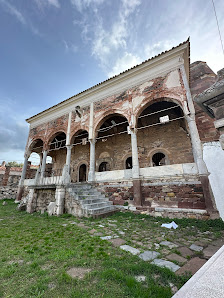
Archaio Akromolio
Αρχαίο ακρομόλιο
Perched on a rugged coastal promontory near the quiet village of Alyfada, Archaio Akromolio is a site of ancient ruins whose very name speaks to its character — "archaio" meaning ancient, and "akromolio" evoking the notion of a headland or sea-edge settlement. This stretch of the eastern Lesvos coastline was inhabited across multiple periods of antiquity, as the island's strategic position in the northeastern Aegean made its promontories natural candidates for lookout points, small fortifications, and coastal settlements. The site reflects the layered human presence that defines so much of Lesvos, where Bronze Age, Classical, Hellenistic, and Roman-era communities each left traces in the landscape. Visitors who make the journey to Akromolio today encounter the atmospheric remnants typical of such coastal ruins — foundation stones, scattered masonry, and earthworks that speak quietly of the structures that once stood here. The setting itself rewards the effort: the elevated vantage point offers sweeping views across the Aegean, and the immediate surroundings retain the wild, unhurried character of this less-visited corner of the island. Alyfada village nearby provides a taste of authentic rural Lesvos, making the excursion feel like a genuine exploration rather than a managed tourist experience. What makes Archaio Akromolio significant is precisely its understated nature. Unlike the island's more prominent archaeological sites, this is a place where history sits close to the surface of the land, unmediated by barriers or interpretive boards, inviting a personal and contemplative encounter with the deep past of the Aegean world. For travellers drawn to archaeology, coastal scenery, and the pleasure of discovering places still largely off the beaten path, it offers a quietly memorable afternoon.
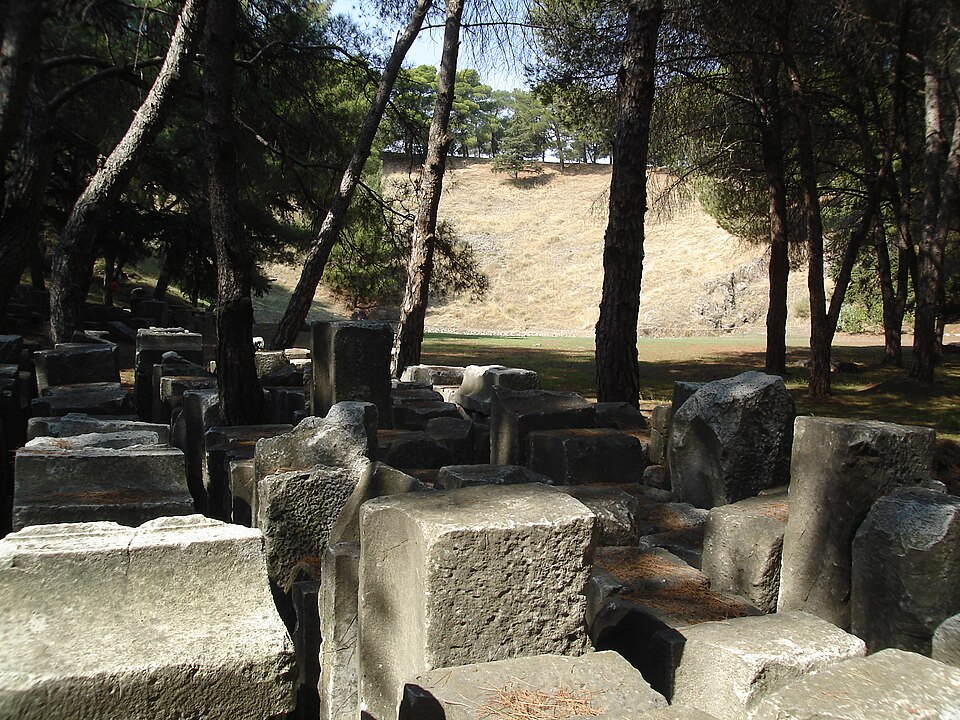
Archaio Theatro Mytilinis
Αρχαίο θέατρο Μυτιλήνης
The Ancient Theatre of Mytilene stands as one of the most historically significant ancient monuments on Lesvos, carved into the hillside above the island's capital city. Built during the Hellenistic period, likely in the 3rd or 2nd century BC, it was once one of the largest theatres in the ancient Greek world, with an estimated capacity of around 10,000 spectators. Its fame reached far beyond the Aegean — ancient sources record that the Roman general Pompey was so struck by its design and grandeur that he used it as the direct inspiration for the Theatre of Pompey in Rome, completed in 55 BC and the first permanent stone theatre in the Roman world. That a provincial island theatre could serve as the template for a landmark of imperial Rome speaks volumes about the cultural and architectural ambition of ancient Mytilene. Today, the site rewards visitors with a compelling layering of history visible in the surviving stone remains. The cavea, or seating area, was hewn directly into the natural slope of the hill, a characteristic technique of Greek theatrical architecture that made elegant use of the landscape. While the structure has weathered centuries of spoliation — stones were repurposed for later Byzantine and Ottoman-era construction — ongoing archaeological work has gradually revealed the scale and sophistication of what once stood here. The elevated position also offers sweeping views over Mytilene and the surrounding area, giving a sense of how commanding this space must have felt to ancient audiences. For visitors to Lesvos with an interest in antiquity, the Ancient Theatre of Mytilene is an essential stop. It sits close to the centre of Mytilene town, making it easy to combine with a broader exploration of the capital's rich archaeological and Byzantine heritage. Standing among its remains, you are treading ground that connects Lesbos directly to the grandest cultural projects of the ancient Mediterranean world.
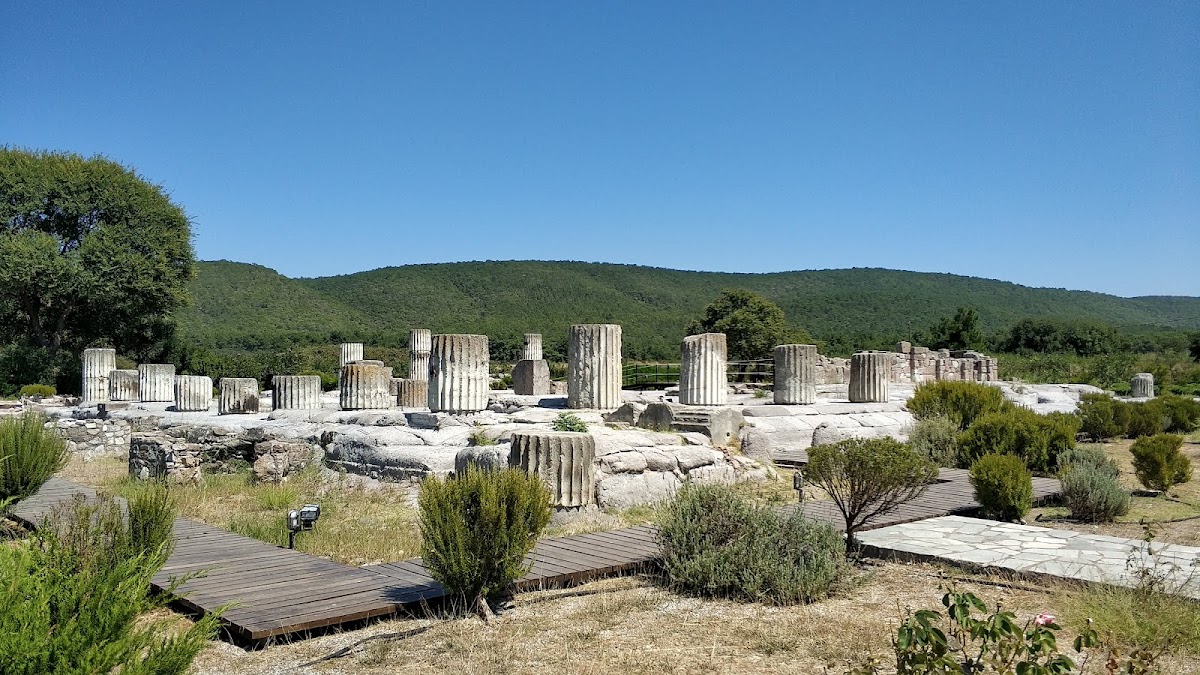
Archaiologikos Choros Ierou Tou Messou
Αρχαιολογικός χώρος Ιερού του Μέσσου
Tucked into the gentle hills near the village of Mesa in the heart of Lesvos, the Archaeological Site of the Sanctuary of Messa stands as one of the island's most significant ancient religious complexes. Known in antiquity as the Messon sanctuary, this site served as a pan-Lesbian gathering place where the inhabitants of the entire island would converge for communal religious festivals honoring shared deities, most notably Zeus, Hera, and Dionysus. Its importance transcends local worship — ancient literary sources, including references attributed to the poet Sappho, speak of this sanctuary as a unifying spiritual center for the Lesbians of old, a place where the island's distinct city-states set aside rivalry in favor of collective celebration and sacrifice. Excavations at the site have brought to light architectural remains spanning several centuries of ancient occupation, including foundations of temple structures, column fragments, and an array of votive offerings that attest to the depth of devotion shown here across generations. The layout reflects the classical Greek tradition of sacred precincts, with evidence of altars and processional spaces suggesting a well-organized cult center that attracted worshippers from across the Aegean. Ceramic finds, terracotta figurines, and inscriptions recovered during archaeological work have helped scholars piece together the ritual life of the sanctuary and its evolving role in Lesbian religious identity through the archaic and classical periods. Today, visitors to the site can walk among the exposed foundations and appreciate the atmospheric setting — a landscape of olive groves and low hills that has changed little in its essential character since antiquity. The site rewards those with an interest in Greek religion and archaeology, offering a quieter, more contemplative counterpart to the busy coastal attractions of the island. Interpretive signage helps orient the visitor, and the proximity to the village of Mesa makes it easy to combine a visit with an exploration of the surrounding countryside and the traditional character of inland Lesvos.
Aristotle
Προτομή φιλόσοφου Αριστοτέλη
Lesvos holds a singular place in the history of science, for it was on these shores that Aristotle conducted the fieldwork that would lay the foundations of Western biology. Around 345 BCE, following the death of his mentor Plato, Aristotle came to live on Lesvos, settling near the lagoon-like Gulf of Kalloni — the ancient Pyrrha lagoon — where he spent roughly two years observing, dissecting, and cataloguing the remarkable diversity of marine life found in its sheltered waters. His time here produced some of the most meticulous zoological records of the ancient world, including detailed accounts of fish, cephalopods, and crustaceans that would not be surpassed in depth for nearly two millennia. Scholars consider this Lesbian sojourn one of the most productive periods of Aristotle's intellectual life. The memorial near Skala Kalloni stands as a tribute to that extraordinary chapter, positioned close to the very waters where the philosopher waded and observed. The site acknowledges Lesvos not merely as a beautiful Aegean island but as a cradle of empirical inquiry, a place where curiosity about the natural world was first systematically pursued. The Gulf of Kalloni itself remains one of the most ecologically rich lagoons in the eastern Mediterranean, home to vast flamingo flocks and migratory birds that arrive in numbers Aristotle himself would have found remarkable. Visitors today come to reflect on the improbable idea that a man sitting beside these quiet, reed-fringed waters essentially invented the scientific method of observation and classification. The surrounding landscape — the salt flats, the glittering shallows, the distant olive-covered hills — has changed little in character since antiquity. Paired with a visit to Skala Kalloni's waterfront tavernas serving the gulf's celebrated sardines, a stop at this memorial offers a rare chance to stand at the exact intersection of natural beauty and intellectual history.
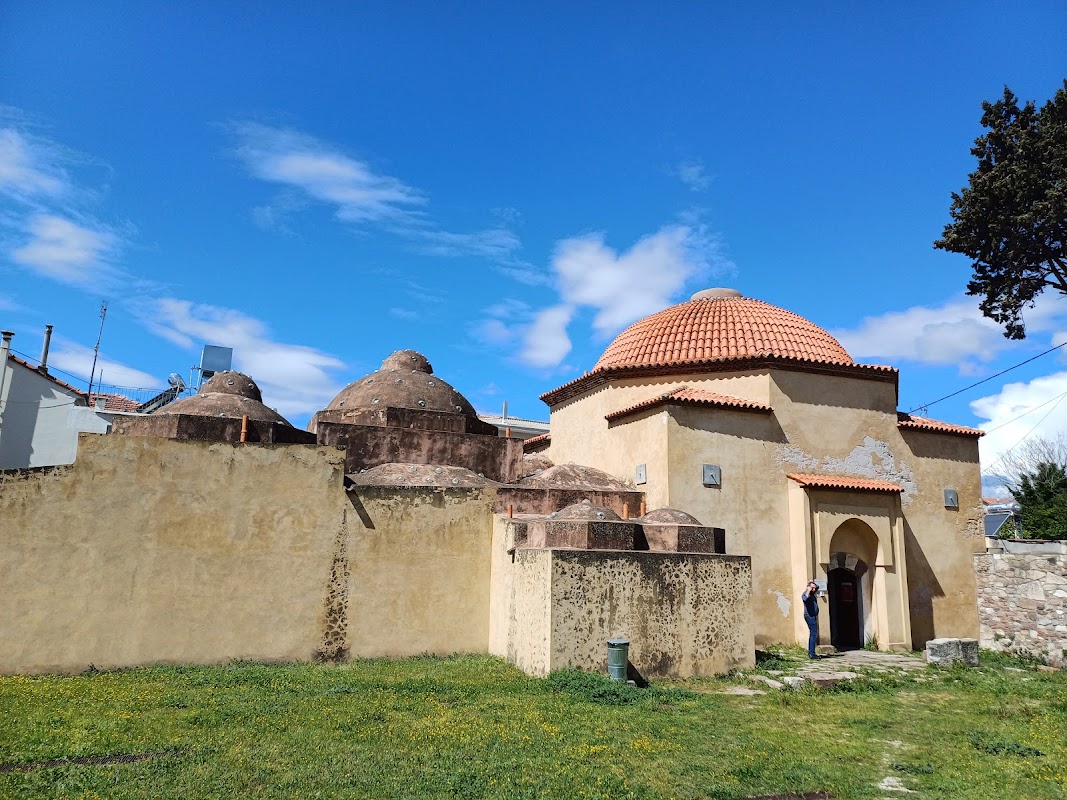
Bath
Λουτρό
The ruined bath complex near Alyfada offers a quietly evocative glimpse into the daily life of ancient and Byzantine-era Lesvos. Bathing establishments were central to social and civic life across the Eastern Mediterranean for centuries, serving not merely as places of hygiene but as community gathering points where locals conducted business, exchanged news, and sought relief from the Aegean heat. This site, tucked into the landscape of eastern Lesvos, reflects that long tradition of communal bathing culture that stretched from the classical Greek period through the Byzantine and Ottoman eras, each successive civilization adapting and rebuilding such facilities to suit their own customs and needs. What remains today are the stone foundations and fragmentary walls that hint at the original layout of the bathing rooms. Visitors with a keen eye can often trace the outlines of separate chambers — the cool, warm, and hot rooms that were characteristic of Mediterranean bath design — along with remnants of the hypocaust system, the underfloor heating network that circulated hot air to warm the floors and walls above. The quality of the stonework and the careful siting of the structure near a reliable water source speak to the engineering knowledge and civic investment that once made such facilities possible even in smaller settlements like Alyfada. For those exploring the quieter corners of Lesvos away from the better-known archaeological showcases, this site rewards a visit with a sense of intimate connection to ordinary ancient life. The rural setting, surrounded by the olive groves and rolling hills typical of this part of the island, makes the experience contemplative rather than crowded. Bring sturdy footwear and an appreciation for unrestored ruins; there are no interpretive panels or formal facilities here, but the site's very rawness is part of its charm, a fragment of Lesvos's layered past left open to the sky.
Bridge (39.2750, 26.3720)
Near the quiet village of Pedi, this historic stone bridge stands as one of the enduring reminders of the island's layered past. Like many of Lesvos's surviving bridges, it was likely constructed during the Ottoman period, when the island's prosperity in olive oil and trade demanded reliable infrastructure to connect villages across the seasonal streams that cut through the landscape. Built in the traditional technique of dry-laid or mortared local stone, these bridges were engineered to handle the rush of winter rains while remaining sturdy enough for the steady passage of loaded mules, merchants, and villagers throughout the year. The bridge's arched form reflects a craft tradition shared across the Aegean and broader Mediterranean world, where skilled stonemasons created structures that have outlasted the empires that commissioned them. Its modest scale belies its importance to the community it served, forming a vital link in the network of paths and tracks that once tied Pedi and neighboring settlements together long before paved roads arrived on the island. The surrounding landscape of olive groves, dry-stone walls, and rolling hills gives the site a timeless quality that makes it easy to imagine the generations of islanders who have crossed here. Visitors today find the bridge a peaceful and photogenic spot, particularly in the softer light of morning or late afternoon when the stone takes on a warm golden hue. The area around Pedi rewards slow exploration on foot, and the bridge makes a natural pause point on any walk through this corner of Lesvos. It is the kind of quiet, unhurried monument that defines the island's character — unassuming in scale yet rich in the accumulated history of everyday life.
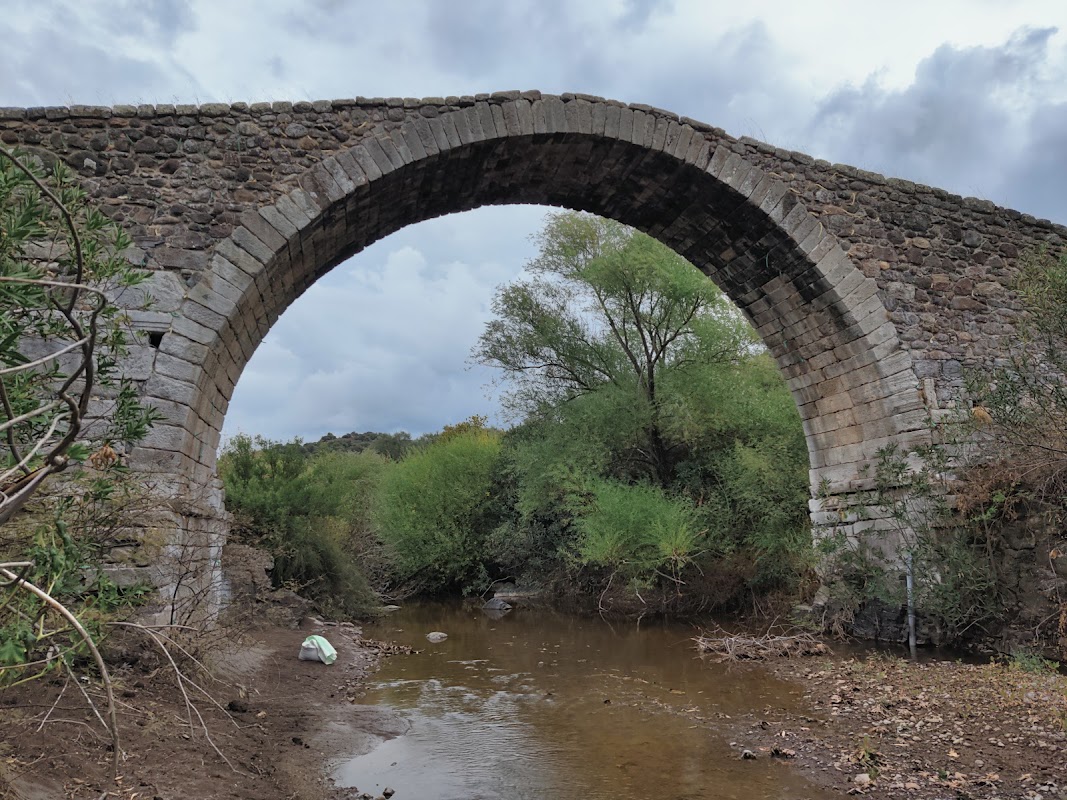
Bridge of Kremastis
Γεφύρι Κρεμαστής
The Bridge of Kremastis is a graceful stone arch bridge tucked into the quiet countryside near the village of Napi in western Lesvos. Like many such structures across the Aegean islands, it bears the hallmarks of Ottoman-era craftsmanship: carefully fitted local stone, a single or double rounded arch designed to withstand seasonal torrents, and a roadbed wide enough for laden pack animals to cross safely. Bridges of this type served as vital arteries of rural life, connecting villages and fields across the stream beds that cut through Lesvos's hilly interior, and their construction often reflected the considerable engineering skill of local master builders working within a centuries-old tradition. Today the bridge stands as a quiet monument to that vernacular engineering heritage. Visitors who seek it out are rewarded with a scene of understated beauty: the old stonework weathered to soft grey and amber tones, framed by the scrub oak, olive groves, and maquis that typify this corner of the island. The surrounding landscape near Napi is largely unspoiled, and the bridge sits in the kind of rural tranquility that has become increasingly rare. Whether encountered on a walk through the area or as a deliberate destination for those interested in Lesvos's built heritage, the Bridge of Kremastis offers a tangible connection to the island's layered past and to the generations of farmers, merchants, and travelers who once depended on crossings like this one.
Building (39.1128, 26.5599)
Near the quiet settlement of Alyfada in southern Lesvos, this historic building stands as a tangible remnant of the island's layered past. Southern Lesvos developed significantly during the prosperous Ottoman era and into the early twentieth century, when the region's thriving olive oil industry and local trade brought wealth and architectural ambition to even its smaller communities. Buildings of this type often served agricultural, commercial, or residential purposes for the landowning families who shaped village life, and their solid stone or plastered-masonry construction reflects both the available materials of the Aegean landscape and the craftsmanship traditions passed down through generations of local builders. The structure occupies a landscape typical of this part of Lesvos, where terraced hillsides planted with ancient olive groves give way to stone walls and rural paths connecting scattered hamlets. Architectural details common to the region — arched openings, thick load-bearing walls designed to keep interiors cool in summer and warm in winter, and the characteristic weathered texture of local stone — speak to a vernacular building tradition that predates modern construction. Such buildings were not merely functional; they were expressions of community identity and economic status at a time when Lesvos was one of the wealthier islands of the eastern Aegean. Visitors who make their way to this corner of Lesvos will find it rewards slow exploration. The area around Alyfada retains an unhurried rural character, far from the tourist centres, and encountering a historic building like this one in its natural setting offers a genuine sense of place. Whether viewed as an example of Aegean vernacular architecture or simply as a quiet witness to centuries of island life, it provides a compelling reason to linger and reflect on the deep human history woven into even the most unassuming corners of Lesvos.
Bust of Captain Logothetis
Προτομή Καπετάν Λογοθέτη
Standing in the village of Polichnitos, the bust of Captain Logothetis pays quiet tribute to one of Lesvos's local heroes from the era of Greek national struggle. Like many monuments of its kind scattered across the Aegean islands, it commemorates the courage of those who resisted Ottoman rule and contributed to the broader Greek independence movement of the nineteenth century. The memorial reflects the deep pride that communities across Lesvos hold for their ancestral fighters, men whose names may not always dominate the history books but whose sacrifice was woven into the fabric of island life and memory. The bust itself is a simple, dignified work in the tradition of Greek civic sculpture, depicting the captain in period dress and bearing the solemn expression characteristic of revolutionary-era portraiture. Positioned within the village setting, it serves as a natural gathering point and a reminder that Polichnitos, like so many Lesbian communities, has its own distinct thread in the larger tapestry of Greek history. The surrounding landscape of the southern Lesvos plain, with its olive groves and proximity to the thermal springs of Polichnitos, gives the site a peaceful, grounded quality. Visitors to Polichnitos who pause at the memorial will find it a meaningful complement to the village's other charms, including its famous hot springs, one of the hottest natural thermal springs in Europe. The bust invites reflection on the layered history of Lesvos, an island that has known Mycenaean settlers, Byzantine emperors, Genoese lords, and Ottoman governors, and whose people have long carried a strong sense of local identity and resilience. Even for those with only a passing interest in history, the monument offers a moment of connection to the human stories behind the island's landscape.
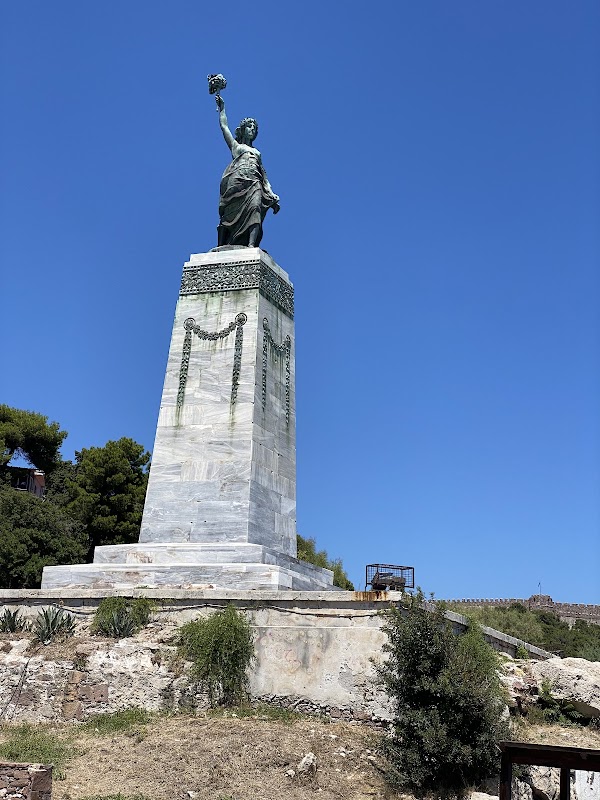
Bust of Ioannis Theofilopoulos
Προτομή Ιωάννη Θεοφιλόπουλου
Standing quietly in the countryside near the small village of Alyfada, the bust of Ioannis Theofilopoulos is one of those modest yet meaningful memorials that dot the rural landscape of Lesvos, honoring figures whose lives were intertwined with the island's communities. Such commemorative busts are a deeply rooted tradition in Greek village culture, erected to preserve the memory of individuals who played a role in local civic life, education, or the broader struggles that shaped the region. The placement of this memorial near Alyfada, a village in the quieter interior of the island, speaks to the local esteem in which Theofilopoulos was held by those who knew his legacy best. Visitors who make the short detour to this site will find themselves immersed in the unhurried atmosphere that defines this part of Lesvos, away from the busier coastal resorts. The memorial offers a moment for quiet reflection on the human history layered into even the smallest corners of the island. The surrounding landscape, typical of the olive-covered hills of the eastern Aegean, lends the site a timeless, contemplative quality that invites visitors to slow down and consider the lives of those who built the communities they are exploring. For travelers with an interest in Greek history and culture beyond the well-trodden sites, memorials like this one reward a curious spirit. They are reminders that Lesvos carries a deep and sometimes overlooked human story, shaped by generations of islanders whose contributions, however local, were significant enough to be cast in stone. Combining a visit here with an exploration of Alyfada itself makes for a rewarding off-the-beaten-path excursion into the authentic fabric of Lesbian village life.
Castle (39.1794, 26.4840)
Near the spa town of Loutrópoli Thermís on the eastern coast of Lesvos, this castle stands as a quiet testament to the island's layered history of occupation and defense. The Thermi area has been continuously inhabited since prehistoric times, and the coastline here has long held strategic value for whoever controlled the eastern Aegean. During the Byzantine period and later under the Genoese and Ottoman administrations that successively ruled Lesvos, small fortifications and watchtowers were constructed along this stretch of coast to monitor sea traffic and protect the fertile hinterland. The castle at Thermi reflects this tradition of coastal defense, its weathered masonry bearing witness to centuries of changing hands. Visitors arriving today will find a structure that rewards the historically curious, with remnants of thick stone walls adapted to the terrain. The setting along the northeastern coast offers sweeping views across the water toward the Turkish mainland, just a few kilometers distant, giving an immediate sense of why this location was so prized militarily and commercially. The proximity to Thermi's famous thermal springs suggests the area was doubly valued — for both its defensible position and its therapeutic waters, which drew visitors from antiquity onward. The castle pairs naturally with a visit to the thermal baths and the surrounding village of Loutrópoli Thermís, whose gracious old buildings and mineral-rich springs have drawn Lesvians and travelers alike for generations. Exploring this corner of the island offers a sense of time layered upon time — prehistoric settlement, Byzantine fortification, Ottoman administration, and the languid spa culture that persists to this day.
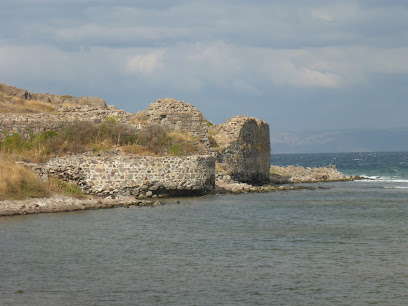
Castle Wall (39.2908, 26.0193)
Rising from the rugged terrain near Archaia Adissa, this ancient castle wall stands as a compelling remnant of the layered history that defines the interior of Lesvos. The island's strategic position in the northeastern Aegean made it a prize contested by successive powers across the centuries — ancient Greeks, Byzantines, the Genoese Gattilusio dynasty, and ultimately the Ottomans, who took Lesvos in 1462. Fortifications like this one were essential to controlling the island's hinterland, protecting villages and agricultural land from raids and invasion. The stonework reflects the enduring tradition of using locally quarried materials, with thick courses of masonry designed to withstand both assault and the passage of time. Today the wall survives as an evocative ruin set against the quiet landscape of the island's interior, where olive groves and rolling hills stretch toward the horizon. Visitors can trace the outline of what was once a substantial defensive structure, reading in its remaining courses the ambitions of whoever ordered its construction and the skill of the craftsmen who raised it. The setting rewards those who arrive on foot or by a slow drive through the surrounding countryside, as the wall reveals itself gradually amid the vegetation that has reclaimed much of the surrounding terrain. For travelers with an interest in the archaeology and medieval history of the Aegean, this site offers an unmediated encounter with the past far from the crowds of the coast. The nearby village of Archaia Adissa — its very name invoking ancient roots — adds context to the visit, and the wider landscape of this part of Lesvos remains little-touristed, lending the experience a quality of genuine discovery.
Castle of Agiasos
Κάστρο Αγιάσου
Perched on the forested slopes of Mount Olympos, the highest peak on Lesvos, the Castle of Agiasos bears witness to centuries of turbulent history on the island. The fortification is associated with the medieval period of Genoese rule, when the Gattilusio dynasty controlled Lesvos from the mid-fourteenth to the mid-fifteenth century and erected or reinforced defensive structures across the island to protect its prosperous communities. The castle formed the protective heart of what would become one of Lesvos's most distinctive inland settlements, its thick stone walls enclosing the core of the village and shielding its inhabitants from the raids and conflicts that periodically swept the eastern Aegean. Within the fortified enclosure stands the Church of the Panagia Agiasos, a deeply venerated shrine that draws pilgrims from across Greece. According to local tradition, the church houses a sacred icon of the Virgin Mary believed to date to the early Byzantine era, lending the site a spiritual gravity that has outlasted every political upheaval. Visitors who pass through the castle's arched gateway enter a remarkably preserved world of narrow cobblestone lanes, stone-built houses with wooden balconies, and traditional workshops where craftspeople still practice age-old trades. The walls and remnant towers that survive give a tangible sense of the settlement's original defensive character. Today Agiasos and its castle quarter form one of the most atmospheric corners of Lesvos, beloved by Greeks and foreign visitors alike for their authenticity. Walking through the fortified village, travelers encounter a living community rather than a museum piece, with kafeneions, pottery studios, and local eateries tucked beneath the old stonework. The surrounding chestnut and pine forests of Olympos complete the picture, making this a rewarding destination for anyone seeking the deeper, quieter soul of the island beyond the coastal resorts.
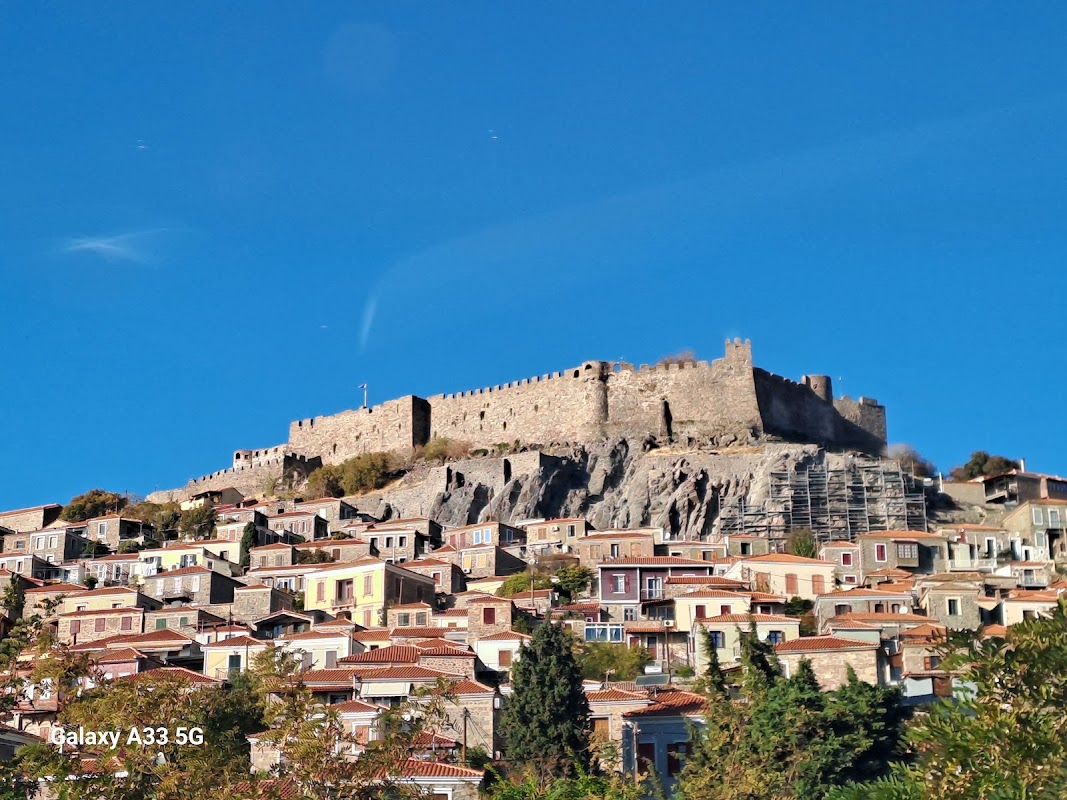
Castle of Mithymna
Κάστρο Μήθυμνας
Perched dramatically on a rocky promontory above the picturesque town of Molyvos, the Castle of Mithymna is one of the finest and best-preserved medieval fortresses in the Aegean. The site has been fortified since antiquity, as ancient Mithymna was a powerful rival city-state to Mytilene, but the castle standing today reflects successive layers of Byzantine construction, later reinforced and expanded during the Genoese occupation of Lesvos in the fourteenth and fifteenth centuries. Under the Genoese Gattilusio dynasty, the fortress was substantially rebuilt to its current form, with thick curtain walls, imposing towers, and a commanding keep designed to dominate both the town below and the sea approaches from Asia Minor. The castle's architecture speaks to centuries of contested sovereignty. Its walls incorporate recycled ancient masonry alongside medieval stonework, and the layout follows the natural contours of the hill to maximize its defensive potential. After the Ottoman conquest of Lesvos in 1462, the castle continued to serve a military function and underwent further modifications, leaving a layered architectural record that spans more than a thousand years. The fortress played a role in the broader story of Aegean power struggles, guarding one of the island's most strategic northern harbors just a short distance from the Turkish coast. Today visitors can walk the well-maintained ramparts and enjoy sweeping panoramic views that take in the terracotta rooftops of Molyvos, the Aegean stretching toward the horizon, and on clear days the mountains of the Turkish mainland across the strait. The interior grounds are used for cultural events and open-air performances during summer, giving the ancient stones a vivid new life. Approaching the castle through Molyvos itself is part of the experience, as the cobblestone lanes lined with stone houses and bougainvillea lead the eye upward to the fortress walls that have defined this skyline for centuries.
Chalandrokastro
Χαλαντρόκαστρο
Perched on a commanding hilltop near the village of Agra in the western reaches of Lesvos, Chalandrokastro is one of the island's lesser-known but evocative medieval fortifications. Like many castles scattered across Lesvos, it bears the layered imprint of centuries of Mediterranean power struggles, with its origins likely rooted in the Byzantine era and its walls subsequently shaped or reinforced during the period of Genoese dominion that held sway over the island from the mid-fourteenth century until the Ottoman conquest of 1462. This was a landscape of strategic importance, where hilltop strongholds controlled the movement of people and goods across the island's interior, and Chalandrokastro would have served as both a refuge and a watchtower over the surrounding valleys and coastline. Today, visitors who make the journey to Chalandrokastro are rewarded with the atmospheric ruins of thick stone walls and the remnants of towers that speak to the castle's former defensive purpose. The masonry, typical of Aegean medieval construction, blends local stone with the pragmatic engineering of an era when security meant elevation and solid walls. Wildflowers and herbs push through the ancient stonework in spring and summer, lending the ruins a romantic, half-reclaimed quality that photographers and history enthusiasts find irresistible. The elevated position also opens up sweeping views across the olive-covered hills and toward the Gulf of Kalloni, offering one of the more rewarding panoramas in this quieter part of the island. What makes Chalandrokastro particularly worthwhile is the journey itself and the sense of discovery it offers. Far from the well-trodden tourist circuit, the castle sits in a landscape that feels genuinely unhurried, surrounded by the agricultural rhythms of the Agra area and the ancient olive groves that have defined Lesvos for millennia. For travellers with a curiosity for medieval history and a willingness to venture off the main roads, Chalandrokastro delivers an authentic encounter with the island's layered past, away from the crowds and deeply embedded in the natural and human geography of Lesvos.
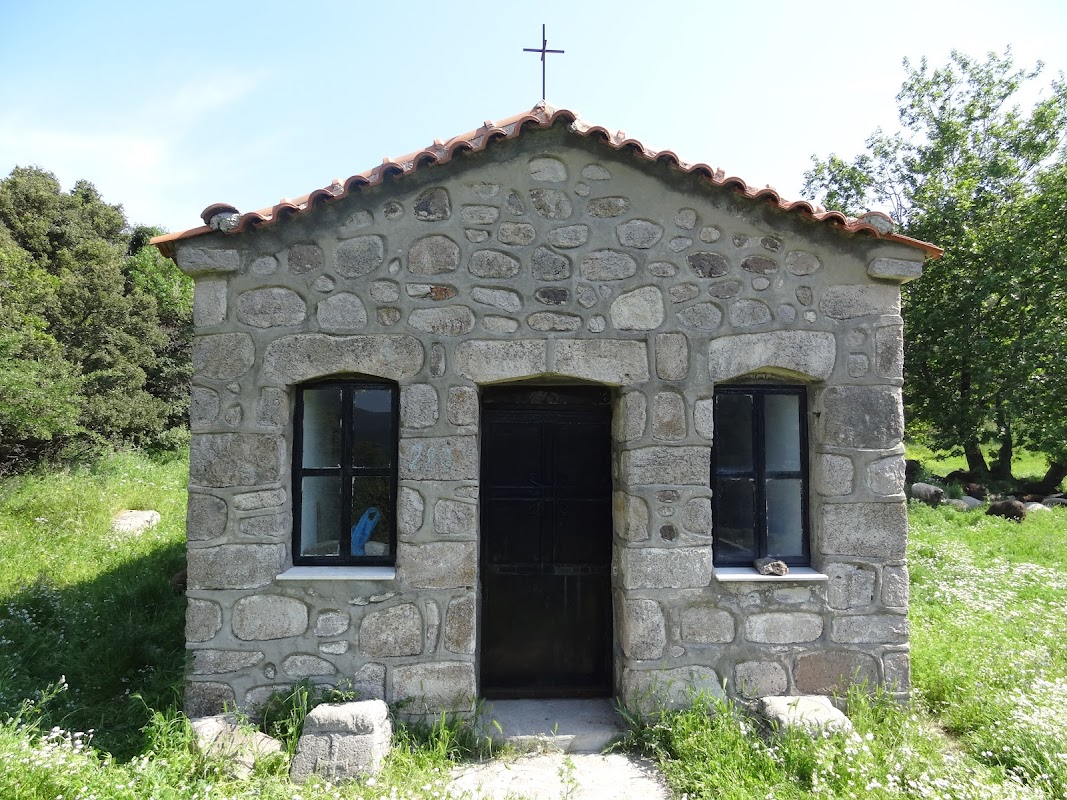
Chapel of Saint Alexander
Tucked into the quiet landscape near the village of Lafionas in northwestern Lesvos, the Chapel of Saint Alexander stands as a testament to the island's deep Byzantine and Ottoman-era Christian heritage. Like many of the small stone chapels scattered across Lesvos, it was built to serve the spiritual needs of a rural community that has long since dwindled, and today its ruined state speaks to centuries of abandonment, seismic activity, and the slow reclaiming work of the Aegean elements. Saint Alexander, venerated in the Eastern Orthodox tradition, lent his name to countless such modest sanctuaries across the Greek world, and this chapel likely served as a focal point for local feast day gatherings and the rhythms of agricultural life in its surrounding area. What greets visitors today are the characteristic remnants of a rubble-stone structure, its walls partially standing amid overgrown vegetation, with traces of the simple architectural vocabulary common to rural Aegean ecclesiastical buildings. The thick limestone masonry, the remnants of a modest apse oriented to the east, and fragments of worked stone suggest the care with which even isolated communities once built their places of worship. The setting itself is evocative, with the surrounding hills and the distant shimmer of the sea providing a backdrop that makes the ruin feel less like a site of loss and more like a quietly eloquent landscape feature. For travelers exploring the less-visited north of Lesvos, the chapel offers a rewarding detour for those drawn to vernacular religious architecture and the melancholic beauty of sacred ruins. It rewards a slow, contemplative visit rather than a quick stop, inviting reflection on the generations of islanders who once gathered here. Combined with a walk through Lafionas or a drive along the scenic northern coastal roads, it forms part of a broader tapestry of Lesvos that reaches well beyond the island's famous beaches and olive groves into its layered, quietly moving human history.
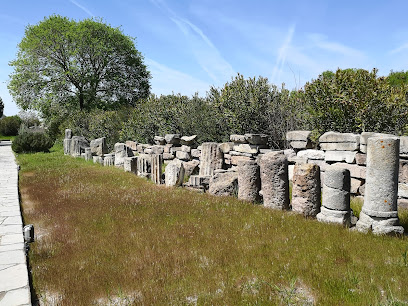
Christian basilica of Halinados
Nestled in the rolling landscape near the village of Mesa in western Lesvos, the ruins of the early Christian basilica of Halinados offer a quiet but profound glimpse into the island's Byzantine past. Like many such basilicas scattered across the Aegean, this structure likely dates to the Early Christian period, roughly the fourth to sixth centuries AD, when the spread of Christianity across the eastern Roman Empire prompted a surge of church construction throughout Greece and its islands. Lesvos, as a prosperous and well-connected island in the northeastern Aegean, was home to several such basilicas, and Halinados stands as one of the lesser-known but evocative remnants of that formative era. Visitors to the site can observe the characteristic footprint of an early Christian basilica: a longitudinal plan typically divided into nave and side aisles, with the eastern end oriented toward an apse. Fragments of architectural stonework, column drums, and carved marble elements scattered across the site speak to what would once have been a substantial and carefully crafted place of worship. The quality of such details in comparable Aegean basilicas suggests these were not modest rural chapels but meaningful centers of community and liturgical life. The landscape surrounding the ruins, with its dry stone walls and views across the western Lesvos hills, adds a contemplative stillness to the experience. For those with an interest in early Christian archaeology or Byzantine history, Halinados rewards a detour from the nearby village of Mesa. The site sits within a broader archaeological fabric on Lesvos that includes ancient Antissa and other historic settlements, making the western part of the island particularly rich for heritage exploration. Bring sturdy footwear and a sense of curiosity — much of what makes this place compelling lies in reading the stones and imagining the community that once gathered here, on this sun-warmed hillside, at the edge of the ancient world.
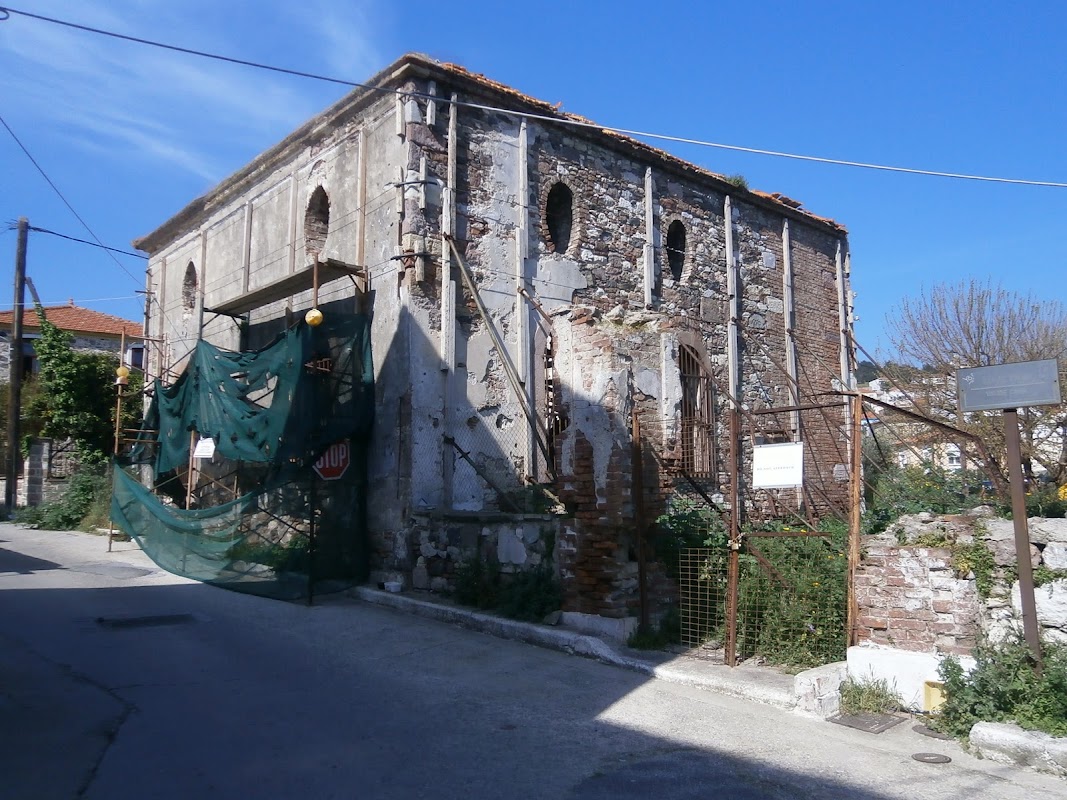
City wall
Παράκτιο τοίχος
The remnants of this ancient city wall stand as a quiet testament to the long human history embedded in the Lesbian landscape near Alyfada. Constructed most likely during the classical or Hellenistic period, when the island's city-states invested heavily in defensive fortifications to protect their territories and trade routes, the wall would have formed part of the perimeter of a now largely forgotten settlement. Lesvos was home to several thriving poleis beyond the famous centers of Mytilini and Methymna, and the scattered ruins found across the island's countryside hint at a denser, more complex network of ancient communities than history books often record. What remains today are the characteristic courses of local stone masonry that typify ancient Aegean construction, where large roughly-hewn blocks were laid without mortar yet with a precision that has allowed sections to endure for millennia. Depending on the season, the ruins emerge dramatically from the dry scrub and wild herbs that carpet this part of the island, offering a striking visual contrast between the ancient stonework and the surrounding olive groves and hillside vegetation. The setting itself rewards a slow walk along the perimeter, where the logic of the original builders becomes clear as the wall follows the natural contours of the terrain to maximize defensive advantage. For visitors, this site offers something increasingly rare in heavily touristed Greece: an unmediated encounter with antiquity in an unhurried, uncrowded setting. There are no ticket booths or guided tours, just the stones themselves and the open sky of the northern Aegean. Coming here alongside a broader exploration of Lesvos's lesser-known archaeological heritage gives a richer sense of how thoroughly this island was inhabited and contested across the ancient world, long before it became celebrated for its poets, philosophers, and the olive oil that still flows from its groves today.
Citywalls (39.1125, 26.5648)
Scattered across a hillside near the quiet village of Alyfada in northern Lesvos, these ancient citywalls are the remnants of a fortified settlement that once commanded a strategic vantage over the surrounding landscape. The masonry, composed of large dressed stone blocks fitted in the ancient Greek tradition, speaks to a settlement of some importance during the classical or Hellenistic period, when the island was home to numerous small city-states and fortified communities. Northern Lesvos was densely inhabited in antiquity, and traces of walls, towers, and terracing like these are evidence of a long-vanished urban life that shaped the island's history long before the Byzantine and Ottoman periods that followed. Visitors who make the effort to reach this site are rewarded with more than archaeology. The walls themselves, though partially collapsed and reclaimed by scrub oak and wild herbs, retain an impressive scale in places, with courses of stone still rising to head height. The setting amplifies the experience: the rolling hills of the northern interior stretch away in every direction, and the silence is broken only by birdsong and the occasional distant bell of a grazing flock. It takes little imagination to picture the community that once sheltered here, looking out over the same ridgelines and olive groves. For those with an interest in Lesvos beyond its beaches, sites like this offer a rare and unhurried encounter with the island's deep past. There are no fences, no entrance fees, and no crowds — only the stones themselves and the landscape they have always belonged to. A good pair of walking shoes and a spirit of quiet curiosity are all that is needed to spend a genuinely rewarding hour among the ruins.

Citywalls (39.1130, 26.5618)
The weathered stone fortifications near Alyfada stand as one of the quieter archaeological treasures of western Lesvos, tracing the outline of an ancient settlement that once commanded this stretch of the island's interior. Like much of Lesvos, this region was inhabited continuously across millennia, and the layered stonework visible here reflects the island's long passage through Greek, Hellenistic, Byzantine, and later Genoese periods of rule. The walls, built from the local dark volcanic and limestone material characteristic of the island, would have served both defensive and civic purposes, defining the boundary of a community that looked out over the surrounding hills and valleys toward the Aegean. Walking among the remains today, visitors can trace the course of the fortification line through the landscape, where sections of cut masonry still rise above the scrub and wild herbs. The site rewards those who arrive with patience and curiosity: there are no crowds here, no interpretive panels or cafes, only the wind moving through the olive groves and the occasional distant bleating of goats. The survival of these walls, even in fragmentary form, offers a tangible sense of how densely settled and strategically organised Lesvos once was, with fortified settlements distributed across the island rather than concentrated solely along the coast. For visitors exploring the western reaches of Lesvos beyond the more frequented attractions of Sigri or Eresos, this site provides a compelling reason to slow down and read the land itself. Combine a visit with the surrounding countryside, the fossilised forest nearby, and the traditional village life of Alyfada to build a full picture of a part of Lesvos that remains genuinely off the beaten track. Come in the morning or late afternoon when the light catches the stonework at an angle that reveals the craft and intention still embedded in these ancient courses of masonry.
Citywalls (39.1131, 26.5615)
The ancient citywalls near Alyfada stand as enduring evidence of Lesvos's long history of settlement and the strategic importance placed on defending its communities. Like many of the island's fortifications, these walls reflect the successive waves of civilization that shaped Lesvos over millennia — from the ancient Greek city-states that flourished here in antiquity, through the Byzantine era, and into the periods of Genoese and Ottoman rule that left their own marks on the island's built heritage. Stone courses, some still standing to considerable height, reveal construction techniques adapted to the local volcanic and sedimentary materials, creating structures that have endured centuries of weather and seismic activity. Walking along the remnants of these walls, visitors gain a tangible sense of the layered human geography of Lesvos. The defensive perimeter would once have enclosed a community whose inhabitants farmed the surrounding valleys and worked the sea, relying on these fortifications for protection during times of conflict. The craftsmanship visible in the surviving stonework speaks to organized civic life and the resources communities were willing to invest in collective security. Views from the elevated sections of the walls extend across the surrounding landscape, making immediately clear why this position was chosen — commanding sightlines that would have given defenders early warning of approaching threats. For visitors with an interest in archaeology and ancient urbanism, the citywalls near Alyfada offer a quieter and less-visited counterpart to Lesvos's more famous fortified sites. Away from the crowds, the ruins sit in a landscape of olive groves and scrubland, encouraging a contemplative exploration of the stones and the stories embedded in them. Combining a visit here with a walk through the surrounding countryside reveals the agricultural and pastoral setting that sustained these ancient communities, connecting the physical remains of their defenses to the broader rhythms of island life they were built to protect.
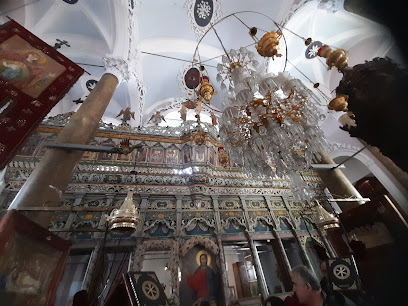
Citywalls (39.3683, 26.1770)
Draped across the hillside above the cobbled lanes of Molyvos, the ancient citywalls stand as one of the most evocative remnants of medieval life on Lesvos. These fortifications form part of the broader defensive system that once protected the town, known in antiquity as Mithymna, and they reflect the layered history of an island that passed through Byzantine, Genoese, and Ottoman hands across the centuries. The walls were reinforced and expanded during the Genoese period, when the Gattilusio dynasty held Lesvos as a strategic outpost in the northeastern Aegean, and the sturdy stonework visible today speaks to both the military ambitions and the architectural craftsmanship of that era. Walking along or below the surviving stretches of wall, visitors gain a vivid sense of how the town was once organised around its own defence. The fortifications trace the natural contours of the terrain, rising steeply in places and blending into the volcanic rock beneath, making it genuinely difficult to tell where the hillside ends and the human hand begins. Towers, archways, and sections of curtain wall punctuate the circuit, offering photographers a wealth of textured stone framed by the terracotta rooftops of the village below and the deep blue of the Aegean beyond. The citywalls are best explored on foot, winding up through the narrow streets of Molyvos from the lower town toward the great castle that crowns the hill. The entire fortified ensemble, walls and castle together, is a designated monument and one of the finest examples of medieval military architecture in the northern Aegean. Even for visitors with little interest in history, the panoramic views from beside the walls across the Gulf of Kalloni and toward the Turkish coast on clear days make the climb entirely worthwhile.
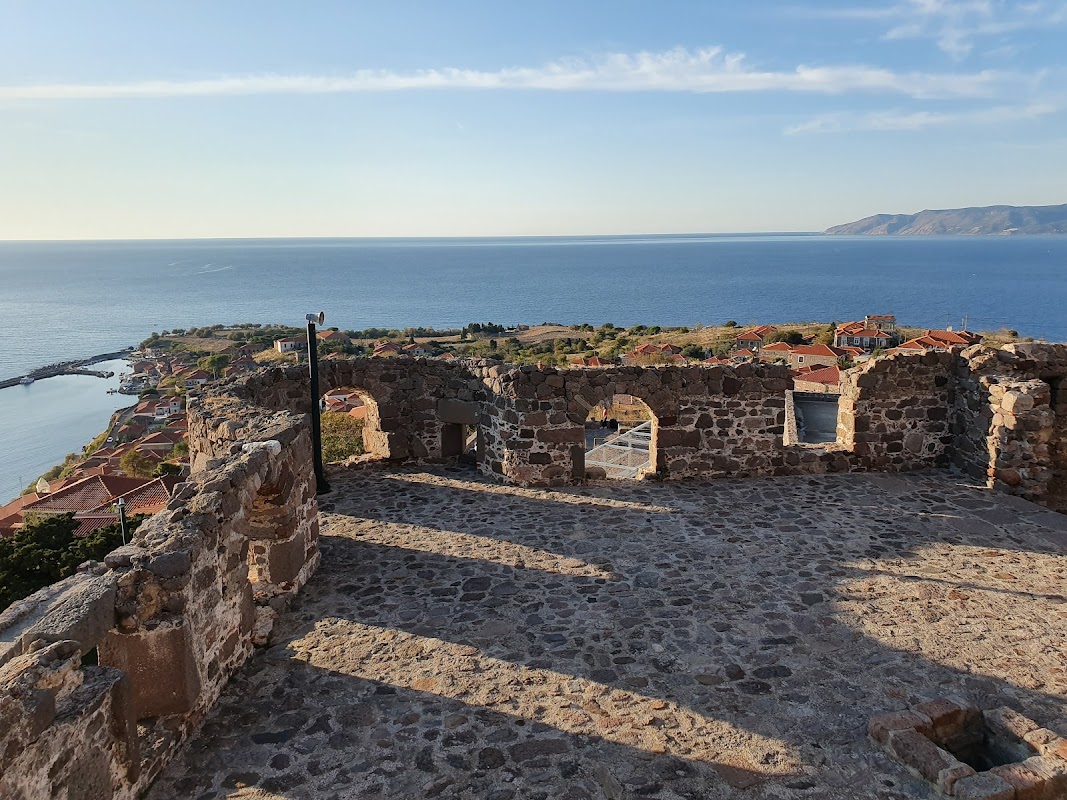
Citywalls (39.3683, 26.1773)
Perched above the cobbled lanes of Molyvos, the ancient city walls trace the contours of one of the most dramatically sited medieval settlements in the Aegean. The fortifications form part of the broader defensive network anchored by the hilltop kastro, a complex with roots in the Byzantine era that was substantially expanded and reinforced during the Genoese Gattilusio period, when the powerful Genoese family held dominion over Lesvos from the mid-fourteenth century until the Ottoman conquest in 1462. Built from local volcanic stone in the characteristic manner of Aegean medieval construction, the walls descend the hillside in irregular courses, punctuated by towers and gate passages that once controlled access to the town below, protecting its inhabitants from the ever-present threat of piracy and rival powers. What visitors encounter today is a layered palimpsest of different building periods, where Byzantine masonry sits alongside Genoese additions and later Ottoman repairs. Walking the perimeter of the walls reveals not only the sheer scale of the medieval ambition behind their construction, but also breathtaking panoramas over the terracotta rooftops of Molyvos, the deep blue of the Aegean, and on clear days the faint outline of the Turkish coast to the east. The walls integrate seamlessly with the narrow lanes of the old town, so that in places it is difficult to tell where domestic architecture ends and the fortification begins — a testament to how completely life in medieval Molyvos was shaped by the imperatives of defense. For visitors, the city walls are best explored on foot in the early morning or late afternoon, when the low light catches the honey-colored stone and the tourist crowds thin. The walls connect naturally to a visit to the castle itself, which is open to the public and hosts open-air performances during summer. Together they form one of the finest surviving examples of medieval military architecture in the northeastern Aegean, and a compelling reason why Molyvos has been designated a preserved traditional settlement by the Greek state.
Citywalls (39.3685, 26.1778)
The ancient town of Molyvos, known in antiquity as Mithymna, has been fortified since classical Greek times, and the imposing circuit of citywalls that still embraces the hilltop settlement reflects centuries of layered defenses built upon those early foundations. The walls visible today are largely of Byzantine construction, later reinforced and modified during the Genoese period of rule over Lesvos in the fourteenth and fifteenth centuries. Built from the dark volcanic and locally quarried stone so characteristic of northern Lesvos, they follow the contours of the dramatic promontory on which Molyvos stands, creating a formidable barrier that once protected the town's inhabitants from pirate raids and rival powers competing for dominance in the eastern Aegean. The Gattelusi dynasty, the Genoese lords who held Lesvos during this era, left a distinctive architectural imprint here as they did across the island. Walking along the surviving sections of the citywalls today, visitors gain an immediate sense of how strategically conceived the fortifications were. The walls descend from the castle keep at the summit in broad sweeping lines, enclosing the tightly packed lanes of the medieval town below. Towers punctuate the circuit at intervals, offering commanding views over the terracotta rooftops and down to the harbor and the shimmering sea beyond. Several original gates and arched entranceways remain intact, still serving as the thresholds through which pedestrians pass into the older quarters of the town. The masonry retains much of its weathered integrity, and in places you can trace the repairs and rebuilding phases that different occupiers undertook over the generations. Beyond their architectural interest, the citywalls of Molyvos are inseparable from the town's extraordinary atmosphere. They form a living backdrop to daily life, draped in wild capers and grasses that root in every crevice, glowing warm amber in the late afternoon light. For visitors, simply wandering along the perimeter path or climbing to the castle to look back down over the walled town and out across the sea toward the Turkish coast is one of the most memorable experiences the northern Lesvos coastline offers. The walls serve as a reminder that Molyvos has been a place worth defending and returning to for millennia.
Commercial stoa of the Hellenistic Period in Epano Skala
Εμπορική στοά Ελληνιστικών χρόνων στην Επάνω Σκάλα
The Commercial Stoa of Epano Skala is a significant archaeological remnant of Hellenistic Lesvos, dating to the period following Alexander the Great's campaigns when Greek culture and commerce flourished across the Aegean world. Stoai — long, colonnaded halls that served as covered marketplaces and gathering spaces — were a defining feature of prosperous Hellenistic cities, and their presence on Lesvos speaks to the island's active participation in the broader Mediterranean trading networks of the era. This structure, situated in the area of Epano Skala near the village of Alyfada, would have functioned as a hub of economic life, sheltering merchants, goods, and citizens from the elements while facilitating the exchange that sustained coastal communities. The site preserves evidence of the architectural sophistication characteristic of Hellenistic commercial architecture, offering a rare glimpse into how the island's ancient inhabitants organized their public and mercantile spaces. Visitors to the site today can observe the structural remains and appreciate how this colonnaded passage once animated the rhythm of daily life in antiquity. The coastal setting near Alyfada adds an evocative dimension — the proximity to the sea serving as a reminder of how intimately tied commerce was to maritime activity in the ancient Aegean. For those interested in classical archaeology and the layered history of Lesvos, this stoa stands as a quiet but compelling testament to the island's deep roots in the Hellenistic world.
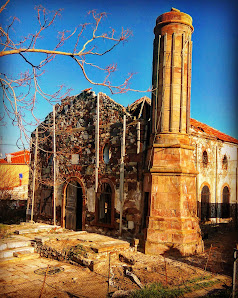
Doric colonnade
Δωρική στοά
Scattered across a quiet hillside near the small settlement of Alyfada, the remnants of a Doric colonnade offer a compelling glimpse into the ancient world that once flourished across Lesvos. Doric architecture, the oldest and most austere of the three classical Greek orders, is characterized by sturdy fluted columns rising directly from the stylobate without a base, topped by simple, unadorned capitals. The presence of such a structure in this corner of the island speaks to the density of organized civic and religious life that existed here during antiquity, when Lesvos was a prosperous crossroads of Aegean culture, trade, and philosophical thought. Visitors who make the effort to seek out this site will find column drums and architectural fragments resting in the landscape, worn smooth by centuries of wind and rain. The natural setting amplifies the sense of time passing — wild vegetation has gradually reclaimed what was once a place of formal, deliberate human construction. Though much has been lost to the centuries, the sheer scale and quality of the stonework that remains hints at a building of some ambition, likely associated with a sanctuary or public gathering space serving an ancient community in this part of the island. For those drawn to the quieter, less-visited corners of Lesvos, this site rewards contemplation. It sits far from the tourist trails, offering a genuinely solitary encounter with the ancient past in an unspoiled rural landscape. Bring sturdy footwear and take time to absorb the surroundings — the rolling terrain, the distant shimmer of the Aegean, and the silence broken only by birdsong all combine to make a visit here feel like a small but memorable discovery.
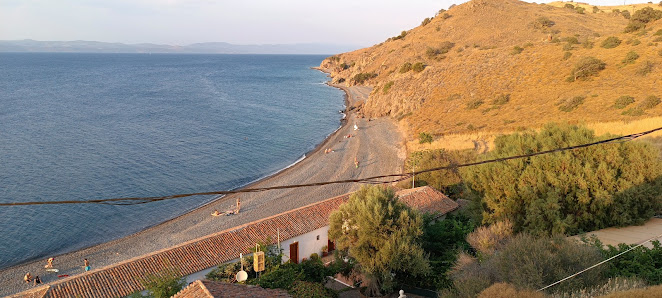
Eftalou
Eftalou is a tranquil coastal hamlet perched on the northern shore of Lesvos, a short drive from the medieval hilltop town of Molyvos. The area has drawn visitors for centuries, most notably for its natural thermal springs that bubble up along the shoreline and flow directly into the sea. The centrepiece of the site is an old domed bathhouse, a compact stone structure of Ottoman heritage that sits almost at the water's edge, its worn walls and arched roof a quietly evocative reminder of the island's layered past under Byzantine and later Ottoman rule. The bathhouse pools, fed by geothermal waters, have long served both locals and travellers seeking the reputed therapeutic benefits of the mineral-rich springs. Even today visitors can bathe in the warm indoor pools, or simply wade in the shallower thermal outflows where hot and cool seawater mingle along the rocky shore. The setting — sea on one side, rolling olive-covered hills on the other — makes Eftalou an especially rewarding stop for photographers. The interplay of the weathered stone building against the Aegean light, particularly in early morning or at dusk, lends the scene a timeless, painterly quality that captures something essential about the north Aegean. Beyond the baths, the surrounding coastline offers a pebbly beach with clear water and a handful of small tavernas. The relative quiet of Eftalou compared to busier resort areas makes it a favourite with visitors who want to experience a more unhurried side of Lesvos, where history, landscape, and the simple pleasure of warm water meet in one place.
Elaiotrivio
Ελαιοτριβίο
Scattered across the olive-covered hills near Kournela, the ruins of this traditional elaiotrivio — an olive press — stand as a quiet testament to the agricultural heritage that has shaped Lesvos for centuries. Olive cultivation has been the economic and cultural backbone of the island since antiquity, and by the Ottoman period the landscape was dense with stone pressing facilities where communities would gather each autumn to transform the harvest into oil. These structures were not merely functional buildings but the beating heart of village economies, determining livelihoods and connecting families across generations to the same groves their ancestors had tended. The remains reveal the characteristic stone construction typical of Aegean vernacular architecture, with thick walls built to withstand the weight of heavy pressing machinery and the passage of time. Visitors can discern the outlines of the press floor and storage areas, where ceramic vessels once held the prized golden oil before it was traded across the Aegean and beyond. The craftsmanship embedded in even these ruined walls reflects the prosperity that olive oil once brought to this part of the island, a prosperity that drew skilled stonemasons and sustained entire communities through the nineteenth and into the twentieth century. Today the site offers a contemplative stop for those exploring the quieter interior of Lesvos on foot or by vehicle. The surrounding landscape of ancient, gnarled olive trees — many of them centuries old — gives powerful context to the ruins, allowing visitors to imagine the rhythms of harvest season that once animated this place. Coming here alongside a visit to Kournela village and the broader network of rural paths in the area provides a grounded sense of how deeply olive culture is woven into the identity of Lesvos, long before the island became known to the wider world for its natural beauty.
Elevtheros Venizelos
Ελεύθερος Βενιζελος
Standing near the heart of Kalloni, the memorial to Eleftherios Venizelos pays tribute to one of modern Greece's most consequential statesmen. Born in Crete in 1864, Venizelos rose to become a towering figure in Greek politics during the early twentieth century, serving multiple terms as prime minister and steering Greece through a period of profound territorial transformation. It was under his leadership that Lesvos, along with much of the Aegean, was liberated from Ottoman rule and united with the Greek state in 1912 following the First Balkan War — a moment of immense emotional and historical weight for the island's people. The memorial stands as a reminder of that turning point, honoring the man whose diplomacy and determination reshaped the map of the eastern Aegean. The site invites visitors to pause and reflect on the broader sweep of Aegean history. Venizelos was celebrated not only as a military and political strategist but as a champion of the Greek-speaking communities scattered across the Ottoman world, and Lesvos, with its deep intellectual and mercantile traditions, held a particular place in that vision. The landscape around Kalloni — the wide lagoon, the olive groves, the unhurried rhythm of provincial life — provides a quietly evocative backdrop to a memorial of this kind, connecting the abstract weight of history to the living texture of the island. Visitors today will find a modest but dignified monument that draws locals and history-minded travelers alike. It serves as a natural stopping point for anyone tracing the arc of modern Greek history through the Aegean, and pairs well with a visit to Kalloni's central square, its nearby salt flats, and the string of traditional kafeneions where conversation about the past flows as freely as the local ouzo.
Ellinistiki Stoa Kai Epithalassio Teichos
Ελληνιστική Στοά και Επιθαλάσσιο Τείχος
On the northeastern shores of Lesvos, near the quiet coastal settlement of Alyfada, lie the remains of one of the island's most evocative Hellenistic-era monuments: a stoa and its accompanying maritime wall. Dating to the Hellenistic period — roughly the three centuries following the campaigns of Alexander the Great — these ruins speak to a time when the Aegean coastline was shaped not only by commerce and fishing, but by the political ambitions and civic pride of competing city-states. The stoa, a colonnaded portico that served as a public gathering place for merchants, officials, and ordinary citizens, was among the defining architectural forms of the era, and its presence here hints at a once-active coastal community that remains only partially understood by archaeologists. The epithalassio teichos, or maritime wall, ran along the water's edge and would have served both a defensive and a civic function — protecting the shoreline settlement from seaborne threats while also defining the formal boundary between land and sea. Stone courses still trace the original line of the fortification, and in places the scale of the masonry gives a tangible sense of the engineering ambition behind such structures. The proximity of the stoa to this wall suggests a well-organized harbor precinct where public life and maritime activity intersected. For visitors today, the site offers a contemplative encounter with antiquity in a setting of raw natural beauty. The ruins sit close to the sea, with views across the water toward the Turkish coast, providing the kind of geographic context that makes ancient Mediterranean history feel immediate. Those who come prepared — with sturdy shoes and some patience for uneven ground — will find the remains quietly compelling, a reminder that Lesvos was never a peripheral island but a place of genuine cultural and strategic significance across the centuries.
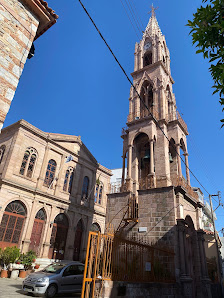
Epigraph (39.1082, 26.5581)
Near the quiet hillside village of Alyfada in northern Lesvos, an ancient stone epigraph stands as one of the island's more intimate connections to its classical past. Inscribed stonework of this kind — whether funerary, votive, or civic in nature — was a common medium of public expression throughout the ancient Greek world, and Lesvos, with its flourishing city-states and long tradition of poetry and philosophy, produced a notable body of such inscriptions. This example, set in the gently undulating landscape between the island's interior and its northern coastline, likely dates to the Hellenistic or Roman period, when the practice of commemorating individuals and recording dedications in stone reached its widest reach across the Aegean. Epigraphs like this one offer a rare unmediated voice from antiquity. Where temples and public buildings have crumbled and been repurposed, a carved inscription endures as a direct act of communication — a name, a dedication, a grief — preserved in the very stone the ancient mason shaped. In the broader context of Lesvos, such monuments contribute to the epigraphic record that historians and archaeologists use to reconstruct daily life, religious practice, and social organization on the island across the centuries. Visitors who make the effort to find this site will encounter it in a characteristically Lesbian rural setting: terraced land, old stone walls, and the unhurried pace of the surrounding countryside. The inscription itself rewards close inspection, and even those who cannot read ancient Greek will feel the weight of the centuries embedded in the weathered letters. It is the kind of discovery that rewards the curious traveler willing to step off the main road and into the deeper, quieter history of the island.
Epigraph (39.3681, 26.1768)
Carved into stone in the ancient tradition of public communication, this epigraph near Molyvos stands as a direct voice from Lesvos's layered past. The area surrounding Molyvos — known in antiquity as Methymna, one of the island's most powerful city-states — was a hub of civic and cultural life for centuries, and inscriptions like this one were the notice boards and monuments of their era. Whether commemorating a decree, honoring a benefactor, marking a boundary, or recording a dedication to the gods, ancient epigraphs reveal the administrative and religious texture of daily life in ways that no later account can fully replicate. Standing before a surviving inscription is one of the more quietly moving experiences classical Lesvos offers. The stone-cut letters, shaped by a mason's chisel perhaps two millennia ago, connect the modern visitor to the hands and intentions of people who inhabited the same hills and coastlines. The script itself — typically an ancient Greek dialect — carries the regional character of Aeolian Lesvos, whose literary tradition produced poets of enduring fame. Even without reading ancient Greek, the physical presence of the inscription, its weathering and patina, communicates the depth of time compressed into this hillside. Visitors to this site will find it most rewarding as part of a broader exploration of Molyvos and its surroundings, where medieval castle walls, Byzantine churches, and Hellenistic traces occupy the same dramatic landscape above the Aegean. The epigraph rewards those who pause and look closely — bring a good eye and, if possible, a reference to ancient Lesbian epigraphy to help decode what the stone has preserved.
Epimelitirio
ΕΠΙΜΕΛΗΤΗΡΙΟ
Standing near the quiet village of Alyfada in eastern Lesvos, the Epimelitirio is a historic structure that speaks to the island's layered administrative and commercial past. The term itself — denoting a chamber or bureau of oversight — points to a building that once served an organizational or regulatory function, likely during the late Ottoman period or the early decades of Greek administration following Lesvos's liberation in 1912. Eastern Lesvos was long shaped by the rhythms of olive cultivation and maritime trade, and buildings of this civic character formed the institutional backbone of rural communities, coordinating local economic life in an era before centralized modern governance reached every corner of the island. The monument sits in a landscape typical of this part of Lesvos — gently rolling terrain dotted with olive groves, with the Gulf of Gera not far to the south. Architecturally, structures of this type on Lesvos often reflect the hybrid Ottoman-Aegean vernacular common to the late nineteenth and early twentieth centuries, blending locally quarried stone construction with details drawn from the broader eastern Mediterranean building tradition. The solidity of such buildings was itself a statement of institutional permanence in communities that took their civic identity seriously. Visitors who make the short detour to Alyfada will find a corner of Lesvos largely untouched by mass tourism, where this modest monument anchors a sense of local continuity. It rewards those with a curiosity about the everyday architecture of governance — the unsung buildings that structured island life long before the grand mansions of Mytilini drew the attention of historians. Combined with the surrounding agricultural landscape, the Epimelitirio offers a quietly evocative glimpse into the working history of rural eastern Lesvos.
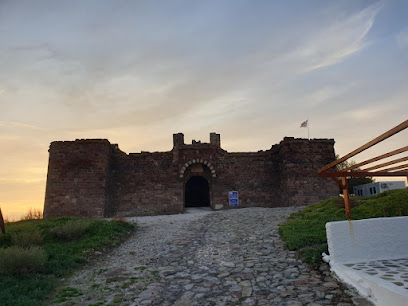
Fort (39.2042, 25.8525)
Standing sentinel over the natural harbour of Sigri, the Ottoman castle is one of the best-preserved fortifications on Lesvos and a defining landmark of this remote western village. Built in the eighteenth century to guard the sheltered bay against piracy and rival naval powers, the compact square tower reflects the strategic importance the Ottomans placed on controlling the island's coastline. Its thick stone walls, crenellated battlements, and corner bastions speak to a period when the Aegean was a contested sea and coastal communities depended on such strongholds for their survival. Visitors today can admire the fort from the small harbour front, where it rises dramatically above the fishing boats and clear turquoise water. The exterior stonework, darkened by centuries of sea air and salt spray, contrasts beautifully with the bright Aegean light, making it one of the most photographed spots in western Lesvos. The setting rewards those who take time to walk around the perimeter and appreciate the care with which the structure was positioned to command both the bay entrance and the approaches from the open sea. Sigri itself is one of Lesvos's quietest and most unspoiled destinations, and the castle anchors the village's identity as a place with deep historical roots. Combining a visit to the fort with a stop at the nearby Natural History Museum of the Lesvos Petrified Forest gives a satisfying sense of the long span of time this corner of the island has witnessed, from prehistoric volcanic landscapes to medieval maritime power struggles. For travellers seeking authenticity away from the busier resort towns, the fort at Sigri offers history, beauty, and genuine solitude in equal measure.
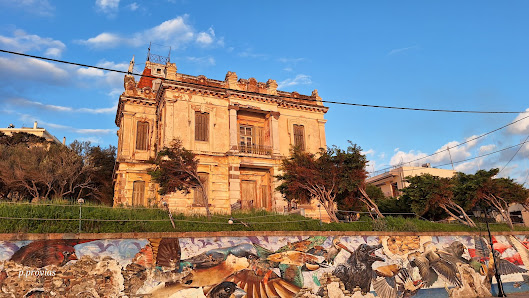
Georgiadis Mansion
The Georgiadis Mansion stands as a testament to the prosperous mercantile era that shaped Mytilene and the broader landscape of Lesvos during the late nineteenth and early twentieth centuries. Like many of the grand archontika that still grace the island, it reflects the ambitions of the merchant class that flourished here — families who built their fortunes through the olive oil trade, ouzo production, and commerce with Anatolia and the wider Mediterranean. The mansion's architecture draws on the eclectic style popular among wealthy Greek families of the Ottoman period, blending neoclassical elements with local building traditions to create a structure that speaks to both European influence and Aegean character. Visitors to the mansion can appreciate the craftsmanship that defined upper-class domestic architecture on Lesvos: ornate facades, tall windows designed to capture sea breezes, and the careful proportions that gave these homes their commanding presence within the townscape. Heritage buildings of this type often feature painted ceilings, decorative ironwork, and interior woodwork that reflects the skill of craftsmen active during the island's economic peak before the upheavals of the early twentieth century. The mansion occupies a place in the cultural memory of Lesvos as a physical remnant of a sophisticated urban society that once connected this island to the great trading networks of the eastern Mediterranean. For anyone exploring Mytilene's architectural heritage, it offers a tangible link to a layered past — a reminder that behind the island's natural beauty lies a long history of human ambition, creativity, and resilience.
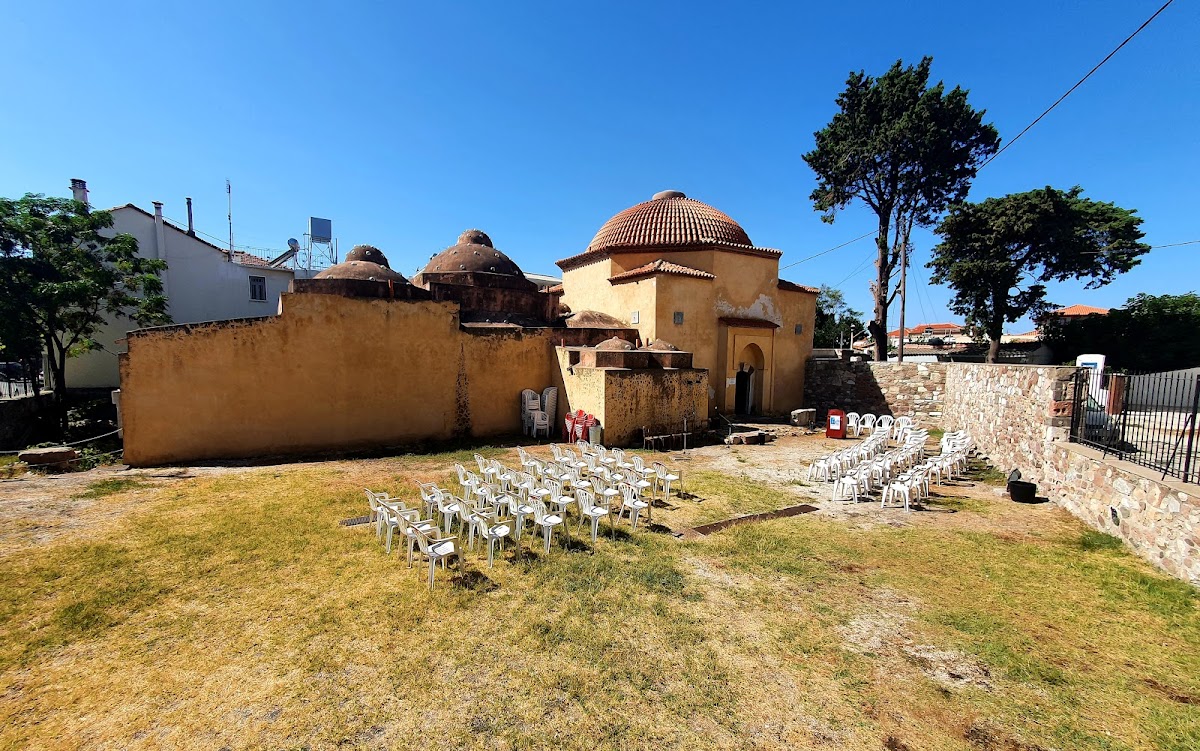
Giali Tzami
Γιαλί Τζαμί
Standing near the quiet village of Alyfada, Giali Tzami is a remnant of the centuries-long Ottoman presence on Lesvos, which lasted from the island's conquest in the fifteenth century until its incorporation into the Greek state in 1912. Like many of the mosques that once dotted the Aegean coast, this structure reflects the layered history of an island that passed through Byzantine, Genoese, and Ottoman hands before becoming part of modern Greece. Its name — combining the Turkish word for mosque with a local toponym — hints at the hybrid linguistic memory still embedded in Lesvos's landscape, where Greek and Ottoman place names coexist as quiet testimony to four and a half centuries of shared, if complex, history. The monument retains the characteristic forms of modest provincial Ottoman religious architecture: a compact stone body, the remnant outline of a dome or vaulted roof, and masonry that has weathered the salt air of the northeastern Aegean over many generations. Though no longer in active use, the structure commands attention as a rare surviving example of the island's non-Christian heritage. The surrounding area, typical of the rolling, olive-grove-threaded countryside near Alyfada, lends the site a certain solitude that rewards visitors who seek it out. For travelers interested in the deeper historical currents of Lesvos, Giali Tzami offers a moment of reflection on the multicultural layers beneath the island's contemporary Greek identity. It stands not as a curiosity but as a genuine architectural document — evidence that this corner of the Aegean was once a crossroads of civilizations whose traces are still legible in stone.
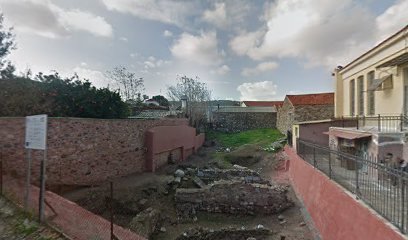
Hellenistic and roman building
Ελληνιστικό και ρωμαϊκό κτίριο
Tucked into the quiet countryside near the village of Alyfada, these ancient remains bear witness to centuries of continuous habitation on Lesvos, spanning the Hellenistic and Roman periods. Following Alexander the Great's campaigns in the fourth century BCE, the Aegean islands experienced a wave of urban development and cultural exchange, and Lesvos — already celebrated as the birthplace of poets and philosophers — thrived as a prosperous node in the wider Greek world. The transition into Roman rule brought further prosperity rather than decline, and sites like this one reflect how local communities adapted and built upon existing traditions under successive empires. The structural remains visible here reveal the characteristic building methods of both eras: carefully dressed stone foundations from the Hellenistic phase give way to Roman-period modifications that reflect changing architectural tastes and engineering techniques. Elements such as worked masonry blocks, floor bedding layers, and the outlines of walls hint at a building of some civic or domestic importance, set within what would have been a productive agricultural landscape. The site's location inland from the eastern coast suggests it served the rural hinterland, possibly as part of a larger estate or local administrative complex connected to one of the island's ancient settlements. Today, visitors who seek out this site are rewarded with a serene and largely undisturbed encounter with Lesvos's deep past. The surrounding landscape of olive groves and low hillsides has changed little in character since antiquity, lending the ruins an atmosphere of quiet continuity. While the site does not offer the scale of the ancient theatre at Mytilene or the excavated city of Antissa, it represents exactly the kind of understated archaeology that makes exploring Lesvos beyond its well-known landmarks so rewarding — a reminder that the island's long history is written not just in monuments, but in every field and hillside.
Ilias Kazakos
Ηλίας Καζάκος
Tucked into the quiet countryside near the village of Alyfada, the memorial of Ilias Kazakos stands as a modest but meaningful tribute in the rural landscape of central Lesvos. Like many such memorials scattered across the island, it marks a site of personal or collective significance, honoring an individual whose memory the local community has chosen to preserve in stone and place. The surrounding terrain is characteristic of this part of Lesvos — olive groves, dry hillside scrub, and the kind of unhurried rural atmosphere that has defined life here for generations. Memorials of this kind on Lesvos frequently commemorate figures connected to the island's turbulent modern history, which includes the upheavals of the Balkan Wars, the Asia Minor catastrophe of the early twentieth century, and the hardships of the Second World War and the Greek Civil War. Whether Ilias Kazakos was a local fighter, a victim of historical violence, or a figure of community importance, the site reflects the deeply rooted Greek tradition of honoring the dead in the landscape where they lived or fell. Visitors who seek it out will find a place of quiet reflection, set against the natural beauty of the Lesvos countryside near Alyfada.
Kakaro
Κάκαρο
Perched in the verdant hills above Stypsi, the boundary stone known as Kakaro stands as one of Lesvos's quiet witnesses to the long human effort of ordering the land. Boundary markers like this one were fundamental to rural life across the Aegean for centuries, used to delineate property lines, communal grazing territories, and the limits of village jurisdiction. Carved or roughly shaped from the island's volcanic stone, such markers carried real legal and social weight in communities where land rights were the foundation of livelihood. The name Kakaro itself belongs to the local topographical vocabulary that has accumulated over generations, preserving in place-names a layer of history that written records rarely capture. The setting around the stone speaks to why this particular hillside mattered enough to mark. The landscape between Stypsi and the surrounding heights is a patchwork of olive groves, terraced fields, and scrubland that has been cultivated and contested since antiquity. This region of northern Lesvos was densely settled in the medieval and Ottoman periods, when disputes over grazing rights and field boundaries were common enough to require permanent, visible markers. The stone at Kakaro likely served a community that has long since shifted or changed in character, making it both a practical artifact and an inadvertent memorial to the agrarian world that shaped this corner of the island. Visitors who make the short journey from Stypsi will find the stone in a landscape that rewards quiet attention. The village itself is one of the more picturesque in the northern interior, with a traditional kafeneion and stone architecture, and the walk or drive toward Kakaro passes through countryside that feels genuinely off the tourist trail. The boundary stone is not a monumental sight in the conventional sense, but for those drawn to the unsung archaeology of everyday life, it offers a tangible connection to the people who once measured and named every corner of this island.
Kasteli of Papados
Καστέλι Παπάδου
Perched on the hillside terrain near the village of Pappados in the heart of Lesvos, the Kasteli of Papados stands as a quiet sentinel over the surrounding landscape of olive groves and rolling countryside. Like many of the island's fortified structures, this kasteli — the Greek term for a small castle or fortified stronghold — reflects the turbulent medieval history of Lesvos, a strategically positioned island that passed through Byzantine, Genoese, and Ottoman hands over the centuries. The Genoese Gattelusi dynasty, which governed Lesvos from the mid-fourteenth century until the Ottoman conquest in 1462, oversaw the construction and reinforcement of numerous such defensive outposts across the island, and the Kasteli of Papados likely traces its origins to this era of intense fortification activity. The structure exemplifies the modest but sturdy defensive architecture typical of rural Aegean strongholds — thick stone walls built to command views of the surrounding valleys and provide refuge for local inhabitants during times of threat. Its elevated position allowed garrison forces to monitor movement across a broad swath of the island's interior, a function that made such kasteliia essential nodes in Lesvos's medieval defensive network. The stonework, shaped from locally quarried volcanic and sedimentary rock, has weathered the centuries with characteristic resilience, and its ruined state today only adds to the atmospheric quality of the site. Visitors who make the journey to the Kasteli of Papados are rewarded with sweeping views across the central and southern portions of the island, with the glint of the Aegean visible on clear days. The site appeals particularly to those with an interest in Byzantine and Genoese heritage, and the surrounding area around Pappados offers a glimpse into traditional Lesbian village life largely unchanged by mass tourism. A visit pairs naturally with exploration of the nearby olive-producing villages of the island's interior, where the landscape itself feels like a continuation of the history that the kasteli so quietly embodies.
Kastreli of Stypsi
Καστρέλλι Στύψης
Perched on a rocky hilltop in the verdant interior of northern Lesvos, the Kastreli of Stypsi is a ruined medieval fortification that speaks to the island's long history of successive rulers and the strategic importance of controlling its fertile hinterland. Like many of Lesvos's smaller castles, it belongs to a landscape shaped by Byzantine administrative needs and later by the Genoese Gattilusio dynasty, which held the island from the mid-fourteenth century until the Ottoman conquest of 1462. These lords dotted the island with fortified positions to protect villages, monitor movement across the interior, and assert authority over the land below — and the Kastreli of Stypsi was one such sentinel, guarding the agricultural heartland around the village of Stypsi and the surrounding hillside settlements. What remains today are the weathered stone walls and foundation courses of a compact fortification, reclaimed in large part by the scrub and wildflowers of the Lesvos countryside. The masonry reflects the pragmatic building style common to medieval Aegean fortifications: locally quarried stone fitted without great ornament, designed for function over display. Visitors who make the ascent are rewarded not only by the atmospheric ruins but by sweeping views across olive groves and pine-covered ridges toward the Gulf of Kalloni, offering an immediate sense of why this promontory was chosen in the first place. The Kastreli sits close to the village of Lafionas and within easy reach of Stypsi, making it a rewarding detour for those exploring the quieter roads of Lesvos's northern interior. This is a place for unhurried visitors — walkers, history enthusiasts, and anyone drawn to the texture of a landscape where medieval stone and living countryside have grown inseparable over centuries. There are no crowds here, no barriers or interpretive signs, just the wind, the view, and a tangible connection to the island's layered past.
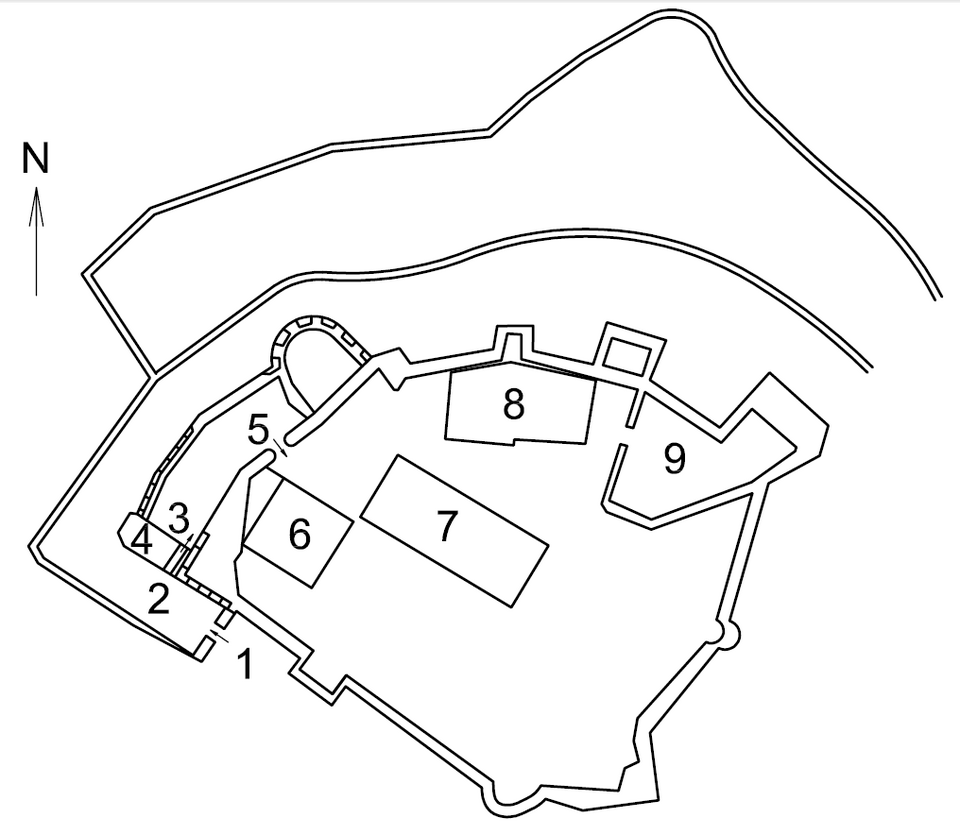
Kastro Molyvou
Κάστρο Μολύβου
Perched on a commanding hilltop above the picturesque village of Molyvos on Lesvos's northern coast, Kastro Molyvou is one of the finest surviving medieval fortresses in the Aegean. The site has been fortified since antiquity, but the castle as it stands today reflects centuries of Byzantine construction and, most visibly, the extensive work carried out by the Genoese Gattilusio family, who ruled Lesvos from the mid-fourteenth century until the Ottoman conquest in 1462. Under the Gattilusio, the fortress was expanded and reinforced to defend against the advancing Ottoman threat, and its thick stone walls, angular towers, and deep cisterns speak to the strategic importance this stronghold once held over the surrounding sea lanes. Walking through the gatehouse and up into the castle precinct, visitors pass through successive rings of fortification, each layer telling a different chapter of the island's layered history. Inside, the remains of Byzantine churches, a small Ottoman mosque, and storage vaults give the site an almost archaeological character. The views from the upper ramparts are extraordinary: on clear days the Turkish coastline appears close enough to touch across the strait, while below, the terracotta rooftops of Molyvos cascade down the hillside toward the harbor in one of the most photographed townscapes in Greece. Today the castle is open to visitors throughout much of the year and comes alive in summer when its ancient theater hosts open-air performances under the stars. The combination of intact medieval architecture, sweeping Aegean panoramas, and the charming village spread at its feet makes Kastro Molyvou an essential stop on any visit to northern Lesvos — a place where the weight of history settles naturally over stone and sea.
Kastro Polichnitou Trogalias
Κάστρο Πολιχνίτου Τρογαλιάς
Perched above the southern plains of Lesvos, the Kastro Polichnitou Trogalias stands as a weathered sentinel overlooking the fertile lands surrounding the town of Polichnitos. Like many of the island's medieval fortifications, this castle reflects the layered history of Lesvos, which passed through Byzantine, Genoese, and Ottoman hands over the centuries. The Gattelusi dynasty of Genoa, who governed the island from the mid-fourteenth century until the Ottoman conquest of 1462, left a network of strongholds across Lesvos, and local tradition associates several such ruins in the southern reaches of the island with that era of Genoese stewardship. The ruined walls and remnants visible today speak to a period when controlling the high ground meant controlling the surrounding villages, trade routes, and agricultural plains below. Visitors who make the short journey from Polichnitos will find the remains of masonry walls and foundations that hint at the castle's former extent. The stonework, characteristic of medieval construction in the Aegean, blends local materials with techniques common across the eastern Mediterranean. Though much of the structure has succumbed to time and the elements, the elevated position rewards the effort with sweeping views toward the Gulf of Kalloni to the north and the rolling hills of the island's interior. The surrounding landscape is deeply rural and largely unchanged, giving the site a quiet, unhurried quality that invites contemplation of the long centuries it has overlooked. The Kastro Polichnitou Trogalias may lack the scale of Lesvos's more prominent fortifications at Mytilini or Molyvos, but its appeal lies precisely in this intimacy. It is the kind of place that rewards the curious traveler willing to venture beyond the well-trodden path. Paired with a visit to the thermal baths of Polichnitos, among the hottest natural springs in Europe, the castle makes for a half-day excursion that weaves together the island's natural and historical heritage in a deeply satisfying way.
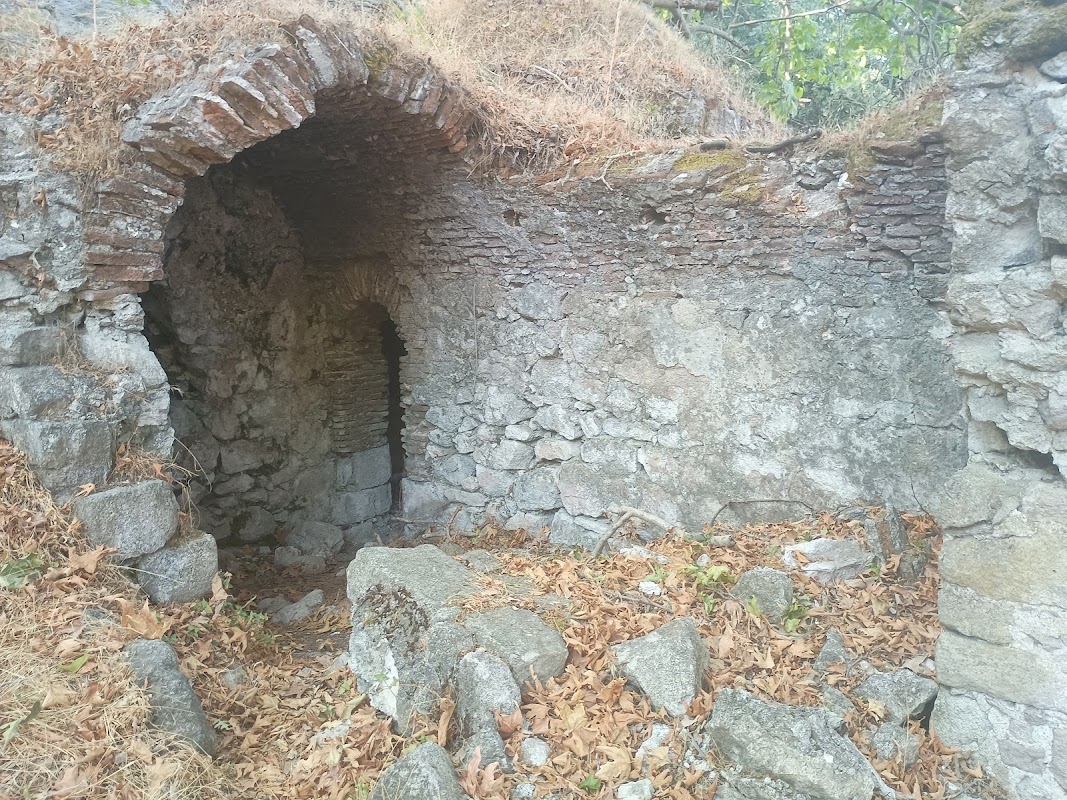
Klapados
Κλαπάδος
Perched in the rugged northwestern reaches of Lesvos near the quiet village of Lafionas, Klapados is a hauntingly beautiful site of abandoned ruins that speaks to the island's long and layered human history. Like many of the scattered ghost settlements found across Lesvos, Klapados was once a living community whose inhabitants worked the surrounding land and sea, their daily rhythms shaped by the rhythms of the Aegean. The site reflects a broader pattern common to the island: villages that flourished under Byzantine and later Genoese and Ottoman rule, only to be gradually abandoned as populations shifted toward the coast or consolidated in larger settlements over the centuries. Today, visitors who make their way to Klapados encounter the quiet drama of stone walls reclaimed by wild vegetation, broken foundations that trace the outlines of former homes and perhaps a small chapel, and the sweeping views over the northwestern landscape that first drew people to settle here. The area around Lafionas is off the well-worn tourist trail, which means the ruins feel genuinely undiscovered, offering an atmosphere of solitude that is rare on a popular island. The surrounding terrain is typical of this corner of Lesvos: dry hills dotted with olive trees, the smell of wild herbs underfoot, and a deep silence broken only by wind and birdsong. Klapados matters not for any single monument but for what it represents: the human impulse to build community in even the most remote corners of this ancient island. For the historically curious traveller, it is a place for quiet reflection on the generations who shaped Lesvos before the modern era, and a rewarding destination for those willing to venture beyond the signposted sites. The journey from Lafionas is itself part of the experience, passing through landscapes that have changed little in centuries.
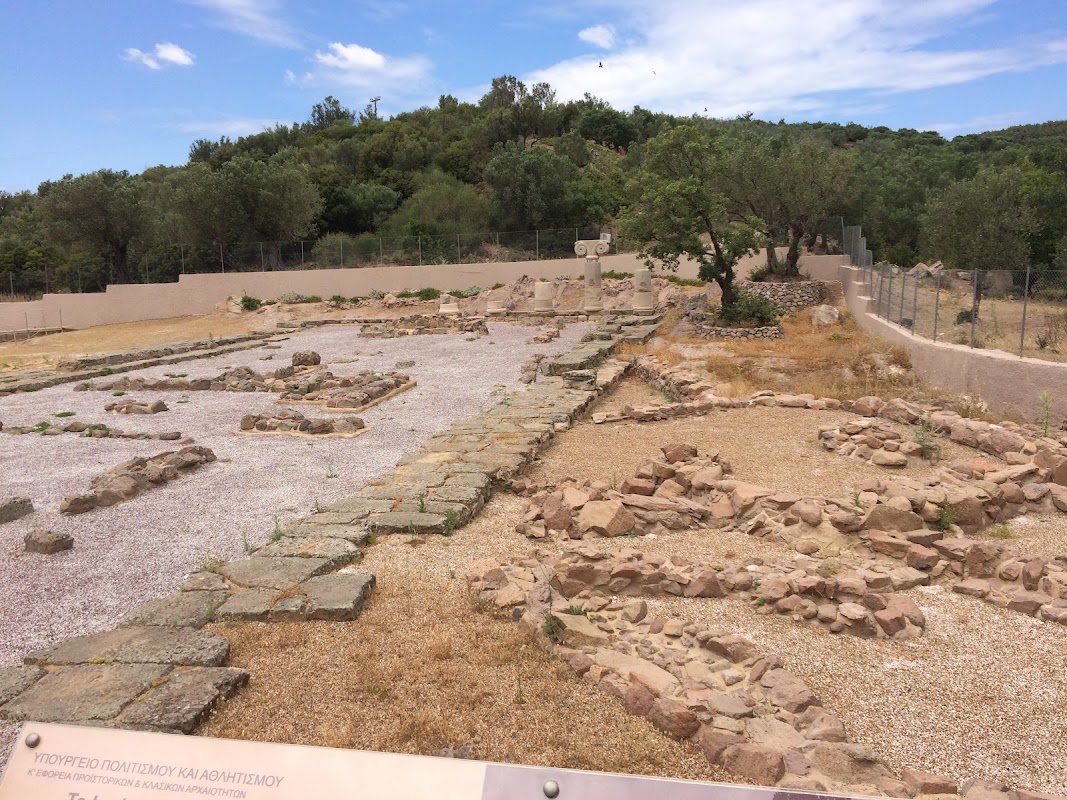
Klopedi archaelogical site
Αρχαιολογικός χώρος αιολικού Ιερού Απόλλωνος στην Κλοπεδή
Perched in the rolling landscape of central Lesvos near the village of Agia Paraskevi, the Klopedi archaeological site offers a quiet window into the island's deep antiquity. Traces of ancient settlement here suggest continuous human presence stretching back through the classical and possibly earlier periods, when this fertile inland region — sheltered from coastal winds and close to the productive waters of the Gulf of Kalloni — was prized for agriculture and habitation. Like many sites on Lesvos, Klopedi reflects the island's position at the crossroads of Aegean civilizations, a place shaped by successive waves of Greek cultural life and, later, by the broader currents of the Hellenistic and Roman worlds. Visitors exploring the site today will encounter the atmospheric remains characteristic of Lesvos's lesser-known archaeological landscape: foundations, scattered masonry, and the quiet geometry of ancient structures reclaimed by grass and wildflowers. The setting itself is part of the experience — the olive-covered hillsides, the distant shimmer of the gulf, and the unhurried pace of the surrounding countryside all contribute to a sense of continuity with the past. Agia Paraskevi, the nearest village, is also home to the annual Taurokathapsia, a bull festival with ancient roots, underscoring how this corner of Lesvos has long maintained a living connection to its pre-Christian heritage. For travelers drawn to history beyond the guidebook headlines, Klopedi rewards the curious. It lacks the crowds of more prominent classical sites, making it an ideal stop for those who appreciate the meditative quality of a place where the past surfaces quietly from the earth. Combined with a visit to the nearby Museum of Industrial Olive Oil Production in Agia Paraskevi, the site fits naturally into a half-day journey through one of the island's most historically layered and scenically rewarding inland areas.
Ktirio Proin Saponopoieiou Georgadelli
Κτίριο πρώην σαπωνοποιείου Γεωργαντέλλη
Standing in the southern port town of Plomari, the former Georgadelli Soap Factory is a testament to the thriving agro-industrial economy that once defined this corner of Lesvos. The island's vast olive groves, among the most extensive in the Aegean, provided abundant raw material not only for table oil and export but also for soap manufacturing, a trade that brought prosperity to coastal settlements like Plomari throughout the late nineteenth and early twentieth centuries. Factories such as this one were the engines of a local mercantile class that left behind a legacy of neoclassical mansions, well-built warehouses, and civic ambition still visible across the town today. The building itself reflects the sturdy, utilitarian architecture favored by Aegean industrialists of the era, with solid masonry construction designed to house the vats, presses, and storage of an active production facility. Its designation as a protected monument speaks to its architectural integrity and its role as a surviving example of an industry that has largely disappeared from the island. Plomari is today far better known for ouzo than for soap, and so the factory stands as a quiet counterpoint to that more celebrated heritage, reminding visitors that this town's entrepreneurial spirit once extended well beyond the distillery. Visitors exploring Plomari's historic waterfront and backstreets will find the building as part of a broader architectural landscape worth wandering slowly. The town rewards those who look beyond the harbor tavernas, and the old factory is one of several industrial-era structures that give Plomari its distinct, layered character. Combined with the nearby ouzo distilleries and the elegant stone townhouses that climb the hillside, it forms part of a living record of what made this small port one of the most commercially active settlements on nineteenth-century Lesvos.
Laxevtoi Tafoi
Λαξευτοί Τάφοι
Laxevtoi Tafoi, meaning "hewn tombs" in Greek, are rock-cut burial chambers carved directly into the natural stone near the village of Palios in western Lesvos. This type of funerary monument was widespread across the ancient Aegean world, and the examples here likely date to the ancient or Hellenistic period, reflecting a time when the island's coastal communities buried their dead in elaborate chambers cut by hand from the living rock. The practice speaks to a sophisticated understanding of stonecraft and a belief that the permanence of stone could honour and protect the deceased for eternity. Visitors who make their way to the site will find the characteristic rectangular or chamber-like recesses cut into outcrops or cliff faces, their forms worn smooth by centuries of wind and rain. Though stripped of any grave goods long ago, the craftsmanship visible in the clean lines and deliberate shaping of each tomb remains quietly striking. The rural setting near Palios adds to the atmosphere — the surrounding landscape of dry scrub, old olive groves, and sea views creates a contemplative mood that suits a place of ancient rest. Laxevtoi Tafoi matter not for spectacle but for what they reveal about Lesvos beyond its famous antiquities: that the island was densely settled and culturally active across many centuries, and that even small coastal communities invested care and skill in their funerary traditions. For travellers with an interest in the deeper layers of Greek history, this is an unhurried, off-the-beaten-path encounter with the ancient world in its most elemental form.
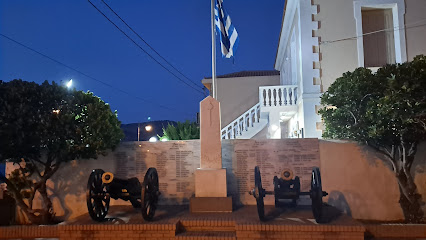
Lesbian canon
Perched in the rugged landscape near Molyvos, the site known as the Lesbian Canon stands as a quiet testament to the ancient world that once flourished across northern Lesvos. The area surrounding ancient Methymna — the settlement that preceded and underlies today's Molyvos — was inhabited continuously from Mycenaean times through the classical, Hellenistic, Roman, and Byzantine eras, leaving layers of history embedded in the hillsides and shoreline. This archaeological site invites reflection on the island's remarkable intellectual and cultural legacy: Lesvos was home to some of antiquity's greatest minds, from the lyric poets Sappho and Alcaeus to the philosopher Theophrastus, and the island's traditions of philosophical inquiry and artistic expression made their mark on the ancient Mediterranean world. Visitors to the site today encounter remnants of ancient construction set against the dramatic northern Aegean backdrop that inspired generations of Greek poets and thinkers. The stonework and structural remains reflect building traditions common to the northeastern Aegean, where local volcanic and sedimentary materials were shaped into civic and ceremonial structures. The proximity to Molyvos adds depth to the experience: the medieval castle visible on the headland above town was itself built upon ancient foundations, a palimpsest of occupation that characterises so much of Lesvos. For those willing to look beyond the more famous landmarks, a visit here rewards with solitude and a genuine sense of historical depth. The site sits within a landscape largely unchanged in its broad outlines — the olive groves, the sea views toward the Turkish coast, the quality of light — making it easier to imagine the world as the ancients knew it. Combined with a walk through Molyvos village and its castle, this stop forms part of a rich archaeological itinerary through one of the Aegean's most historically layered islands.
Loranda tower
Πύργος Λοράντα
Rising from the olive-clad hillsides near the quiet village of Alyfada, the Loranda tower is one of Lesvos's many surviving medieval watchtowers that testify to centuries of contested rule over this strategically vital island. Like much of the island's fortified architecture, it belongs to a landscape shaped by Genoese dominion during the fourteenth and fifteenth centuries, when powerful Italian families constructed a network of defensive towers to protect their agricultural estates, monitor movement across the interior, and signal threats from sea. These pyrgoi, as they are known locally, were both status symbols and practical necessities in an era when piracy and rival powers made security a constant concern across the Aegean. Today the tower survives as an evocative ruin, its stonework weathered by centuries of sun and salt wind yet still communicating the solidity of its original construction. The masonry reveals the characteristic thick walls and compact footprint typical of Lesvos tower architecture, built to withstand assault and the elements in equal measure. The surrounding countryside retains much of the agricultural character it would have had when the tower was active, with olive groves and scrubland stretching toward the horizon, making it easy to understand why this elevated position was chosen to command views across the terrain. For visitors who venture off the main roads to find it, Loranda tower offers a genuinely atmospheric encounter with the island's layered past. There are no crowds here, no entrance gates or interpretive panels — just stone, landscape, and silence. It rewards those with a curiosity for the quieter corners of Lesvos history, and pairs well with an exploration of the surrounding villages and the rural eastern interior, where the medieval and the modern continue to coexist with remarkable ease.
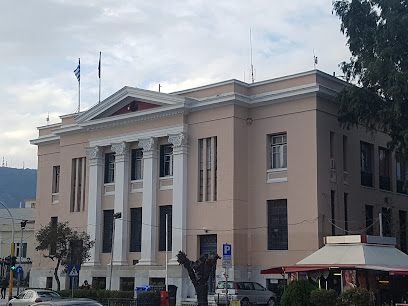
Memorial (39.1030, 26.5561)
This is a commemorative bust of Georgios Papandreou, created in 1998 by sculptor Maria Kallipoliti. Here is the description: --- Standing in the environs of Mytilini, this stone bust honours Georgios Papandreou, one of the most consequential Greek statesmen of the twentieth century. Papandreou served multiple terms as Prime Minister of Greece, most memorably leading the government during the turbulent years following the Second World War and again during the political upheavals of the 1960s. His connection to Lesvos reflects the island's deep engagement with modern Greek political life — Mytilini has long been not merely a provincial outpost but a place that shaped and was shaped by the currents of the nation. Created in 1998 by the sculptor Maria Kallipoliti, the bust is part of a broader tradition of commemorative public art that punctuates Mytilini's streets and squares. Kallipoliti's work belongs to a body of sculptures documented in the encyclopedic survey of Lesvos's outdoor sculpture, attesting to the island's rich tradition of honouring its cultural and political heritage in stone and bronze. The piece captures Papandreou with the solemnity appropriate to a figure who both embodied and contested the defining political struggles of modern Greece. Visitors passing through this part of the island will find the bust a quiet but meaningful stop — a prompt to reflect on Greece's turbulent twentieth-century history and on the way a small Aegean island remains woven into the fabric of national memory. It rewards those who take a moment to pause, read, and consider the layers of history that accumulate in even the most unassuming corners of Lesvos.
Memorial (39.1099, 26.5562)
Standing near the small settlement of Alyfada in the northeastern corner of Lesvos, this memorial bears quiet witness to the human stories that have unfolded along this stretch of coastline. The northeastern shores of the island sit just a few kilometers from the Turkish coast, and for decades this narrow strait has served as a crossing point for people seeking safety and new lives in Europe. From 2015 onward, hundreds of thousands of refugees and migrants arrived on these shores, and the communities of this corner of Lesvos found themselves at the center of one of the largest humanitarian movements of modern times. Memorials in this area serve as places of remembrance for the many lives lost at sea during the crossing, honoring both those who perished and the people of Lesvos who responded with extraordinary generosity. Visitors who come to this part of the island often do so with a sense of reflection, moving through a landscape that is at once strikingly beautiful and deeply charged with recent history. The rolling hills, olive groves, and turquoise waters of the northeastern coast offer some of the most serene scenery on the island, yet the memorial grounds this natural splendor in a more somber awareness. Local villagers, aid workers, and international volunteers have all left their mark on this corner of Lesvos, and the site stands as a reminder that this island has long been a place where cultures and histories converge across the water. For travelers, a visit here offers something beyond sightseeing. It is an invitation to pause, to read the names or inscriptions if present, and to consider the broader human currents that have shaped Lesvos across centuries of migration, displacement, and resilience. The island has been a crossroads of civilizations since antiquity, and this memorial, however modest in form, connects that ancient tradition of passage and belonging to the urgent stories of the present day.
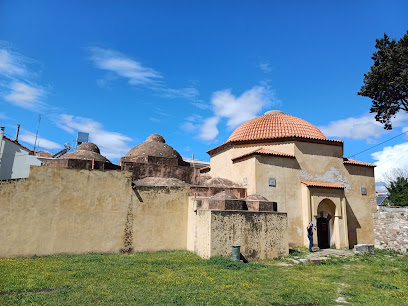
Memorial (39.1118, 26.5572)
Standing quietly in the landscape near the small village of Alyfada in eastern Lesvos, this memorial bears witness to the profound human history that has shaped this corner of the Aegean. Eastern Lesvos occupies a particularly poignant geography, lying within sight of the Anatolian coastline across the narrow strait that has served for millennia as both a bridge and a boundary between worlds. The island absorbed wave after wave of displacement and loss over the twentieth century, from the catastrophic population exchanges of 1922, when Greek communities uprooted from Asia Minor sought refuge on these shores, to the hardships of wartime occupation, each chapter leaving its mark on local memory and local stone. Memorials like this one serve as anchor points for collective remembrance in communities where oral history and lived experience run deep. In villages such as Alyfada, the connection to the mainland just across the water remains vivid in family stories passed down through generations, and the act of commemoration is woven into the rhythm of local life. The site invites visitors to pause and reflect on the layers of history embedded in this seemingly tranquil countryside, where olive groves and terraced hillsides hold the quiet weight of the past. Visitors who make their way to this memorial will find it set against the unhurried backdrop of rural eastern Lesvos, a landscape of considerable natural beauty that contrasts with its sobering human resonance. Coming here offers a moment of stillness and an opportunity to engage with the island's identity beyond its celebrated beaches and villages, connecting with the dignity and resilience that communities across Lesvos have long embodied. It is a reminder that travel, at its most meaningful, involves bearing witness as much as sightseeing.
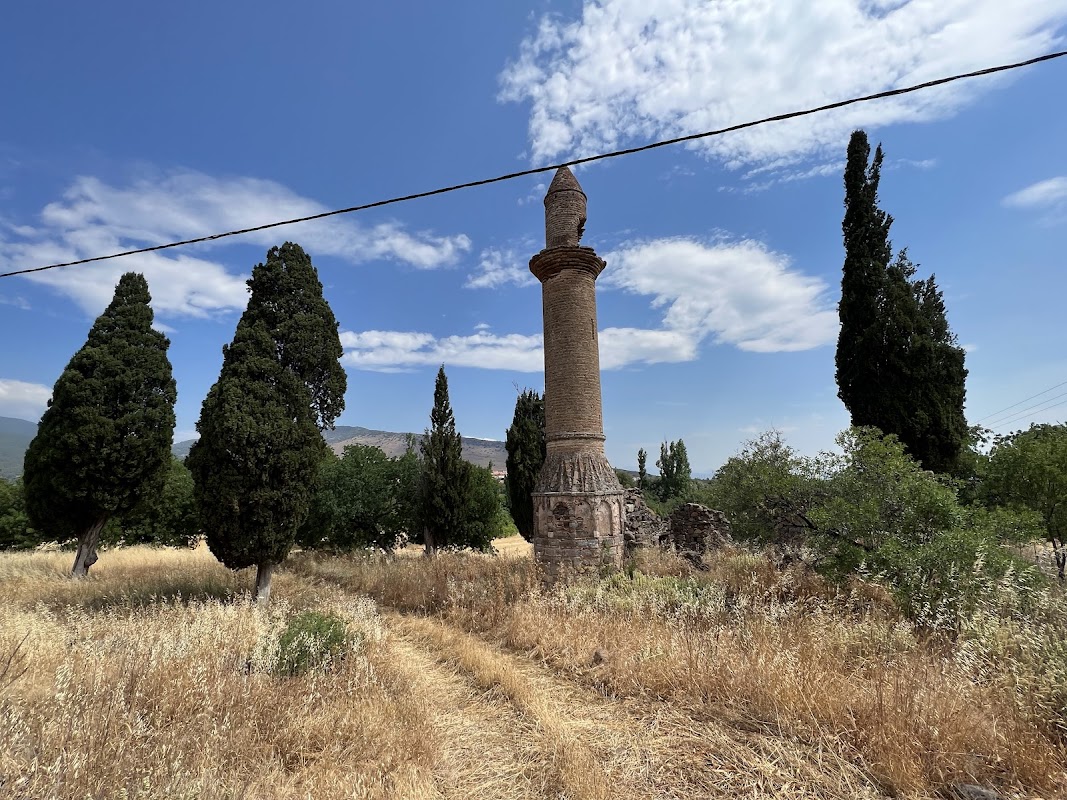
Minares Parakoilon
Μιναρές Παρακοίλων
Rising quietly from the landscape near the village of Parakoila, the ruins known as Minares Parakoilon are a poignant reminder of the Ottoman centuries that shaped Lesvos. The name itself — "minarets of Parakoila" — speaks to what once stood here: the slender towers of a mosque that served the island's Muslim community during the long era of Ottoman rule, which lasted from the mid-fifteenth century until 1912. This part of western Lesvos, like much of the island, carried a mixed population of Orthodox Greeks and Muslims for centuries, and the mosques and minarets that dotted the landscape were as much a part of daily life as the Byzantine churches they stood alongside. Following the population exchange of the early 1920s, which resettled Muslim communities from the Aegean islands to Anatolia and Greek Orthodox communities from Asia Minor to Greece, the mosque lost its congregation and gradually fell into ruin. What visitors find today are atmospheric remnants — crumbling masonry, the base or partial shaft of a minaret, and the faint geometric logic of a once-functioning religious building slowly being reclaimed by scrub and wild herbs. The stonework, typical of rural Ottoman construction on the island, speaks to the pragmatic craftsmanship of the era. For those drawn to the layered history of Lesvos, Minares Parakoilon offers a quietly affecting experience. There are no crowds here, no signage or barriers — just open countryside and the weight of history in the stones. The site pairs naturally with a visit to Parakoila village itself and fits into a broader exploration of the island's Ottoman heritage, which includes better-preserved structures in Mytilini and Molyvos. Coming here rewards the curious traveller willing to sit with complexity: the reminder that Lesvos was, for a very long time, home to more than one world.
Mnimeio
Μνημείο
Mnimeio, meaning simply "memorial" in Greek, stands near the small village of Kapi in the western reaches of Lesvos as a quiet testament to the island's layered and often turbulent past. This part of Lesvos was shaped profoundly by the upheavals of the early twentieth century, particularly the catastrophic population exchange of 1922 to 1923 following the Greco-Turkish War, which uprooted centuries-old communities and left deep marks on every corner of the island. Memorials like this one serve as anchors of collective remembrance, ensuring that the sacrifices and losses of those who came before are not swallowed by time or overgrown by the island's characteristic olive groves and maquis scrubland. Visitors approaching the site will find themselves in a landscape of austere rural beauty, where the stillness amplifies the weight of commemoration. The memorial itself, modest in scale as many such village monuments are, likely features inscribed stone or masonry typical of Greek memorial tradition, with names or dedications carved to honor those from the surrounding communities. The proximity to Kapi, a quiet agricultural village, gives the site an intimate, local character distinct from grander civic monuments found in Mytilini. Coming here offers a moment of genuine reflection amid a journey through Lesvos. It invites visitors to consider not just the popular beaches or Byzantine churches that draw tourists, but the human story threaded through every village and hillside on the island. The surrounding countryside, with views toward the gentle slopes of western Lesvos, makes the walk to the memorial rewarding in its own right. Pairing a visit with a stop in Kapi itself, where traditional stone architecture and a slow village rhythm persist, rounds out a meaningful half-day excursion into the heart of what makes this island so resonant.
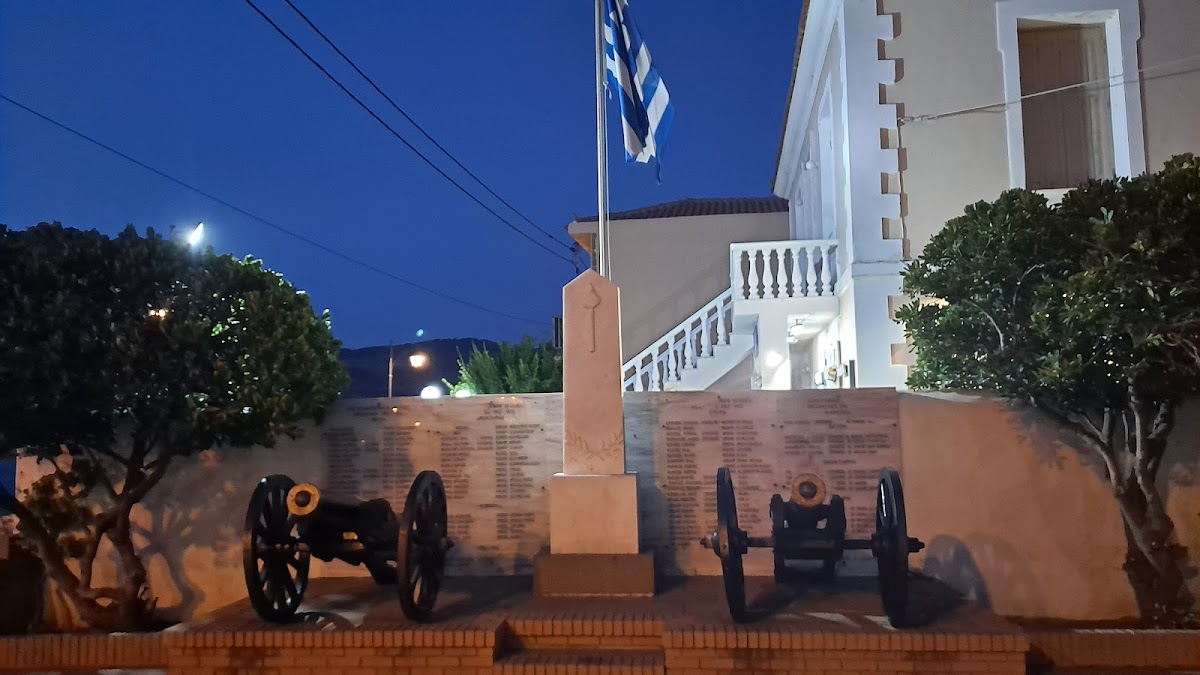
Mnimeio Pesodon
Μνημείο πεσόντων
Standing quietly in the landscape near the coastal town of Petra, the Mnimeio Pesodon — Monument to the Fallen — is one of Lesvos's solemn tributes to the islanders who gave their lives in the conflicts that shaped modern Greece. Like similar memorials across the Aegean, it speaks to the turbulent history that the people of Lesvos lived through across the late nineteenth and twentieth centuries, including the Balkan Wars, the upheaval of the Asia Minor catastrophe of 1922, and the hardships of two world wars. For a community like Petra, where generations of families have been deeply rooted in the land and sea, such a monument carries a weight that goes far beyond stone — it is a focal point of local memory and collective grief. The monument itself is modest in the way that Greek village memorials often are: a structured marker bearing inscribed names, designed not to overwhelm but to invite quiet reflection. Visitors who pause here will find themselves confronted with the human cost of history on an island that, despite its pastoral beauty, was never insulated from the wider struggles of the Hellenic world. The surrounding area near Petra offers a compelling contrast — the great rock of Petra rising behind the town, the sea glittering in the distance — making this a place where the weight of remembrance sits alongside everyday life in a distinctly Mediterranean way. For travellers with an interest in local history and culture, the Mnimeio Pesodon offers a meaningful moment away from the beaches and Byzantine churches. It is the kind of place that reminds visitors that Lesvos is not merely a postcard landscape, but a living community with deep roots and hard-won stories. Taking a few minutes to stand here and read the names carved in stone is a quiet act of respect for those who shaped the island that welcomes travellers today.
Mnimeio Pilotou Pyrosvestikou Aeroskafous Kourelia Stefanou
ΜΝΗΜΕΙΟ ΠΙΛΟΤΟΥ ΠΥΡΟΣΒΕΣΤΙΚΟΥ ΑΕΡΟΣΚΑΦΟΥΣ ΚΟΥΡΕΛΙΑ ΣΤΕΦΑΝΟΥ
Standing quietly amid the pine-scented landscape near the village of Achladeri, this modest but poignant monument pays tribute to the pilot of a firefighting aircraft who lost their life in service of protecting Lesvos from the devastating wildfires that have long threatened the island's forests and communities. Forest fires are a recurring and deeply felt hazard across the Aegean islands, and aerial firefighting has played a critical role in combating blazes that sweep through dry hillsides during the summer months. The memorial stands as a reminder of the courage demanded of those who fly low over flames and smoke to drop water and retardant on fast-moving fires. The monument itself is a simple commemorative marker, characteristic of the small, heartfelt memorials that dot the Greek countryside in honor of those who died in service or in accidents on the land they loved. Its setting near Achladeri, a village nestled in the forested southwestern part of the island, gives it a natural solemnity — the trees and hillside around it are precisely what the pilot worked to protect. For visitors, the site offers a moment of quiet reflection and a window into a less-celebrated but vital dimension of island life: the seasonal battle against fire and the human cost it sometimes exacts. Travelers passing through this part of Lesvos on their way to the beaches of the Gulf of Kalloni or the nature trails of the surrounding countryside may find the monument a worthwhile brief stop. It asks nothing more than a moment's pause, yet it speaks volumes about community memory, gratitude, and the deep relationship between the people of Lesvos and their landscape. The surrounding area, with its mix of pine forest and olive groves, provides a peaceful and contemplative setting that makes the visit all the more affecting.
Mnimeio Ton Ektelesmenon
Μνημείο των Εκτελεσμένων
Standing near the quiet village of Alyfada, the Mnimeio Ton Ektelesmenon — the Memorial of the Executed — is a somber and deeply affecting site that bears witness to one of the darkest chapters in Lesvos's modern history. The memorial commemorates those who were executed during the Axis occupation of Greece in World War II, a period of brutal reprisals against civilian populations across the country. Lesvos, like many Greek islands, suffered under occupation, and sites such as this one preserve the memory of those who were killed, ensuring their fate is neither forgotten nor diminished by the passage of time. The memorial itself is a place of quiet dignity, set within the rural landscape of the island's interior, and reflects a tradition of community remembrance that remains deeply important to local identity. Wreaths and offerings are periodically placed here by residents and descendants of those who perished, and the site continues to draw visitors who come to pay their respects. The surrounding countryside — with its olive groves and gentle hills — lends the location a stillness that feels appropriate to the gravity of what is commemorated here. For visitors to Lesvos, the memorial offers an important counterpoint to the island's ancient ruins and sun-drenched beaches. It is a reminder that beneath the scenic beauty lies a layered human history that includes resistance, sacrifice, and survival. Coming here encourages reflection on the broader story of twentieth-century Greece and the resilience of the communities that endured and ultimately rebuilt. Those traveling through this part of the island will find it a meaningful and worthwhile stop.
Mnimeio Yper Pesodon Ston A' Pagosmio Polemo
Μνημείο υπέρ πεσόντων στον Α' Παγκόσμιο πόλεμο
Standing quietly near the village of Agia Paraskevi, this memorial commemorates the men of Lesvos who lost their lives during the First World War. The island's involvement in that conflict is inseparable from its broader modern history: Lesvos was incorporated into Greece in 1912 following the Balkan Wars, and Greek forces subsequently participated in the campaigns of the First World War, with islanders serving in a conflict that reshaped the entire Aegean region. This monument stands as a testament to those local families who sent sons to distant fronts and never saw them return. The memorial bears the hallmarks of interwar commemorative architecture common across Greece — modest in scale yet dignified in intention, with inscribed names or dedications that root abstract historical tragedy in the lived reality of specific communities. Set within the rural landscape of the Lesvos interior, surrounded by olive groves and the gentle hills that characterize this part of the island, it occupies a place that feels both intimate and solemn. The village of Agia Paraskevi itself is known for its traditional character and the nearby Museum of Industrial Olive Oil Production, making this corner of Lesvos a place where multiple layers of local history converge. Visitors who seek out this memorial will find a moment of quiet reflection away from the busier coastal attractions. It rewards those with an interest in the human cost of the twentieth century's conflicts and in understanding how even a relatively small Aegean island was drawn into the upheavals that remade Europe. Coming here alongside a visit to Agia Paraskevi village makes for a thoughtful half-day that connects the agricultural heritage of the olive-growing interior with the deeper story of a community shaped by both prosperity and sacrifice.
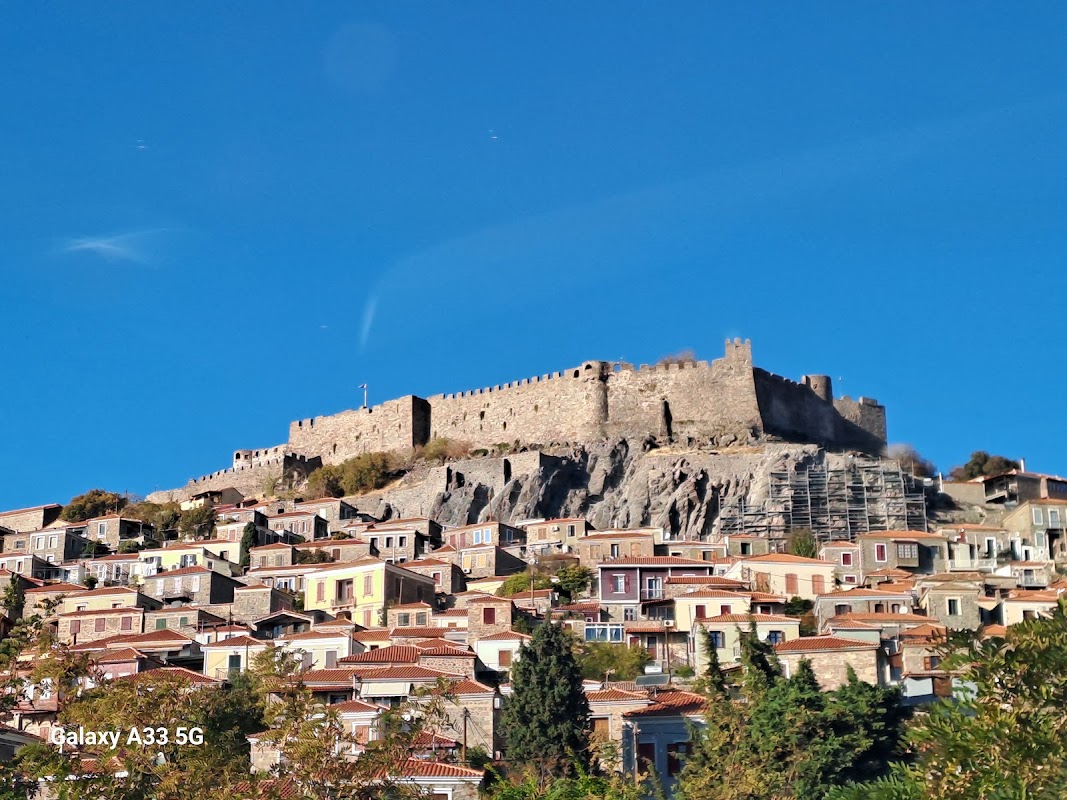
Molyvos Castle
Molyvos Castle
Crowning the rocky promontory above the cobblestoned lanes of Molyvos, the ancient citywalls trace the outline of one of Lesvos's most storied medieval fortifications. Built upon earlier Byzantine foundations, the walls were substantially reinforced during the Genoese occupation of the island in the fourteenth and fifteenth centuries, when the Gattilusi dynasty transformed Mithymna into a formidable coastal stronghold. The stonework reflects centuries of layered history: rough-hewn Byzantine courses give way to more refined Genoese masonry, with the whole circuit following the natural contours of the hillside to command sweeping views over the Aegean toward the Turkish coastline just a few miles distant. Walking the perimeter of the walls today, visitors encounter battlements, towers, and gateway arches in varying states of preservation, all woven into the fabric of a living town where bougainvillea spills over ancient stone and the occasional cat surveys the scene from a crumbling merlon. The walls enclose what remains of the upper citadel, and sections open to the public allow visitors to appreciate the scale of the medieval defensive system that once protected this prosperous port. The views from the upper ramparts are among the finest on the island, taking in the red-tiled rooftops of Molyvos, the silvery shimmer of olive groves on the hillsides below, and the deep blue of the north Aegean stretching to the horizon. For anyone exploring Lesvos, the citywalls of Molyvos offer far more than a photogenic backdrop. They stand as a tangible link to the island's layered past — Byzantine, Genoese, Ottoman — and to the strategic importance this coast held for centuries of Mediterranean commerce and conflict. The site rewards a slow visit: arrive in the late afternoon when the honey-colored light plays across the stonework, and linger long enough to watch the sun sink toward Chios and the walls fall into dramatic shadow.
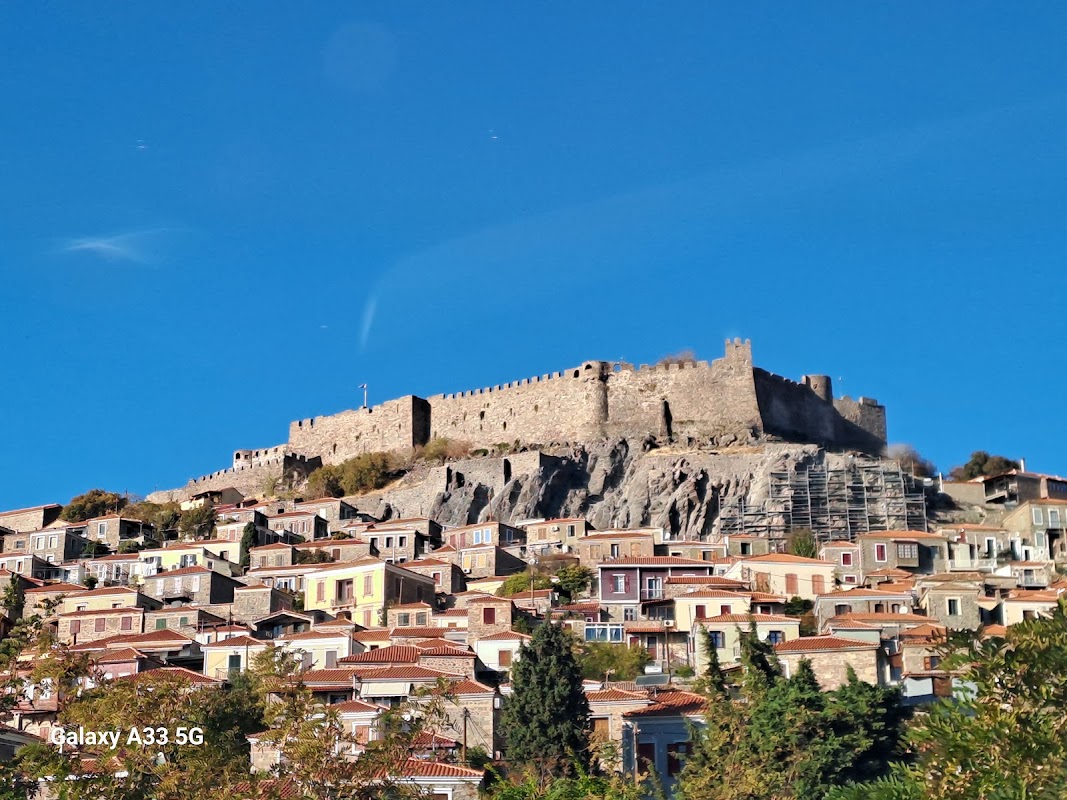
Molyvos Castle
Molyvos Castle
The citywalls of Molyvos stand as one of the most evocative remnants of medieval fortification on Lesvos, encircling the upper reaches of this ancient town that has been inhabited since antiquity. The settlement of Mithymna, as it was known in classical times, was among the most powerful city-states of the island, and successive rulers recognized the strategic value of its commanding hilltop position overlooking the northeastern Aegean. The walls visible today largely reflect Byzantine construction methods refined during the centuries of Byzantine rule, with subsequent modifications carried out by the Genoese Gattilusio dynasty, which controlled Lesvos from the mid-fourteenth century until the Ottoman conquest in 1462. Together with the castle above, they formed an integrated defensive system designed to protect the town's population and control maritime approaches from Anatolia. Walking along or beneath the walls, visitors encounter courses of well-cut stone interspersed with sections of rubble fill, characteristic of the pragmatic building techniques used in medieval Aegean fortifications. Towers punctuate the circuit at intervals, and the walls step dramatically with the contours of the rocky hillside, giving the fortifications an organic, almost sculptural quality against the skyline. The interplay of the dark volcanic stone with the terracotta rooftiles of the town below creates a scene that has drawn painters and photographers for generations. The setting is particularly striking at dusk, when the light catches the upper courses and the castle keep glows above the medieval streetscape. For visitors today, the citywalls provide both a vivid connection to Lesvos's layered history and a practical vantage point over the town and the sea. The lanes running close to the wall circuit pass traditional stone houses, bougainvillea-draped archways, and small workshops, making a walk around the perimeter one of the most atmospheric ways to experience Molyvos. The walls are freely accessible and integrate naturally into the village's walking routes, rewarding those who venture up from the harbor with sweeping views across to the Turkish coastline just a handful of kilometers to the east.
Monument (39.0411, 26.2012)
The village of Vrisa sits in the fertile southern reaches of Lesvos, and the monument found near its heart stands as a quiet witness to both the resilience and the sorrows that have shaped this community over generations. Like many such memorials scattered across Greek island villages, it serves as a gathering point for local memory — honoring those who gave their lives in the conflicts of the twentieth century, from the Balkan Wars through the two World Wars and the Greek Civil War, all of which touched island communities with particular intensity. The surrounding landscape of olive groves and low hills gives the site a contemplative quality that amplifies its purpose as a place of remembrance. Vrisa itself gained wider attention following the earthquake of June 2017, a 6.3-magnitude tremor that struck the southern part of Lesvos and caused severe damage to the village's traditional stone architecture. In this context, the monument takes on layered significance: it stands not only as a tribute to historical loss but as a marker of continuity for a community that has endured and rebuilt across centuries. The craftsmanship typical of such Aegean memorials — often featuring carved marble, inscribed names, and the stark cross of the Greek Orthodox tradition — reflects a local aesthetic rooted in the island's long stone-carving heritage. Visitors who make the journey to Vrisa will find more than a single monument; the village and its surroundings reward slow exploration. The rolling southern landscape is among the most traditionally agricultural on the island, and pausing at the monument offers a genuine moment of connection with the human story behind the scenery. It is a reminder that Lesvos, for all its natural beauty, is above all a place shaped by the lives, losses, and enduring spirit of its people.
Monument (39.0456, 26.2003)
Standing near the village of Vrisa in the olive-rich southern reaches of Lesvos, this monument serves as a quiet focal point of local memory and communal identity. The area around Vrisa has been inhabited for centuries, shaped by the rhythms of olive cultivation and the turbulent currents of Aegean history — from Ottoman rule through the island's union with Greece in 1912 and the upheavals of the twentieth century. Monuments of this kind in rural Lesvos most often honor those lost in the wars and conflicts that defined the modern Greek nation, standing as enduring testaments to the sacrifices of ordinary village communities. Vrisa itself carries its own particular weight of memory. The village was severely damaged by the earthquake of June 2017, which reshaped the landscape and the lives of its residents. Visiting the area today, travelers encounter a community in the long process of recovery, where the resilience of the local people is palpable. The surrounding countryside — terraced hillsides covered in ancient olive groves, the air fragrant with wild herbs — provides a strikingly peaceful backdrop that makes moments of quiet reflection at such a site feel all the more meaningful. For visitors, the monument offers an opportunity to pause and connect with the human story behind this corner of Lesvos. Whether arriving from the nearby coast or passing through on a journey across the southern part of the island, stopping here rewards the traveler with a deeper appreciation of what these villages have endured and preserved. The simplicity of rural monuments like this one is itself part of their power — unassuming markers of lives lived and remembered by a community that has called this remarkable island home across generations.
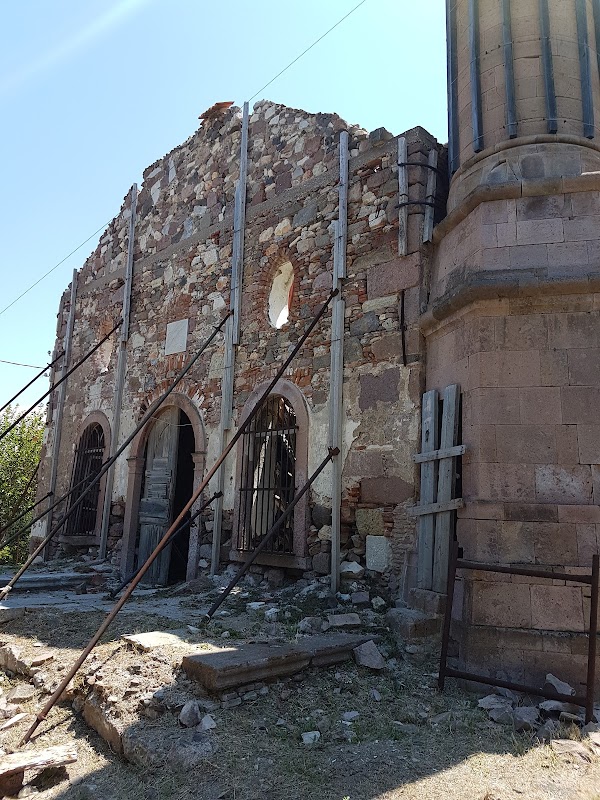
Monument (39.1124, 26.5562)
Standing near the quiet village of Alyfada in the northeastern reaches of Lesvos, this monument bears witness to the layered human history that defines this corner of the Aegean. The northeastern interior of the island has long been a crossroads of civilizations — from ancient Greek settlements and Byzantine rule to Ottoman administration and the turbulent exchanges of the early twentieth century that reshaped the demographic fabric of the entire region. Monuments in this landscape often commemorate those upheavals: the communities uprooted, the lives lost, and the resilience of the people who built new lives on this soil. The setting itself amplifies the monument's quiet gravity. The hills around Alyfada roll gently toward olive groves and distant sea views, a landscape little changed in its essentials for centuries. Visitors who make the effort to seek out this site are rewarded not only by the monument itself but by the profound stillness of the surrounding countryside, far from the busier tourist circuits of the coast. It is the kind of place where history feels immediate and personal rather than distant. For travelers with an interest in the deeper currents of Aegean history, a visit here pairs well with the broader story of northeastern Lesvos — a region shaped by its position between cultures and empires. Coming with some prior reading about the island's modern history enriches the experience considerably, allowing visitors to read the landscape and its memorials as chapters in a long and still-resonant story.
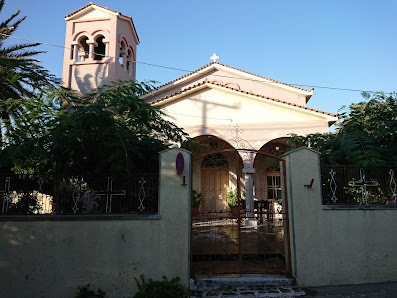
Monument (39.1343, 25.9317)
Standing at the heart of Skala Eresou, this monument pays tribute to one of the ancient world's most celebrated poets — Sappho, born in the ancient city of Eressos whose ruins lie just inland from the modern coastal village. Sappho lived around the seventh and sixth centuries BC and composed lyric poetry of extraordinary beauty, much of it addressing themes of love, longing, and the natural world. Though only fragments of her work survive, her influence on Western literature has been immense, and she was regarded in antiquity as equal to Homer. The monument serves as a focal point for the community's deep pride in this remarkable heritage, anchoring a village that has grown into a destination closely associated with her legacy. Visitors to Skala Eresou will find the monument set against the backdrop of a charming seaside settlement, with the long pebble beach stretching out nearby and the ruins of ancient Eressos visible on the low hill to the east. The site draws travelers from across the world, many of whom come specifically to stand where Sappho herself once walked. The atmosphere around the monument is relaxed and welcoming, with the village square and waterfront cafes providing a natural gathering place for reflection. Whether you arrive with a scholarly interest in classical antiquity or simply an appreciation for meaningful places, this small monument carries a weight far greater than its size suggests.
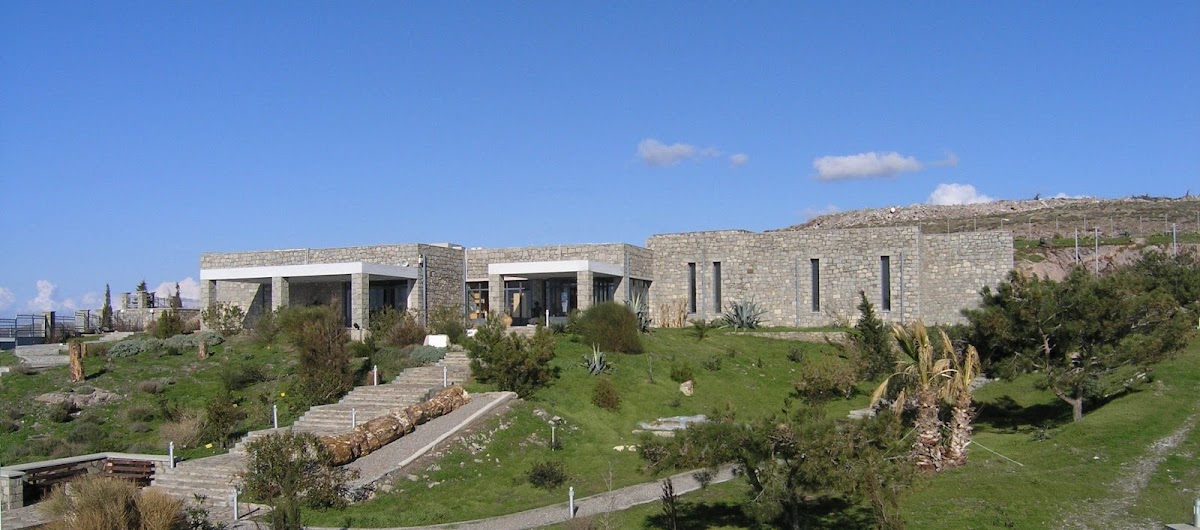
Monument (39.2111, 25.8511)
Standing sentinel over the natural harbor of Sigri on Lesvos's remote western coast, this monument marks one of the island's most historically layered corners. The Ottoman-built castle that dominates the village waterfront was constructed in the eighteenth century to guard the sheltered bay, a strategically vital anchorage along the Aegean sea lanes. Its thick, squared walls of cut stone reflect the pragmatic military architecture of the period, designed to deter pirates and rival naval powers who prowled these waters. Sigri's natural geography — a deep, protected inlet flanked by headlands — made it a prized stopping point for vessels crossing between the eastern Aegean and the wider Mediterranean world. Visitors today find the fortification remarkably intact, its tower rising above the low whitewashed rooftops of the village and offering commanding views across the bay toward the small islet of Nissiopi. The surrounding area rewards slow exploration: Sigri remains one of the least-developed settlements on Lesvos, and the monument sits within easy walking distance of the harbor front, where fishing boats still tie up beneath the castle walls much as they have for centuries. The nearby Natural History Museum of the Lesvos Petrified Forest adds further depth to any visit, placing the human history of this coast alongside the island's remarkable geological story. What makes this corner of Lesvos so affecting is the sense of accumulated time. The monument stands not as an isolated relic but as part of a living village that has quietly persisted at the edge of the island, facing the open sea. For travelers willing to make the journey to Lesvos's western extreme, the castle and harbor of Sigri offer a rare combination of authentic atmosphere, scenic grandeur, and tangible history that more visited destinations on the island cannot easily match.
Monument (39.3364, 26.1841)
Standing in the village of Petra on the northwest coast of Lesvos, this monument occupies a prominent place within a community that has witnessed centuries of Aegean history. Petra itself takes its name from the dramatic volcanic rock that rises abruptly from the shoreline, and the settlement around it has been continuously inhabited since antiquity, passing through Byzantine, Genoese, and Ottoman periods before becoming part of the modern Greek state in 1912. Monuments of this kind in Aegean towns typically commemorate the sacrifices of local residents during the wars of the early twentieth century, including the Balkan Wars and the two World Wars, serving as focal points for collective memory and civic identity. Visitors to Petra will find a village that wears its history openly, from the celebrated Church of the Sweet-Kissing Virgin perched atop the great rock to the neoclassical mansions that line its streets. The monument sits within this layered townscape, offering a moment of quiet reflection amid the lively waterfront promenade. Its presence connects the living village to generations past and invites travelers to consider the human stories behind the landscapes they explore. Petra itself is one of the most rewarding stops on the Lesvos coast, and the monument makes a natural pause point during a walk through the town center. Whether you climb the rock to visit the church, explore the folk museum housed in a historic mansion nearby, or simply sit at a waterside café, the commemorative marker serves as a reminder that this beautiful corner of the Aegean has been shaped as much by human endurance as by its extraordinary natural setting.
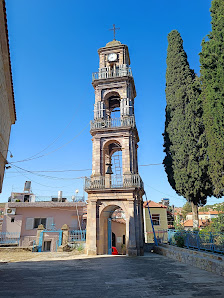
Monument Of Liberty
Μonument of Liberty
Standing in the heart of Polichnitos, the Monument of Liberty is a lasting tribute to one of the most transformative moments in Lesvos's modern history: the island's liberation from Ottoman rule in November 1912, during the First Balkan War. After nearly five centuries under Ottoman administration, Greek naval forces arrived at Lesvos and the island was reunited with the Greek state, an event that reshaped the lives of its inhabitants and the character of its communities. Monuments like this one were erected across the island's towns and villages in the decades that followed, giving local communities a place to honour that collective memory and the generations who lived through the transition. The monument stands as a focal point in Polichnitos, one of the larger inland settlements of southern Lesvos, surrounded by the everyday rhythms of village life. Its placement in the public space of the town reflects the deep civic importance such commemorations hold in Greek communities, where history is kept close and visible rather than confined to museums. The southern part of Lesvos, with its thermal springs and agricultural plains, has its own quieter character compared to the more visited northern coast, and the monument anchors Polichnitos's identity within that broader island narrative. Visitors passing through Polichnitos on their way to the famous thermal baths or the salt flats near Kalloni will find the monument a natural pause point, offering a moment of reflection amid the village square. It is the kind of place that rewards a slow walk rather than a hurried glance, inviting you to consider how deeply the events of the early twentieth century shaped the Lesvos that travellers experience today, from its architecture and place names to the warmth with which locals speak of belonging to Greece.
Mother of Minor Asia
Μικρασιάτισσα μάνα
Standing near the quiet village of Alyfada on Lesvos's eastern coast, the memorial known as the Mother of Minor Asia is a deeply moving tribute to one of the most traumatic chapters in modern Greek history. It commemorates the hundreds of thousands of Greek Orthodox Christians who were uprooted from their ancestral homelands along the Aegean coast of Anatolia during and after the catastrophic events of 1922, when the collapse of the Greek military campaign in Asia Minor led to a massive forced displacement. Lesvos, separated from the Turkish coast by only a narrow stretch of sea, became a primary landing point for refugees fleeing in desperate circumstances, and the island's population and culture were permanently shaped by their arrival. The monument embodies the figure of the archetypal refugee mother — a symbol of endurance, loss, and the preservation of a displaced civilization. This kind of memorial tradition runs deep on Lesvos, where entire villages and neighborhoods were founded by Asia Minor Greeks who brought with them their dialects, recipes, music, and religious traditions, weaving them irreversibly into the island's identity. Many families on Lesvos today can trace their roots directly back to towns such as Ayvalik, Smyrna, or Pergamon, just across the water, making this memorial not merely a historical marker but a living family monument. Visitors who make their way to the site find a place of quiet contemplation set against the landscape of the eastern Lesvos coastline, with the hills of Turkey visible on the horizon — a geographic detail that lends the memorial an almost unbearable poignancy. The location itself is part of the message: the refugees who crossed this narrow sea lost everything yet built new lives on this shore. For anyone seeking to understand the layered, bittersweet soul of Lesvos, a visit here is essential.
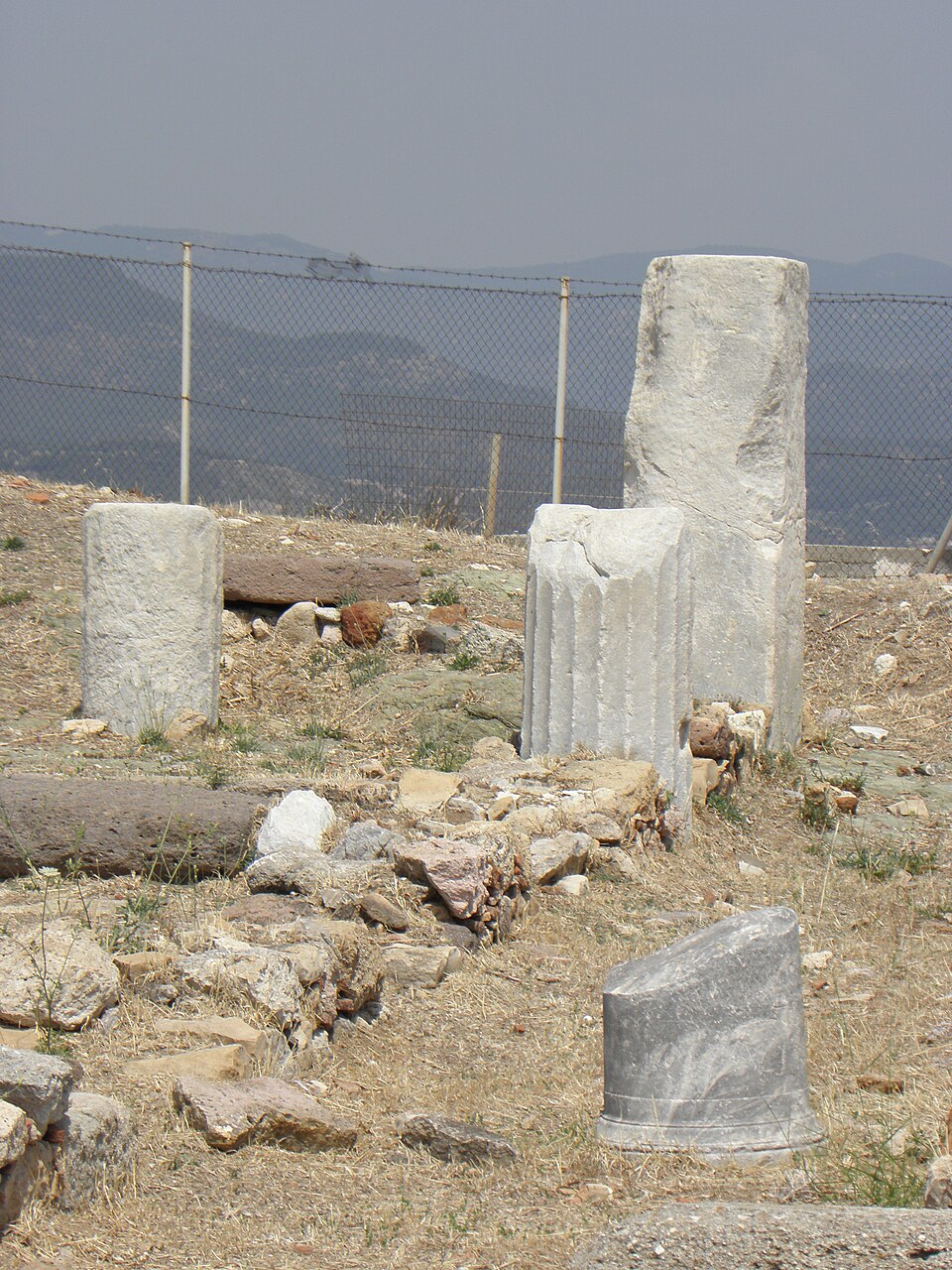
Naos Dionysou Tou Vrisagenous
Ναός Διονύσου του Βρησαγενούς
Nestled in the landscape near the quiet village of Agios Fokas, the sanctuary known as Naos Dionysou tou Vrisagenous — the Temple of Dionysus Vrisagenis — stands as one of Lesvos's most intriguing ancient religious sites. The epithet Vrisagenis, meaning roughly "born of the spring" or "of the springs," points to a cult deeply rooted in the island's natural landscape, where water sources held sacred significance in ancient Greek worship. Dionysus was venerated across Lesvos from at least the archaic period, and the island's fertile terrain, renowned for its vineyards and olive groves, made it fertile ground for his cult. This particular sanctuary reflects the way ancient Lesbians wove together the worship of the god of wine and transformation with the living landscape around them. The archaeological remains at the site offer a glimpse into the devotional life of ancient Lesvos, with evidence of cult activity spanning several centuries of antiquity. Like many rural sanctuaries of the Greek world, it was not a grand urban temple but rather a sacred precinct embedded in the countryside, drawing worshippers from surrounding settlements for festivals and rites. The masonry and structural remnants that survive speak to the care communities invested in maintaining this sacred space, even far from the island's main ancient centers at Mytilene and Methymna. Visitors today come to a site where archaeology meets natural beauty, set against the rolling hills typical of this part of Lesvos. The surrounding countryside, with its stone-walled terraces and Mediterranean vegetation, feels continuous with the ancient world. Those with an interest in Greek religion, rural archaeology, or simply the deeper layers of this island's past will find the sanctuary a rewarding and atmospheric stop, a reminder that Lesvos was not only a place of poets and philosophers but also of living, landscape-bound faith.
National Resistance Monument
Μνημείο Εθνικής Αντίστασης
The National Resistance Monument near Alyfada stands as a solemn tribute to the people of Lesvos who defied Axis occupation during the Second World War. Like much of Greece, Lesvos endured a brutal period of occupation between 1941 and 1944, during which ordinary islanders — farmers, fishermen, intellectuals, and clergy — organized clandestine networks of resistance against the occupying forces. The monument honors their courage and sacrifice, preserving the memory of a chapter in island history that shaped the collective identity of Lesvian communities for generations. Set amid the quiet landscape of the island's eastern reaches, the memorial offers visitors both a place of reflection and a tangible connection to the wartime experience of the Aegean. The monument's form and inscriptions speak to the local spirit of defiance and solidarity that characterized resistance movements throughout occupied Greece, where the absence of outside resources made every act of opposition a deeply personal risk. For residents of nearby villages like Alyfada, this site carries particular emotional weight, as many families trace their own histories through the hardships of that era. Visitors to the monument will find a contemplative setting appropriate for quiet remembrance. The surrounding landscape — typical of Lesvos's olive-covered hillsides and open skies — lends the site a timeless quality that makes the human story all the more affecting. Coming here offers travelers a deeper understanding of Lesvos beyond its beaches and natural beauty, revealing an island whose people have long possessed remarkable resilience and a proud sense of place.
Neomartyras Agios Georgios O Ex Ioanninon
Νεομάρτυρας Άγιος Γεώργιος ο εξ Ιωαννίνων
Near the quiet village of Larsos in the southern reaches of Lesvos, a small wayside shrine stands as a testament to one of the most poignant chapters of Greek Orthodox devotion — the veneration of the New Martyrs. This modest proskynitari is dedicated to Agios Georgios o ex Ioanninon, a young Christian from the city of Ioannina in Epirus who was martyred in the early nineteenth century after refusing to renounce his faith under Ottoman pressure. The New Martyrs — Christians who died for their beliefs during the long centuries of Ottoman rule — hold a cherished place in Greek Orthodox spiritual life, and roadside shrines like this one keep their memory woven into the everyday landscape of the island. The shrine itself follows the timeless tradition of the Greek proskynitari: a small stone or rendered structure housing an icon, an oil lamp, and space for a candle or a simple offering. These wayside sanctuaries are inseparable from the rural character of Lesvos, appearing at crossroads, along hillside paths, and beside ancient olive groves, marking the boundary between the sacred and the ordinary. This one, set against the rolling terrain near Larsos, reflects the deep local piety that has sustained the island's communities through centuries of hardship and change. Visitors passing through the Larsos area will find the shrine a quiet place for a moment of reflection. Even for those who do not share the Orthodox faith, there is something moving about these small acts of collective memory — a community's insistence on honoring a distant martyr through a humble structure maintained through generations. The surrounding countryside, with its characteristic Lesbian landscape of dry stone walls, scrub pine, and glimpsed sea views, only deepens the contemplative atmosphere of the spot.
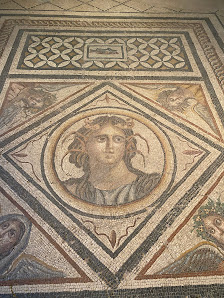
Nikolaos Plastiras
Νικόλαος Πλαστήρας
The memorial dedicated to Nikolaos Plastiras stands near the quiet coastal settlement of Alyfada, honoring one of modern Greece's most consequential military and political figures. Plastiras, known by the epithet "the Black Rider," rose to national prominence in the turbulent years surrounding the Asia Minor Catastrophe of 1922, when he led the military revolt that overthrew the royalist government in the wake of the Greek defeat. His name carries particular resonance on Lesvos, an island that received tens of thousands of refugees fleeing the collapsed Greek communities of Anatolia, and whose population was irreversibly shaped by that humanitarian tragedy. Memorials to Plastiras across the Aegean reflect not just the man himself but the broader grief, defiance, and resilience of a generation. Visiting the site today offers a moment of quiet reflection amid the olive-covered hills and sea views that characterize this corner of the island. The memorial serves as a tangible connection to the sweeping political changes of early twentieth-century Greece, a period when the fate of entire communities was decided in weeks. Plastiras went on to serve as Prime Minister of Greece on multiple occasions and remained a polarizing yet deeply respected figure until his death in 1953. His legacy is bound up with questions of national identity, military honor, and the place of the Asia Minor Greeks in the modern Greek story. For travelers with an interest in modern Greek history, the memorial near Alyfada rewards a short detour from the main roads. The surrounding landscape, typical of western Lesvos with its muted greens and limestone terrain, provides a contemplative setting. Combining a visit here with the nearby villages allows visitors to sense how deeply historical memory is woven into everyday life on the island, where family histories of displacement and resilience are still recounted just a few generations on.
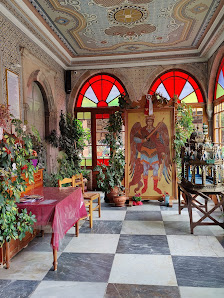
Northrop F-5
Perched near the village of Mandamados in the northern reaches of Lesvos, this retired Northrop F-5 jet fighter stands as an unexpected and striking landmark amid the island's rugged landscape. The F-5 was a supersonic light fighter developed in the United States during the Cold War era and exported widely to allied nations, including Greece, where it served with the Hellenic Air Force for decades. Sleek, compact, and distinctly purposeful in its design, the aircraft represents a chapter of twentieth-century military aviation history that touched even this Aegean island, a reminder that Lesvos occupies a strategically significant position at the northeastern edge of the European Union, just a few kilometers from the Turkish coast. Visitors today can approach the aircraft up close and appreciate its aerodynamic lines, twin engines, and the distinctive silhouette that made the F-5 one of the most recognisable jets of its generation. The static display offers a rare opportunity to stand beside a real combat aircraft outside of a formal museum setting, and its placement in the open air against the backdrop of the north Lesbian hills gives it a certain dramatic quality. Whether you are an aviation enthusiast or simply a curious traveller exploring the island's lesser-known corners, the sight of this Cold War-era fighter resting in quiet retirement near one of Lesvos's most traditional villages creates a thought-provoking contrast between the ancient rhythms of rural Greek life and the turbulent modern history of the Aegean region.
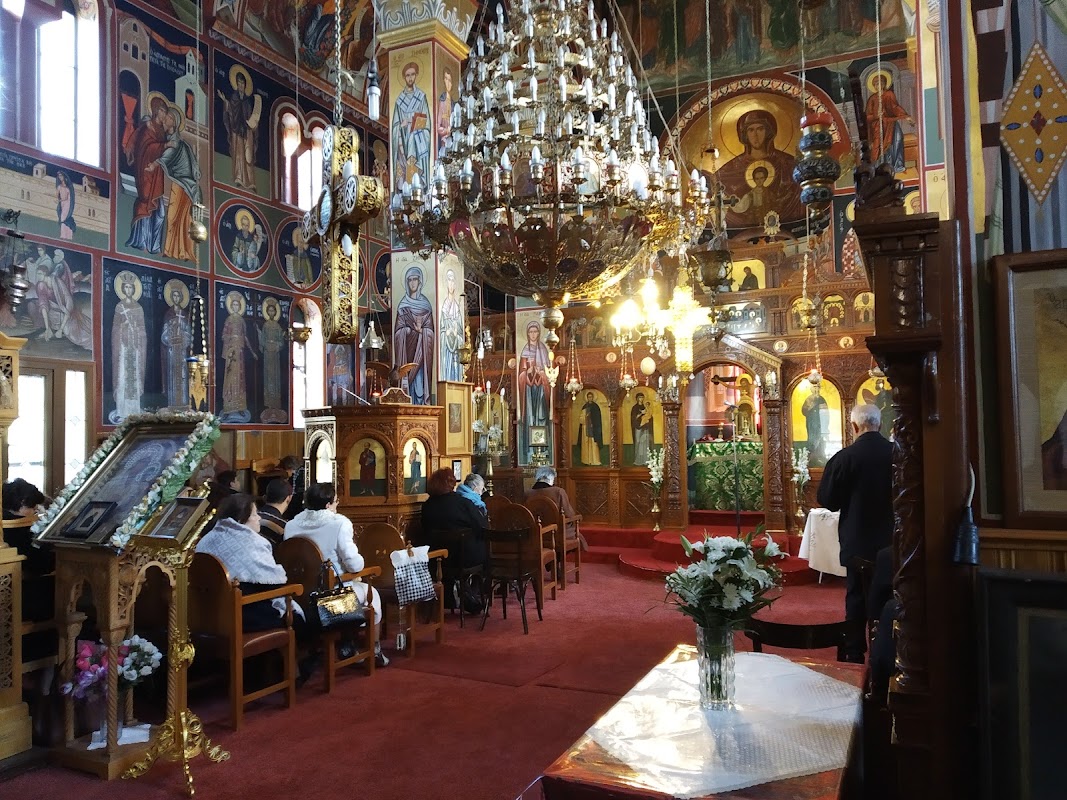
O Agios Ioannis O Kalyvitis
Ο Άγιος Ιωάννης ο Καλυβίτης
Tucked along a rural path near the quiet village of Alyfada, the wayside shrine of Agios Ioannis O Kalyvitis is one of those intimate sacred landmarks that reveal Lesvos at its most authentic. The epithet "Kalyvitis" — derived from the Greek word for a small hut or rustic shelter — suggests a saint associated with humble, ascetic dwelling, a veneration rooted in the long tradition of hermit saints and wandering holy men who sought solitude in the island's wooded hills and olive groves. Wayside shrines of this kind have marked the landscape of Lesvos for centuries, serving as waypoints for travelers, shepherds, and villagers who paused to light a candle and offer a quiet prayer before continuing on their way. The shrine itself reflects the vernacular religious architecture common throughout the Aegean: a small, carefully maintained structure, often whitewashed, housing an icon, an oil lamp, and offerings left by the faithful. These roadside sanctuaries are deeply personal monuments, frequently erected by local families in fulfillment of a vow, in memory of a loved one, or to mark a place where something significant — miraculous or mournful — once occurred. Over generations they become woven into the spiritual geography of their surrounding villages, and the name of Agios Ioannis O Kalyvitis suggests a figure held in particular local affection in this corner of Lesvos. Visitors who venture out to this shrine will find themselves in a landscape that feels far removed from the island's busier tourist routes — rolling terrain, the scent of wild herbs and resin, and a profound quiet broken only by birdsong. It is the kind of place that rewards slow travel and a willingness to step off the main road. For those interested in the living religious folk culture of the Eastern Aegean, Alyfada and its surrounding shrines offer a glimpse into a continuity of devotion that stretches back across many centuries, still tended with care by the people who call this land home.
Old bridge
Nestled in the verdant countryside near the village of Agia Paraskevi, this old stone bridge stands as a quiet remnant of Lesvos's layered past. Bridges of this type were commonly built during the Ottoman period, when the island's network of roads and waterways required sturdy crossings to serve agricultural communities and connect inland villages to coastal markets. Constructed from the local volcanic and sedimentary stone that defines so much of Lesvos's vernacular architecture, the bridge would have carried mule caravans, olive oil merchants, and generations of villagers across the seasonal stream below. Today it survives in ruined form, its weathered stonework slowly being reclaimed by the surrounding vegetation. What remains speaks to the craftsmanship of its builders. Stone arch bridges of this tradition were designed without mortar in key structural sections, relying instead on the precise cutting and placement of voussoirs to distribute weight — a technique that allowed many such bridges across the Aegean to endure for centuries. The setting itself is part of the appeal: the bridge sits within a landscape of olive groves and riparian greenery, typical of the fertile Agia Paraskevi basin, which has long been one of the island's most productive agricultural zones. Visitors who make the short detour from the village will find a place that rewards quiet contemplation rather than spectacle. The ruins are best appreciated as part of a broader wander through the Agia Paraskevi area, which also offers the celebrated Museum of the Olive Pressing and the annual Bull Festival grounds nearby. Together, these sites paint a picture of a community whose rhythms have been shaped by land, water, and trade for many hundreds of years. The old bridge, even in its broken state, anchors that story to the landscape in the most tangible way possible.
Old tank
Perched on the rugged northern coastline near the small village of Gavvathas, this abandoned military tank stands as a silent relic of the twentieth century's turbulent decades in the Aegean. The northwestern coast of Lesvos, facing the narrow strait that separates the island from the Turkish mainland, held considerable strategic significance throughout the Cold War era, and remnants of military infrastructure — watchtowers, fortified positions, and armored vehicles — were stationed at various points along this exposed shoreline. The tank, weathered by decades of salt air and Mediterranean sun, has become part of the landscape itself, its steel hull oxidized to rust-brown tones that echo the dry scrubland surrounding it. Today the old tank draws a particular kind of traveler — those drawn to the melancholy beauty of abandoned machinery and the history embedded in overlooked places. Visitors can walk up close to examine the vehicle, its turret and tracks still largely intact, offering a tangible connection to a period when this quiet stretch of coast was anything but quiet. The setting adds to its haunting quality: the view from here extends across the shimmering Aegean toward the silhouette of the Turkish coast, a reminder of how near the geopolitical fault lines of the twentieth century ran to this seemingly sleepy island. Combined with the wild, wind-swept character of the Gavvathas area — one of Lesvos's least-visited corners — a visit to the old tank feels like a genuine discovery, a moment of unexpected history at the edge of the world.
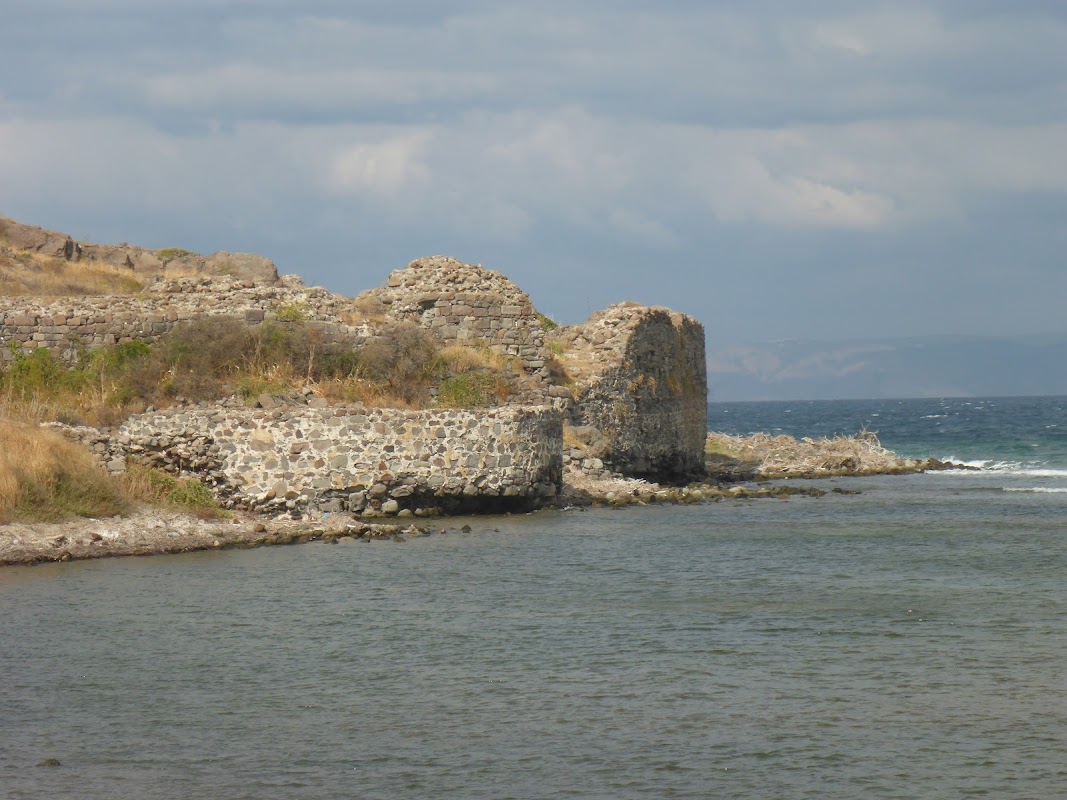
Ovriokastro
Οβριόκαστρο
Perched on a commanding hillside near the village of Archaia Adissa in western Lesvos, Ovriokastro is one of the island's lesser-known but evocative fortified sites. The name itself carries the weight of history: "Ovrio" derives from the Greek word for Hebrew or foreign, a naming convention common across the Aegean that medieval Greeks applied to ancient or mysterious ruins they associated with earlier civilizations. The castle's strategic position overlooking the surrounding landscape speaks to a long tradition of hilltop defense on Lesvos, an island that changed hands between Byzantine, Genoese, and Ottoman rulers over many centuries. Though the precise construction dates are not fully documented, the site reflects the layered military heritage of this part of the Aegean, where controlling the high ground meant controlling the land routes and settlements below. Visitors who make the journey to Ovriokastro are rewarded with the raw, atmospheric quality that only genuinely ancient ruins can offer. Remnants of stone walls and foundations emerge from the scrubland, their weathered surfaces blending into the hillside as if slowly returning to the earth. The rough-hewn masonry speaks to generations of builders who adapted and reused materials across different periods of occupation, a palimpsest of defensive architecture typical of Aegean fortifications. The surrounding terrain of dry stone, wild herbs, and scattered oak gives the site a timeless, solitary character quite unlike the more polished attractions found closer to Mytilene. For those drawn to the quieter, more contemplative side of Lesvos, Ovriokastro offers a genuine sense of discovery. The lack of crowds and formal facilities makes it the kind of place best appreciated by curious travelers willing to explore on foot and read the landscape for themselves. The views across the undulating western interior of the island, far from the coastal tourist trail, are striking and remind visitors that Lesvos is a place of considerable depth and historical complexity beyond its famous beaches and olive groves.
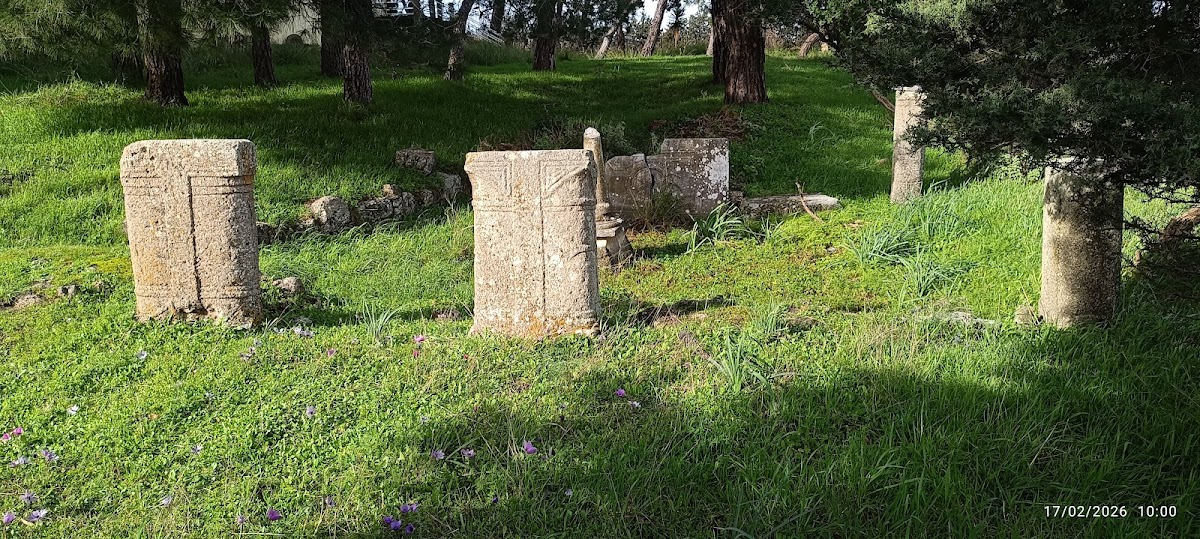
Palaiochristianiki Vasiliki Achladeris
Παλαιοχριστιανική Βασιλική Αχλαδερής
Near the quiet village of Achladeri, in the wooded interior of southern Lesvos, lie the evocative remains of an Early Christian basilica — one of several such monuments that speak to the island's deep roots in Byzantine Christianity. Built during the early centuries of the Christian era, likely between the fourth and sixth centuries AD, the basilica would have served as a focal point of community worship at a time when Christianity was establishing itself as the dominant faith across the late Roman and early Byzantine world. Its location in this part of Lesvos hints at a settled, prosperous agricultural landscape that once supported a larger population than the sparse villages of today suggest. What survives today are the stone foundations and scattered architectural fragments characteristic of the three-aisled basilica form common throughout the eastern Mediterranean during this period. Visitors with an eye for early Byzantine architecture can trace the outline of the nave and flanking aisles, and may spot remnants of column bases, cut stonework, or fragments of decorative elements that once gave the structure a dignified interior. The site is unenclosed and open to the landscape, lending it a contemplative quality that feels entirely appropriate to its sacred origins. The basilica at Achladeri is part of a broader mosaic of early Christian heritage scattered across Lesvos, an island that has been continuously inhabited since antiquity and was touched by early Christian mission relatively soon after the faith spread through the Aegean. For visitors interested in archaeology and Byzantine history, this site offers a rare and unhurried encounter with that layered past, away from the crowds, surrounded by the olive groves and pine-scented hills that define this corner of the island.
Palaiokastro Kallonis Archaia Arisvi
Παλαιόκαστρο Καλλονής Αρχαία Αρίσβη
Perched on a commanding hilltop above the village of Arisvi, Palaiokastro Kallonis marks the site of ancient Arisve, one of the original settlements of Lesvos recorded in classical antiquity. This ancient city was part of the Aeolian Greek world that flourished across the island, and like many such elevated sites, its acropolis was later fortified during the Byzantine period, when the strategic position above the Gulf of Kalloni made it a natural stronghold. The layering of ancient foundations beneath medieval masonry is itself a testament to the continuity of human settlement across centuries, each era finding value in the same commanding promontory. The castle ruins visible today reflect the Byzantine and medieval use of the site, with surviving walls and remnants of towers that once watched over the inland plain stretching toward the gulf. Stone blocks, some clearly repurposed from much older structures, speak to the resourcefulness of later builders who drew upon the ancient city's material legacy. The hilltop setting offers sweeping views across the fertile Kalloni basin, the glittering expanse of the gulf, and the rolling countryside typical of Lesvos's interior, giving visitors an immediate sense of why this location was prized for both habitation and defense across so many generations. Visiting Palaiokastro Kallonis is a quiet, contemplative experience well suited to those who enjoy exploring Lesvos beyond its more frequented coastal spots. There are no crowds here, just rough-cut stone, wild herbs, and a profound sense of accumulated time. The walk up rewards the effort with panoramic scenery, and the site pairs naturally with a drive through the surrounding olive groves and a stop in the village below. For travelers drawn to the deeper historical currents of the Aegean, this overlooked site is a genuine discovery.
Palaiokastro of Gera
Παλαιόκαστρο Γέρας
Perched on a rugged hillside overlooking the sheltered waters of the Gulf of Gera, Palaiokastro — whose name simply means "old castle" in Greek — stands as a weathered sentinel over one of Lesvos's most strategically important inlets. The Gulf of Gera is a vast, almost landlocked bay that offered medieval sailors safe anchorage and provided the surrounding villages with a natural defensive boundary. Fortifications in this area reflect the layered history of the island, which passed through Byzantine hands before coming under the rule of the Genoese Gattelusi dynasty in the fourteenth century, and finally falling to the Ottomans in 1462. Whoever held this elevated position controlled movement along the gulf and the fertile lands spreading inland toward the heart of the island. The remains visible today speak to centuries of exposure and occasional conflict. Thick stone walls and the outlines of towers cling to the rocky terrain, their masonry worn smooth by wind and rain but still commanding in scale. The site's elevation rewards the climb with sweeping views across the gulf's glittering waters, the olive groves that carpet the surrounding slopes, and the quiet village of Mesagros below. While formal excavation and restoration have been limited, the ruins retain an atmospheric quality that rewards unhurried exploration, and the walk up through the scrubland offers a meditative approach suited to the place's antiquity. For visitors with an interest in Lesvos beyond its beaches, Palaiokastro of Gera offers a tangible connection to the island's medieval story. It is the kind of site that asks little of you beyond curiosity and sturdy footwear — no ticket booth, no interpretive panels, just stones set by hands long gone and a panorama that has changed remarkably little in the centuries since the castle's walls were standing whole. Come in the morning when the light falls soft across the gulf and the hills are fragrant with thyme, and the place reveals itself as one of those quietly profound corners of the Aegean that stay with you long after you have left.
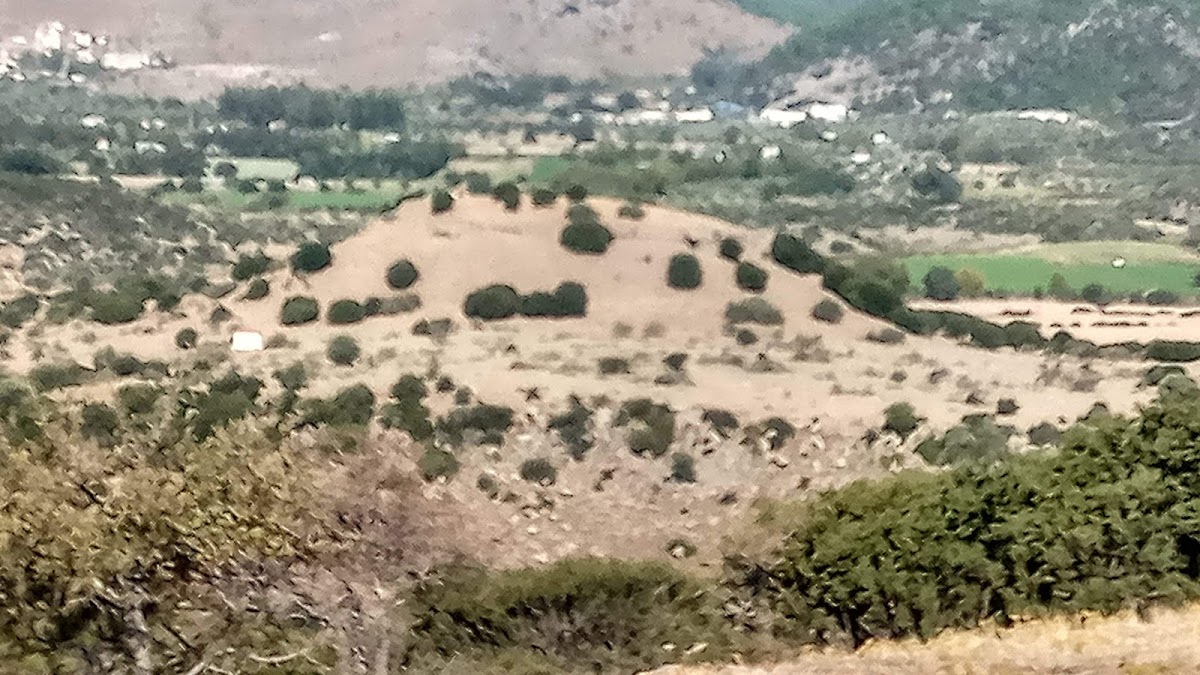
Palaiokastro of Kalloni
Παλαιόκαστρο Καλλονής
Perched above the fertile plains that slope toward the Gulf of Kalloni, the Palaiokastro of Kalloni stands as a weathered sentinel over one of Lesvos's most strategically significant waterways. The name itself, meaning simply "old castle" in Greek, hints at the layers of history embedded in its stones. Like many of Lesvos's medieval fortifications, the site reflects the island's turbulent middle ages, when Byzantine administrators, Genoese lords — most notably the Gattelusi family who ruled Lesvos from the mid-fourteenth century until the Ottoman conquest of 1462 — and later Ottoman authorities each recognized the importance of controlling the approaches to the gulf's sheltered waters. The hilltop position commanding views across the surrounding agricultural landscape and toward the sea would have made it an ideal point for both defense and surveillance. Today visitors who make the journey to the ruins near the quiet village of Arisvi find the characteristic remains of a medieval kastro: fragmentary stone walls rising from the rocky hillside, traces of towers or bastions at the perimeter, and the kind of panoramic outlook that explains precisely why someone chose to build here in the first place. The gulf below, famous among birdwatchers as one of Europe's premier wetland habitats for migratory flamingos and wading birds, shimmers in the middle distance, while the olive groves and fields of the Kalloni basin spread out beneath the castle's feet. The Palaiokastro rewards visitors with a strong sense of place even in its ruined state. It represents the quieter, less-visited side of Lesvos heritage — not the grandeur of Mytilene Castle or the polish of a museum, but the raw, atmospheric remains of a fortified past embedded in an agricultural landscape little changed in its essentials for centuries. For travelers exploring central Lesvos, a stop here pairs naturally with the nearby Gulf of Kalloni and the traditional character of Arisvi, offering a contemplative half-hour that connects the present countryside to its medieval past.
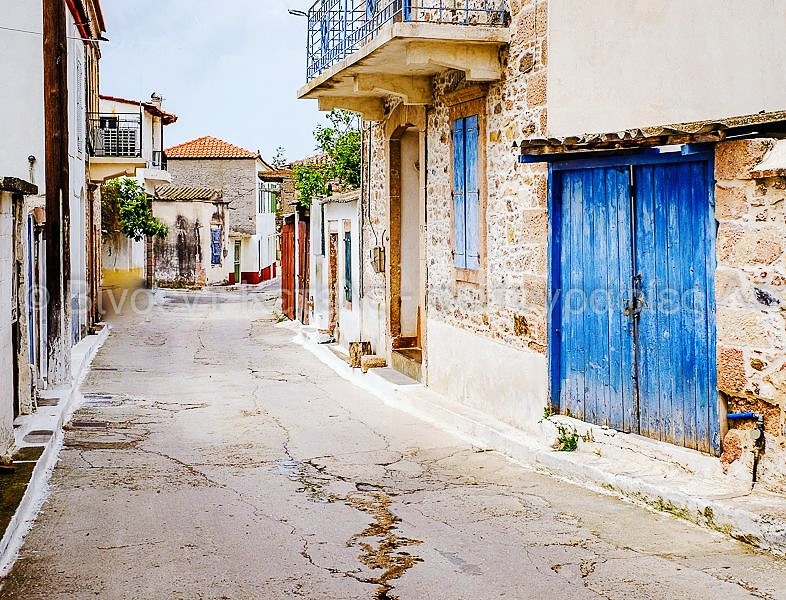
Paliopyrgos of Vrisa
Παλιόπυργος Βρίσας
Rising above the olive-draped hills of southern Lesvos, Paliopyrgos — meaning "old tower" in Greek — is a medieval fortification that watches over the village of Vrisa and the surrounding landscape from its commanding hilltop position. Like many such towers scattered across the island, it bears witness to the turbulent centuries when Lesvos passed through Byzantine, Genoese, and Ottoman hands, each era leaving its mark on the island's defensive architecture. The structure was likely part of a network of watchtowers and strongholds that allowed communities to monitor coastal approaches and signal warnings across the countryside, a necessity during an age when piracy and rival powers made the Aegean a contested sea. The ruins retain enough mass to convey the original scale and purpose of the fortification, with stonework characteristic of medieval Aegean construction. Visitors who make the climb are rewarded not only with a tangible sense of history but with sweeping views over the olive groves, the gentle valleys of the island's southern interior, and on clear days the shimmering expanse of the sea. The walk up also passes through typical Lesbian countryside, where the hum of cicadas and the silver shimmer of ancient olive trees make the journey itself a pleasure. Paliopyrgos sits just outside Vrisa, a village with its own quiet charm and a resilient spirit — the community was significantly affected by the 2017 earthquake and has rebuilt with determination. Together, the village and its old tower offer visitors a layered experience of Lesvos: a place where the medieval past is woven into an agricultural landscape that has changed little in centuries, far from the tourist crowds and rich with authentic character.
Pillory (39.1123, 26.5571)
Standing in the village of Alyfada, this historic pillory is a sobering reminder of the judicial practices that once governed daily life on Lesvos under Ottoman rule and earlier administrations. Public punishment devices such as this were central instruments of social control in Mediterranean communities for centuries, serving both as a means of discipline and as a stark public warning to the wider community. The pillory would have been positioned prominently so that the entire village could witness the humiliation of those deemed to have transgressed local laws or customs, reflecting a justice system rooted in public shame rather than private incarceration. The site offers visitors a tangible connection to the harsher realities of pre-modern life on the island, beyond the beaches and olive groves that define Lesvos today. Alyfada itself is a quiet settlement in the eastern part of the island, and the presence of this relic suggests the village once held enough civic importance to maintain formal mechanisms of local justice. Such artifacts are increasingly rare across the Aegean, making this one of the more unusual heritage points in the region and a point of interest for those drawn to the social and legal history of Greek island communities. Visitors today can view the structure as part of a broader exploration of Alyfada and its surroundings. While the site is modest in scale, it rewards those with an interest in everyday history — the kind that rarely makes it into grand monuments or museum collections but speaks directly to how ordinary people lived, were governed, and were judged. Pair a visit here with a walk through the village lanes and the surrounding olive-covered landscape for a fuller sense of life in this quiet corner of Lesvos.
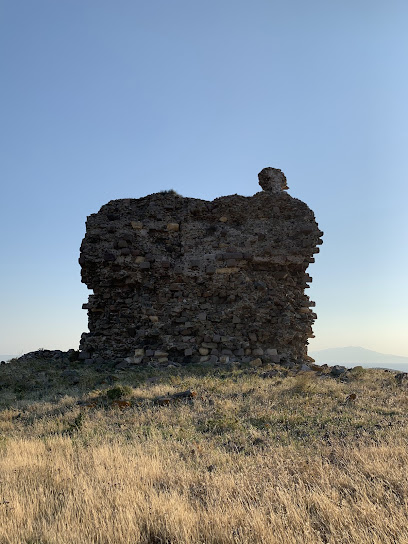
Pordoselene Kulesi
Pordoselene Kulesi takes its name from two distinct layers of history layered upon this windswept corner of northwestern Lesvos. Pordoselene is an ancient toponym recorded by classical geographers to describe this stretch of coastline and its associated islets, a name that evokes the island's deep roots in the Aegean world of antiquity. The word kulesi is Turkish for tower, a reminder that the structure visitors encounter today dates to the long Ottoman period that shaped Lesvos from 1462 until Greek reunification in 1912. Ottoman administrators built watchtowers and small forts along exposed coastlines throughout the Aegean to monitor maritime traffic, guard against piracy, and signal warnings to inland settlements, and this tower served exactly that strategic purpose on a coast that faces the open sea toward the approaches from Anatolia. The fort occupies a position that commands sweeping views over the surrounding coastline and sea, chosen with the practical logic that governed all Ottoman coastal fortifications. Though modest in scale compared to the grand Genoese castle at Mytilini, structures like this one formed the backbone of the island's defensive network, part of a chain of observation points that could relay warnings rapidly across the island. The masonry reflects Ottoman military building traditions adapted to local stone and terrain, and the site retains enough of its original form to convey the scale and character of these frontier installations. Today Pordoselene Kulesi rewards visitors who make the effort to reach it with an atmosphere of quiet historical resonance and exceptional natural scenery. The surrounding landscape of the northwestern Lesvos coast is among the island's most dramatic, with rocky headlands, sparse olive groves, and the deep blue of the Aegean stretching toward the horizon. It is a place where the island's layered identity, ancient Greek, Byzantine, Genoese, Ottoman, and modern Greek, feels especially tangible, written into the stones themselves and the ancient name that the tower still carries.
Rodotoichos I Kalochtistos
Ροδότοιχος ή Καλόχτιστος
Rodotoichos I Kalochtistos is an ancient archaeological site situated in the western reaches of Lesvos, near the quiet settlement of Apothikes. The name itself is revealing: "toichos" is the Greek word for wall, while "kalochtistos" translates as "well-built" or "finely constructed" — a descriptor that ancient inhabitants apparently bestowed on this structure in recognition of its craftsmanship. Sites bearing this epithet typically point to masonry of exceptional quality, the kind that endured through centuries of use and abandonment to remain visible to later generations. The location in western Lesvos places this site within a landscape that has seen continuous human activity since antiquity. This part of the island was inhabited during the archaic and classical periods, when local communities built fortifications, farmsteads, and boundary walls across the hillsides and valleys. Rodotoichos I Kalochtistos likely represents the remains of one such ancient structure — possibly a tower, a stretch of defensive walling, or an enclosure associated with a rural settlement — preserved amid the agricultural terrain that still defines this corner of the island today. Visitors who make their way to this site can expect an experience rooted in quiet discovery rather than curated spectacle. The surrounding countryside near Apothikes offers a glimpse of Lesvos away from its more visited shores, with open views across the western interior. For those drawn to the island's deeper history and the scattered remnants of its ancient past, Rodotoichos I Kalochtistos represents one of those understated but rewarding encounters with the layers of civilization that have shaped this remarkable Aegean island.
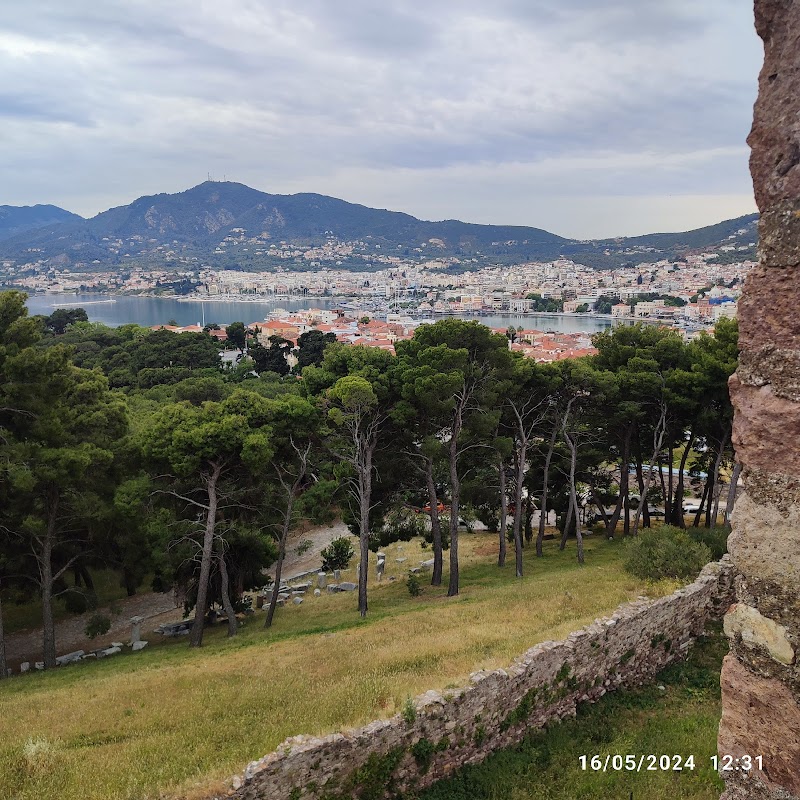
Romaiki Epavli
Ρωμαϊκή Έπαυλη
Romaiki Epavli, whose name simply means "Roman Villa" in Greek, stands as a quiet testament to the centuries when Lesvos formed part of the wider Roman world. The island enjoyed considerable prosperity under Roman rule, and wealthy landowners established country estates across its fertile landscapes, taking advantage of the rich agricultural land, productive olive groves, and the temperate climate that made Lesvos one of the more desirable corners of the Aegean. Sites like this one near Alyfada hint at a rural aristocratic life that once flourished beyond the main urban center of ancient Mytilene, with estates serving both as working agricultural operations and as retreats from city life. Visitors to the site today can explore the surviving structural remains that give the place its enduring name, likely including foundation walls, worked stone elements, and the characteristic layout fragments that archaeologists associate with Roman domestic and estate architecture in the eastern Mediterranean. The setting itself, in the gently rolling countryside near the small community of Alyfada, preserves something of the pastoral atmosphere these ancient landowners would have sought. The proximity to the Aegean coastline and the surrounding olive-covered hillsides provides a sense of continuity, as the landscape has changed relatively little in its fundamental character over the intervening centuries. What makes Romaiki Epavli particularly worthwhile for the historically curious traveler is the way it grounds the abstract history of Lesvos in something tangible and local. While the great classical poets and philosophers associated with the island are celebrated elsewhere, sites like this one speak to the everyday texture of life across many generations — the farms, estates, and households that sustained Lesvos through antiquity. The site rewards those who come with some patience and imagination, allowing the remaining stones to sketch out the outline of a world that shaped this corner of Greece long before the modern villages of the island took form.
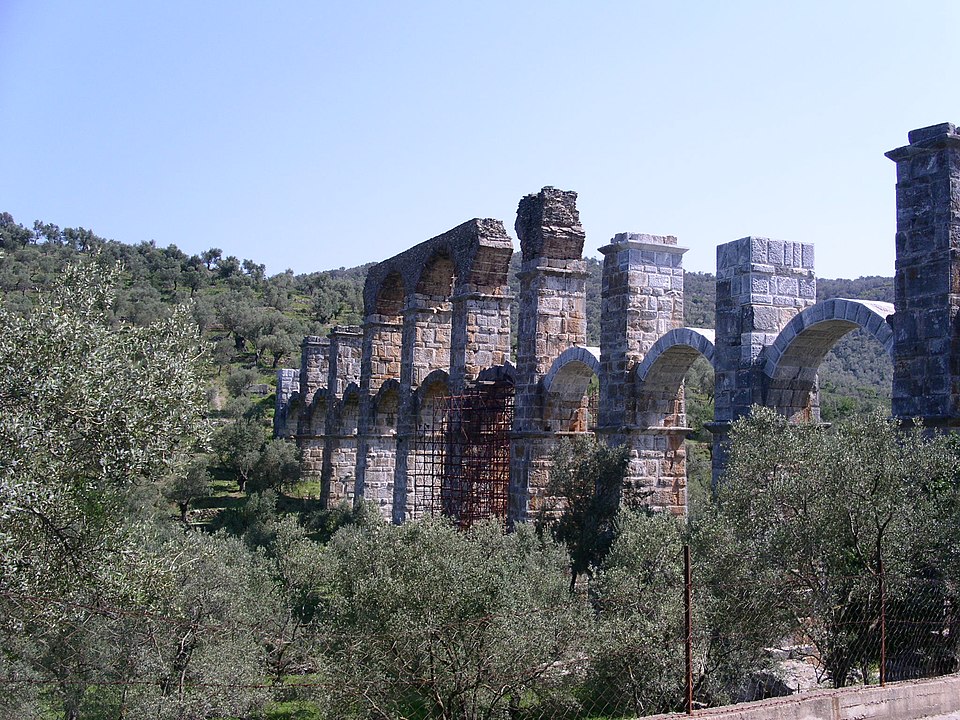
Roman Aqueduct
Ρωμαϊκό Υδραγωγείο Μόριας
Standing in the olive groves near the village of Moria, the Roman Aqueduct of Lesvos is one of the most impressive surviving examples of ancient hydraulic engineering in the eastern Aegean. Built during the Roman imperial period, this monumental structure was designed to carry fresh water from inland springs across the undulating landscape to the thriving city of Mytilene on the coast. Its multi-tiered arches of carefully cut stone stretch across the valley in a series of graceful spans, rising to a considerable height at their tallest points and bearing quiet witness to the organizational ambition and technical mastery of Roman provincial rule. The quality of construction speaks to how important Lesvos was as a prosperous outpost of the empire, wealthy enough to commission the kind of grand public infrastructure more commonly associated with Rome itself or the great cities of Asia Minor. What visitors encounter today is a remarkably well-preserved ruin that rewards close inspection. Walking among the arches, you can trace the channel that once guided water along the top of the structure and appreciate how the engineers calculated gradients across difficult terrain. Much of the stonework remains intact, and the scale of the monument — rising above the surrounding landscape — gives a vivid sense of Roman civic ambition. The setting itself is atmospheric: wild vegetation has softened the ancient masonry over the centuries, and the play of light across the stone at different times of day makes the site a rewarding subject for photography. Beyond its architectural interest, the aqueduct carries broader significance as a tangible link between the modern island and its layered past. Lesvos has been inhabited and contested across millennia — by Greeks, Persians, Romans, Byzantines, Genoese, and Ottomans — and this structure anchors a specific chapter of that long story in stone. It is easily combined with a visit to the nearby village of Moria and the ancient olive groves of the surrounding countryside, making it a natural stop for travellers curious about the island's deeper history beyond its famous beaches and medieval monuments.
Roman Aqueduct at at Lambou Mili
Ρωμαϊκό Υδραγωγείο
Nestled in the verdant hills near the village of Lampou Mili, the Roman aqueduct stands as one of Lesvos's most tangible connections to its ancient past. Built during the Roman period of occupation, when engineering ambition transformed the Aegean world, the structure was part of a network designed to channel freshwater from the island's inland springs and streams down to coastal settlements and agricultural lands. The name of the nearby village itself — "Mili" meaning mills in Greek — hints at a long history of harnessing the area's natural water resources, and the aqueduct fits squarely into this tradition of hydraulic ingenuity that shaped life on the island for centuries. What remains today speaks quietly but powerfully to the craftsmanship of its builders. Visitors can observe sections of the original stonework and arched construction that characterize Roman aqueduct engineering throughout the Mediterranean, set against a landscape of olive groves and rolling hills that has changed little in character since antiquity. The scale and precision of the surviving masonry offer a vivid sense of the organizational capacity of the Roman world and the importance placed on reliable water supply for urban and rural life alike. The site rewards those willing to venture off the well-worn tourist trail. Accessible from Lampou Mili, it combines naturally with a walk through the surrounding countryside, where the sound of running water and the shade of old trees create an atmosphere of timeless calm. For history enthusiasts and curious travelers alike, the aqueduct is a reminder that Lesvos was never a backwater but a fully integrated part of the ancient Mediterranean world, shaped by the same ambitions and technologies that built Rome itself.
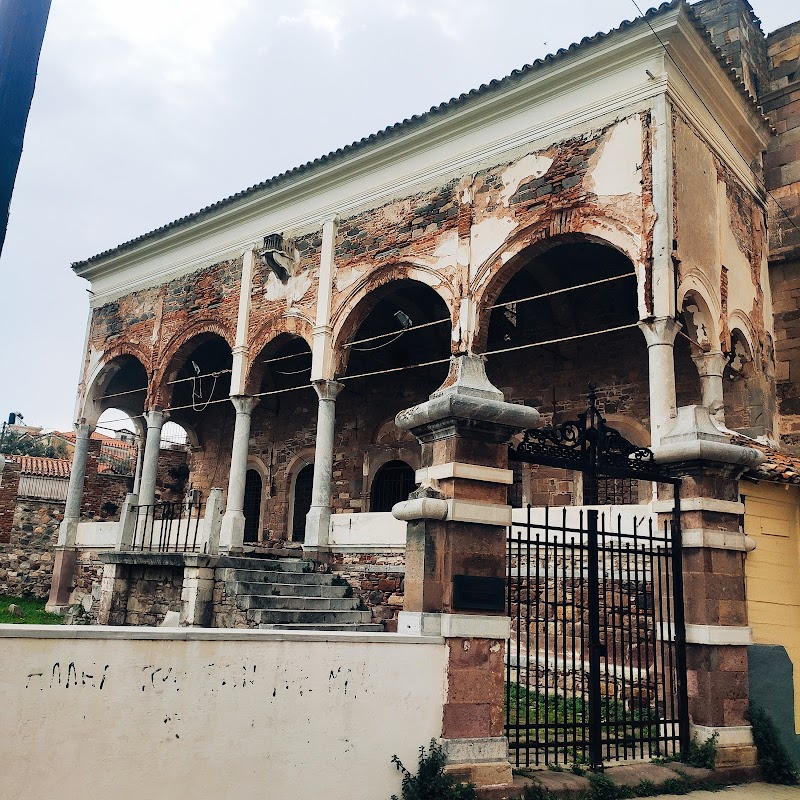
Roman House
Ρωμαϊκή Οικία
Tucked into the rural landscape near the small village of Alyfada, the Roman House is a rare glimpse into the domestic life of Lesvos during the Roman imperial period, when the island enjoyed considerable prosperity as part of the broader Mediterranean world. Roman rule brought new architectural influences to the Aegean, and this archaeological site preserves the foundations and structural remains of what was once a private dwelling, offering tangible evidence of how the island's inhabitants lived during an era when Lesvos was integrated into the vast networks of Roman trade and culture. The site reveals characteristic features of Roman domestic architecture, including the organized spatial layout that typically defined houses of some standing in provincial Roman settlements. Visitors can trace the outlines of rooms arranged around a central area, and observe construction techniques that blend local building traditions with Roman influence. Stone foundations and floor remnants hint at a household that was part of a wider agricultural or estate economy, reflecting the prosperity that the fertile eastern Aegean landscape could sustain across centuries. For visitors willing to venture off the well-trodden tourist paths, the Roman House offers a quietly rewarding experience. The setting itself, surrounded by the olive groves and rolling terrain typical of this part of Lesvos, adds a contemplative quality to the visit. It is the kind of site that rewards curiosity and imagination, inviting you to piece together the rhythms of everyday Roman life in this corner of the ancient world. Combined with the broader archaeological richness of Lesvos, which spans Neolithic, classical, Hellenistic, and Byzantine layers, the Roman House stands as a meaningful thread in the island's long and layered human story.
Roman fish tank
Ρωμαϊκή ιχθυοδεξαμενή
Carved into the rocky shoreline near the quiet hamlet of Alyfada, this ancient fish tank stands as a quiet testament to the sophistication of Roman aquaculture along the Aegean coast. Structures of this kind, known in Latin as piscinae maritimae, were a hallmark of prosperous Roman coastal estates, engineered to keep live fish and seafood fresh for the table by harnessing the natural flow of seawater through channels and basins cut directly into the rock. Their presence on Lesvos reflects the island's integration into the wider Roman world during antiquity, when its fertile lands and strategic position in the eastern Aegean made it a place of considerable wealth and cultural exchange. The tank itself is hewn from the coastal bedrock, its rectangular basin and connecting channels still clearly legible despite centuries of exposure to wind and sea. The craftsmanship involved in cutting and sealing such structures required considerable skill, and their construction was typically associated with nearby villa complexes whose owners valued a reliable supply of fresh fish. The site near Alyfada offers a compelling glimpse into the daily rhythms of Roman provincial life, far removed from the grand monuments of the capital yet no less revealing of Roman ingenuity and appetite for comfort. Visitors today can explore the site on foot along the coastline, where the rock-cut basin remains exposed and accessible. The setting itself is evocative, with the blue waters of the Aegean lapping close by and the surrounding landscape largely unspoiled. It is the kind of site that rewards curiosity — understated, rooted in place, and offering a rare tangible connection to the people who shaped this island's long history.
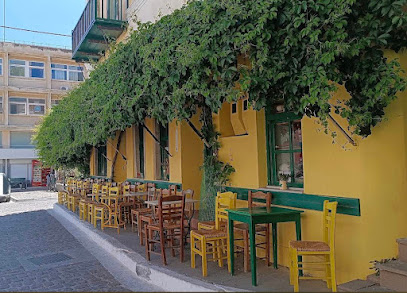
Ruins (38.9748, 26.3676)
Scattered across a hillside above the southern coast of Lesvos, these ruins stand as silent evidence of the island's long arc of human habitation. The area around Plomari has been settled since antiquity, and fragments of masonry, foundation walls, and cut stone visible at this site speak to a history that likely spans several centuries. Lesvos changed hands repeatedly over the millennia — passing through Archaic Greek, Hellenistic, Roman, Byzantine, and Ottoman stewardship — and remnants like these often reflect that layered occupation, with later builders repurposing earlier stonework in a practice that was entirely common across the Aegean world. Visitors who make their way to this site will find the kind of atmospheric ruin that rewards a slow, unhurried visit. Tumbled courses of stone, the ghost outlines of walls, and the occasional worked block hint at the scale of what once stood here. The elevated position offers views toward the Aegean and across the olive-covered slopes that define this corner of the island, giving some sense of why the original inhabitants may have chosen this ground. Wildflowers and scrub have softened what remains, giving the site a melancholy beauty typical of southern Lesvos. The ruins sit within easy reach of Plomari, a lively coastal town famed throughout Greece for its ouzo distilleries, and the two make natural companions for a half-day excursion. Coming here from Plomari — passing through groves of ancient olive trees that are themselves living monuments to the island's history — adds a layer of continuity to the visit. These are not grand, excavated ruins with explanatory signage, but rather the kind of place that asks the visitor to slow down, look closely, and let the landscape tell what it can of the past.
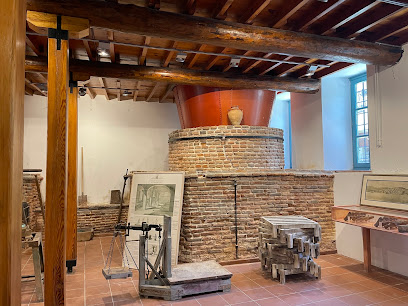
Ruins (38.9750, 26.3673)
Perched in the sun-bleached hills above Plomari, these ancient ruins stand as silent testament to the layered human history of southern Lesvos. The southern coast of the island was settled from antiquity, and the remnants here — scattered stone foundations, collapsed walls, and architectural fragments worn smooth by centuries of wind and heat — speak to a settlement that likely thrived during the Byzantine era, when the interior highlands offered both protection from coastal raiders and access to the fertile valleys below. The area around Plomari has been continuously inhabited for millennia, and sites like this one represent the physical memory of communities that predate the modern town by hundreds of years. Walking among the ruins, visitors can trace the outlines of former structures in the low stone courses that emerge from the scrub and wild thyme. Dressed masonry blocks, some still bearing the marks of ancient quarrying, lie where they fell, gradually being reclaimed by the landscape. The setting itself is evocative — views stretching toward the Aegean and the olive groves that have defined Lesbian agriculture since antiquity frame the site with a beauty that makes the act of contemplation feel natural. Archaeologically, southern Lesvos remains relatively under-excavated compared to the island's northern reaches, lending sites like this a sense of quiet mystery. For travellers visiting Plomari — itself renowned as the spiritual home of Lesvos ouzo — this site offers a worthwhile detour into the island's deeper past. It rewards those willing to engage their imagination alongside the bare stones, piecing together the rhythms of a community that once cultivated these slopes, sheltered within these walls, and looked out over the same shimmering sea that draws visitors today.
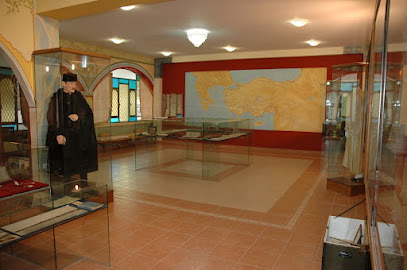
Ruins (39.0362, 26.5107)
Scattered across a sun-bleached hillside near the quiet settlement of Marmaro, these ruins offer a compelling glimpse into the layered human history that defines the Lesvos interior. The island has been continuously inhabited since antiquity, passing through ancient Greek, Byzantine, Genoese, and Ottoman hands over the millennia, and sites like this one bear silent witness to each successive chapter. The stonework visible here, worn smooth by centuries of wind and rain, is characteristic of the vernacular building traditions that once sustained small agricultural and pastoral communities throughout this part of central Lesvos. What visitors encounter today is an evocative landscape of tumbled walls and foundation lines, their outlines still legible against the scrubby Mediterranean vegetation. The setting itself rewards contemplation: the elevated position typical of such sites was no accident, offering both defensive advantage and commanding views across the surrounding countryside toward the distant shimmer of the Aegean. Fragments of cut stone and the occasional carved architectural element hint at a structure that, in its day, would have formed the heart of a functioning community. For travelers willing to venture off the well-worn tourist routes, a visit here provides a meditative counterpoint to the island's beach resorts and busy harbor towns. The site is best approached in the cooler hours of morning or late afternoon, when the quality of light brings the textures of the ancient stonework into sharp relief. Combined with a drive through the surrounding villages and olive groves, it forms part of a broader picture of a Lesvos that has been quietly inhabited, built upon, and loved for thousands of years.
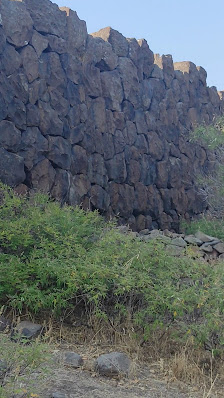
Ruins (39.0780, 26.0925)
Scattered across a quiet hillside near the small settlement of Apothikes, these ruins offer a silent testament to the layered human history that has shaped the interior of Lesvos over many centuries. The name Apothikes itself — meaning "storehouses" in Greek — hints at the agricultural and commercial activity that once animated this part of the island, and the remnants of stone foundations and collapsed walls visible here speak to a community that once thrived in this now-tranquil landscape. Whether dating to the Byzantine era, the long Genoese occupation of the fourteenth and fifteenth centuries, or the subsequent Ottoman period, such rural ruins are characteristic of an island that passed through many hands, each leaving its mark on the land. Visitors approaching the site will find the kind of atmospheric, unexcavated remains that define much of Lesvos's hinterland — courses of dressed stone, the outlines of rooms and enclosures, and fragments of wall that have slowly been reclaimed by wild herbs and scrub oak. The setting itself rewards exploration, with views across the olive-covered slopes that have defined the island's economy for millennia. Unlike the island's more prominent archaeological sites, places like this carry a particular intimacy; there are no crowds, no fences, and no interpretive panels, only the texture of old stone and the sound of wind moving through the countryside. For travelers with an interest in vernacular history and the quieter chapters of the Aegean past, these ruins represent something genuinely valuable: an unmediated encounter with the deep time of a Mediterranean island. The area around Apothikes remains largely off the tourist circuit, making a visit here feel like genuine discovery. Those who make the effort to seek out such sites come away with a richer appreciation for the complexity of Lesvos — not simply as a place of beaches and ouzo, but as a landscape dense with forgotten lives and untold stories.
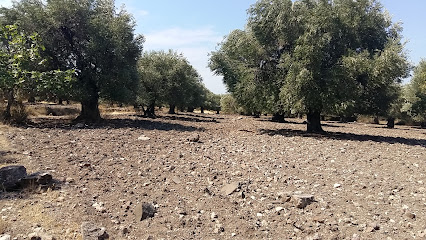
Ruins (39.0898, 26.1034)
Scattered across the hillside near the small settlement of Apothikes, these ancient ruins offer a quiet but evocative window into Lesvos's layered past. The island has been continuously inhabited since the Bronze Age and passed through Archaic Greek, Roman, Byzantine, Genoese, and Ottoman hands, leaving behind traces at countless unmarked sites like this one. The stonework visible here — tumbled walls, foundation lines, and worked blocks — speaks to a settlement or agricultural complex that once animated this corner of the island, though the full story of its origins and use awaits more systematic archaeological study. The setting itself rewards a visit. The ruins sit within a broader landscape shaped by centuries of human activity: terraced hillsides, ancient olive groves, and the characteristic drystone walls that crisscross rural Lesvos. Visitors willing to explore on foot can trace the outlines of former structures and take in views that have changed little in their essential character over the centuries. The silence of the site — far from the tourist circuits of Mytilene or Molyvos — makes it easier to feel the depth of time embedded in the landscape. For those with an interest in archaeology or rural history, Apothikes and its surrounding ruins represent the less-celebrated but deeply authentic side of Lesvos: a working island whose countryside is as historically rich as its famous towns. The site is best explored with good footwear and an unhurried spirit, perhaps as part of a longer ramble through the surrounding hills where remnants of the island's long human story continue to surface at every turn.
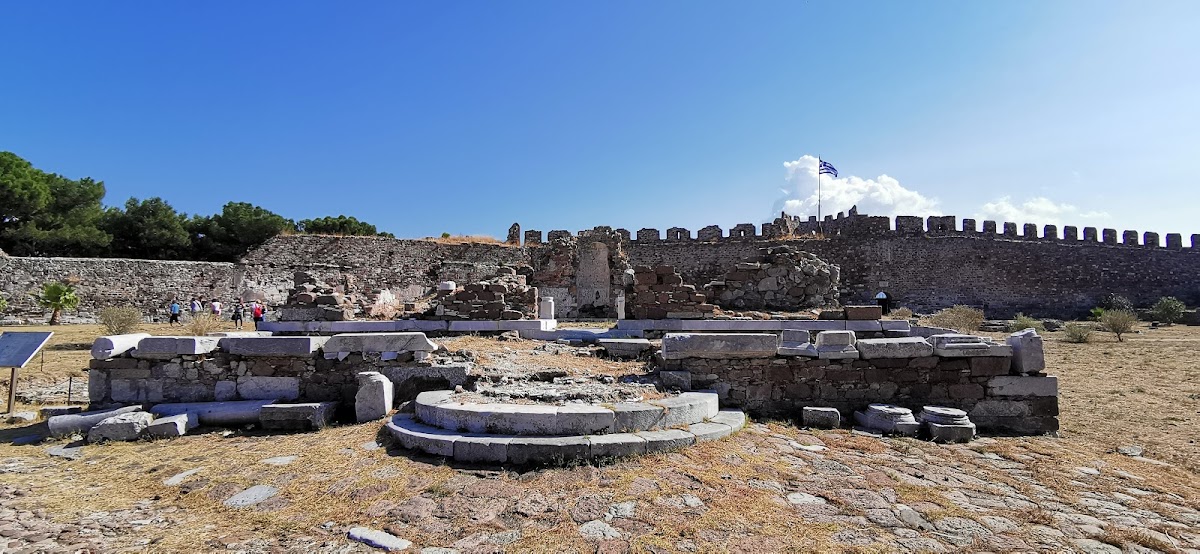
Ruins (39.1103, 26.5621)
Scattered across a hillside near the quiet settlement of Alyfada, these ruins speak to the layered human history that marks so much of Lesvos's interior landscape. The island has been inhabited continuously for millennia, passing through ancient Greek, Roman, Byzantine, Genoese, and Ottoman hands, and fragmentary remains like these are often all that survive of once-functioning settlements, farmsteads, or minor religious foundations. The stonework visible here reflects the practical building traditions common to the eastern Aegean, where local granite and limestone were shaped into walls that served generations before being abandoned to time, earthquake, and the slow reclamation of the Mediterranean scrub. Visitors who make the effort to seek out this site will find a rewarding sense of quiet discovery away from the island's busier destinations. The rural surroundings near Alyfada are typical of Lesvos's lesser-visited eastern hinterland, where olive groves and low stone terraces hint at centuries of agricultural life. The ruins themselves invite careful observation: look for the remains of foundation courses, the outlines of rooms or enclosures, and the way the site relates to its topography, often chosen for defensibility, water access, or views across the surrounding countryside. Places like this carry a particular value for travelers interested in the unpolished texture of Greek history. Without signage or crowds, they demand a degree of imagination and engagement, encouraging visitors to piece together a sense of how ordinary life on Lesvos once looked beyond the grand monuments. A visit pairs well with exploration of the surrounding villages and landscape, where locals can sometimes offer their own knowledge of what the old stones once were.
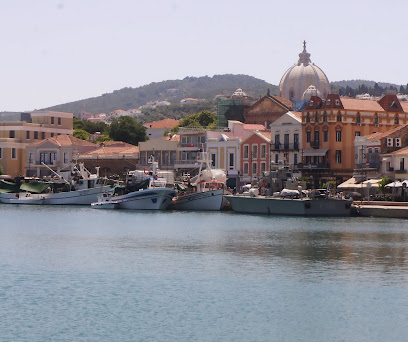
Ruins (39.1105, 26.5630)
Scattered across the gentle hillside near the quiet village of Alyfada, these ruins stand as silent testimony to the layered human history that defines Lesvos. The island's position in the northeastern Aegean made it a crossroads of civilizations for millennia, and fragments of stone walls, foundation courses, and worked masonry visible at this site hint at settlement activity spanning from antiquity through the Byzantine and later medieval periods. Lesvos changed hands many times over the centuries, leaving behind traces of communities that farmed, fished, and traded along its northern shores long before the villages that exist today took their present form. Visitors who make their way to this quiet corner of the island will find a contemplative landscape where history and nature have grown together. Tumbled masonry lies half-hidden beneath wild herbs and scrubland, and the surrounding countryside offers sweeping views toward the Aegean coast. The rural setting rewards those with a curiosity for the less-visited corners of Lesvos, where the absence of tourist infrastructure allows a more personal encounter with the island's past. Nearby Alyfada retains the unhurried character of a traditional Lesbian village, making it a fitting base from which to explore the area. What gives sites like this their particular resonance is not any single dramatic monument but the cumulative sense of deep habitation — the understanding that people have lived, built, and left their mark on this landscape across many generations. While archaeological signage and excavation records may be limited, the ruins reward patient observation, offering fragments of carved stone, traces of walls following the natural contours of the land, and the occasional ceramic shard that hints at daily life in ages past. For history-minded travelers seeking authenticity over spectacle, this is exactly the kind of discovery that makes wandering the back roads of Lesvos so rewarding.
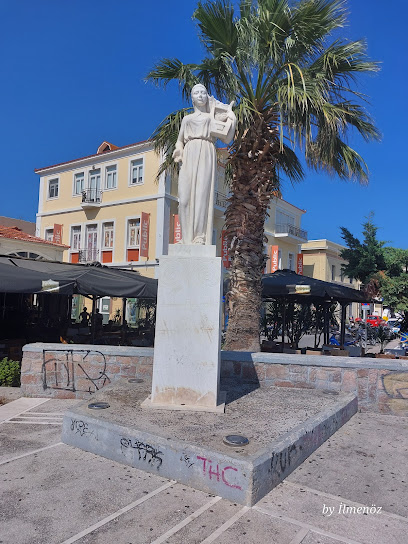
Ruins (39.1107, 26.5625)
Scattered across the hillside near the quiet settlement of Alyfada, these ancient ruins offer a tangible connection to the long human story of northern Lesvos. The island's position in the northeastern Aegean made it a crossroads of civilizations for millennia, and remnants like these speak to layers of habitation stretching from the classical Greek period through Byzantine and later Ottoman eras. Stone foundations, tumbled walls, and worked masonry fragments emerging from the scrub vegetation suggest a settlement or structure of some significance, though much remains unexcavated and the historical record for this particular site is incomplete. What visitors encounter today is an evocative landscape of weathered stonework gradually returning to nature, framed by the characteristic Lesbian terrain of olive groves, rocky outcrops, and distant sea views. The quality of the surviving masonry — where visible — reflects the skilled construction traditions common across the Aegean world, with large-cut blocks and careful coursework hinting at a building of more than everyday purpose. The isolation of the site adds to its atmosphere; without crowds or interpretation boards, there is a rare sense of genuine discovery. For travellers willing to seek out places off the beaten path, ruins like these near Alyfada reward the effort with quiet contemplation and the pleasure of imagining the lives once lived here. Lesvos is an island where archaeology and landscape are inseparable, and even incompletely understood sites carry real historical weight. Those with a deeper interest in the island's past may wish to cross-reference a visit here with the collections at the Archaeological Museum of Mytilene, which contextualises the many periods of settlement that left their mark across Lesvos.
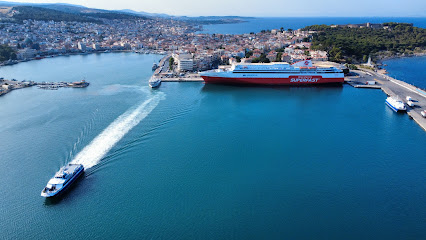
Ruins (39.1107, 26.5636)
Scattered across a quiet hillside near the small settlement of Alyfada, these ancient remains offer a glimpse into the layered human history of eastern Lesvos. The island was continuously inhabited from prehistoric times through the classical Greek, Hellenistic, Roman, Byzantine, and Ottoman periods, and rural sites like this one often preserve traces of multiple eras — foundations, cut stonework, and ceramic fragments that specialists have used to piece together the rhythms of settlement and agriculture that shaped this corner of the Aegean. The precise history of this particular site awaits fuller archaeological study, but the stonework visible at ground level suggests it formed part of the broader network of rural estates, watchtowers, or ancillary structures that dotted the island's interior and coastal approaches in antiquity. What visitors find today is an atmospheric, largely unexcavated site where weathered masonry emerges from the scrubland and olive groves characteristic of this part of Lesvos. The surrounding landscape — gently rolling terrain with views toward the eastern coastline and the strait that separates Lesvos from the Turkish mainland — helps explain why this location was chosen in the first place, offering natural vantage points and proximity to fertile agricultural land. Walking among the stones, one gains a tangible sense of the island's deep continuity of habitation, unmarked by tourist infrastructure and all the more evocative for it. For travelers with an interest in archaeology or simply in getting off the beaten path, the ruins near Alyfada reward a short detour. The village itself is a tranquil base, and the site fits naturally into a wider exploration of eastern Lesvos's lesser-visited interior. Those seeking context are advised to visit the Archaeological Museum of Mytilene beforehand, where finds from across the island illuminate the kinds of communities that once built and inhabited places like this one.
Ruins (39.1108, 26.5632)
Scattered across a hillside near the quiet hamlet of Alyfada in northeastern Lesvos, these ruins offer a quietly compelling glimpse into the island's layered past. Lesvos has been continuously inhabited since antiquity, passing through ancient Greek, Byzantine, Genoese, and Ottoman hands over the millennia, and the stonework visible here reflects that long accumulation of habitation and abandonment. The precise origins of this particular site remain subject to scholarly inquiry, but the construction techniques and positioning — commanding views over the surrounding landscape — are characteristic of the medieval and post-Byzantine settlements that once dotted the island's interior. Visitors approaching the site will find tumbled masonry, foundation outlines, and fragments of walls that hint at the scale of what once stood here. The elevated position likely served both practical and defensive purposes, as communities throughout Lesvos historically sought higher ground during periods of piracy and regional instability. The surrounding terrain, covered in wild herbs and scrub oak, lends the ruins an atmosphere of solitude that invites quiet contemplation. Archaeologically minded travelers will appreciate the way the stonework sits naturally into the hillside, while those simply seeking an off-the-beaten-path experience will find the walk to the site reward enough. What makes this place worth seeking out is precisely its anonymity. Unlike the island's more celebrated ancient sites, these ruins near Alyfada have not been fenced off or curated — they exist as Lesvos itself so often does, open and unhurried, asking nothing more of the visitor than curiosity. The absence of crowds and the surrounding agricultural landscape of olive groves and dry stone walls make for an experience that feels genuinely intimate with the island's deep human history.
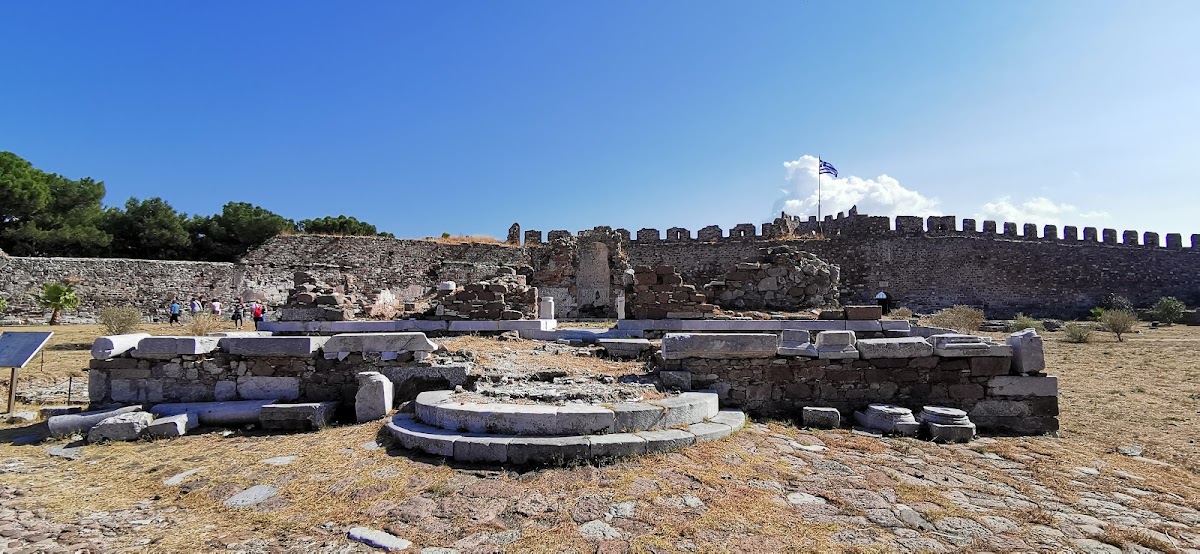
Ruins (39.1115, 26.5641)
Scattered among the quietly beautiful landscape near the village of Alyfada in northern Lesvos, these ruins stand as silent testimony to the island's layered history. Lesvos has been continuously inhabited since antiquity, passing through the hands of ancient Greek city-states, the Byzantine Empire, the Genoese, and the Ottomans, and the fragmentary stonework visible here reflects that depth of occupation. Without detailed archaeological documentation for this precise site, the remains most likely date to the Byzantine or post-Byzantine period, when rural settlements and small ecclesiastical or agricultural structures dotted the island's interior and coastal fringes. Visitors who make their way to this spot will find a landscape where worked stone, weathered walls, and scattered masonry have become part of the natural environment, half-claimed by vegetation and the passage of centuries. The setting itself rewards the journey — the rolling terrain of northern Lesvos, with its mix of olive groves, pine-covered hillsides, and distant views toward the Aegean, provides a striking backdrop for quiet contemplation. This kind of unexcavated ruin is common across Lesvos and speaks to how densely populated and agriculturally active the island once was. The ruins near Alyfada are best appreciated by those who enjoy off-the-beaten-path exploration and are comfortable with sites that offer atmosphere over interpretation. There are no visitor facilities, signs, or guardrails — just the stones themselves and the countryside around them. Coming here with a spirit of curiosity and respect for the landscape will yield the most rewarding experience. Wear sturdy footwear, bring water, and take time to look carefully; the island has a way of revealing its past to those willing to slow down and look closely.
Ruins (39.1116, 26.5606)
Scattered across the hillside near the quiet settlement of Alyfada, these ancient remains speak to the deep layers of habitation that mark this corner of Lesvos. Like much of the island's interior, this stretch of land has witnessed the passage of successive civilisations — from the archaic and classical Greek periods through Byzantine rule and into the Ottoman era — each leaving behind traces in stone that time and vegetation have slowly reclaimed. The precise origins of this particular site remain part of the broader archaeological tapestry of Lesvos, an island that has never been fully excavated and continues to yield surprises to researchers and curious walkers alike. What visitors encounter today is an evocative landscape of tumbled masonry, foundation outlines, and weathered stone that rewards slow, attentive exploration. The rural setting, away from the more visited sites of the island, lends the place a contemplative stillness. Fragments of worked stone and the faint geometry of former walls hint at a settlement or structure of some consequence, though the silence of the surrounding scrubland now stands in for whatever activity once animated the site. Olive trees, some of considerable age, grow among the ruins, blurring the boundary between the built and the natural in the way that is so characteristic of the Aegean landscape. For travellers drawn to the quieter, less curated side of Lesvos, a visit here pairs well with an exploration of the surrounding countryside and the village of Alyfada itself. This is not a site of grand monuments or explanatory signage, but rather one of those unassuming places that reminds you how thoroughly inhabited — and how long inhabited — this island has been. Comfortable footwear is advisable, and the early morning or late afternoon light casts the stonework in its most atmospheric relief.
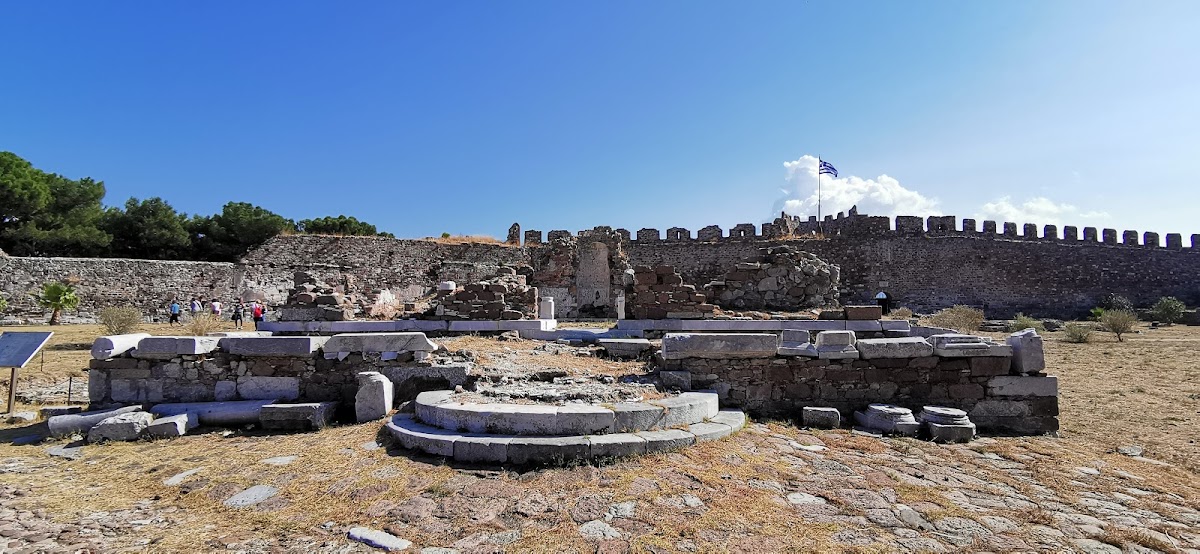
Ruins (39.1117, 26.5615)
Scattered across a hillside near the quiet settlement of Alyfada, these ruins speak to the deep historical layering that characterizes so much of Lesvos. The island has been continuously inhabited since antiquity, passing through ancient Greek, Byzantine, Genoese, and Ottoman hands, and sites like this one preserve the quiet evidence of that long human presence. Stone foundations and tumbled masonry emerge from the scrubland, their exact origins difficult to pin down without excavation, yet unmistakably the remnants of a settled community that once found reason to build and remain here. The surrounding landscape offers important context. Alyfada lies in a part of Lesvos where agricultural terracing, olive groves, and the remains of older field systems still trace the outlines of past economies. Ruins of this kind often represent farmsteads, minor ecclesiastical structures, or the edges of settlements that contracted or shifted over centuries in response to plague, piracy, or political upheaval. Byzantine-era stonework in the region frequently shows reuse of earlier ancient material, a pragmatic continuity that gives even modest ruins a compressed archaeological significance. For visitors, the appeal is less about dramatic monuments than about atmosphere and imagination. Walking among the overgrown stones, with views across the Aegean visible through the trees, invites a sense of how densely this island was once populated and how thoroughly time reclaims its architecture. Those with an interest in rural archaeology or simply in wandering off the tourist circuit will find these ruins a rewarding detour from the nearby village, best visited in the cooler morning hours when the light catches the old stonework at a low angle.
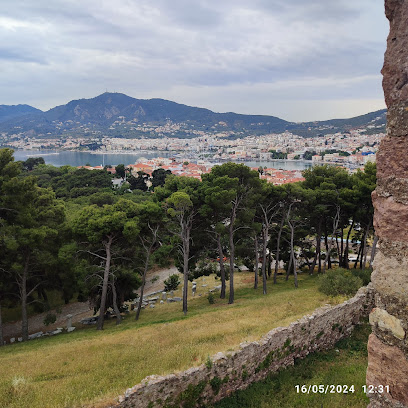
Ruins (39.1119, 26.5609)
Scattered across a hillside near the quiet village of Alyfada, these ancient ruins offer a compelling glimpse into the layered human history of northern Lesvos. The site preserves remnants of stone foundations and structural fragments that speak to centuries of settlement in this corner of the island, where fertile land and proximity to the Aegean made habitation attractive across multiple historical periods. Like many sites throughout Lesvos, the stonework reflects the accumulated presence of successive civilizations — ancient Greek, Roman, Byzantine, and later Genoese and Ottoman — each leaving traces upon the landscape that patient visitors can begin to read. Today the ruins sit in a landscape of olive groves and low scrub, the kind of setting that rewards slow exploration. Dressed stone blocks, collapsed wall sections, and scattered architectural fragments lie in varying states of preservation, hinting at structures that once served the communities of this fertile interior. The elevation affords views across the surrounding countryside toward the coast, a reminder that these settlements were chosen as much for their strategic vantage as for their agricultural potential. For travelers with an interest in Lesvos beyond its beaches and villages, this site represents one of the island's quieter historical encounters. The absence of interpretive signage and crowds means a visit here feels genuinely exploratory, a chance to stand in the ruins of an unnamed past and appreciate the remarkable depth of human presence on this Aegean island. It pairs naturally with a drive through the surrounding villages and the olive-grove landscapes that have defined this part of Lesvos for millennia.
Ruins (39.1119, 26.5616)
Scattered across a hillside near the quiet hamlet of Alyfada, these ancient ruins offer a compelling glimpse into the layered human history of northeastern Lesvos. The site reflects the island's long arc of habitation, from the classical and Hellenistic periods through Byzantine and later medieval occupation. Fragments of worked stone, the remnants of walls, and the traces of foundations speak to a settlement or structure of some significance, positioned — as so many sites on Lesvos are — with a commanding view over the surrounding landscape toward the sea. The northeastern reaches of the island were historically well-populated, lying along trade and maritime routes that connected the Aegean world. Visitors who make the effort to seek out this site will find themselves rewarded with an atmosphere of quiet discovery. The ruins sit largely unexcavated and unmanicured, embedded in the natural vegetation of the Lesvian countryside, which lends the place an authenticity that more developed archaeological parks cannot replicate. Potsherds and architectural members may be visible at the surface, hinting at the lives once lived here. The surrounding terrain — typical of the island's interior, with olive groves, scrubland, and stone outcroppings — adds to a sense of timelessness that is one of Lesvos's great gifts to the curious traveler. For those interested in the deeper history of the Aegean, a visit to this site pairs naturally with exploration of the nearby villages and coastline of the island's northeastern corner. Lesvos has never been fully excavated — much of its ancient past remains literally underfoot — and sites like this one near Alyfada serve as reminders of how richly storied the island is beneath its surface. Wear sturdy footwear, bring water, and allow yourself the time to simply sit among the stones and imagine the centuries that have passed across this hillside.
Ruins (39.1120, 26.5602)
Scattered across a quiet hillside near the village of Alyfada, these ancient ruins stand as silent testimony to the long human habitation of eastern Lesvos. The island's strategic position in the northeastern Aegean meant that settlements rose and fell here across thousands of years, from archaic Greek communities through Byzantine fortifications to the later periods of Genoese and Ottoman influence. The stonework visible at this site reflects the layered history common to Lesbos, where successive civilizations built upon and repurposed what came before, leaving behind walls, foundations, and fragments that reward patient exploration. Visitors who make their way to this remote spot will find themselves surrounded by the characteristic landscape of inland Lesvos — olive groves, dry-stone terracing, and sweeping views toward the Aegean. The ruins themselves, though unexcavated and largely unrestored, retain a raw authenticity that many more famous sites have lost. Fallen masonry, worked stone blocks, and the outlines of former structures emerge from the vegetation, inviting reflection on the communities that once lived, farmed, and sheltered here. The relative solitude of the location means visitors are unlikely to share the experience with crowds. The area around Alyfada exemplifies the understudied archaeological wealth of rural Lesvos, where systematic survey has repeatedly uncovered evidence of continuous occupation stretching back to antiquity. For travelers drawn to the island's deeper history rather than its beaches alone, sites like this offer a meditative counterpoint to the well-trodden paths — a chance to stand in genuine proximity to the past and appreciate how thoroughly human stories have shaped even the quietest corners of this extraordinary island.
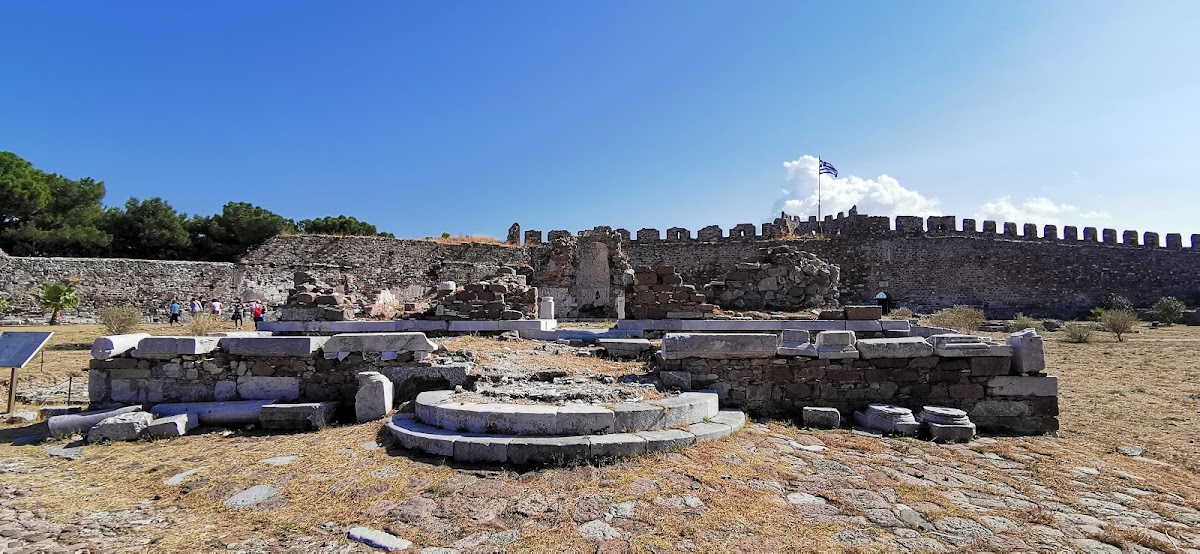
Ruins (39.1121, 26.5609)
Scattered across a quiet hillside near the small village of Alyfada, these ruins offer a silent testament to the layered human history of central Lesvos. The island has been continuously inhabited since antiquity, passing through ancient Greek, Roman, Byzantine, and Ottoman hands, and sites like this one preserve traces of that long occupation in stone. Fragmentary walls, foundation outlines, and worked masonry speak to a settlement or structure of some significance, though the precise period and function await fuller archaeological study. Lesvos sits along historic maritime and trade routes between the Aegean and the eastern Mediterranean, and even modest rural sites such as this one reflect the density of past habitation that once spread well beyond the island's surviving towns. Visitors who make the effort to reach the site are rewarded with an atmosphere of quiet discovery. The ruins sit within a landscape of olive groves and open terrain typical of this part of Lesvos, with views that convey how strategically or agriculturally valuable the surrounding land would have been to earlier inhabitants. Walking among the remnants, one can trace the rough geometry of walls and imagine the daily life that once unfolded here. The site is undeveloped and unenclosed, which means exploration feels genuinely exploratory rather than curated, though visitors should tread carefully to respect the fragile remains. For travellers drawn to the quieter, off-the-beaten-path corners of Lesvos, a visit to these ruins near Alyfada pairs naturally with the unhurried character of the surrounding countryside. The village itself is small and traditional, and the road to it passes through scenery representative of the island's interior. This is not a site of grand monuments, but rather the kind of place that rewards curiosity — a reminder that the history of Lesvos does not belong only to its famous ancient cities, but is threaded through its hills and fields in fragments waiting to be noticed.
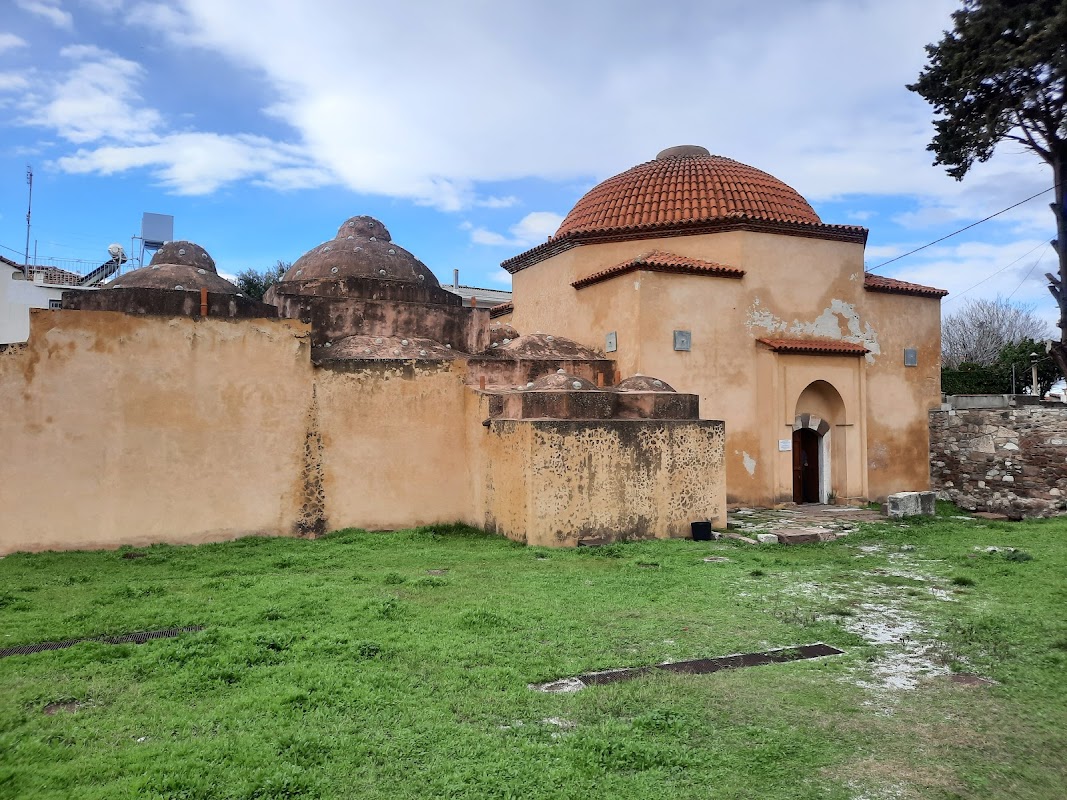
Ruins (39.1122, 26.5610)
Scattered across the gentle hillside near the quiet settlement of Alyfada, these ruins offer a tangible connection to Lesvos's deep and layered past. The island has been continuously inhabited since antiquity, passing through ancient Greek, Byzantine, Genoese, and Ottoman hands, and the fragmentary stonework visible here reflects that accumulated weight of history. Stone walls reduced to their foundations, the outlines of enclosures, and dressed masonry half-swallowed by scrub vegetation speak to a time when this corner of the island supported a more active human presence, whether as a rural estate, a modest settlement, or agricultural outbuildings serving the surrounding land. Visitors who make the effort to seek out this site will find the kind of understated archaeology that rewards the curious traveler. Unlike the grand excavated sites of Mytilene or ancient Eressos, these remains have a raw, unmediated quality — no fences, no interpretive panels, just stones returned to the landscape. The setting itself is part of the experience: olive trees pressing close, the smell of thyme and dry earth, and the distant shimmer of the Aegean framed by low hills. It is the sort of place that invites quiet reflection on the countless generations who worked this same land. For those exploring the less-visited interior of Lesvos, the ruins near Alyfada make a worthwhile detour when combined with a drive through the surrounding countryside. The area exemplifies the island's character as a place where history is woven into everyday terrain rather than confined to museums, and where the line between the ancient world and the living landscape has always been productively blurred.
Ruins (39.1122, 26.5611)
Scattered across a hillside near the quiet settlement of Alyfada, these ruins bear quiet witness to the layered human history of northeastern Lesvos. The island has been continuously inhabited since antiquity, passing through ancient Greek, Roman, Byzantine, Genoese, and Ottoman hands over the millennia, and fragmentary stonework of this kind is often all that remains of the farmsteads, watchtowers, or minor ecclesiastical structures that once punctuated the rural landscape. Without systematic excavation, the precise age and function of these remains is difficult to determine, though the building techniques and local stone are characteristic of the medieval or post-Byzantine centuries when small communities worked the terraced hillsides of the island's interior. Visitors who make their way here will find tumbled walls and foundation courses emerging from the scrub, a landscape shaped as much by abandonment and time as by deliberate construction. The site rewards those with an archaeological imagination: the placement on elevated ground hints at defensive awareness or the desire for a commanding view over the surrounding countryside, while the proximity to Alyfada suggests these structures once formed part of a broader network of rural habitation. Wildflowers push through the stonework in spring, and the silence is broken only by birdsong and the distant sound of the Aegean. The ruins of Lesvos are rarely celebrated in the way that the great monuments of mainland Greece are, but they speak honestly to the island's texture — a place where history accumulates in small, unassuming layers rather than dramatic monuments. For travelers seeking to move beyond the beaches and the postcard villages, sites like this one near Alyfada offer a more contemplative encounter with the island's deep past.
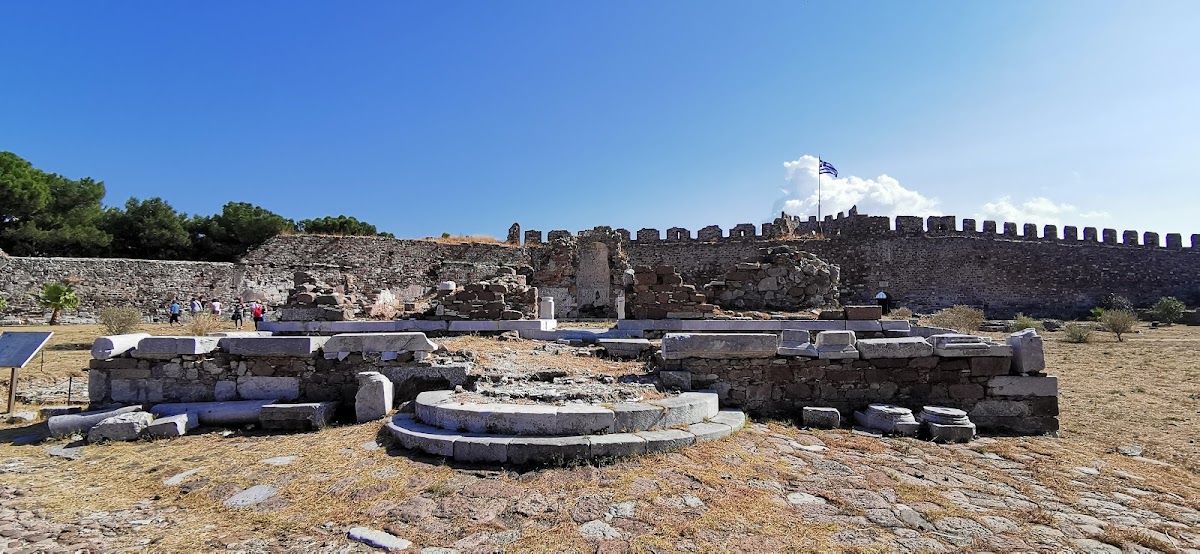
Ruins (39.1123, 26.5599)
Scattered across a quiet hillside near the village of Alyfada, these ancient ruins stand as silent testimony to the long human story of Lesvos. The island's interior has been settled since antiquity, and remnants like these — stone foundations, collapsed walls, and worked masonry absorbed back into the earth — reflect the layered occupation of a land that passed through ancient Greek, Roman, Byzantine, and Ottoman hands over the course of millennia. The precise origins of this site remain uncertain, but the quality of the stonework and its commanding position in the landscape suggest it once served a purpose of some consequence, whether as a rural estate, a religious structure, or part of a larger agricultural settlement. Visitors who make their way here will find themselves surrounded by the kind of understated antiquity that defines so much of Lesvos beyond its famous archaeological centers. Tumbled blocks of local stone, some still bearing traces of mortar or carved edges, lie half-buried among wild herbs and scrub oak. The setting is peaceful and largely undisturbed, offering a contemplative contrast to the more curated ancient sites elsewhere on the island. The surrounding landscape of low hills and cultivated fields gives a sense of how this corner of Lesvos would have looked to the people who built here — fertile, sheltered, and well-positioned relative to the broader network of villages and tracks that stitched the island together. For travelers with a curiosity about the quieter layers of Greek history, this site rewards a short detour. It is the kind of place that invites reflection rather than structured sightseeing — no signage, no crowds, just the stones themselves and the long view across the Lesvian countryside. Coming in the cooler hours of morning or late afternoon, when the light is low and the air carries the scent of thyme, makes the experience all the richer.
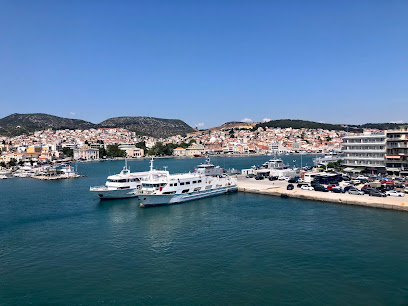
Ruins (39.1133, 26.5610)
Scattered across the hillside terrain near the quiet settlement of Alyfada, these ruins speak to the layered human occupation that defines so much of Lesvos. The island has been continuously inhabited since at least the Bronze Age, passing through ancient Greek, Roman, Byzantine, Genoese, and Ottoman hands, and the fragmentary stonework visible here reflects that long accumulation of settlement and abandonment. Such sites in this part of the island often preserve traces of domestic or agricultural structures, their cut limestone blocks and foundation courses slowly being reclaimed by scrub oak and wild thyme. Standing among the remains, visitors gain a tangible sense of how densely populated Lesvos once was beyond its major centers. The rural hinterland supported farming communities, seasonal shepherds, and small estate holdings across the centuries, and ruins like these are the quiet evidence of lives lived far from the recorded histories of Mytilene or Methymna. The masonry technique and the positioning of the site — typically chosen for drainage, defensibility, or proximity to water — can often hint at a broad period of construction even when documentary sources are silent. The site rewards unhurried exploration. There are no crowds and no interpretive signs, just the raw texture of old stone against the Aegean sky, birdsong, and the surrounding landscape of olive groves and maquis that has changed remarkably little in character over centuries. For visitors interested in the deep rural history of Lesvos rather than its more celebrated monuments, places like this offer an unmediated encounter with the island's past.
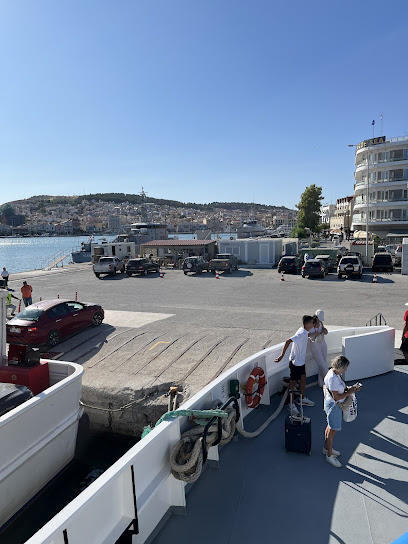
Ruins (39.1133, 26.5612)
Scattered across a hillside near the quiet settlement of Alyfada in northern Lesvos, these ancient ruins stand as silent witnesses to the island's deep and layered past. Lesvos has been continuously inhabited since prehistoric times, passing through successive waves of ancient Greek, Roman, Byzantine, Genoese, and Ottoman influence, and the remnants visible here reflect that long arc of human presence. Stone foundations, partial walls, and architectural fragments hint at a community that once found shelter and sustenance in this corner of the island, where the land rolls gently toward the Aegean coast. Visitors who make their way to the site will find themselves immersed in the unhurried beauty of the Lesvos countryside, with olive groves and scrubland framing the ancient stonework. The masonry, though worn by centuries of wind and weather, retains enough form to invite quiet contemplation about the lives once lived here. The scale and construction style suggest a settlement of modest but enduring character, typical of the rural communities that dotted Lesvos throughout antiquity and the medieval period. The site rewards those with a curiosity for off-the-beaten-path history. Unlike the more visited ruins at Ancient Mytilene or Mithymna, this place offers solitude and an unmediated encounter with the past. The surrounding landscape — the quality of light, the distant shimmer of the sea, the scent of wild herbs underfoot — provides a sensory context that no museum can replicate. For travelers drawn to the quieter chapters of Greek history, a visit here offers a genuinely reflective experience.
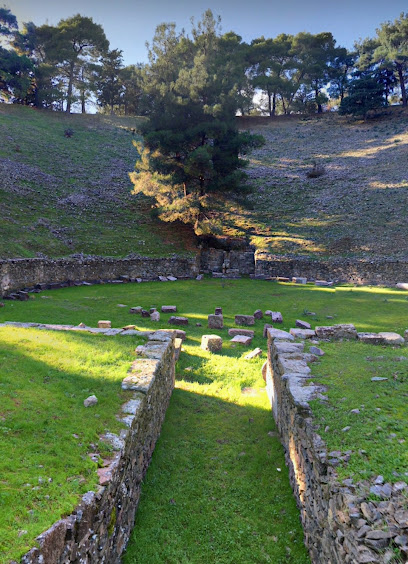
Ruins (39.1150, 26.5589)
The ruined structures near Alyfada stand as quiet testimony to the layered human story of northeastern Lesvos, a corner of the island that has been settled, fought over, and transformed across millennia. Like much of Lesvos, this region passed through the hands of ancient Greek city-states, the Roman Empire, Byzantium, and the Ottoman Empire before becoming part of the modern Greek state in 1912, and the remnants visible here reflect that accumulated weight of history. Stone foundations, collapsed walls, and scattered architectural fragments speak to a time when this landscape supported communities whose names and stories have been largely absorbed by the centuries. Visitors who make the effort to seek out these ruins are rewarded with a contemplative experience that feels far removed from the island's busier tourist circuits. The setting itself enhances the sense of discovery: the gently rolling terrain of this part of Lesvos, dotted with olive groves that may themselves be centuries old, creates a backdrop that has changed relatively little since the structures were last inhabited. The stonework, where it survives, demonstrates the solid masonry traditions common across the Aegean, with walls fitted from local materials quarried from the same hills that surround them today. For those with an interest in archaeology or the deeper currents of Greek and Aegean history, a visit to the Alyfada ruins pairs naturally with exploring the broader northeastern reaches of Lesvos, a part of the island that rewards slow travel and a willingness to wander. The site carries the particular atmosphere that attaches to places of genuine antiquity left largely to themselves, where imagination can fill the silences that scholarship has not yet fully addressed.
Ruins (39.1213, 26.5489)
Scattered across the hillside near the quiet village of Alyfada, these ancient ruins offer a silent testament to the layered human history of Lesvos. The island has been continuously inhabited since prehistoric times and passed through the hands of Mycenaean settlers, classical Greek city-states, Roman administrators, Byzantine governors, and Ottoman rulers, and remnants of these successive civilizations can be found throughout its interior landscapes. The stonework visible at this site reflects the kind of rural settlement patterns common across the Aegean — modest structures built to endure the elements, their walls now reduced to foundation courses and tumbled masonry that archaeologists and curious visitors alike must read like a palimpsest. Walking among the remains, visitors can observe the characteristic dry-stone construction techniques that recur throughout Lesvos, where local volcanic and sedimentary rock was shaped and stacked without mortar to form walls of surprising solidity. The surrounding terrain — a mix of olive groves, scrubland, and the occasional terrace wall — hints at the agricultural life that once animated this corner of the island. The proximity to Alyfada suggests this may have been part of an estate, a small farmstead, or a secondary settlement associated with the village's longer history of habitation. For those with an interest in archaeology or the slow rhythms of rural Greek history, a visit rewards patient observation. While no interpretive signage marks the site, the ruins invite reflection on how densely the landscape of Lesvos is woven with human presence across millennia. Combining a visit here with a walk through Alyfada itself — with its traditional stone houses and unhurried pace — gives a fuller sense of how deeply rooted community life on this island truly is.
Ruins (39.1227, 26.5487)
Scattered across a hillside near the quiet settlement of Achlia, these ruins stand as silent testimony to the layered human history that defines the Lesvos interior. The island's strategic position in the northeastern Aegean made it a crossroads of civilizations for millennia, and sites like this one bear the marks of successive occupations — from ancient Greek settlement through Byzantine stewardship and into the Genoese and Ottoman periods that shaped the island's later character. Remnants of stone foundations and collapsed walls emerge from the scrub and wildflowers, their precise origins awaiting fuller archaeological attention, though the careful observer can trace the outlines of structures that once served a community here. Visiting this site today is an exercise in quiet contemplation rather than grand spectacle. The landscape around Achlia is typical of the Lesvos hinterland — gently rolling terrain with patches of olive groves and the occasional stand of pine — and the ruins sit within it with an unassuming dignity. Fragments of worked stone lie where they fell, and the foundations of what may have been a farmstead, a chapel, or an outbuilding of a larger estate hint at the agricultural rhythms that sustained island life across the centuries. There are no fences or formal paths, and visitors explore at their own pace along the natural contours of the land. What makes this spot worthwhile for the curious traveler is not any single dramatic feature but rather the sense of continuity it offers — a reminder that the Lesvos countryside has been inhabited, cultivated, and contested for thousands of years. Combine a visit here with a walk through Achlia itself, one of the island's smaller and less-visited villages, to appreciate how contemporary rural life in this part of Greece remains rooted in patterns laid down long before the modern era.
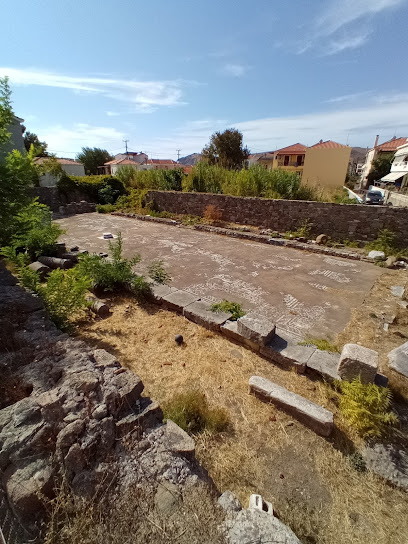
Ruins (39.1301, 25.9339)
Scattered across the low hills just inland from the seafront of Skala Eresou lie the remains of ancient Eressos, one of the six great city-states of classical Lesvos. This was a settlement of considerable antiquity and cultural importance, inhabited continuously from prehistoric times through the Byzantine era. The site is best known to history as the birthplace of Sappho, the lyric poet whose fragments survive as some of the most celebrated verse from the ancient world, and the philosopher Theophrastus, successor to Aristotle. Walking among the weathered stones here is to stand on ground that shaped the intellectual and artistic heritage of ancient Greece. What visitors encounter today is a layered archaeological landscape where centuries of habitation have left overlapping traces. The most visible ruins include stretches of the ancient city walls, foundations of civic and domestic buildings, and the atmospheric remains of an early Christian basilica, its column stumps and mosaic fragments hinting at the town's continued importance well into the Byzantine period. The site is open and largely unfenced, allowing for an unhurried, contemplative exploration against a backdrop of the Aegean and the long sandy beach below. The ruins reward visitors who arrive with a little curiosity and patience. Signage is minimal, so bringing a guidebook or researching beforehand helps give the stones their proper context. The small Archaeological Museum in the village holds finds from the site and provides essential background. Coming in the soft light of late afternoon, when the shadows lengthen across the limestone and the sea glimmers to the south, makes the experience especially memorable. For anyone drawn to the deep history of the Greek world, this quiet, unhurried site carries a weight that more famous ruins rarely match.
Ruins (39.1328, 25.9359)
Perched near the storied shores of Skala Eresou, these ancient ruins are the remnants of Eressos, one of the most celebrated city-states of classical Lesvos. The original settlement occupied the commanding hilltop above the modern village, and traces of its defensive walls, foundations, and civic structures still emerge from the earth, offering a tangible connection to a community that thrived across the archaic, classical, and Hellenistic periods. Eressos is renowned as the birthplace of Sappho, the lyric poet whose verses shaped the literary traditions of the ancient Mediterranean, and the ruins carry the quiet weight of that extraordinary heritage. Visitors who make the short climb from the beachside village will find scattered stonework and foundation walls that hint at the scale of the ancient town. The surrounding landscape of wheat fields, olive groves, and the wide sweep of the Aegean provides a striking backdrop, and the combination of natural beauty and archaeological texture gives the site a contemplative atmosphere distinct from more heavily excavated sites on the island. Early Christian layers are also visible in the area, reflecting how communities continued to inhabit and transform this ground across successive centuries. The site rewards those with a genuine curiosity about Aegean history, though it lacks formal interpretive infrastructure, so arriving with some background reading deepens the experience considerably. The proximity to the long sandy beach of Skala Eresou means that a visit to the ruins integrates naturally into a broader day of exploring this southwestern corner of Lesvos, combining archaeology with the village's relaxed waterfront character. For anyone drawn to the poetry of Sappho or the broader sweep of ancient Greek civilization, standing among these stones carries a resonance that no photograph fully captures.
Ruins (39.1341, 26.2487)
Near the quiet village of Agios Pavlos, these scattered ruins offer a glimpse into the layered human history that has shaped the western reaches of Lesvos over millennia. The island's interior and hillside settlements were repeatedly inhabited, abandoned, and rebuilt across successive civilizations, from ancient Greek and Hellenistic settlers through Byzantine Christian communities and later Ottoman-era populations. Ruins of this character on Lesvos typically preserve remnants of foundations, cut stone, and occasionally ceramic fragments that speak to centuries of continuous habitation, agriculture, and trade across the island's fertile valleys and terraced hillsides. Visitors who make their way to this site will find a landscape where history blends quietly with the natural surroundings of olive groves and dry-stone walls. The stonework, though weathered, hints at the craftsmanship of past builders who quarried and shaped local materials to construct homes, churches, or agricultural structures suited to the Aegean climate. The setting near Agios Pavlos places the ruins within a broader network of small communities that once dotted this part of Lesvos, many of which declined or shifted location over the centuries as economic and political conditions changed. For the curious traveler, these ruins reward a contemplative visit rather than a dramatic archaeological spectacle. They serve as a reminder that beneath the sun-bleached hills and terraced fields of modern Lesvos lies a rich palimpsest of human endeavor. Coming here offers a moment of quiet reflection on the passage of time, and the chance to connect with the less-celebrated, everyday history of an island whose story stretches back thousands of years beyond its more famous ancient sites.
Ruins (39.1479, 26.4399)
Scattered across a hillside near the quiet village of Kerameia, these ancient ruins stand as silent witnesses to the long arc of human settlement on Lesvos. The island has been continuously inhabited since at least the Bronze Age, and its interior landscapes are dotted with the remnants of communities that rose and faded across Greek, Byzantine, and Ottoman periods. Though the precise origins of this particular site await fuller archaeological study, the stonework and setting speak to the enduring human instinct to build on high ground, commanding views across the surrounding valleys and the distant Aegean. Visitors who make the effort to reach the site will find tumbled walls and foundation courses half-reclaimed by scrub oak and wild thyme, the kind of ruin that rewards slow, contemplative exploration rather than a quick glance. Fragments of cut stone and broken terracotta suggest a settlement of some substance, and the topography itself tells a story of a community that understood its landscape intimately. The isolation that now defines the place was once its protection, a reminder that the rhythms of life on Lesvos have always been shaped by the interplay of geography and history. For travellers drawn to the less-visited corners of the island, these ruins offer something rare: the chance to stand in an ancient place without the mediation of signage or crowds. Kerameia itself is a gentle and unhurried village, and the walk out to the site passes through some of the most characteristic inland scenery Lesvos has to offer, with olive groves, dry-stone walls, and the faint smell of sage on the breeze. It is the kind of place that lingers in memory precisely because it asks something of you.
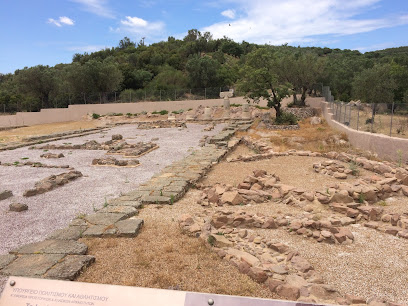
Ruins (39.2526, 26.2431)
Scattered across the gentle hillside near Agia Paraskevi, these weathered ruins speak to the long continuity of human settlement in the heart of Lesvos. The island's interior has been inhabited since antiquity, and fragmentary remains of walls, foundations, and worked stone in this area reflect the layered history that spans from ancient Greek and Hellenistic periods through Byzantine centuries. Villages and rural sanctuaries once dotted these fertile lowlands, sustained by the agricultural abundance of the surrounding plain, and what survives today offers a quiet testimony to the generations who built their lives here long before the modern village took shape. Visitors who make their way to the site will find tumbled masonry and stone courses that hint at the outlines of former structures, their original purpose now left to interpretation. The craftsmanship visible in cut stone blocks suggests deliberate construction rather than mere field walls, pointing to a settlement or civic structure of some local importance. The landscape itself provides context: the broad, cultivated valley below and the low ridgelines around it would have made this a naturally attractive place to settle, offering both defensible position and access to farmland and water. For travelers exploring the villages of central Lesvos, this site rewards a contemplative visit rather than a dramatic spectacle. The ruins are best understood as part of the wider archaeological texture of the island, where ancient remains surface constantly from olive groves and plowed fields. Pairing a stop here with a visit to Agia Paraskevi itself, a village known for its traditional festivals and the remarkable Folklore Museum of Industrial Olive Oil Production, gives a fuller sense of how deeply rooted human culture is in this corner of Lesvos, from ancient foundations to living traditions that continue today.
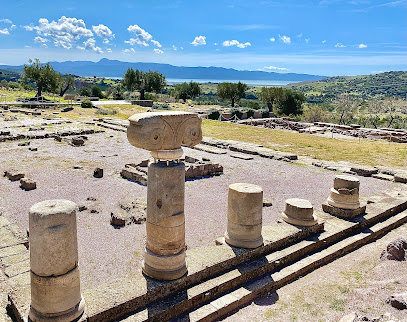
Ruins (39.2528, 26.2434)
Scattered across a hillside near the village of Agia Paraskevi, these ruins offer a quiet window into the layered human history of central Lesvos. The island's interior has been inhabited since antiquity, and the remains here likely reflect the overlapping occupations that have shaped this landscape across the centuries — from the ancient Greek settlements that once dotted the region's fertile valleys to the Byzantine and later medieval structures that followed. Stone foundations, collapsed walls, and the outlines of former rooms emerge from the scrub vegetation, speaking to a community that once organized its life around agriculture, trade, and the rhythms of the Aegean. What visitors encounter today is an evocative rather than monumental site — no grand columns or restored temples, but the kind of authentic, unrestored remnants that reward those with a curiosity for the island's quieter history. The setting itself is striking: the rolling hills of the Kalloni basin stretch out nearby, olive groves frame the view, and the atmosphere carries the unhurried character of rural Lesvos. Wandering among the stones, it is easy to sense how generations of islanders built their lives in this protected inland terrain, sheltered from coastal piracy and close to the agricultural richness of the valley. The proximity to Agia Paraskevi makes this a natural pairing with a visit to that charming village, known for its folk museum and traditional architecture. For travellers who have already explored Lesvos's more celebrated archaeological attractions — the ancient site of Antissa to the west or the museum collections in Mytilene — these ruins provide a grounding reminder that history here was never confined to the grand and the famous, but lived in every corner of the island.
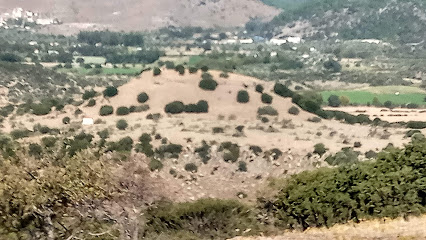
Ruins (39.2529, 26.2435)
Scattered across the gentle hillsides near Agia Paraskevi, these ruins bear quiet witness to the layered human history of central Lesvos. The island has been continuously inhabited since at least the Bronze Age, and the agricultural heartland around the Kalloni Gulf — of which this area forms part — supported a dense network of settlements through the ancient Greek, Roman, Byzantine, and Genoese periods. Stone foundations, tumbled walls, and the occasional carved architectural fragment visible at sites like this one reflect centuries of building, abandonment, and rebuilding as the island passed through successive civilizations, each leaving its mark on the landscape before the next. Visiting the ruins today offers a contemplative counterpoint to the bustling village life of nearby Agia Paraskevi. The stonework — rough-cut and fitted without mortar in places, more refined ashlar in others — hints at the different hands and eras that shaped the site over generations. Wild herbs push through the joints, and the surrounding olive groves, some of them ancient in their own right, lend the place a timeless atmosphere. For those with an eye for archaeology, careful observation may reveal repurposed ancient blocks incorporated into later walls, a common practice throughout the Aegean that speaks to both pragmatism and a deep continuity of habitation. What makes ruins like these valuable on Lesvos is less any single dramatic monument than the cumulative sense they provide of a lived landscape. The island's interior is dotted with such remnants — medieval towers, Byzantine chapels built atop older foundations, the ghost outlines of vanished farmsteads — and exploring them alongside the thriving villages they once served gives travelers an unusually complete picture of how this corner of the eastern Aegean has sustained human life across the millennia.
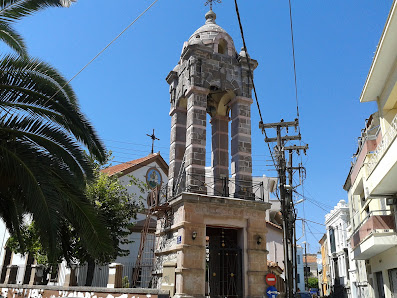
Sanctuary of Apollo Maloeis
Ιερό Μαλέοντος Απόλλωνος
The Sanctuary of Apollo Maloeis is one of the most evocative ancient religious sites on Lesvos, dedicated to a distinctly local cult of Apollo known by the epithet "Maloeis" — a title unique to the island that speaks to the deep, particular bond Lesbians forged with this deity. Venerated here from at least the archaic period, Apollo Maloeis held a significance that went beyond ordinary worship: ancient sources record that the sanctuary served as a gathering place for religious assemblies and that the cult was woven into the civic and cultural identity of the island's communities. The site sits in the gentle, olive-covered landscape near the village of Alyfada in the eastern reaches of Lesvos, a setting that still carries a sense of quiet removed from the modern world. Archaeological investigation of the site has revealed traces of ancient activity consistent with a sanctuary of regional importance, including architectural remains and votive material that illuminate the long continuity of worship here. The sanctuary would have functioned as a place of pilgrimage, oath-taking, and communal gathering, roles that made such temene central to Greek civic life. The connection to Apollo — god of light, music, prophecy, and order — resonated deeply on an island that produced some of antiquity's greatest lyric poets, and it is easy to imagine the poets and thinkers of ancient Lesvos drawing inspiration from these sacred precincts. Visitors today come to a site that rewards contemplation as much as observation. While the remains are fragmentary rather than monumental, the setting itself conveys the atmosphere of an ancient sacred landscape. Walking the grounds near Alyfada, with views across the Aegean and the rolling terrain of eastern Lesvos stretching around you, offers a genuine sense of connection to the island's layered past. For those with an interest in Greek religion and the way ancient communities inscribed meaning onto the land, the Sanctuary of Apollo Maloeis is a quietly compelling destination.
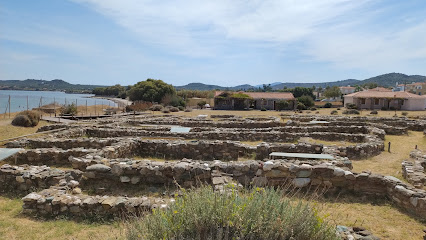
Sanctuary of Artemis Thermia, Lesbos
Nestled near the thermal springs that give the coastal settlement of Thermis its name, the Sanctuary of Artemis Thermia stands as a testament to the deep religious life of ancient Lesvos. Dedicated to Artemis in her local epithet linked to the warm mineral springs of the area, this sanctuary reflects a practice common across the ancient Greek world of venerating the goddess at naturally charged landscapes where earth, water, and the divine were felt to converge. The northeast coast of Lesvos has been inhabited since at least the Bronze Age, and the broader Thermis area has long attracted scholarly attention for its layered history stretching back millennia, making this sanctuary part of a richly storied landscape rather than an isolated monument. Archaeological investigation of the site has revealed traces of cult activity and structural remains consistent with a sacred precinct, including votive deposits and architectural fragments that speak to the sanctuary's active use across several centuries of antiquity. Such sanctuaries typically served not only as places of worship but as focal points for the surrounding community, hosting festivals, offerings, and rites of passage connected to Artemis's domains of the hunt, wilderness, and transitions in human life. The proximity of the thermal springs likely deepened the sanctuary's sacred character, as mineral waters were widely associated with healing and divine presence in the ancient Mediterranean world. Today visitors to the area can explore the site within a landscape that retains much of its quiet, rural character, with the Aegean coast nearby and the gentle hills of northeastern Lesvos as a backdrop. While the remains are modest compared to the grand sanctuaries of mainland Greece, the setting rewards the curious traveler with a palpable sense of place and continuity. Combining a visit here with the thermal baths at Thermi and the surrounding countryside makes for a compelling half-day excursion that connects the island's ancient religious heritage with its enduring natural gifts.
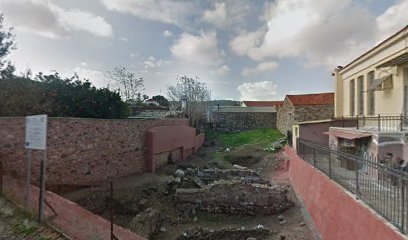
Sanctuary of Cybele
Ιερό Κυβέλης
Nestled in the landscape near the village of Alyfada in northern Lesvos, the Sanctuary of Cybele stands as a testament to the island's deep and layered connections with the ancient Anatolian world. Cybele, the great mother goddess of Phrygian origin, was one of the most widely venerated deities across the ancient Aegean, and her cult found fertile ground on Lesvos, an island that has always occupied a cultural crossroads between the Greek world and the civilizations of Asia Minor just across the narrow strait. The proximity of Lesvos to the Anatolian coast made the adoption of Cybele's worship a natural development, and sanctuaries dedicated to her were typically established in natural settings — rocky outcrops, hillsides, and sacred groves — reflecting her identity as a goddess of wild nature, mountains, and the earth's generative powers. Archaeological sites associated with Cybele worship in the Aegean region characteristically feature rock-cut niches and reliefs carved into the living stone, where votive figures and representations of the goddess were placed by worshippers seeking her protection and blessing. Offerings of terracotta figurines, incense, and small devotional objects were common at such sanctuaries, and the rituals associated with her cult were known for their ecstatic, communal character. The site near Alyfada preserves evidence of this ancient veneration within a landscape that retains much of its original remoteness and atmosphere, allowing visitors to appreciate how the natural environment itself was considered sacred by the ancients who chose this spot for their devotions. Today, a visit to the Sanctuary of Cybele rewards those willing to seek it out with a tangible sense of antiquity in an unhurried, often solitary setting. The surrounding countryside of olive groves and rocky terrain evokes the timeless quality of the Aegean landscape that the goddess herself was thought to embody. For travelers interested in the pre-classical and classical religious life of the Aegean islands, this site offers a rare and authentic glimpse into the syncretic spiritual world of ancient Lesvos, where Greek, Phrygian, and broader Anatolian traditions intertwined to produce a distinctive local culture that endures, in its traces, to this day.
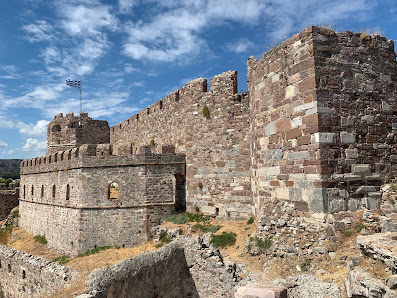
Sanctuary of Demeter and Kore
Ιερό Δήμητρας και Κόρης
Nestled in the quiet countryside near the village of Alyfada, the Sanctuary of Demeter and Kore stands as a testament to the deep religious life of ancient Lesvos. Worship of Demeter, goddess of grain and the harvest, and her daughter Kore, later known as Persephone, was widespread across the ancient Greek world, and sanctuaries dedicated to them typically served as focal points for agricultural communities seeking divine favour for their crops and fertility of the land. The cult of these two goddesses held profound spiritual meaning for ordinary people, often involving seasonal rituals tied to the cycles of sowing and reaping that defined rural existence in antiquity. Archaeological investigation of this site has uncovered evidence of sustained religious activity over many centuries, reflecting the enduring importance of the site to the local population across different periods of antiquity. Sanctuaries of this type typically feature open-air precincts, altars, and votive deposit areas where worshippers left offerings of terracotta figurines, ceramic vessels, and other objects as expressions of devotion or gratitude. The landscape setting, characteristic of sanctuaries to chthonic deities associated with the earth and its bounty, adds a contemplative quality to any visit. Today the site invites visitors with an interest in ancient religion and rural Aegean history to reflect on the spiritual world of Lesvos's earliest inhabitants. Though the remains are modest compared to the great sanctuaries of mainland Greece, the setting among the island's gentle hills and olive groves creates an atmospheric connection to the ancient past. Those exploring the lesser-visited inland villages of the island will find this sanctuary a rewarding detour, combining archaeology with the unhurried beauty of the Lesvos countryside around Alyfada.
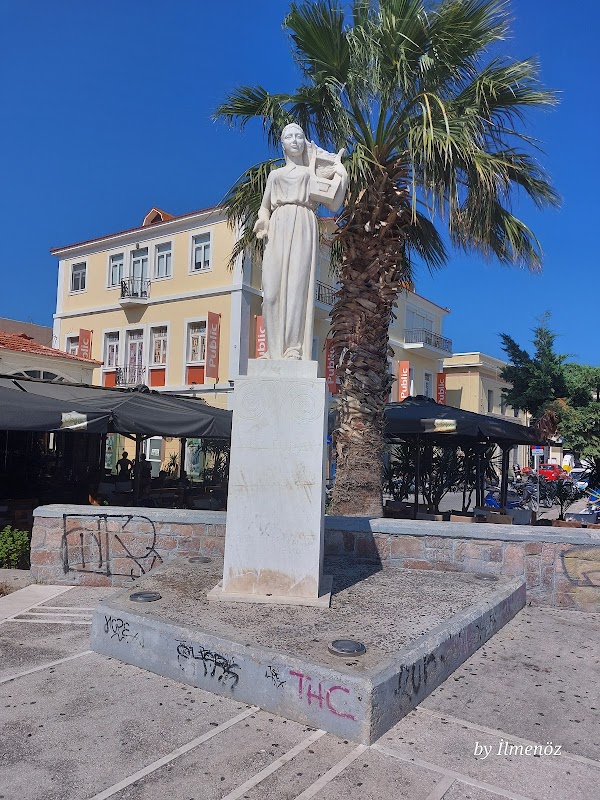
Sapfo
Σαπφώ
Standing quietly near the village of Alyfada, this memorial to Sapfo — the ancient Greek name for Sappho — pays tribute to one of the most celebrated poets of the classical world and Lesvos's most enduring cultural treasure. Sappho was born on Lesvos around 630 BCE, and her lyric poetry, written in the Aeolic Greek dialect of the island, earned her a place among the greatest voices of antiquity. Ancient writers ranked her alongside Homer, and Plato reportedly called her the tenth Muse. Though only fragments of her work survive today, her verses on love, longing, and the natural beauty of her island home continue to resonate across millennia, making her a defining symbol of Lesbian identity and pride. The memorial serves as a quiet point of reflection for those who come to honour her legacy, situated in the island's gentle, olive-draped interior not far from the Aegean coast. While Sappho is perhaps most closely associated with Eresos in western Lesvos, where she is believed to have been born, memorials and monuments to her are scattered across the island as testament to how thoroughly her spirit is woven into its cultural fabric. Visitors often pause here to consider the extraordinary reach of a woman whose work shaped Western literary tradition, influenced conceptions of lyric poetry, and gave the English language the words "sapphic" and "lesbian." A visit to this site pairs naturally with a broader exploration of the surrounding landscape — the silvery olive groves, the unhurried village life of Alyfada, and the turquoise waters visible in the distance. For travellers with a literary or historical bent, it offers a moment of genuine connection to antiquity, a chance to stand on the same island soil that inspired verses still read and loved two and a half thousand years later.
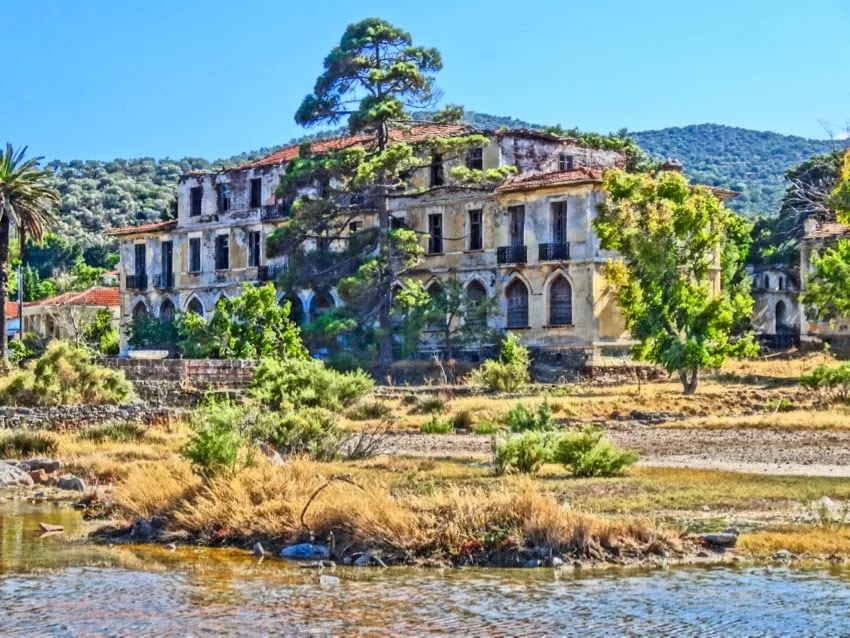
Sarlitza
Σάρλιτζα
The ruins of Sarlitza stand as one of Lesvos's most atmospheric reminders of the island's final decades under Ottoman rule. Built in the early twentieth century as a grand summer palace, Sarlitza was designed to take advantage of the famous thermal springs of nearby Thermi, whose naturally heated waters have drawn visitors to this stretch of coastline since antiquity. The palace reflected the cosmopolitan ambitions of late Ottoman society, combining European neoclassical influences with the elegance expected of an imperial-era retreat. Its scale and setting — overlooking the northeastern Aegean coast — speak to a moment when Lesvos was a prosperous crossroads between East and West. Following the turbulent years of the Balkan Wars and the incorporation of Lesvos into the Greek state in 1912, the palace gradually fell into disuse and eventual ruin. What remains today are hauntingly beautiful fragments: crumbling walls, arched window frames open to the sky, and overgrown terraces that hint at the building's former grandeur. The setting among mature trees and wild vegetation gives Sarlitza a melancholy romantic quality that photographers and history enthusiasts find deeply compelling. The nearby village of Paralia Thermis still hosts thermal bathing facilities, so a visit to the ruins pairs naturally with a soak in the ancient healing waters just steps away. Visiting Sarlitza offers something rarer than a well-preserved monument — it offers a genuine encounter with layered history in an unmediated form. The silence of the ruins, the sea glittering through collapsed archways, and the knowledge that this place witnessed the end of one era and the beginning of another gives it a contemplative power that polished tourist sites rarely achieve. For travelers drawn to the quieter, more reflective side of Lesvos, Sarlitza is an essential stop along the island's northeastern shore.
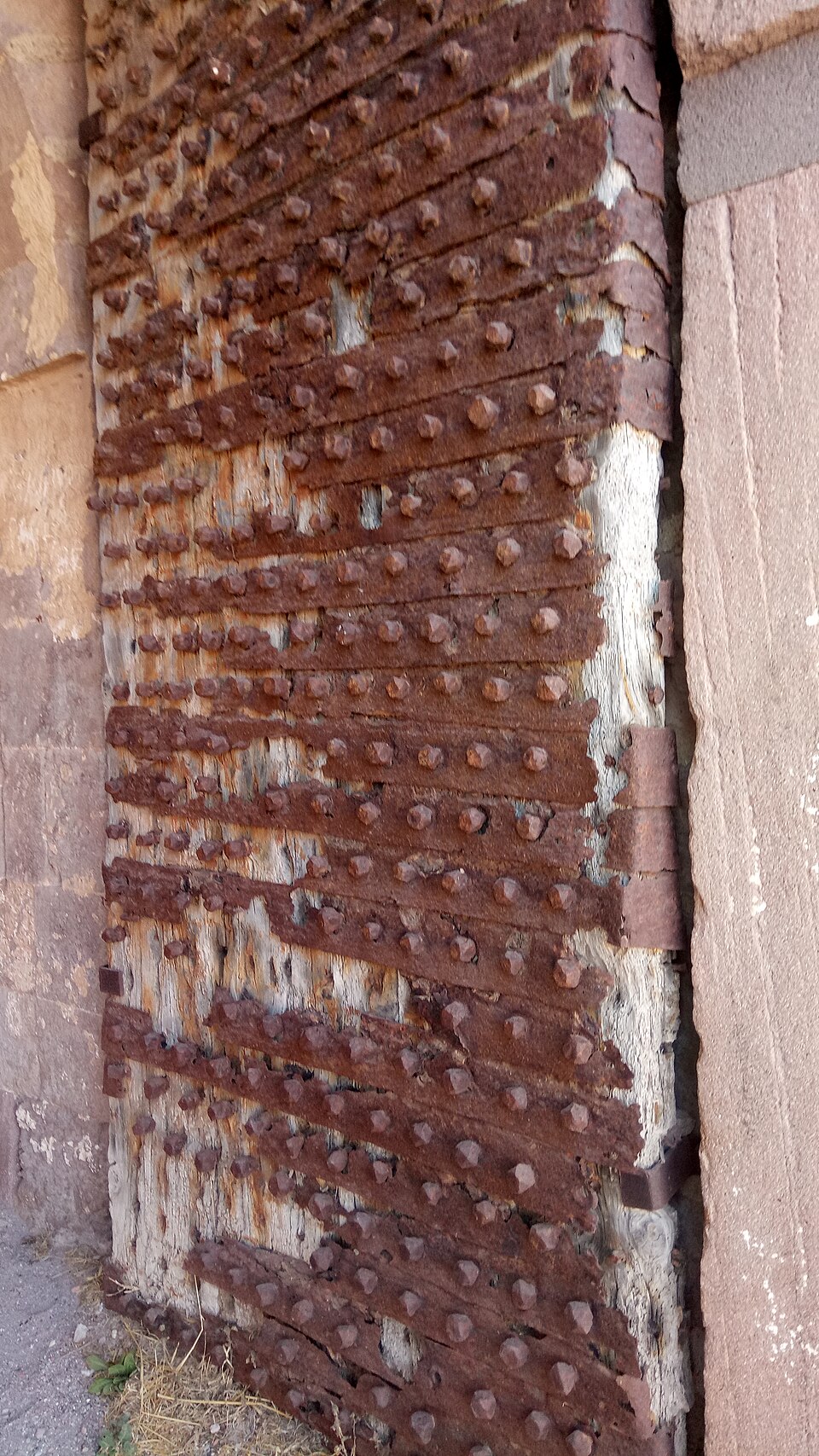
Sigri Castle
Κάστρο Σιγρίου
Perched on a rocky promontory at the edge of the small harbor village that shares its name, Sigri Castle is one of the best-preserved Ottoman fortifications on Lesvos. Built in the eighteenth century to guard the sheltered natural anchorage on the island's remote western coast, the castle reflects the strategic importance the Ottomans placed on controlling these waters, which were vulnerable to both piracy and rival naval powers operating across the Aegean. Its compact, robust construction — thick stone walls rising in a roughly rectangular plan with a prominent tower — is characteristic of Ottoman coastal defensive architecture of the period, built for durability rather than grandeur. Sigri itself sits at the end of a long, winding road through dramatic volcanic landscape, and arriving at the castle feels like reaching the edge of the known world. The fortification stands directly beside the water, and its weathered walls absorb the full force of the westerly winds that sweep across the open sea toward Turkey. Visitors can walk around the exterior and take in the commanding views over the harbor, the islets scattered offshore, and the wide sweep of the Aegean horizon. The structure is remarkably intact, giving a tangible sense of the watch kept here over centuries of maritime traffic. The castle is a natural complement to Sigri's other notable attraction, the Natural History Museum of the Lesvos Petrified Forest, located in the village itself, making this corner of the island worth a dedicated half-day. The combination of geological wonder and Ottoman-era history gives Sigri a depth that belies its quiet, unhurried character. For travelers who make the effort to reach this far western outpost, the castle is a rewarding reminder that Lesvos has been a place of consequence for far longer than its present tranquility might suggest.
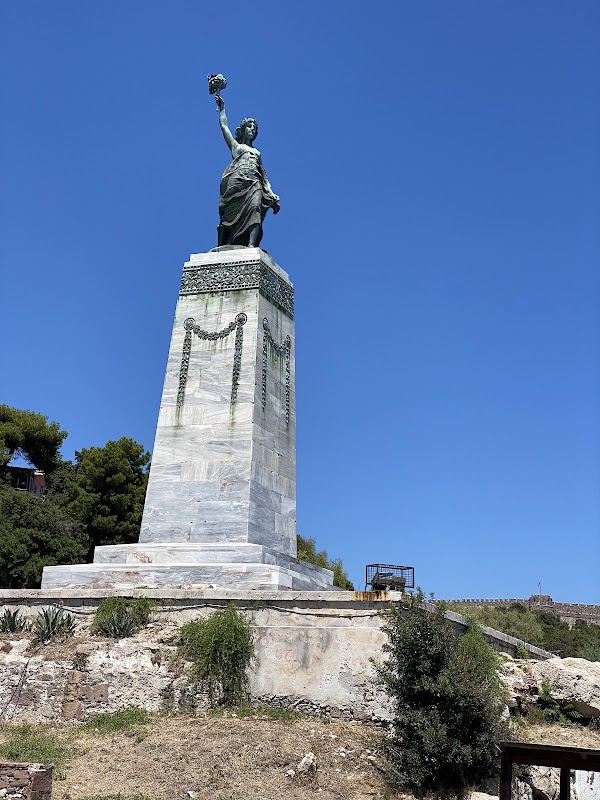
Statue of Eleftherios Venizelos
Ανδριάντας Ελευθέριου Βενιζέλου
Standing near the coastal settlement of Alyfada in the northeastern reaches of Lesvos, the statue of Eleftherios Venizelos pays tribute to one of modern Greece's most towering political figures. Venizelos, the Cretan-born statesman who served multiple terms as Prime Minister of Greece in the early twentieth century, is remembered across the Aegean as the architect of the country's great territorial expansion. It was under his leadership that Lesvos, along with much of the northern Aegean, was incorporated into the Greek state in 1912 following the First Balkan War, ending centuries of Ottoman rule. For the islanders of Lesvos, that moment of union was profoundly transformative, and Venizelos remains a revered symbol of national liberation and Hellenic identity. The memorial stands as a quiet but dignified landmark in a landscape shaped by olive groves and the shimmering blue of the Aegean. Sculptures of this kind, common throughout Greece, serve not merely as civic decoration but as anchors of collective memory, connecting present-day communities to the political struggles and aspirations of their grandparents' generation. The setting near Alyfada gives the monument an unhurried, contemplative atmosphere — away from the bustle of Mytilene, visitors can pause and reflect on the layers of history that shaped this island's modern identity. For those touring the northern and eastern stretches of Lesvos, the statue offers a meaningful cultural waypoint. It rewards visitors who come with some knowledge of Greek history, prompting reflection on the complex transition from Ottoman to Greek sovereignty and the role individual statesmen played in that process. Whether encountered on a scenic drive or a deliberate pilgrimage, the monument speaks to Lesvos's deep pride in its Greek heritage and its sense of hard-won belonging to the modern nation.
Tafos Kai Iero Palamidi
Τάφος και Ιερό Παλαμήδη
Near the quiet upland village of Ypsilometopo, the site known as Tafos kai Iero Palamidi — the Tomb and Sanctuary of Palamidi — stands as one of Lesvos's more enigmatic ancient monuments. The name points to a hero cult, a practice deeply embedded in ancient Greek religious life whereby the reputed tomb of a legendary or semi-divine figure became a place of veneration and offering. Hero sanctuaries of this kind were scattered across the Aegean world, and Lesvos, with its rich Aeolic heritage and mythological associations reaching back to the Bronze Age, was fertile ground for such traditions. The figure of Palamidi, linked to the wider Greek mythological tradition, lent this remote hillside site a sacred character that drew worshippers seeking the protection or intercession of a venerated ancestor. The archaeological remains reflect the layered history typical of Lesvos's interior sites — masonry courses, possible terrace walls, and traces of a sacred precinct that once demarcated the holy ground from the surrounding landscape. While the site has not received the same degree of systematic excavation as the island's more prominent ancient cities such as Mytilene or Antissa, what survives speaks to the enduring local reverence for this place across the ancient period. The setting itself, on elevated ground with views across the island's interior hills, would have reinforced its sacred atmosphere and made it a meaningful destination for religious processions and ritual activity in antiquity. For visitors today, Tafos kai Iero Palamidi rewards those willing to venture off the main tourist routes into the quieter heart of Lesvos. The surrounding landscape of olive groves, scrubland, and rolling hills is characteristic of the island's lesser-visited interior, and the site offers a genuine sense of encounter with the deep past. Coming from Ypsilometopo, the approach through the village itself is part of the experience — a reminder that in Lesvos, ancient history and living communities have always shared the same ground.
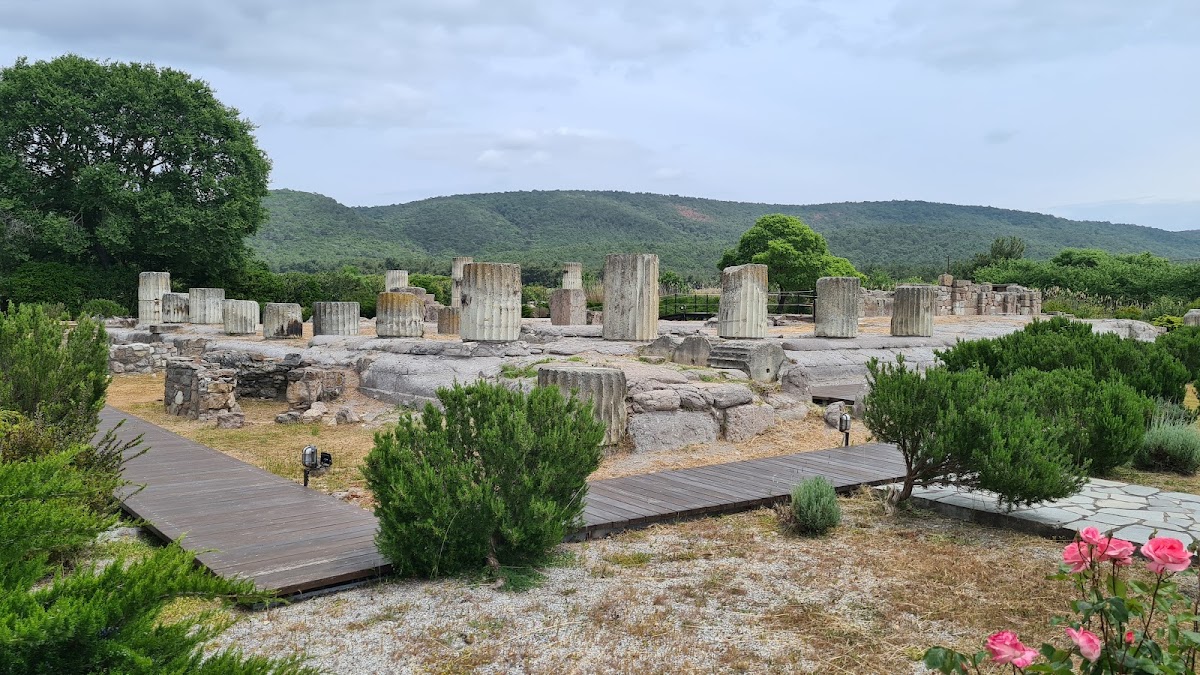
Temple of Messa
Ιερό των Μέσων
Deep in the island's interior, not far from the village of Mesa, the Temple of Messa stands as one of the most historically significant ancient sites on Lesvos. In antiquity, this sanctuary served as a pan-Lesbian religious center, a place where the rival city-states of the island set aside their differences to gather for shared worship and festival. Ancient sources, including references in the poetry of Alcaeus and Sappho who lived around 600 BCE, allude to this communal sanctuary, suggesting it held a unifying, almost sacred civic importance for the Lesbian people as a whole. The site is believed to have been dedicated to a triad of deities central to Lesbian religious life, reflecting the cosmopolitan spiritual character of the ancient Aegean world. The architectural remains speak to a once-substantial sacred precinct. Scattered column drums, worked stone blocks, and foundation courses survive across the site, hinting at a temple of considerable scale and ambition. The setting itself, in the gently undulating landscape of central Lesvos with views toward the surrounding hills, would have made it a natural gathering point for pilgrims arriving from the island's many communities. Though systematic archaeological excavation has been limited and much still lies beneath the surface, what has been documented points to continuous use and veneration across several centuries of antiquity. For visitors today, the Temple of Messa offers a quietly moving experience rather than a dramatic ruin. The fragmented stones are evocative precisely because of their understatement, inviting the imagination to reconstruct the processions, hymns, and communal rites that once animated this landscape. It is a place that rewards those with a genuine curiosity about the ancient world, and it sits comfortably alongside a visit to the nearby village of Mesa and the broader rural heart of the island. Coming here is a reminder that Lesvos was not just a backdrop to famous poets and philosophers, but a living civilization with its own traditions of community and devotion.
The house of Menander
Οικία Μενάνδρου
Tucked into the landscape near the quiet settlement of Alyfada in eastern Lesvos, the House of Menander is an archaeological site that offers a rare glimpse into the domestic life of the island's ancient inhabitants. The remains belong to what appears to have been a substantial private residence from the Hellenistic or early Roman period, reflecting the prosperity and cultural sophistication that characterized Lesvos during those centuries. The island was a significant center of Greek intellectual and artistic life, and the architecture and layout of such elite residences often mirrored the refined tastes of their owners, incorporating mosaic floors, plastered walls, and organized room arrangements around a central courtyard following the traditions of Mediterranean domestic design. The site takes its name from Menander, though whether this refers to a local landowner or reflects a broader cultural association is a matter that lends the place an intriguing air of historical mystery. What the exposed foundations and structural remnants reveal is a home of considerable scale and ambition, suggesting its occupant held meaningful social standing in the region. The construction techniques and materials visible in the ruins are consistent with the building traditions of the broader Aegean world during that era, offering archaeologists and visitors alike tangible evidence of how the wealthy of ancient Lesvos lived, entertained, and organized their households. For visitors today, the House of Menander provides a contemplative encounter with Lesvos's layered past in a setting that remains largely unspoiled. Standing among the stones, with the gentle rhythms of the Aegean not far distant and the surrounding countryside carrying that timeless character particular to the eastern Aegean, it is easy to feel the long arc of human habitation on this island. Those with an interest in classical archaeology will find the site rewarding, while even the casual traveler will appreciate its quiet dignity and the way it anchors the landscape in deep historical time.
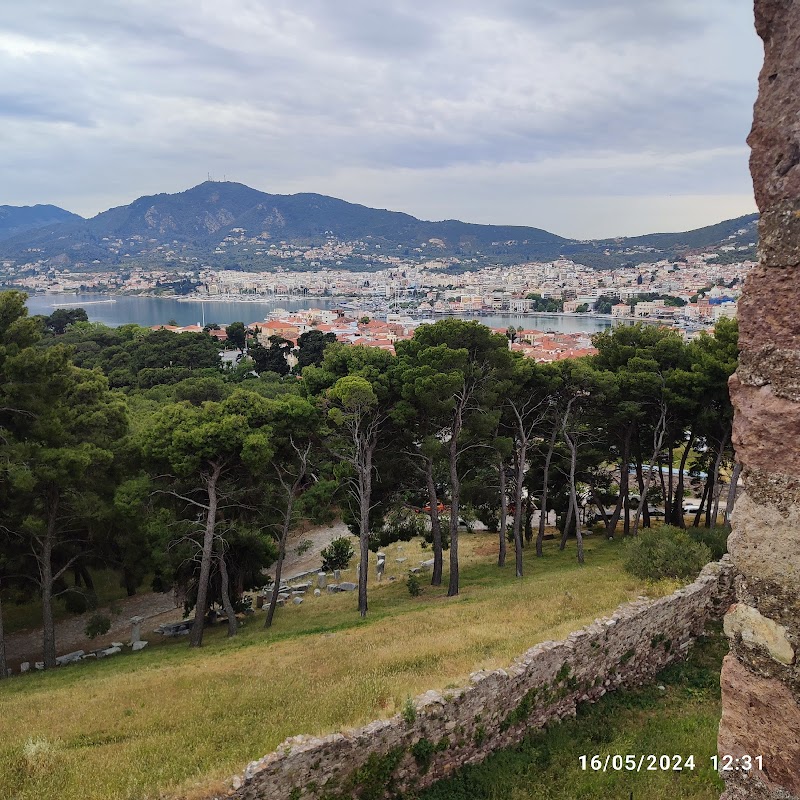
Tmima Romaikou Ydragogeiou
Τμήμα ρωμαϊκού υδραγωγείου
Standing amid the quiet countryside near Alyfada, the surviving section of a Roman aqueduct offers a striking reminder that Lesvos was once woven into the vast infrastructure of the Roman Empire. Aqueducts of this kind were the arteries of Roman civilization, engineered to carry fresh water across considerable distances to supply towns, bathhouses, and public fountains. This particular remnant, known locally as the Tmima Romaikou Ydragogeiou, preserves fragments of the masonry channelwork and structural supports that once formed part of a larger hydraulic system serving the island's Roman-era settlements. The construction technique, relying on carefully cut stone and hydraulic mortar, is characteristic of Roman engineering practice and speaks to the organizational sophistication of the period. What visitors encounter today are evocative ruins in a largely undisturbed rural setting, where sections of the original channel and supporting stonework remain visible above ground. The site rewards those with an interest in ancient engineering and offers a contemplative quality that more crowded archaeological sites sometimes lack. The surrounding landscape of low hills and scrub vegetation gives some sense of the engineering challenges the Roman builders faced in routing water supply across uneven terrain. Up close, the scale and craftsmanship of even these surviving fragments convey how seriously Roman communities invested in reliable water infrastructure. For anyone exploring the lesser-known corners of Lesvos, this aqueduct section is a worthwhile detour that connects the island to its deep Mediterranean past. Alyfada itself is a small, unpretentious settlement, and the combination of the village and the nearby ruins makes for a genuinely off-the-beaten-path excursion. Visitors are advised to wear sturdy footwear and to approach with care, as the site is an unenclosed ruin in open countryside rather than a managed archaeological park.
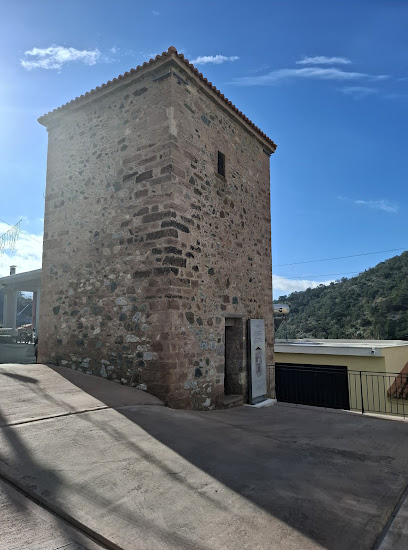
Tower of Ambeliko
Πύργος στο Αμπελικό
Standing on a gentle rise near the quiet village of Ampeliko, the Tower of Ambeliko is one of Lesvos's many surviving medieval pyrgoi — the fortified towers that punctuate the island's landscape as silent witnesses to centuries of shifting rule. Built during the era of Genoese dominance over Lesvos, likely between the fourteenth and fifteenth centuries when the Gattelusi dynasty controlled the island, this stone tower would have served as both a watchtower and a place of refuge for the surrounding rural population. The Genoese were prolific builders on Lesvos, and towers like this one formed part of a broader defensive network that helped lords monitor their estates and respond to the ever-present threat of piracy and Ottoman incursion in the Aegean. The tower displays the sturdy, utilitarian construction typical of Aegean defensive architecture of its period — thick rubble masonry walls designed to withstand attack rather than impress with ornament. Its compact form, rising above the surrounding olive groves and farmland, speaks to the practical concerns of medieval landowners who needed defensible shelter without the resources of a full castle garrison. The placement near Ampeliko also reflects the close relationship between these towers and the agricultural villages they protected, forming the social and defensive backbone of rural Lesvos life for generations. Visitors today will find the tower set within a pastoral landscape little changed in its essential character from medieval times — rolling hillsides covered in olive trees, with views stretching across the quiet interior of the island. While the structure shows the weathering of many centuries, it remains an evocative ruin, and reaching it offers a rewarding sense of stepping off the main tourist trails into the lived history of Lesvos. For those interested in the island's medieval heritage, Ambeliko sits within a region rich in similar monuments, making it a worthwhile stop on any deeper exploration of Lesvos beyond its famous coastline.
Tower of Lisvorio
Πύργος Λισβορίου
Standing amid the rolling hills of central Lesvos near the quiet settlement of Skamioudi, the Tower of Lisvorio is a striking remnant of the island's medieval past. Like many such defensive structures scattered across Lesvos, it bears witness to the turbulent centuries when the island passed through Byzantine, Genoese, and eventually Ottoman hands. The Genoese Gattilusio dynasty, who governed Lesvos from the mid-fourteenth century until the Ottoman conquest of 1462, left behind a legacy of fortified towers and watchtowers across the island's interior and coastline, and Lisvorio fits within that tradition of rural defense against both rival powers and the ever-present threat of piracy that plagued the Aegean throughout the medieval period. The tower itself displays the robust masonry typical of Aegean defensive architecture, with thick stone walls built to withstand both assault and the test of time. Its elevated position commands views over the surrounding landscape, underscoring its original function as a lookout point from which approaching threats could be spotted and signals relayed to nearby settlements. Structures of this kind were essential nodes in a network of communication and defense that helped communities survive in an era of persistent instability across the eastern Mediterranean. Today, the Tower of Lisvorio offers visitors a quiet, unhurried encounter with Lesvos's layered history, away from the more heavily visited sites near Mytilene or Molyvos. The surrounding countryside, characteristic of the island's interior with its olive groves and scrubland, provides a peaceful backdrop for exploring the site. Those with an interest in medieval architecture or in tracing the physical footprint of Genoese rule on Lesvos will find it a rewarding detour, and the solitude of the location gives the ruins a contemplative atmosphere that more accessible monuments sometimes lack.
Tower of Magnisalis
Πύργος Μαγνήσαλη
Standing sentinel on the northeastern reaches of Lesvos, the Tower of Magnisalis is a medieval fortification that speaks to centuries of strategic defense and dynastic ambition on the island. Rising near the thermal spa town of Loutrópoli Thermís, the tower belongs to a broader network of watchtowers and strongholds that once guarded Lesvos against raids and invasion during the Byzantine and Genoese eras. The Gattilusio family, who ruled Lesvos as a Genoese lordship from the mid-fourteenth century until the Ottoman conquest of 1462, were prolific builders of such defensive works, reinforcing key vantage points across the island's coastline and hinterland. Whether this particular tower predates or post-dates their tenure, its commanding position reflects the enduring importance of controlling the approaches to this fertile corner of the island. The structure itself is characteristic of Aegean medieval military architecture — thick stone walls built to withstand both the elements and hostile assault, designed more for functional resilience than decorative flourish. Its elevated position would have allowed lookouts to scan the sea lanes and signal warnings to nearby settlements. The surrounding landscape of gently rolling hills, pine groves, and the proximity to ancient Thermi — a site with Bronze Age layers of occupation — means the tower sits within a landscape layered with human history stretching back thousands of years. Visitors today will find a place that rewards quiet contemplation rather than formal tourism infrastructure. The tower stands as an evocative remnant in an area better known for its rejuvenating hot springs and the low-key charm of Loutrópoli Thermís nearby. Combining a visit to the tower with a walk through the surrounding countryside gives a tangible sense of how the medieval inhabitants of Lesvos lived with constant awareness of the horizon — watchful, resourceful, and deeply connected to the land they defended.
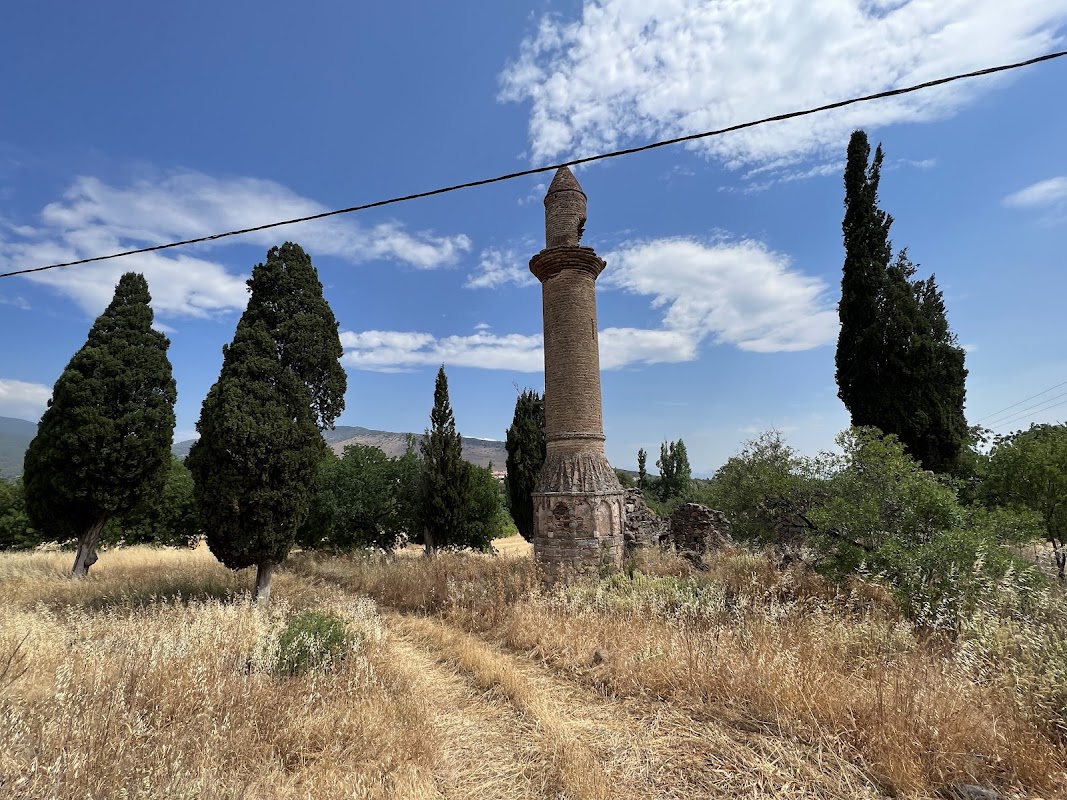
Tower of Parakoila
Πύργος στα Παράκοιλα
Standing sentinel over the small village of Parakoila in the western reaches of Lesvos, the Tower of Parakoila is a striking remnant of the island's medieval layered past. Like many such structures scattered across Lesvos, it dates to an era when the island was a contested prize between Byzantine, Genoese, and eventually Ottoman powers. The Genoese Gattilusi dynasty, who ruled Lesvos through much of the fourteenth and fifteenth centuries, left a legacy of fortified towers and watchtowers across the landscape, and this tower bears the hallmarks of that tradition — built for surveillance, refuge, and the rapid signaling of approaching threats across the Aegean. Its thick stone walls and commanding position reflect the defensive logic of an age when coastal raiding and territorial conflict shaped daily life for island communities. Architecturally, the tower exemplifies the robust masonry typical of late medieval Aegean military construction, with the kind of austere, functional stonework that has allowed it to endure centuries of earthquakes, storms, and neglect. The surrounding countryside of olive groves and dry stone walls gives the site an almost timeless quality, the tower rising from the land as if it grew there organically rather than being raised by human hands. For visitors, the experience of approaching it on foot through the quiet village lanes of Parakoila — a settlement that retains much of its unhurried, traditional character — is itself part of the reward. The Tower of Parakoila holds particular value not just as an architectural survivor but as a tangible anchor for understanding the complex human geography of Lesvos across the centuries. It stands as evidence that even small, seemingly peripheral villages once occupied strategically significant positions in the island's network of defense and communication. Travelers with an interest in medieval history, Byzantine and post-Byzantine architecture, or simply the texture of a landscape shaped by deep time will find it a quietly powerful place to pause and reflect.
Tower of Tsoukaladelli
Πύργος Τσουκαλαδέλλη
Standing sentinel over the rolling landscape northeast of Loutrópoli Thermís, the Tower of Tsoukaladelli is one of the lesser-known but evocative remnants of Lesvos's medieval layered past. Towers of this kind were characteristic of the Genoese period of rule on the island, when the Gattelusi dynasty and their noble allies erected fortified structures across the countryside to assert territorial control, protect agricultural estates, and watch over the vital coastal approaches facing the Anatolian shore. The eastern flank of Lesvos, with its proximity to the Asia Minor coast, made defensive infrastructure here a practical necessity through centuries of shifting Mediterranean power. The tower exhibits the sturdy, unadorned masonry typical of Aegean defensive architecture — thick walls built to endure both assault and time, with a commanding elevation that would have afforded broad views across surrounding farmland and toward the sea. This corner of the island, already prized for its thermal springs at nearby Thermi, was settled and contested across antiquity and the medieval era alike, giving structures like Tsoukaladelli a layered significance that extends well beyond their martial function. Today the tower stands in a quiet rural setting, largely unrestored and away from the main tourist circuits, which lends it an authentic, unhurried atmosphere. Visitors who seek it out are rewarded with a genuine connection to the island's medieval history, along with sweeping views of the gentle northeastern Lesbian countryside. It pairs naturally with an excursion to the thermal baths at Loutrópoli Thermís and the nearby archaeological site of ancient Thermi, making this corner of Lesvos a rewarding half-day journey for anyone drawn to the deeper strata of Greek island heritage.
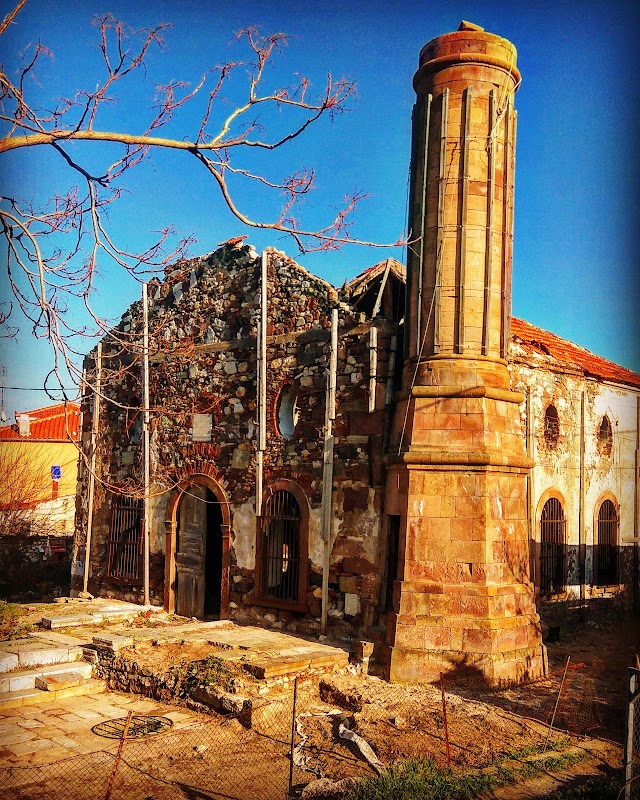
Valide Mosque
Βαλιδέ Τζαμί
The Valide Mosque (Greek: Βαλιδέ Τζαμί, from Turkish: Valide Camii, lit. 'Mosque of the Valide Sultan'), known locally as the Valide Djami, is a former mosque in Mytilene, on the island of Lesbos, in the North Aegean region of Greece. Completed in 1615 during the Ottoman era, the mosque was abandoned in the 1920s, following the Balkan Wars and the Greco-Turkish population exchange, and is in a partial ruinous state.
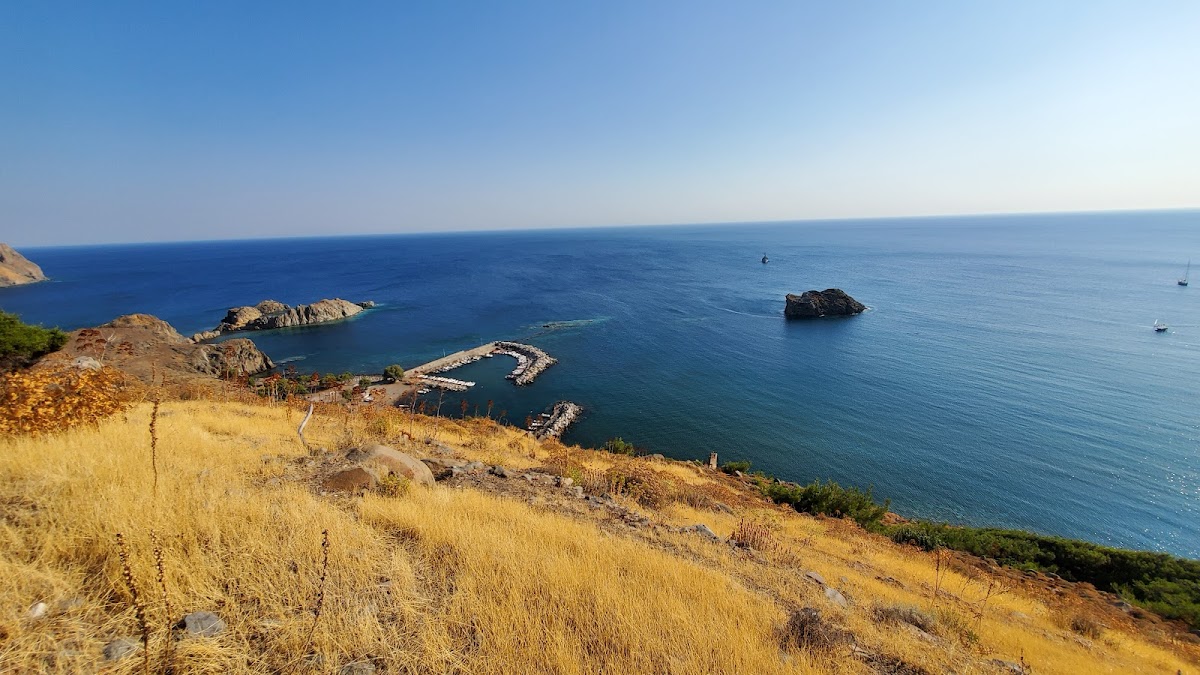
Vigla of Eresos
Βίγλα Ερεσού
Rising above the western coastline of Lesvos, the Vigla of Eresos is a Byzantine-era fortification that once stood sentinel over the ancient city of Eresos and the sea approaches below. The word "vigla" derives from the Byzantine military system of coastal watchtowers, and this hilltop stronghold formed part of the island's broader network of defenses against the pirate raids and naval threats that plagued the Aegean throughout the medieval period. Eresos itself is one of Lesvos's oldest settlements, its roots reaching back to antiquity, and the hillside fortification reflects centuries of successive occupation by Byzantine, Genoese, and Ottoman powers, each of whom recognized the strategic command this elevated position held over the surrounding landscape. The ruins that visitors encounter today speak to that long layering of history. Surviving walls of rough-hewn local stone follow the natural contours of the rocky promontory, and fragments of towers and defensive embrasures hint at the scale the structure once achieved. From the summit, the panorama is extraordinary: the sprawling blue of the Gulf of Kalloni to one side, the village of Skala Eresou and its wide sandy beach below, and the gentle hills of the western Lesvos interior stretching toward the horizon. The hike up is relatively short but rewarding, passing through scrub and wildflowers with views that open at every turn. For visitors, the Vigla offers more than ruins — it provides a vivid sense of how deeply this corner of Lesvos has been shaped by its position at the crossroads of civilizations. Standing among the stones, one can appreciate why ancient Eresos flourished here, why medieval lords chose this ridge for their stronghold, and why travelers still make the journey to this quiet western edge of the island. Skala Eresou, just below, is famed as the birthplace of the poet Sappho, lending the whole area an atmosphere of cultural resonance that the Vigla, gazing over it all, seems to quietly preside over.
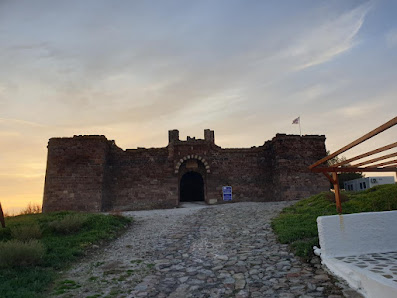
WWII Tank
On the rugged western edge of Lesvos, not far from the fishing village of Sigri, a lone tank stands as a silent witness to the turbulence of the Second World War. During the Axis occupation of Greece from 1941 to 1944, the Aegean islands were drawn into the wider theater of conflict that swept across the Mediterranean, and Lesvos was no exception. Military hardware was deployed across the island as occupying forces sought to maintain control of strategically important territory in the eastern Aegean. When the war ended and the occupation lifted, some of this equipment was simply left behind, abandoned in the landscape where it had last stood. This tank, weathered by decades of salt air and Aegean sun, has become an unexpected landmark in one of the island's most remote and atmospheric corners. Its presence near Sigri — a village already known for its petrified forest, medieval castle, and windswept beauty — adds a layer of historical weight to the area. The machine itself tells a story of industrial warfare transplanted onto an ancient island, a jarring juxtaposition that prompts reflection on how even the quietest corners of Greece were touched by the catastrophic events of the twentieth century. Visitors who make the journey to this western extremity of Lesvos will find the tank in an open setting that invites quiet contemplation. The surrounding landscape of low scrub, volcanic rock, and distant sea views provides a stark and memorable backdrop. It is the kind of place that rewards the curious traveler willing to venture off the more-traveled routes — a tangible piece of living history sitting in the open air, free to approach and examine up close, with no barriers between you and the past.
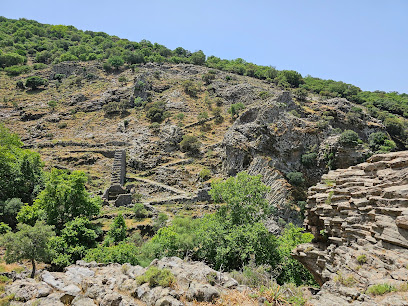
Water mills
Scattered across the hillsides and stream valleys of the Lesvos countryside, the old water mills near Petrio stand as quiet monuments to the island's agricultural past. For centuries, these stone structures harnessed the power of seasonal streams and springs to grind grain, primarily wheat and barley, sustaining the communities of the eastern Aegean through generations of Ottoman rule and into the modern era. The mills of this region represent a technology brought to near perfection over hundreds of years, with local craftsmen adapting the basic horizontal-wheel design to the particular flow and topography of each site. Their thick-walled masonry, built from local volcanic stone, was engineered to endure the weight of the millstones above and the constant presence of water below. The area around Petrio, a small inland settlement in the island's western reaches, retains several of these structures in varying states of preservation. Visitors can trace the channels and sluices that once directed water onto the mill wheels, and in the better-preserved examples, peer inside to see the arrangement of the grinding floor and the timber beams that once supported the working machinery. The surrounding landscape of terraced fields and ancient olive groves gives powerful context to what these mills once meant: they were the economic heart of rural life, the place where the harvest was transformed into sustenance, and where neighbors gathered during the grinding season. Today the mills stand largely silent, but they draw walkers and history enthusiasts who appreciate the chance to encounter the everyday engineering of a vanished way of life. The path to the mills passes through scenery typical of the Lesvos interior, with low stone walls, wild herbs, and the distant shimmer of the Aegean visible on clear days. For anyone interested in vernacular architecture or the deeper rhythms of Mediterranean rural history, a visit to these water mills offers a grounding and unhurried encounter with the island's working heritage.
Wayside Cross (39.1117, 26.5669)
Scattered across the landscapes of Lesvos like quiet sentinels, wayside crosses have marked the island's roads and pathways for centuries, serving as enduring expressions of Orthodox Christian devotion woven into everyday rural life. This cross near Alyfada stands in a tradition that spans the Byzantine era and beyond, when communities erected stone and iron markers at crossroads, field boundaries, and spots where travelers paused to pray before a journey or give thanks upon returning safely home. Such crosses were often raised in memory of those who died nearby, as votive offerings following a recovered illness, or simply to sanctify the land and invoke divine protection over the surrounding countryside. The cross at these coordinates reflects the vernacular religious craftsmanship long practiced across the Aegean islands, where modest materials — wrought iron, carved stone, or painted wood — were fashioned by local hands into objects of sincere spiritual meaning. Unlike the grand ecclesiastical monuments of Mytilene or the monastery complexes found higher in the hills, wayside crosses derive their power from intimacy and accessibility, standing at human scale along the paths people actually walked. Small oil lamps or candle holders are often incorporated into their base or protective glass case, tended by villagers who keep the flame alive as an act of daily piety. Visitors passing through the quiet agricultural land around Alyfada will find this cross a gentle reminder of the deeply rooted faith that has shaped life on Lesvos for generations. The surrounding landscape of olive groves and open fields gives the site a peaceful, contemplative quality. It is not a destination that demands a long stop, but those who pause here for a moment connect with something authentic and unhurried — the living texture of a Greek island community that has always sought meaning in the ordinary places of daily passage.
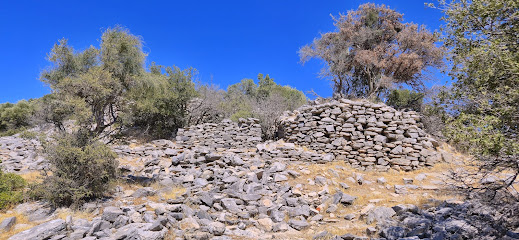
Wayside Shrine (39.0412, 26.3831)
Scattered along the roadsides and footpaths of Lesvos, the small wayside shrines known locally as proskynitaria are among the most intimate expressions of Greek Orthodox devotion on the island. This shrine near Megalochori stands as a quiet sentinel along the rural landscape, part of a tradition that stretches back centuries and remains very much alive today. These diminutive structures — typically a miniature chapel or a glass-fronted box mounted on a post or stone plinth — shelter an oil lamp, a small icon, and sometimes a few personal offerings left by the faithful. Their origins are varied: some mark the site of a miraculous event or answered prayer, others commemorate a traveler saved from an accident, and still others serve simply as a focal point for the daily piety of nearby families and villagers. The shrine near Megalochori sits within the gentle, olive-threaded countryside that characterises this part of central Lesvos. Megalochori itself is a traditional agricultural village, and the surrounding landscape retains the unhurried character of rural island life. The proskynitario here likely serves both passing travelers on the road and local residents who tend to it as a matter of family or community responsibility — keeping the lamp lit, refreshing the icon, and pausing for a brief prayer. For visitors, this modest landmark offers a window into the living religious culture of Lesvos far removed from grand monastery complexes or famous pilgrimage sites. There is something deeply affecting about encountering one of these shrines unexpectedly in the landscape — a small flame burning in the afternoon light, an icon weathered by seasons, a handful of wildflowers left by an unknown hand. It is a reminder that faith on this island is not confined to churches and feast days, but woven into the everyday fabric of the roads people travel and the land they tend.
Wayside Shrine (39.0473, 26.6095)
Scattered across the roadsides and footpaths of Lesvos, the small wayside shrines known locally as proskinitaria are among the most intimate expressions of Greek Orthodox faith on the island. This shrine near Agia Paraskevi sits along a route that has connected inland villages for centuries, a quiet landmark that has guided and comforted travelers long before paved roads crossed the Lesvos countryside. These structures belong to a living tradition that spans the Byzantine era to the present day, their placement often marking sites of answered prayers, narrow escapes, or the memory of a loved one — each one a private chapel in miniature, maintained by a family or a community with a devotion that outlasts generations. The shrine itself is typical of the rural Lesbian vernacular: a small box-like cabinet or columnar structure, usually fashioned from stone, concrete, or rendered masonry, and topped with a modest cross. Inside, a glass-fronted door protects an oil lamp, an icon of a saint, and perhaps a few votive offerings left by the faithful. The area around Agia Paraskevi is known for its fertile plain and its deeply rooted agricultural communities, and shrines like this one have long served as waypoints for farmers, shepherds, and pilgrims moving through the landscape between villages and the fields beyond. Visitors passing through will find in this small structure something quietly moving — a reminder that the sacred and the everyday are woven together throughout Lesvos in ways that feel entirely natural. It costs nothing to pause here, to observe the oil lamp flickering inside, and to appreciate how this modest roadside monument speaks to an unbroken continuity of belief and belonging. It is the kind of place that rewards the traveler who is willing to slow down and look closely at what the island has always taken care to remember.
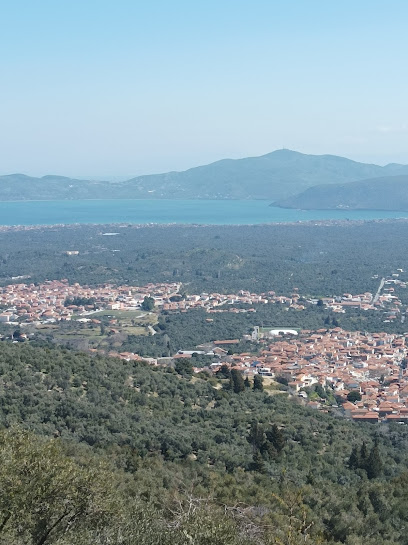
Wayside Shrine (39.0614, 26.4892)
Scattered across the roadsides and pathways of Lesvos, the small wayside shrines known as proskynitaria are among the most intimate expressions of Greek Orthodox devotion you will encounter on the island. This particular shrine, situated near the village of Evreiaki in the northeastern reaches of Lesvos, follows a tradition stretching back centuries, when travelers and villagers alike erected these modest structures at meaningful spots along their routes. Some mark the site of a miraculous survival, others commemorate a life lost on that stretch of road, and still others were raised simply as acts of gratitude or prayer — each one a private testament made public, offered to the passing world. The shrine itself is typical of the Aegean vernacular: a small stone or whitewashed cabinet, often no larger than a birdhouse, mounted on a post or set into a niche, its glass front protecting a flame-licked oil lamp, an icon of a saint or the Virgin Mary, and perhaps a few dried flowers or a string of prayer beads left by a faithful hand. The surrounding landscape near Evreiaki is gently rural, with the quiet rhythms of an agricultural village forming the backdrop — olive groves, dry stone walls, and the distant shimmer of the Aegean hinting at the island's unhurried pace of life. For visitors, pausing at a proskynitarion offers a moment of genuine connection with the living spiritual culture of Lesvos. These are not museum pieces but active, tended objects of faith, regularly replenished with oil and candles by local families. Slowing down beside one is to glimpse something rarely captured in guidebooks: the texture of everyday devotion that has shaped Greek island life for generations, turning even an ordinary country lane into something quietly sacred.
Wayside Shrine (39.0762, 26.5341)
Tucked along the roadside near the thermal village of Loutra, this small wayside shrine — known in Greek as a proskynitari — represents one of the most intimate expressions of Orthodox faith found across the Aegean landscape. These modest structures have lined the roads and paths of Lesvos for centuries, serving as open-air sanctuaries where travelers could pause to light a candle, offer a prayer, or give thanks for a safe journey. Built from local stone or fashioned from metal and wood, they typically shelter a small icon, a glass oil lamp kept burning by the surrounding community, and perhaps a few dried flowers or personal offerings left by devoted passers-by. The tradition of the proskynitari is deeply woven into the spiritual fabric of Greek rural life, drawing on Byzantine and post-Byzantine religious practice that transformed the natural world into a sacred landscape. In a region like Lesvos, where the Orthodox faith has shaped daily rhythms for well over a millennium, these shrines mark not only crossroads and village boundaries but also sites of personal significance — places where a family gave thanks for recovery from illness, or where the community honored a memory too important to let fade. The placement of this particular shrine near Loutra, long associated with healing waters valued since antiquity, lends it an additional resonance, sitting at the confluence of spiritual and physical renewal. Visitors pausing here today will find a quiet moment apart from the road, a glimpse into a living tradition that requires no grand architecture to carry great meaning. The shrine invites respectful observation — note the handcrafted details, the flickering lamp if it is lit, and the layers of devotion accumulated over generations. It is a reminder that on Lesvos, the sacred is never far from the everyday, and that the island's landscape is as much a human and spiritual creation as a natural one.
Wayside Shrine (39.0811, 26.4462)
Scattered across the roadsides and footpaths of Lesvos, small wayside shrines known as proskinitaria are among the most intimate expressions of Greek Orthodox devotion you will encounter on the island. This shrine near Pigadakia, a quiet inland settlement in the central part of Lesvos, belongs to a tradition that stretches back centuries, rooted in the belief that sacred markers at crossroads and along paths offer protection to travelers and serve as permanent stations of prayer in the landscape. These structures typically emerged to commemorate a significant event — a miraculous survival, a death, or a vision — and were maintained by local families across generations, binding communities to the land through acts of memory and faith. The shrine itself follows the characteristic form found throughout the Greek world: a small box-like cabinet or miniature chapel, often fashioned from stone, metal, or whitewashed concrete, mounted on a post or set into a low plinth beside the road. Inside, visitors will typically find a small icon, a vigil oil lamp kept burning by a devoted local, and perhaps a few tokens of thanksgiving left by those who have received intercession. The surrounding landscape near Pigadakia is gentle and rural, with olive groves and dry-stone field boundaries giving way to the quieter rhythms of the Lesvos interior, making this a contemplative spot far removed from the bustle of the coast. For visitors, stumbling upon a proskinitario like this one is a reminder that Lesvos is not merely a place of beaches and postcard scenery, but a living community whose relationship with the sacred is woven into every lane and hillside. Pausing here for a moment — observing the fresh oil in the lamp or a recently placed flower — offers a glimpse into the unbroken continuity of rural Greek spiritual life, practiced not in grand cathedrals but in these small, sincere monuments tucked beside the road.
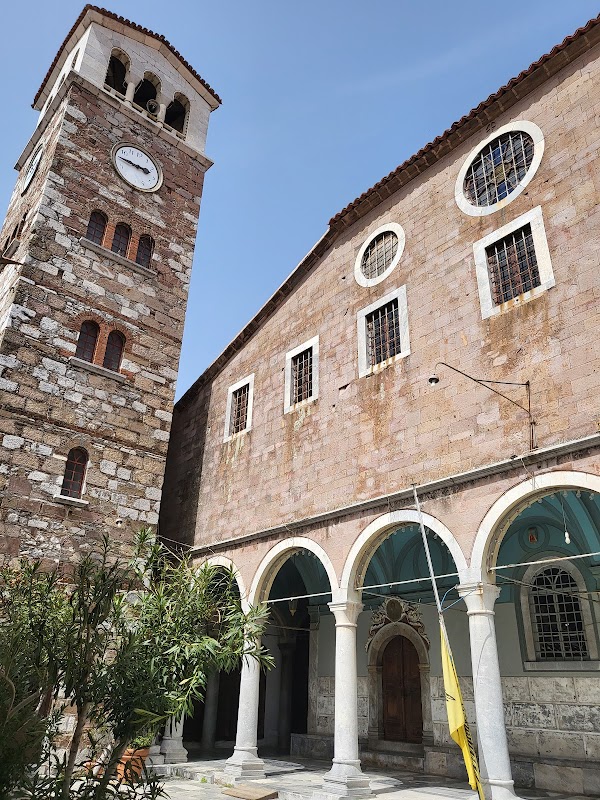
Wayside Shrine (39.0839, 26.3746)
Scattered across the roads and hillside paths of Lesvos, wayside shrines — known in Greek as proskynитaria — are among the most intimate expressions of Orthodox faith woven into the island's everyday landscape. This small shrine near Agiasos stands in a tradition that stretches back centuries, its form typically a miniature chapel fashioned from metal or stone, housing an icon, a small oil lamp, and sometimes photographs or votive offerings left by the faithful. Such shrines serve multiple purposes in Greek custom: they may mark the site of a road accident, commemorate a beloved local figure, or give thanks for a miraculous survival, their presence a quiet reminder that the sacred and the ordinary coexist closely in Aegean life. Positioned near Agiasos, one of the most distinctive and historically rich villages on Lesvos, this shrine sits within a landscape dense with spiritual significance. Agiasos itself is home to the celebrated Church of the Panagia Agiasotera, which houses a revered icon of the Virgin Mary and draws pilgrims from across the island, particularly during the Dormition of the Virgin in August. The surrounding terrain of pine-forested slopes and ancient olive groves has long been traversed by villagers, pilgrims, and travelers alike, and wayside shrines like this one functioned as waypoints of prayer along those routes. Visitors passing this spot today will find a modest but carefully tended structure, its small flame or icon visible through a glass pane. The shrine rewards a moment of pause — to observe the handmade quality of its construction, the personal offerings inside, and the broader view of a landscape where centuries of Greek Orthodox devotion have left their mark on even the quietest roadside corners. For those exploring the villages and forested interior of Lesvos, these shrines offer a genuine and unscripted window into living local tradition.
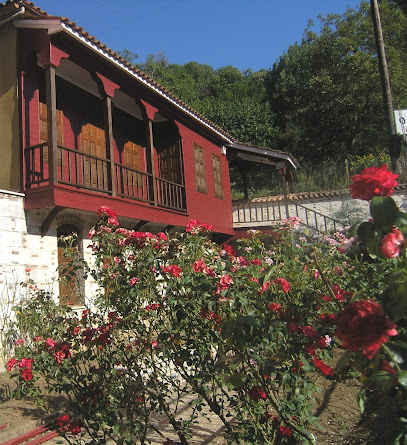
Wayside Shrine (39.0862, 26.3675)
Scattered across the hillsides and roadsides of Lesvos, the small wayside shrines known locally as kandylakia or proskynitaria are among the most intimate expressions of Greek Orthodox devotion you will encounter on the island. This shrine near Agiasos stands along the roads that wind through the forested interior of Lesvos, in a region long associated with deep religious tradition — Agiasos itself is home to one of the most venerated pilgrimage churches in the Aegean. These miniature sanctuaries typically take the form of a small stone or metal cabinet mounted on a post or set into a low stone base, housing an oil lamp, an icon of a saint or the Virgin, and sometimes small offerings left by passing faithful. The tradition of roadside shrines in Greece stretches back through centuries of Orthodox practice, though individual shrines are often erected to mark the site of a traffic accident, a miraculous escape from harm, or as an act of private thanksgiving or remembrance. In the Agiasos area, where the landscape rises into dense pine and chestnut forest and the old mule tracks predate the modern road network, such shrines have long served as waypoints of spiritual orientation for travellers and villagers alike. The craftsmanship varies widely — some are simple tin boxes, others are beautifully fashioned miniature churches complete with a small dome and a cross. Visitors passing this spot will find a quiet, unassuming marker of living faith embedded in the everyday landscape of rural Lesvos. It rewards a moment of pause: the flicker of an oil lamp inside, a faded icon glimpsed through the small glass door, and the surrounding scenery of the island's green interior all combine to convey something essential about the spiritual texture of life here. It is not a destination in the conventional sense, but an encounter with the devotional fabric that runs through Lesbian village culture, especially poignant so close to the sacred precincts of Agiasos.
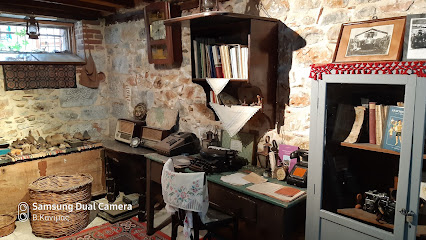
Wayside Shrine (39.0926, 26.3667)
Tucked along the roads that wind through the forested hills surrounding Agiasos, this wayside shrine is a quintessential example of the proskynítari tradition that has shaped the spiritual landscape of rural Greece for centuries. These small roadside sanctuaries, typically housing an oil lamp, a sacred icon, and offerings left by passing faithful, serve as intimate markers of devotion between the grand churches and monasteries of the island. In a region as steeped in Orthodox Christian heritage as Lesvos, such shrines reflect a deeply personal relationship between the community and its saints, often erected in gratitude for a safe journey, in memory of a life lost on the road, or to honor the patron of a nearby family or estate. This particular shrine sits within the orbit of Agiasos, one of Lesvos's most culturally rich villages and home to the celebrated Monastery of the Panagia of Agiasos, which draws pilgrims from across the Aegean. The spiritual energy of that center radiates outward into the surrounding countryside, and wayside shrines like this one form part of a living devotional network that connects travelers and villagers to the sacred as they move through the landscape. The structure itself, as is typical of the tradition, is modest in scale — a small niche or miniature chapel form in stone or whitewashed plaster — yet carefully maintained, its lamp often still flickering with oil replenished by local hands. Visitors who pass this shrine on their way through the hills near Agiasos encounter something that no museum can fully replicate: an unbroken, everyday act of faith still practiced as it has been for generations. It is worth pausing here to take in the quietude of the surrounding olive groves and chestnut forest, the faint scent of incense or lamp oil lingering in the air, and the remarkable continuity of a tradition that makes the Lesvian countryside feel not merely beautiful, but genuinely sacred.
Wayside Shrine (39.0998, 26.5558)
Scattered across the roadsides and footpaths of Lesvos, the small wayside shrines known as proskinitaria are among the most intimate expressions of Greek Orthodox devotion on the island. This shrine near Alyfada, a quiet village in the northeastern reaches of Lesvos, is a characteristic example of a tradition that has shaped the island's landscape for centuries. These modest structures — typically a small metal or stone cabinet mounted on a post or set into a niche, housing an icon, an oil lamp, and perhaps a few dried flowers — mark places of personal and communal significance. Some commemorate a life lost in a road accident, others give thanks for a miraculous survival or answered prayer, and still others have stood at crossroads and field boundaries as long as local memory extends. The shrine near Alyfada sits within a rural landscape of olive groves and stone walls that has changed little in its essential character over generations. Alyfada itself is a small, unhurried settlement, and the surrounding countryside retains the quiet that draws visitors seeking an authentic sense of the island away from busier coastal resorts. The care lavished on these shrines — the freshly trimmed wicks, the occasional spray of wildflowers, the polished glass of the icon box — speaks to a living faith rather than a relic of the past. Locals tend them with quiet regularity, and passing drivers often slow briefly to cross themselves. For the visitor, this wayside shrine offers a window into one of Lesvos's most enduring cultural practices. Unlike the grand monasteries or hilltop churches that appear in guidebooks, proskinitaria ask nothing of you — no entrance fee, no set visiting hours, no crowds. They reward those who travel slowly and pay attention to the margins of the road. Pausing here, in the shade of olives with the faint sound of the Aegean carried on the breeze, one feels the texture of daily life on the island in a way that few formal sights can provide.
Wayside Shrine (39.1043, 26.5136)
Scattered across the roads and pathways of Lesvos, wayside shrines — known in Greek as proskynitaria — are among the most intimate expressions of Orthodox faith you will encounter on the island. These small roadside sanctuaries have been a constant feature of the Greek landscape for centuries, rooted in the Byzantine tradition of marking sacred or significant places with a devotional structure. The shrine near Kedro, sitting quietly along a rural route in the island's interior, follows this enduring custom, typically taking the form of a miniature chapel or icon house crafted from stone or metal, sheltering an oil lamp, icons, and sometimes flowers or offerings left by passing villagers and travelers. The proskynitaria of Lesvos serve multiple purposes woven together over generations. Many mark the site of a miraculous event, a fatal accident, or simply a spot where a traveler once felt moved to give thanks for a safe journey. Others are erected by families in memory of loved ones, maintained with quiet devotion year after year. The one near Kedro stands within a landscape of olive groves and dry stone walls that has changed little in its essential character across the centuries, lending even a modest shrine a sense of deep continuity with the people who have worked and traveled this land. Visitors passing through this corner of Lesvos will find in this small shrine a moment worth pausing over. It speaks not of grand history but of personal and communal faith practiced at a human scale — the everyday sacred that defines rural Greek life. The surrounding countryside near Kedro offers a quietly beautiful setting of terraced hillsides and ancient olive trees, and the shrine itself is a reminder that on this island, the sacred and the everyday have never been far apart.
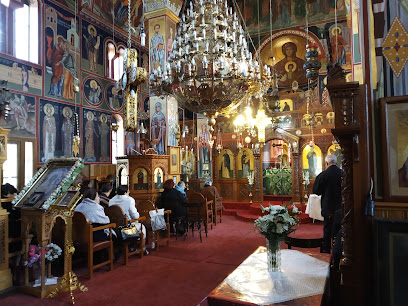
Wayside Shrine (39.1080, 26.5400)
Scattered across the olive-shaded roadsides and hillside paths of Lesvos, the small wayside shrines known locally as proskinitaria are among the most intimate expressions of Greek Orthodox devotion you will encounter on the island. This particular shrine, standing near the village of Alyfada in the northeastern reaches of Lesvos, follows a tradition that stretches back centuries, rooted in both religious practice and the deeply personal relationship islanders have long maintained with their faith. These miniature sanctuaries are typically erected to mark the site of a miraculous survival, to honor a loved one lost nearby, or simply to offer a moment of grace to travelers passing through the landscape. In form, wayside shrines on Lesvos are usually small whitewashed structures resembling miniature churches, complete with a pitched roof, a tiny door or glass-fronted niche, and a cross above. Inside you will find an oil lamp kept burning by local hands, a small icon of a saint or the Virgin Mary, and often modest offerings left by passers-by — a candle stub, a handful of dried flowers, a folded prayer. The craftsmanship is modest but sincere, and each shrine carries a quiet individuality that reflects the person or community that maintains it. Visitors who pause at this shrine near Alyfada are rewarded not only with a glimpse into living Greek religious tradition but also with the unhurried stillness of the surrounding countryside. The rolling hills and stone-walled terraces of this part of Lesvos provide a contemplative backdrop, and the shrine serves as a reminder that travel on this island has always been punctuated by moments of reflection. It asks nothing of the visitor beyond a moment's attention, yet it offers something increasingly rare: a direct, unmediated connection to the spiritual life of a place.
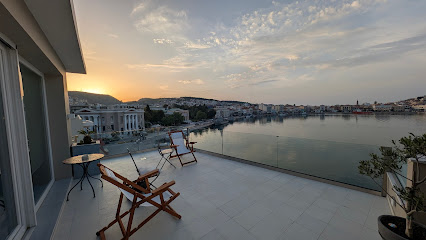
Wayside Shrine (39.1086, 26.5605)
Dotting the roadsides and footpaths of Lesvos, small wayside shrines known locally as exoklisia or proskinitaria are among the most quietly moving features of the island's landscape. This particular shrine, positioned near the village of Alyfada in the eastern reaches of Lesvos, is a testament to a tradition that has persisted across centuries of Byzantine, Ottoman, and modern Greek history. These diminutive structures typically take the form of a miniature church or box-shaped cabinet mounted on a post or stone plinth, housing an oil lamp, an icon, and small offerings left by passing devotees. Their origins are varied: some mark the site of a miracle or answered prayer, others commemorate a life lost on the road, and still others were erected by grateful travelers who survived a dangerous journey. The shrine near Alyfada stands in a landscape shaped by olive groves and dry-stone walls, the kind of unhurried rural terrain where such objects feel entirely natural. Architecturally modest, it likely features a small arched or gabled roof in the manner of a miniature Orthodox chapel, painted white or left in natural stone, with a hinged glass door protecting the sacred contents within. The flickering of an oil lamp inside, kept burning by local families or passers-by, is a sight common across the Greek world but no less affecting for its familiarity. The care lavished on even the smallest roadside shrine speaks to the deep interweaving of Orthodox faith and everyday life on Lesvos. For visitors, stopping at a wayside shrine like this one offers a moment of genuine connection with the island's living spiritual culture. There is no formal visit required, no entrance fee, no scheduled hours. You simply pause, observe the tiny icon within, perhaps notice fresh flowers or a votive candle left by someone that morning, and appreciate how this small object anchors an entire community's sense of the sacred in the ordinary world. In the context of a drive or walk through the Alyfada countryside, it is the kind of detail that transforms sightseeing into something closer to understanding.
Wayside Shrine (39.1096, 26.5668)
Scattered across the roadsides and hillsides of Lesvos, the small wayside shrines known as proskynetaria are among the most intimate expressions of Greek Orthodox devotion you will encounter on the island. This shrine near the village of Alyfada, set along the quiet roads of the island's eastern interior, belongs to a tradition stretching back centuries, when travelers and villagers alike erected these modest structures to invoke divine protection for journeys, to give thanks for survival, or to mark the site of an accident or a death. Each one is a personal act of faith made permanent in stone or metal, placed at the threshold between the sacred and the everyday. The shrine itself follows the enduring vernacular form common throughout Greece: a small cabinet or miniature chapel, often fashioned from whitewashed stone, brick, or painted metal, housing an oil lamp, an icon of a saint or the Virgin Mary, and perhaps a few offerings left by passing devotees. In this corner of Lesvos, near Alyfada and the gently rolling agricultural land that characterizes the region, such shrines punctuate the landscape with a quiet spiritual gravity, reminding visitors that the island's relationship with the sacred is not confined to grand monasteries or hilltop churches but is woven into the fabric of daily movement and rural life. Visitors who pause here will find not a monument to be formally visited but rather an invitation to observe a living tradition. The lamp inside may still be lit by a local hand, the icon kept fresh and tended. It is worth approaching slowly and with respect, as these shrines remain active places of worship. For travelers exploring the less-visited villages of eastern Lesvos, stopping at a proskynetario like this one offers a rare and unmediated glimpse into the continuity of Greek Orthodox culture and the deeply personal ways in which the people of Lesvos have long inhabited and sanctified their landscape.
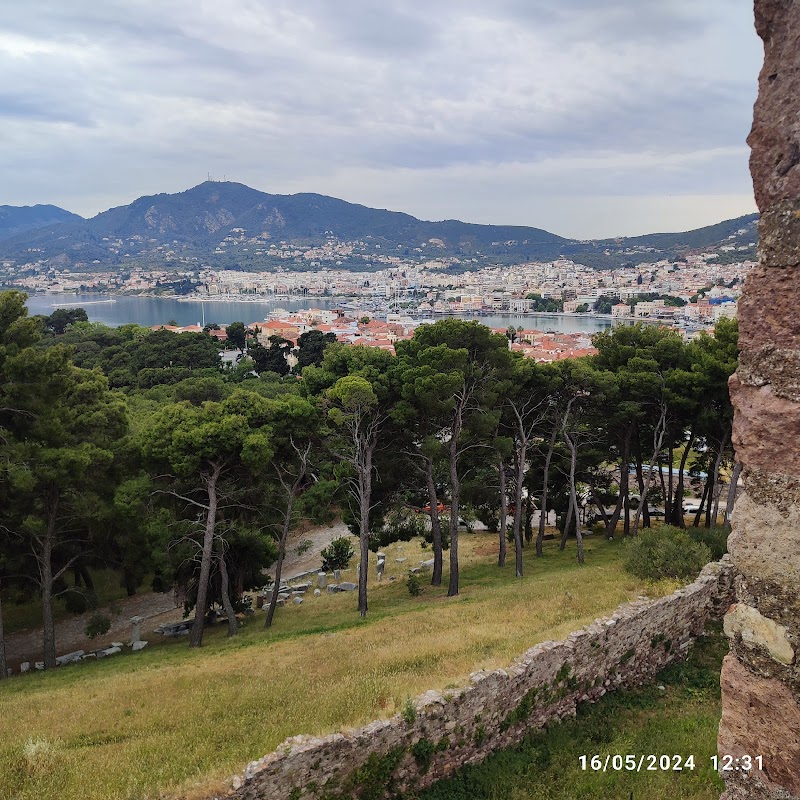
Wayside Shrine (39.1097, 26.5579)
Scattered across the roadsides and footpaths of Lesvos, the small wayside shrines known as proskynitaria are among the most intimate expressions of Greek Orthodox devotion you will encounter on the island. The shrine near Alyfada, sitting quietly beside the road at the edge of this small settlement in the eastern part of Lesvos, is a characteristic example of this centuries-old tradition. These miniature chapels — typically fashioned from whitewashed stone or metal, sometimes resembling a tiny church complete with a pitched roof and a cross — are erected by families to mark the site of a road accident, to fulfill a religious vow, or simply to honor a saint whose protection is sought for travelers passing by. Inside, a small oil lamp or candle burns beside an icon, and offerings of flowers, incense, or personal mementos speak to ongoing acts of private faith. What makes these shrines so compelling for visitors is precisely their unpretentious character. Unlike the grand monasteries or Byzantine churches of Lesvos, a proskynitarion belongs to no institution; it is maintained by ordinary people as a living thread connecting daily life to the sacred. The one near Alyfada stands in a landscape of olive groves and open hillside that is typical of this quieter corner of the island, away from the better-known tourist circuits. Travelers who pause here catch a glimpse of rural Lesvos as it has functioned for generations — a world where the boundary between the everyday and the spiritual is crossed with a simple candle flame and a whispered prayer.
Wayside Shrine (39.1098, 26.5667)
Scattered across the roadsides and footpaths of Lesvos, the small wayside shrines known as proskynitaria are among the most quietly moving features of the island's landscape. Found at crossroads, near dangerous bends in the road, or at spots marking a site of personal significance, these diminutive structures are a living thread connecting the island's Byzantine and Ottoman-era Christian traditions to the present day. The shrine near Alyfada, set amid the olive groves and gentle hills of the island's central interior, represents this centuries-old practice of marking the land with devotion — a custom that predates the modern road network and speaks to how deeply faith has shaped the way people have moved through this terrain. Typically constructed from whitewashed stone or rendered concrete, proskynitaria take the form of miniature churches or chapel-like boxes, often no taller than a meter, mounted on a post or plinth by the roadside. Inside, a small icon, an oil lamp, and perhaps a votive offering or a photograph give each one an intensely personal character. Some are maintained by families in memory of a relative who died nearby; others mark the spot where someone survived an accident and wished to give thanks. The shrine near Alyfada likely belongs to this tradition, tended by local hands and quietly witnessing the rhythms of village life. For visitors, these shrines offer a glimpse into a dimension of Greek Orthodox devotion that is entirely unperformed and unselfconscious. Stopping to observe one — without disturbing the offerings inside — is a way of stepping into the island's intimate spiritual geography. The countryside around Alyfada is itself rewarding to explore, with olive and pine covering the low hills and the unhurried pace of rural Lesvos very much intact. The shrine serves as a reminder that on this island, the sacred and the everyday have always shared the same road.
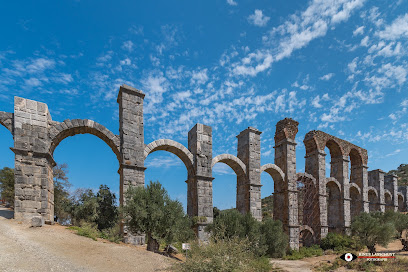
Wayside Shrine (39.1122, 26.5011)
Scattered across the roadsides and footpaths of Lesvos, the small wayside shrines known locally as proskynitaria are among the most intimate expressions of Greek Orthodox devotion you will encounter on the island. This particular shrine, situated near the village of Kedro in the island's interior, represents a tradition that stretches back centuries, rooted in the Byzantine practice of marking sacred or significant spots along travel routes. These diminutive structures were erected to give thanks for safe passage, to commemorate a miraculous event, or to honor a beloved saint, and they continue to serve as quiet anchors of faith in the landscape. The shrine near Kedro follows the form typical of these roadside sanctuaries: a small stone or whitewashed cabinet-like structure, often housing a religious icon, an oil lamp kept burning by local hands, and perhaps a few dried flowers or votive offerings left by passing devotees. The craftsmanship, though modest, reflects the care of a community that values its spiritual landmarks. Set against the backdrop of Lesvos's olive groves and dry-stone walls, the shrine feels entirely at home in a landscape shaped equally by nature and by generations of human devotion. For visitors, pausing at a proskynitario like this one offers a genuine window into the living religious culture of rural Lesvos. Unlike the grand monasteries or hilltop churches that draw pilgrims and tourists alike, these wayside shrines are unassuming and unhurried, tended by ordinary villagers rather than clergy. The area around Kedro rewards slow exploration, and encountering this shrine along a country lane is a reminder that on Lesvos, the sacred is never far from the everyday.
Wayside Shrine (39.1122, 26.5474)
Scattered across the rural landscape of Lesvos, the small wayside shrines known in Greek as proskinitaria are among the most intimate expressions of the island's deep Orthodox Christian faith. This shrine near the village of Alyfada stands beside the road as a quiet sentinel, typical of a tradition that has endured for centuries throughout Greece and the Aegean. These structures — usually small stone or whitewashed cabinets mounted on a post or set into a niche — are maintained by local families or communities, often erected at spots where a traveler once survived an accident, where a prayer was answered, or simply to mark a place considered sacred by those who pass through. The shrine near Alyfada reflects the character of this part of eastern Lesvos, a landscape of olive groves, terraced hillsides, and quiet country lanes where the pace of life has changed little over generations. Inside such shrines visitors typically find an oil lamp kept burning, a small icon of a patron saint or the Virgin Mary, and occasionally votive offerings left by the faithful. The craftsmanship varies from humble tin cabinets to elaborately carved marble or stone structures, but all serve the same purpose: to bring the sacred into the everyday landscape and offer a moment of pause and prayer for those traveling the road. For visitors, these shrines offer a window into the living religious culture of Lesvos that no museum can replicate. Stopping to observe one is an exercise in understanding how faith is woven into the fabric of daily island life. The area around Alyfada is rewarding to explore on foot or by bicycle, and encountering shrines like this one along the way is a reminder that the landscape of Lesvos is not only natural and historical but also deeply spiritual, tended by communities whose ties to this land stretch back across many generations.
Wayside Shrine (39.1247, 26.5457)
Scattered across the roads and pathways of Lesvos, the island's countless wayside shrines — known in Greek as proskynitaria — represent one of the most intimate expressions of Orthodox Christian devotion. The shrine near Achlia is a quietly compelling example of this living tradition, a small roadside structure that has stood as a fixed point of faith amid the rolling olive groves and sun-bleached hills of the island's interior. These modest shrines typically house an icon of a saint or the Virgin Mary, a small oil lamp kept perpetually burning, and offerings left by passing villagers and travelers — candles, incense, ribbons, and heartfelt petitions written on scraps of paper. The origins of wayside shrines in Greece reach back through centuries of Orthodox tradition, blending the ancient Greek custom of marking sacred or liminal spaces with the devotional practices of the Byzantine church. Some proskynitaria commemorate a miracle or a moment of divine intervention; others mark the site where a traveler survived a dangerous journey or where someone lost their life on the road. In communities like Achlia, such shrines have long served as gathering points for neighborhood prayers, informal processions on saints' days, and private moments of supplication by farmers heading to their fields. The craftwork in older shrines often reflects regional vernacular building traditions — stone or rendered masonry, small arched niches, hand-forged metalwork, and painted ceramic tiles. Visitors who pause at this shrine will find themselves stepping briefly out of the modern world into a layer of Lesvos that has changed very little over generations. It is a place of stillness, fragrant with the faint smell of olive oil and melted candle wax, with views across the quiet Achlia countryside. Approaching with respect for those who maintain it and the worshippers who stop here, travelers gain a genuine glimpse into the spiritual texture of rural Greek island life — a reminder that the sacred is woven quietly into every road on Lesvos, not confined to grand churches and monastery gates.
Wayside Shrine (39.1248, 26.5454)
Scattered along the roads and pathways of Lesvos, wayside shrines — known in Greek as proskynitaria — are one of the most intimate expressions of Orthodox Christian devotion on the island. These small roadside sanctuaries, typically crafted from stone, metal, or rendered concrete in the form of miniature churches or pillar-mounted cabinets, have marked the landscape of the Aegean for centuries. They are erected by families to give thanks for miraculous deliverances, to commemorate the souls of those who perished nearby, or simply to place a holy presence along a well-travelled route. The shrine near Achlia, sitting quietly in the olive-covered hills of the island's northeastern interior, belongs to this living tradition of popular piety that continues unbroken to this day. Up close, a proskynitarion reveals its careful tending: a small glass door or hinged panel typically opens to reveal an icon, a vigil oil lamp whose flame flickers even in the open air, and often a few personal offerings — a photograph, a sprig of dried flowers, a coin. The architectural miniature frequently echoes the forms of a full Byzantine church, with a pitched or domed roof, a small cross at the apex, and occasionally painted or tiled decoration. This particular shrine, positioned along a rural lane near Achlia, frames views of the surrounding mastic-scented countryside and the soft contours of the Lesvian hills that have changed little since medieval times. For visitors, these shrines offer a window into the soul of village life far more candid than any museum exhibit. To pause beside one is to encounter Lesvos at its most authentic — a place where the sacred and the everyday remain seamlessly interwoven, where a farmer might stop a tractor to light a candle, and where centuries of faith are expressed not in grand monuments but in gestures of quiet, persistent devotion. The shrine near Achlia rewards those who slow down and wander the back roads, discovering that the island's most moving sights are often its smallest ones.
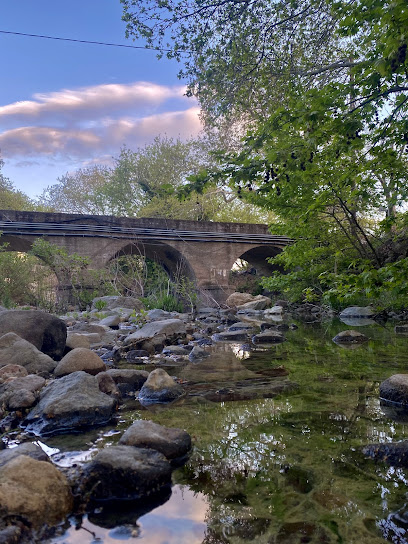
Wayside Shrine (39.1443, 26.1305)
Scattered across the roadsides and footpaths of Lesvos, the small wayside shrines known locally as kandylakia are among the most quietly moving features of the island's landscape. This shrine near Parakoila, a village tucked into the hills of the island's central-western interior, represents a tradition of roadside devotion that stretches back centuries in the Greek Orthodox world. These modest structures — typically a miniature chapel or niche mounted on a stone or metal post — serve as permanent markers of faith, erected by families to give thanks for survival from accidents, to commemorate loved ones lost on the road, or simply to honor a patron saint whose protection is sought by all who pass. The shrine near Parakoila stands in keeping with the vernacular sacred architecture of Lesvos, where Byzantine religious culture took deep root during the medieval period and never truly left. Though individually humble, these kandylakia are carefully tended: locals replenish the oil lamp or candle inside, refresh the icon or holy image within the niche, and occasionally leave flowers or small votive offerings. The surrounding landscape — olive groves, dry stone walls, and the quiet Aegean light — gives encounters with these shrines a contemplative quality that larger monuments rarely achieve. Visitors passing through this part of Lesvos on the road near Parakoila will find the shrine a natural pause point, a small window into the living religious life of the island's villages. It speaks to the continuity of Greek Orthodox practice in rural communities, where the sacred is not confined to church walls but woven into the everyday geography of travel and labor. For those interested in folk religion, vernacular architecture, or simply the texture of authentic Greek village life, these wayside shrines reward slow, attentive travel far more than their modest size might suggest.
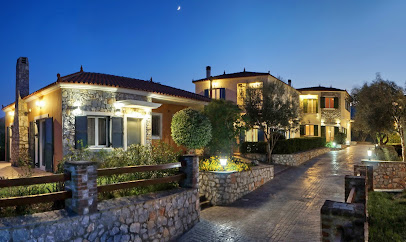
Wayside Shrine (39.1498, 26.5180)
Along the rural roads of Lesvos, small roadside shrines known as proskynitaria appear with quiet regularity, marking the landscape as much as the olive trees and stone walls that surround them. This wayside shrine near the village of Afalonas stands as a representative example of a devotional tradition deeply woven into Greek Orthodox life. These miniature structures — typically fashioned from metal or stone in the form of a tiny church or cabinet — serve as permanent points of prayer and remembrance, lit by oil lamps and tended by local families. They often mark the site of a road accident, a miraculous survival, or a vow of thanksgiving made to a saint, though many are simply expressions of enduring piety passed down through generations. The shrine sits within the quiet agricultural hinterland surrounding Afalonas, a small settlement in the northern reaches of Lesvos where the landscape opens into hillsides of pine and scrub maquis. The area reflects the island's centuries-long layering of Byzantine, Ottoman, and modern Greek culture, and these humble roadside monuments are among the most tangible everyday expressions of that continuity. Visitors may notice an icon behind glass, a small oil lamp, perhaps dried flowers or a few coins — offerings left by passersby who pause for a moment of reflection. For those traveling through Lesvos beyond the well-known beaches and villages, encountering a proskynitario like this one offers a genuinely human moment. It is a reminder that the landscape is not merely scenic but inhabited by living memory and ongoing faith. Visitors are welcome to stop and observe respectfully; the shrines are never locked away or restricted, but simply present on the roadside as they have been for generations, tended by neighbors who likely cannot explain exactly when the tradition began.
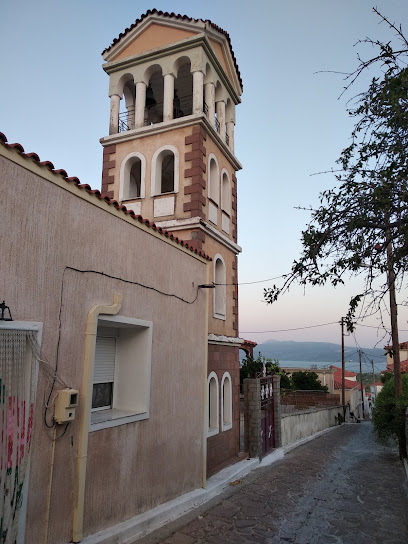
Wayside Shrine (39.1569, 26.1358)
Scattered across the roadsides and footpaths of Lesvos, the small wayside shrines known as proskinitaria are among the most quietly moving expressions of Greek Orthodox faith on the island. This shrine near Parakoila, a village tucked into the hilly interior of western Lesvos, stands as a testament to a devotional tradition that has woven itself into the landscape for centuries. These miniature sanctuaries typically mark a place of personal significance — a site where someone survived an accident, where a loved one was lost, or where a community felt the presence of a particular saint — and they continue to be tended by local families as acts of ongoing gratitude and remembrance. The shrine itself reflects the vernacular religious craftsmanship common to the Aegean world. Usually fashioned from whitewashed stone or metal, these structures take the form of a small cabinet or chapel, housing an icon, a oil lamp kept burning by devoted hands, and sometimes a handful of personal offerings. The iconography inside typically depicts the saint to whom the shrine is dedicated, rendered in the Byzantine tradition that has shaped Greek sacred art for over a millennium. In the surrounding landscape of olive groves and dry-stone walls, the shrine serves as a natural waypoint, its lamp a small but persistent light. Visitors passing through the Parakoila area will find this shrine a gentle invitation to pause and observe a living tradition. Unlike the grand monasteries and village churches of Lesvos, these roadside sanctuaries reveal the intimate, personal dimension of faith as it is practiced in everyday Greek life. The smell of incense, the flicker of a kandili oil lamp, and the weathered icons speak to the unbroken chain of devotion that connects modern islanders to their ancestors. It is a small place, but one that carries the full weight of a community's spiritual history.
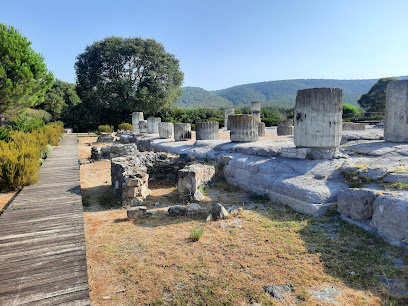
Wayside Shrine (39.1765, 26.3518)
Scattered across the roadsides and footpaths of Lesvos, small roadside shrines known as proskynitaria are among the most intimate expressions of Greek Orthodox faith you will encounter on the island. This wayside shrine near Mesa, set along the rural landscape of the island's interior, belongs to a tradition that stretches back centuries, rooted in both ancient practice and Byzantine Christian devotion. These miniature sanctuaries were typically erected to mark the site of a near-fatal accident, to give thanks for a safe journey, or to honor the memory of a loved one, and they continue to be maintained by local families and communities with quiet dedication. The shrine itself follows the classic form common throughout Greece: a small metal or stone cabinet mounted on a post or set into a niche, housing an oil lamp, an icon of a saint or the Virgin Mary, and often a few personal offerings left by the faithful. The flickering flame within, kept alive by locals who tend to it regularly, lends these humble structures a timeless quality. Near the village of Mesa, surrounded by olive groves and the gently undulating terrain of the Lesvos countryside, the setting intensifies the sense of continuity between the land and its people. Visitors passing through this part of the island will find the shrine a quiet and contemplative stop, offering a window into the living religious culture of rural Lesvos. Unlike grand churches or ancient ruins, proskynitaria demand nothing of the visitor — they simply stand as markers of human feeling in the landscape, reminding travellers that every road on this island has been walked by generations before them. It is worth pausing here, if only for a moment, to appreciate the unbroken thread of belief and belonging that these small sanctuaries represent.
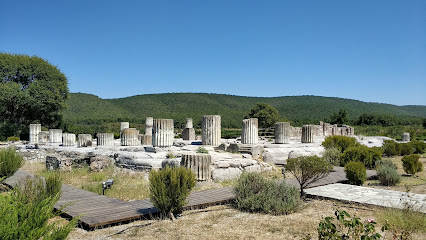
Wayside Shrine (39.1943, 26.2870)
Scattered across the landscapes of Lesvos, the small wayside shrines known as proskynitaria are among the most intimate expressions of Greek Orthodox devotion you will encounter on the island. This particular shrine, standing near the village of Mesa in the western part of Lesvos, follows a tradition that stretches back centuries, rooted in the Byzantine practice of marking significant spots along roads and paths — places where travelers paused to pray for safe passage, or where a community commemorated a miracle, a death, or an answered prayer. These structures typically take the form of a miniature chapel or lantern mounted on a stone or metal post, housing a small icon, an oil lamp, and perhaps a few personal offerings left by the faithful. What makes these shrines so compelling for visitors is precisely their unassuming nature. Unlike grand monasteries or fortress-like churches, the proskynitario belongs to the everyday landscape, nestled at a bend in the road or at the edge of an olive grove. The one near Mesa reflects the quiet, rural character of the surrounding area, where the rhythms of agricultural life and religious observance have long been intertwined. Visitors passing through on foot or by car often find the lamp still burning, tended by locals as a living act of faith rather than a museum piece. Stopping here offers a moment of genuine connection with the texture of Lesbian village life. The shrine invites quiet contemplation and serves as a reminder that the sacred geography of this island is not confined to its famous monasteries but is woven into the roads, hillsides, and margins of daily existence. If you are exploring the interior villages of Lesvos, taking a moment at this humble marker reveals something essential about how the people of this island relate to their land, their history, and their faith.
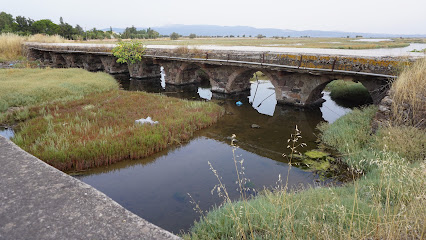
Wayside Shrine (39.1956, 26.1670)
Scattered across the rural landscapes of Lesvos, the small wayside shrines known as proskinitaria are among the most quietly moving expressions of Greek Orthodox devotion. This shrine near the village of Parakoila stands beside the road as a testament to a tradition that has endured for centuries across the Aegean islands. These modest sanctuaries typically take the form of a miniature chapel or lantern-like box mounted on a post or stone plinth, housing an icon, a candle, and perhaps a small oil lamp that flickers day and night. They are erected by families to mark a site of personal significance — a miraculous escape from danger, the memory of a loved one lost nearby, or a vow fulfilled to a patron saint. The landscape around Parakoila, in the quieter inland reaches of Lesvos, gives this shrine its particular character. Surrounded by the island's signature olive groves and dry stone walls, it sits within a rural setting that has changed little over generations. The shrine itself likely follows the traditional form found throughout the eastern Aegean: a small metal or wooden cabinet painted white or blue, fronted with glass, and containing a hand-painted or printed icon along with devotional objects left by passing faithful. The olive oil lamp inside, refilled regularly by local hands, signals that this is no relic but a living place of prayer. For visitors, wayside shrines like this one offer a genuine and unmediated encounter with the spiritual fabric of Greek island life. Pausing here invites reflection on the deep continuity of Orthodox practice and the way sacred space extends far beyond church walls into the everyday landscape. Travelers exploring the villages of central Lesvos will encounter many such shrines along roadsides and field paths, each one a small, handmade act of faith embedded in the land itself.
Wayside Shrine (39.1959, 26.1672)
Scattered across the roadsides and hillside paths of Lesvos, the small wayside shrines known as proskinitaria are among the most intimate expressions of Greek Orthodox devotion on the island. This shrine near Parakoila, a quiet village in the western interior of Lesvos, follows a tradition that stretches back centuries, rooted in Byzantine practice and shaped by the rhythms of rural life. These structures were typically erected to mark the site of a near-fatal accident, to give thanks for a safe journey, or to honor a saint whose feast day holds special meaning for a local family. Over generations, the practice became woven into the landscape itself, so that travelers moving between villages would rarely walk far without encountering one. The shrine takes the form most common across the Aegean: a small stone or rendered masonry cabinet, often no taller than a meter, sheltering an icon behind a glass door. Inside, visitors typically find a small oil lamp, a candle or two, and an image of a saint — most often the Virgin Mary, Saint Nicholas, or a locally venerated figure. The craftsmanship is plain but purposeful, built to endure the Mediterranean sun and the occasional winter storm that sweeps down from the northern hills. Some shrines near Parakoila are tended by nearby families who replenish the oil and replace faded icons, maintaining a living connection to ancestors who first placed the shrine along the path. For visitors, these modest structures offer a window into the texture of everyday religious life on Lesvos that larger churches and monasteries cannot provide. Pausing at the shrine near Parakoila, surrounded by the dry scrub and olive groves of the island's interior, gives a sense of how faith and landscape have shaped each other here over centuries. It is a place that rewards quiet attention rather than crowds, and travelers who walk the rural paths of western Lesvos will find that these small sanctuaries punctuate the journey in a way that feels both ancient and entirely alive.
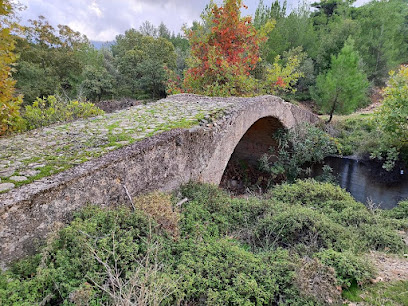
Wayside Shrine (39.2354, 26.0476)
Tucked along a rural road near the village of Vatoussa in the western reaches of Lesvos, this wayside shrine is a quietly eloquent example of a tradition that has defined the Greek landscape for centuries. Known in Greek as a proskinitari, these small roadside sanctuaries serve as living markers of faith, memory, and community identity. Some are erected to honor a patron saint or give thanks for safe passage; others mark the site of an accident or commemorate a loved one. Whatever its particular origin, this shrine near Vatoussa stands as part of a deeply rooted Orthodox Christian practice that weaves the sacred into the everyday fabric of rural life. In form, the shrine likely follows the classic proskinitari design: a miniature chapel or box-like structure, often mounted on a post or set on a low stone base, housing an icon, an oil lamp, and perhaps a few devotional offerings left by passing villagers. The craftsmanship of such shrines varies widely — some are simple metal boxes painted in bold colors, others are lovingly built miniature replicas of stone churches, complete with tiny domes and crosses. In this part of Lesvos, where olive groves and stone-walled fields stretch toward the Aegean horizon, shrines like this one feel inseparable from the landscape itself. Visitors passing through the Vatoussa area will find the shrine a small but meaningful pause on any journey through the island's interior. It invites a moment of reflection amid the unhurried pace of the western highlands, offering a glimpse into the spiritual life that has sustained these communities across generations. Whether you encounter it lit by a flickering oil lamp at dusk or bathed in the clear light of a Greek morning, the shrine is a reminder that on Lesvos, the boundary between the ordinary and the sacred has always been beautifully thin.
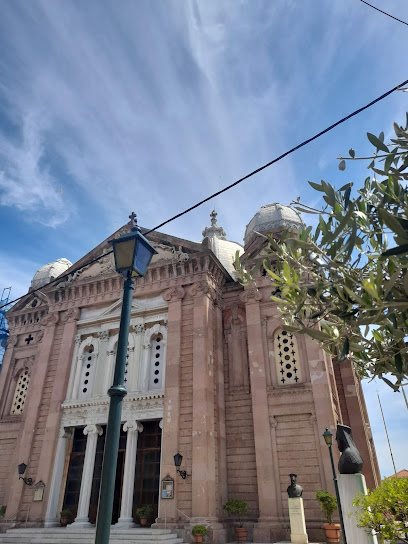
Wayside Shrine (39.3486, 26.3105)
Scattered across the roadsides and mountain paths of Lesvos, small wayside shrines — known locally as proskynitaria — are among the most intimate expressions of Greek Orthodox devotion you will encounter on the island. This shrine near the village of Kleio stands as a quiet testament to a tradition that has shaped the landscape of the eastern Aegean for centuries. These roadside sanctuaries were typically erected to mark the site of a miraculous escape from danger, to honor a beloved saint, or to commemorate a soul lost at that very spot. Passed down through generations, they are tended by local families who keep oil lamps burning and fresh flowers placed before the icons within. The shrine at this location reflects the characteristic form found throughout Lesvos: a small, whitewashed or stone-built cabinet mounted on a post or set into a niche, housing a painted icon, a glass oil lamp, and occasionally a small cross or votive offering. The craftsmanship is humble but sincere, and the weathering of the materials speaks to decades — perhaps longer — of exposure to the Aegean sun and wind. Kleio itself is a quiet inland village set among olive groves, and the surrounding countryside gives the shrine a serene, unhurried character that feels entirely at home in this part of the island. For visitors, pausing at a proskynitario like this one offers a genuine window into the living religious and folk culture of Lesvos. There is no formal visiting protocol — travelers simply slow down, observe, and if they wish, reflect. These small shrines are rarely marked on tourist maps, which makes encountering one on a country road all the more rewarding. They are a reminder that the spiritual life of the island is not confined to its grand monasteries and churches, but is woven quietly into the very fabric of the landscape.
Yes (39.1105, 26.5632)
Near the quiet village of Alyfada in the heart of Lesvos, this historic site sits amid the island's characteristically diverse landscape of olive groves, rolling hills, and scattered rural settlements that have shaped life here for millennia. The central regions of Lesvos bear deep layers of history, from ancient settlements through Byzantine occupation to Ottoman rule and the tumultuous population exchanges of the twentieth century — all of which left their marks on the land and its communities in ways still visible to attentive visitors today. The area around Alyfada reflects the enduring rhythms of rural Lesbian life, where ancient pathways, dry-stone walls, and the remains of agricultural and ecclesiastical structures tell a quiet but persistent story of continuous habitation. Visitors exploring this part of the island will find themselves removed from the coastal tourist circuits, encountering instead an authentic inland landscape where local heritage is woven into the fabric of everyday surroundings. This site rewards the curious traveler willing to venture beyond the well-trodden routes of Mytilene and the coastal resorts. Whether approached as part of a broader exploration of the Lesvos interior or as a destination in its own right, the setting near Alyfada offers a sense of the island's layered past and the timeless quality that has made Lesvos a place of enduring fascination for historians, artists, and travelers alike.
Yes (39.1108, 26.5619)
Tucked into the quiet landscape near the small settlement of Alyfada in northern Lesvos, this historic site offers a glimpse into the layered past that defines so much of the island's interior. The region around Alyfada has been inhabited since antiquity, and the visible remnants here reflect the successive waves of civilization that have shaped Lesvos over millennia, from the ancient Greek and Byzantine periods through the long centuries of Ottoman rule. Stone walls, foundation outlines, or architectural fragments — depending on the season and the angle of the light — speak quietly of lives lived and communities built in this part of the island long before modern roads brought it closer to the wider world. Visitors who make the effort to reach this corner of Lesvos are rewarded with a sense of genuine discovery. The site sits within a landscape of olive groves and low hills characteristic of the island's northern reaches, where the pace of life remains unhurried and the connection to the land feels immediate. Whether the remains here are ecclesiastical, residential, or defensive in origin, they share the quality common to so many of Lesvos's historic sites: an unpretentious authenticity, unmarked by crowds or commercial infrastructure, that invites quiet contemplation rather than guided tours. For those exploring Lesvos beyond the well-trodden paths to Molyvos or Mytilene, a visit to this area near Alyfada offers a fuller picture of the island's historical depth. It is the kind of place that rewards the curious traveler who takes a detour from the coastal road, bringing into focus just how richly settled and historically significant even the quieter corners of this remarkable Aegean island truly are.
historic stone bridge
Πέτρινη Γέφυρα
Tucked into the olive-covered landscape near the quiet village of Napi, this centuries-old stone bridge stands as one of Lesvos's most evocative reminders of the island's layered past. Stone arch bridges of this type were commonly constructed during the Ottoman period, when the island's interior roads and seasonal watercourses required durable crossings to keep trade, agriculture, and daily movement flowing year-round. Built without mortar in the traditional manner, the bridge relies entirely on the precision of its fitted stonework and the geometry of its arch to distribute weight — a technique refined over generations by Aegean craftsmen who understood both the local schist and the behavior of swelling winter streams. The bridge spans a small watercourse that drains the surrounding hillsides, and its setting within a landscape of ancient olives and dry-stone terraces gives it a timeless quality that photographs struggle to capture. The stonework is characteristic of the region: grey-green local stone fitted tightly in courses, the arch weathered smooth by seasonal flooding and centuries of use. Moss clings to the shaded underside, and wild herbs grow from the joints where soil has accumulated over generations. It is modest in scale but confident in its construction, built to outlast the needs that first called it into being. For visitors, the bridge rewards those willing to leave the main road and explore on foot. The surrounding countryside near Napi is typical of western Lesvos — undulating terrain covered with olive groves, stone walls, and the occasional abandoned farmstead — and the bridge sits naturally within this landscape as if it simply grew there. It offers a tangible connection to the everyday life of past islanders: shepherds, farmers, and merchants who crossed here as a matter of routine, unaware they were leaving behind something that would still be standing when none of their names were remembered.
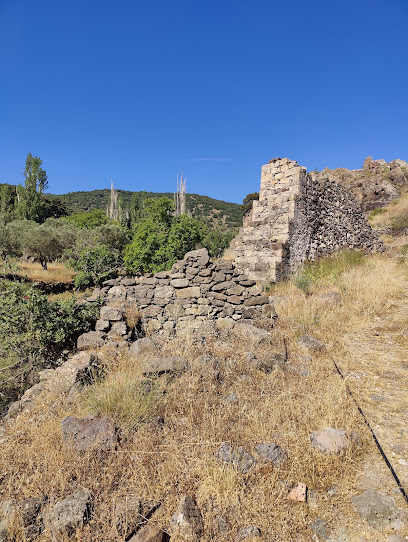
old watermill
Tucked into the rural landscape near the village of Skoutaros, in the rolling hills of northwestern Lesvos, the ruins of this old watermill stand as a quiet testament to the island's agrarian past. Watermills were once essential infrastructure across Lesvos, harnessing the flow of seasonal streams to grind grain — primarily wheat and barley — that sustained local communities through the centuries. This region, set back from the Aegean coast and surrounded by olive groves and pine-covered hillsides, would have provided both the water source and the agricultural produce that made such a mill economically vital. The Ottoman and post-Byzantine periods saw a flourishing of milling activity across the Greek islands, and structures like this one were often family-operated, serving entire villages for generations. What remains today is characteristic of the vernacular stone architecture found throughout the Lesvos interior: thick-walled construction using locally quarried volcanic rock, built to withstand both the elements and the constant vibration of working machinery. Visitors can typically make out the millstone housing, the channel or race that once directed water to drive the wheel, and the sturdy outer walls that have weathered decades of disuse. Nature has begun to reclaim much of the structure, with vegetation threading through the stonework, lending the site a melancholy beauty that rewards the curious traveler willing to venture off the main roads. The mill near Skoutaros is best appreciated as part of a broader exploration of the village and its surrounding countryside. Skoutaros itself is a tranquil, traditional settlement little touched by mass tourism, and the mill complements a visit that might also include walking the old mule paths and taking in the quieter rhythms of Lesbian rural life. For those interested in the island's material culture and pre-industrial heritage, these remnants offer a tangible connection to the generations of ordinary islanders who shaped this landscape long before the age of electricity and mechanized agriculture.
road accident shrine
εκκλησάκι τροχαίου ατυχήματος
Scattered along the winding roads of Lesvos, small metal or stone shrines known as kandylakia stand as poignant markers where lives were lost in road accidents. The shrine near Kedro, set along a quiet rural stretch in the island's interior, belongs to this deeply rooted Orthodox tradition of roadside memorialization that has been practiced across Greece for generations. These modest structures serve both as a memorial to the deceased and as a place of ongoing prayer, typically maintained by grieving families who keep an oil lamp or candle burning inside, along with a small icon, incense, and sometimes a photograph of the person remembered. Architecturally, kandylakia take many forms across the island, from simple painted metal boxes mounted on poles to more elaborate miniature chapels built from stone or concrete, sometimes resembling the churches they echo in miniature. The shrine near Kedro likely reflects the vernacular craft traditions of the surrounding villages, where local materials and the hands of family members have shaped something at once humble and sacred. The presence of such a shrine along this road is a quiet reminder of the hazards once posed by narrow mountain roads and the way communities here have long responded to loss through devotion rather than erasure. For visitors, stopping at a kandylaki offers a window into the living spiritual landscape of Lesvos beyond its famous monasteries and Byzantine churches. These roadside shrines are not tourist sites but genuine expressions of grief and faith, and approaching them with quiet respect is customary. The location near Kedro places it within a landscape of olive groves and stone-walled terraces typical of the island's interior, making the short pause here both a moment of reflection and an introduction to the deeper, unhurried rhythms of rural Lesbian life.
ship
πλοίο
Near the thermal shores of Efthalou, on the northern coast of Lesvos, a weathered vessel lies beached as a silent testament to one of the most significant humanitarian events of the early twenty-first century. During the height of the refugee crisis, particularly between 2015 and 2016, hundreds of thousands of people fleeing conflict and hardship in Syria, Afghanistan, Iraq, and elsewhere made the perilous short crossing from the Turkish coast to the shores of Lesvos. Efthalou was among the stretches of coastline where many of these boats landed, and the vessel that remains here is one of countless craft that carried desperate families across the narrow strait of the Aegean. The boat itself is a humble, utilitarian thing — the kind of inflatable dinghy or small wooden hull pressed into service far beyond its safe capacity. Stripped of function and frozen in time, it has become a monument of a different kind, one that speaks not of conquests or kings but of ordinary people making extraordinary journeys. Lesvos, and particularly its northern villages, became a crossroads of global migration during this period, drawing volunteers, journalists, and aid workers from across the world. The island's residents responded with remarkable compassion, and that chapter is now inseparable from Lesvos's modern identity. Visitors who come to this spot stand at the intersection of ancient hospitality traditions and contemporary history. The setting itself is striking — the warm blue-green waters, the hazy outline of the Turkish coast barely visible across the water, and the gentle steam rising from nearby natural hot springs at Efthalou. The contrast between the beauty of the landscape and the weight of what this place witnessed gives it a quiet, contemplative power. It is a place to pause, reflect, and remember that this island, long a crossroads of civilizations, continues to sit at the heart of the human story.
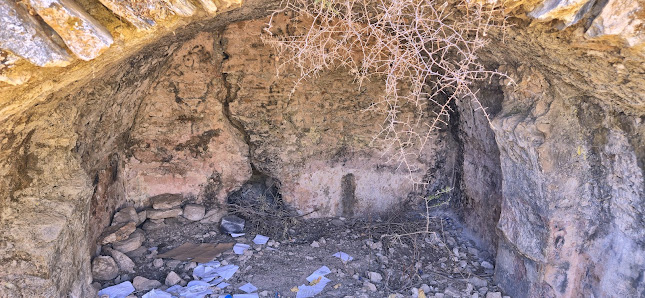
Късноантична и средновековна крепост над с. Пападос
Perched on the heights above the village of Papadoس in central Lesvos, this late antique and medieval fortress stands as a silent testament to the island's long history of strategic importance. Fortifications of this type were commonly constructed across the Aegean during the later Roman and early Byzantine periods, when hilltop strongholds provided both defensive advantage and visibility across the surrounding countryside. The site's commanding elevation would have made it a vital refuge for local communities during the turbulent centuries that saw successive waves of Arab raids and regional instability sweep through the eastern Aegean. The fortress likely saw continued use and modification through the Byzantine era and into the period of Genoese rule, which brought considerable building activity to Lesvos from the mid-fourteenth century onward. The Gattilusio dynasty, who governed the island under Ottoman suzerainty, maintained and reinforced many such hilltop positions as part of a broader network of fortified sites. Today, the ruins preserve traces of masonry and walls that speak to centuries of habitation and defense, set against a landscape of olive groves and rolling hills typical of the island's interior. Visitors who make the climb to the fortress are rewarded not only with the atmospheric remnants of walls and stonework but also with sweeping panoramic views across the Lesvos countryside. The site offers a quieter, more contemplative experience compared to the island's more celebrated monuments, making it a rewarding destination for those interested in Byzantine and medieval heritage. The surrounding area around Papadoس retains its traditional rural character, adding to the sense of stepping back into an older layer of the island's rich and layered past.