Archaeological Site (39.3657, 26.1773)
About
The area around Molyvos preserves traces of one of ancient Lesvos's most storied city-states: Mithymna, as the settlement was known in antiquity. Among the six rival poleis that once divided the island, Mithymna occupied a position of strategic and cultural prominence on the northern coast, its hilltop citadel commanding sweeping views across the Aegean toward the Turkish mainland. Settlement here stretches back through the Bronze Age, and layers of occupation — Greek, Roman, Byzantine, and Genoese — have left an archaeological record that continues to be studied and, in places, uncovered.
Visitors exploring the site today encounter the enduring logic of the ancient city's layout, anchored by the same dramatic promontory that drew settlers millennia ago. Sections of ancient wall, column drums, and architectural fragments have been found incorporated into later Byzantine and medieval structures, most visibly in the imposing castle that crowns the hill. The site rewards those who look closely: cut stone blocks reused in later construction, the outlines of ancient terracing on the slopes, and pottery sherds that speak to centuries of continuous habitation. The interplay between ancient foundations and medieval superstructure gives the site a rare palimpsest quality, where each era built upon and partially preserved what came before.
For travellers, this archaeological context transforms a visit to Molyvos from scenic sightseeing into something more resonant. Standing among the remnants of Mithymna, with the cobalt sea below and the castle rising overhead, it becomes easy to understand why this place held such importance across so many centuries. The site is best explored on foot, moving between the lower town and the castle precinct, where informational signage helps orient visitors within the broader historical narrative of ancient Lesvos.
Before you go
What to expect
Walking the slopes of ancient Mithymna, you encounter the layering of civilisations in a concrete, tactile way — column drums and cut stone blocks from Greek and Roman times reused in Byzantine and later medieval walls, all beneath a castle that still commands the hill. The panoramic view from the upper precinct toward the Turkish coastline immediately explains why this promontory was fought over and built upon for so long. The site rewards careful, slow exploration on foot rather than a swift loop around the castle walls.
Best time to visit
Late spring (May–June) or early autumn (September–October) offer the most comfortable conditions for hillside walking; midsummer heat on the exposed slopes can be punishing.
How to get there
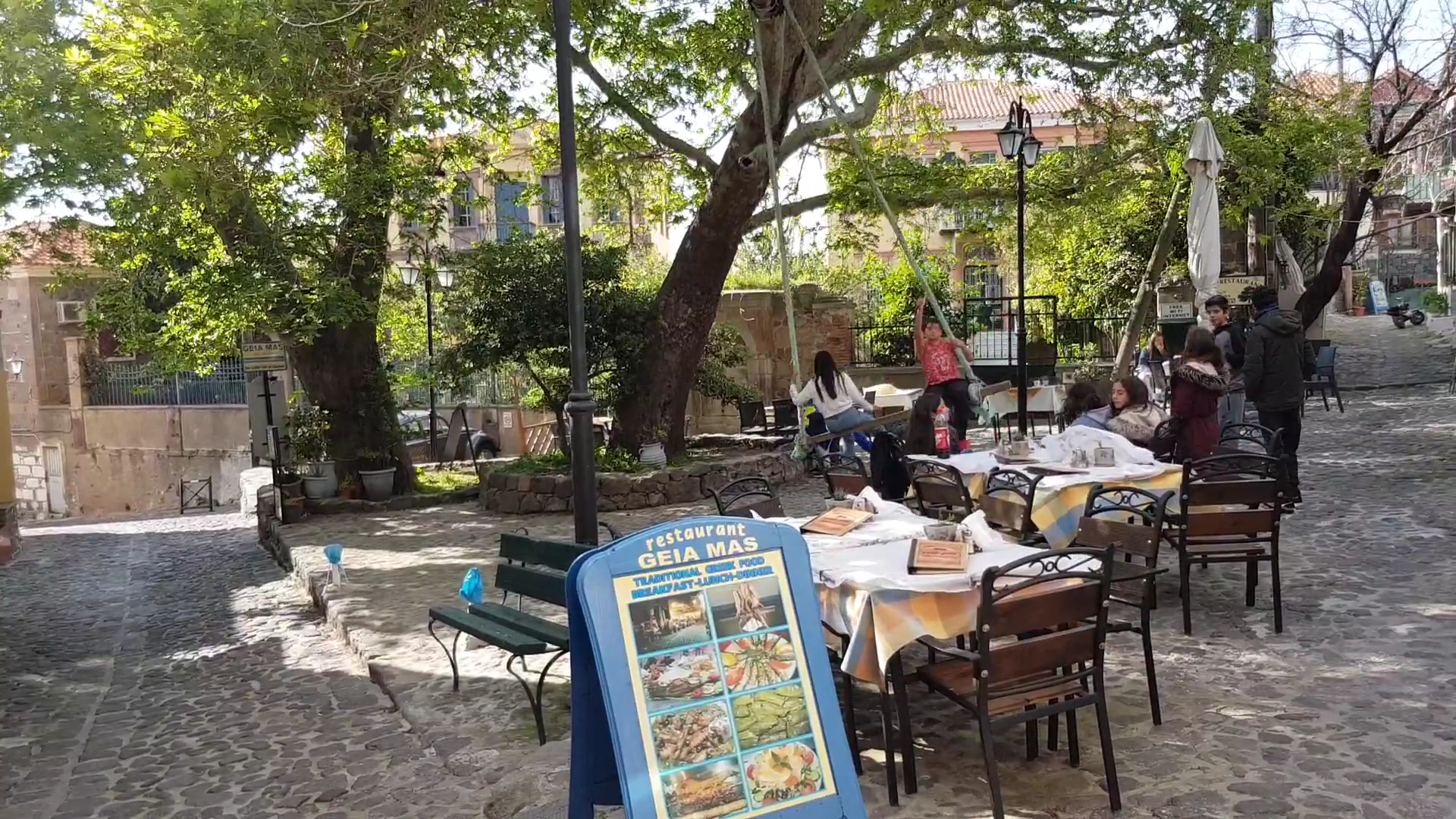
From Mytilene, follow the northern coastal road to Molyvos — a drive of roughly an hour to an hour and a half depending on stops. Once in the village, the archaeological site and castle precinct are reached on foot via the stepped, cobbled lanes that wind through the medieval quarter.
Details
Categories
Make a day of it
Places worth combining with your visit