About
Tucked into the gentle hills near the village of Pedi in western Lesvos, the church of Panagia Tricherousa is dedicated to one of the most beloved and theologically resonant titles of the Virgin Mary in the Orthodox tradition: the Three-Handed Mother of God. The name Tricherousa derives from a celebrated icon type rooted in a medieval miracle associated with Saint John of Damascus, whose severed hand was said to have been miraculously restored through the Virgin's intercession. In gratitude, a silver votive hand was attached to the icon, and this distinctive image spread across the Orthodox world, becoming a focus of deep popular devotion. Churches bearing this dedication are places of particular tenderness and intimacy, drawing the faithful who seek healing, comfort, and the protection of the Theotokos.
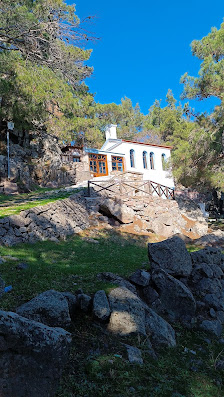
The church itself reflects the vernacular ecclesiastical architecture common to rural Lesvos: modest in scale, whitewashed against the Aegean light, with a simple nave that gathers the community for feast days and the rhythms of the liturgical year. The feast of Panagia Tricherousa is traditionally celebrated on the Friday of Bright Week, the week following Orthodox Easter, as well as on July 12th in many communities, drawing villagers from Pedi and the surrounding area for liturgy, candlelight processions, and the convivial gathering that follows. Inside, the iconostasis and any devotional icons of the Tricherousa type are the spiritual heart of the space, often adorned with votive offerings left by worshippers giving thanks for answered prayers.
For visitors to Lesvos, stopping at small parish churches like Panagia Tricherousa offers a window into the living religious culture of the island that larger monuments cannot provide. This is not a site of grand architectural spectacle but of quiet, authentic faith — the kind that has shaped village life in the eastern Aegean for centuries. The surrounding landscape of Pedi, with its olive groves and stone-walled fields, completes the experience, reminding travelers that on Lesvos the sacred and the pastoral have always been woven together.
Before you go
What to expect
The church sits quietly among olive groves on the edge of Pedi village, its whitewashed walls catching the northern Aegean light. Inside, incense and the flicker of oil lamps surround devotional icons adorned with votive offerings — silver hands among them — left by worshippers giving thanks. The atmosphere is intimate and unhurried, rooted in a living parish tradition rather than tourist spectacle.
Best time to visit
The feast days — the Friday after Orthodox Easter and July 12th — bring candlelit processions and community gatherings; on other days the church and its stone-walled hillside landscape are peaceful and uncrowded.
How to get there
Pedi is in the northern part of Lesvos, roughly 22 kilometres from Mytilene as the crow flies — allow around 40 to 50 minutes by car along winding island roads. The church is within the village itself.
Details
Categories
Photos
Make a day of it
Places worth combining with your visit