Christian basilica of Halinados
About
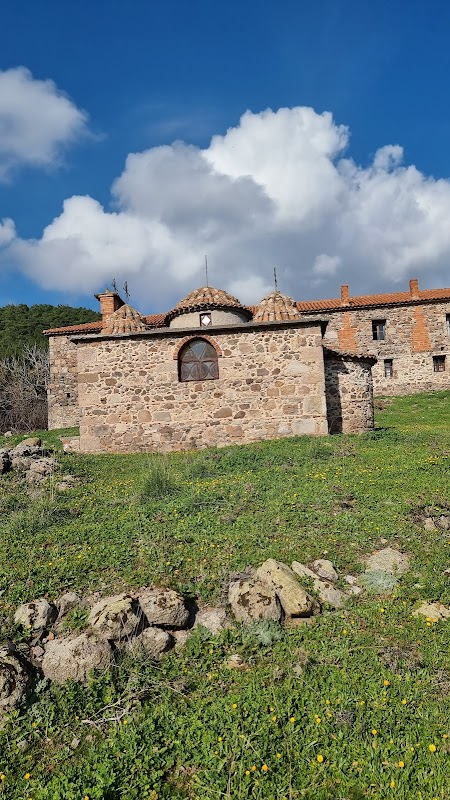
Nestled in the rolling landscape near the village of Mesa in western Lesvos, the ruins of the early Christian basilica of Halinados offer a quiet but profound glimpse into the island's Byzantine past. Like many such basilicas scattered across the Aegean, this structure likely dates to the Early Christian period, roughly the fourth to sixth centuries AD, when the spread of Christianity across the eastern Roman Empire prompted a surge of church construction throughout Greece and its islands. Lesvos, as a prosperous and well-connected island in the northeastern Aegean, was home to several such basilicas, and Halinados stands as one of the lesser-known but evocative remnants of that formative era.
Visitors to the site can observe the characteristic footprint of an early Christian basilica: a longitudinal plan typically divided into nave and side aisles, with the eastern end oriented toward an apse. Fragments of architectural stonework, column drums, and carved marble elements scattered across the site speak to what would once have been a substantial and carefully crafted place of worship. The quality of such details in comparable Aegean basilicas suggests these were not modest rural chapels but meaningful centers of community and liturgical life. The landscape surrounding the ruins, with its dry stone walls and views across the western Lesvos hills, adds a contemplative stillness to the experience.
For those with an interest in early Christian archaeology or Byzantine history, Halinados rewards a detour from the nearby village of Mesa. The site sits within a broader archaeological fabric on Lesvos that includes ancient Antissa and other historic settlements, making the western part of the island particularly rich for heritage exploration. Bring sturdy footwear and a sense of curiosity — much of what makes this place compelling lies in reading the stones and imagining the community that once gathered here, on this sun-warmed hillside, at the edge of the ancient world.
Before you go
What to expect
Scattered column drums and carved marble fragments lie across a sun-warmed hillside, quietly marking where a substantial early Christian community once gathered to worship. The site rewards slow, attentive walking — reading the stones rather than rushing past them — and the surrounding landscape of dry-stone walls and open hill views deepens the contemplative mood. Expect solitude; very few visitors make this detour.
Best time to visit
Spring and early autumn are best — the hillside is exposed, and midsummer heat makes the open site uncomfortable.
How to get there
From Mytilene, drive northwest past Kalloni toward the village of Mesa; allow roughly 45 minutes to an hour by car. A vehicle is essential, as the ruins sit in open countryside with no public transport.
Details
Categories
Photos
Make a day of it
Places worth combining with your visit