About
Nestled in the verdant hills near the village of Lampou Mili, the Roman aqueduct stands as one of Lesvos's most tangible connections to its ancient past. Built during the Roman period of occupation, when engineering ambition transformed the Aegean world, the structure was part of a network designed to channel freshwater from the island's inland springs and streams down to coastal settlements and agricultural lands. The name of the nearby village itself — "Mili" meaning mills in Greek — hints at a long history of harnessing the area's natural water resources, and the aqueduct fits squarely into this tradition of hydraulic ingenuity that shaped life on the island for centuries.
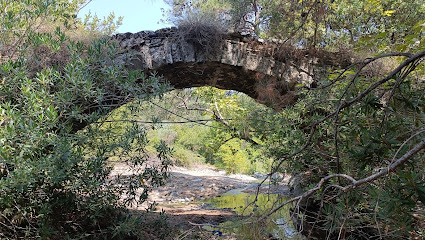
What remains today speaks quietly but powerfully to the craftsmanship of its builders. Visitors can observe sections of the original stonework and arched construction that characterize Roman aqueduct engineering throughout the Mediterranean, set against a landscape of olive groves and rolling hills that has changed little in character since antiquity. The scale and precision of the surviving masonry offer a vivid sense of the organizational capacity of the Roman world and the importance placed on reliable water supply for urban and rural life alike.
The site rewards those willing to venture off the well-worn tourist trail. Accessible from Lampou Mili, it combines naturally with a walk through the surrounding countryside, where the sound of running water and the shade of old trees create an atmosphere of timeless calm. For history enthusiasts and curious travelers alike, the aqueduct is a reminder that Lesvos was never a backwater but a fully integrated part of the ancient Mediterranean world, shaped by the same ambitions and technologies that built Rome itself.
Before you go
What to expect
Walking among the surviving stone arches, you feel the weight of Roman engineering ambition transplanted to an Aegean hillside. The setting is quietly dramatic — olive groves, the rustle of wind through old trees, and the faint sound of water that has shaped this valley since antiquity. It rewards a slow visit: the precision of the surviving masonry becomes more striking the longer you look.
Best time to visit
Spring (April–May) and autumn (September–October) are ideal, when the hillside greenery is lush and the midday heat is manageable.
How to get there
From Mytilene, drive into the central interior toward Lampou Mili — roughly 20–25 minutes by car. The aqueduct is accessible on foot from the village.
Details
Categories
Make a day of it
Places worth combining with your visit