Skala Neon Kidonion
Σκάλα Νέων Κυδωνιών
About
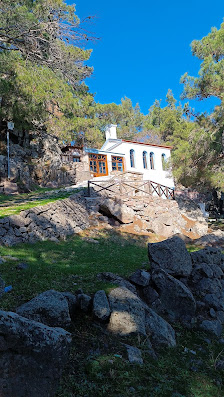
Skala Neon Kidonion is the small seaside landing of the village of Nea Kydonia, a settlement on Lesvos with deep roots in the Asia Minor refugee experience. Nea Kydonia was founded by Greeks who fled Kydonia — the ancient coastal city known today as Ayvalık, just across the narrow strait — following the catastrophic population exchange of 1922 and 1923. The church here stands as a spiritual anchor for that transplanted community, carrying forward a devotional life that the refugees brought with them from their lost homeland on the other shore.
Like many churches in Lesvos's refugee villages, this one likely reflects the modest but heartfelt building traditions of the early 20th century, when newly settled communities raised places of worship with whatever means were available to them. The interior typically holds locally venerated icons, perhaps including images that trace their origins to the Asia Minor parishes the congregation left behind, objects that became precious heirlooms of collective memory. The feast day of the church's patron saint draws villagers and their descendants together in a liturgy that is as much an act of communal identity as it is of faith.
The setting at the water's edge gives the church particular resonance: the sea that once separated a people from their homeland is the same sea that the fishing families of Skala Neon Kidonion have worked for generations since. For visitors, the church offers a quiet moment of reflection on one of modern history's great upheavals, and on the resilience of a community that rebuilt its spiritual life on the rocky shores of Lesvos.
Before you go
What to expect
The church stands right at the shoreline, facing the narrow strait where the silhouette of Ayvalık — the homeland the community left behind in 1922 — is visible on clear days. Inside, locally venerated icons carry the weight of a collective memory that survived displacement, some likely tracing their origins to the Asia Minor parishes the congregation once served. The atmosphere is contemplative and historically charged, especially during the feast day of the patron saint when descendants of the original refugees gather for a liturgy that is as much about identity as it is about faith.
Best time to visit
Late spring and early autumn offer mild weather and a quieter setting; feast days, whenever they fall, bring the community together in a way that makes the visit particularly moving.
How to get there
From Mytilene, take the coastal road north toward the village of Nea Kydonia — the drive takes roughly 20 to 25 minutes. The church is at the waterfront of the small settlement of Skala Neon Kidonion.