About
Near the quiet upland village of Ypsilometopo, the site known as Tafos kai Iero Palamidi — the Tomb and Sanctuary of Palamidi — stands as one of Lesvos's more enigmatic ancient monuments. The name points to a hero cult, a practice deeply embedded in ancient Greek religious life whereby the reputed tomb of a legendary or semi-divine figure became a place of veneration and offering. Hero sanctuaries of this kind were scattered across the Aegean world, and Lesvos, with its rich Aeolic heritage and mythological associations reaching back to the Bronze Age, was fertile ground for such traditions. The figure of Palamidi, linked to the wider Greek mythological tradition, lent this remote hillside site a sacred character that drew worshippers seeking the protection or intercession of a venerated ancestor.
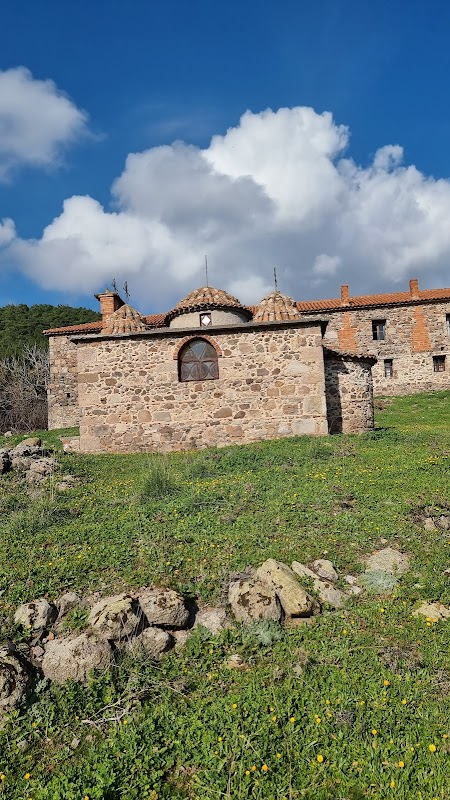
The archaeological remains reflect the layered history typical of Lesvos's interior sites — masonry courses, possible terrace walls, and traces of a sacred precinct that once demarcated the holy ground from the surrounding landscape. While the site has not received the same degree of systematic excavation as the island's more prominent ancient cities such as Mytilene or Antissa, what survives speaks to the enduring local reverence for this place across the ancient period. The setting itself, on elevated ground with views across the island's interior hills, would have reinforced its sacred atmosphere and made it a meaningful destination for religious processions and ritual activity in antiquity.
For visitors today, Tafos kai Iero Palamidi rewards those willing to venture off the main tourist routes into the quieter heart of Lesvos. The surrounding landscape of olive groves, scrubland, and rolling hills is characteristic of the island's lesser-visited interior, and the site offers a genuine sense of encounter with the deep past. Coming from Ypsilometopo, the approach through the village itself is part of the experience — a reminder that in Lesvos, ancient history and living communities have always shared the same ground.
Before you go
What to expect
On a breezy hillside just outside Ypsilometopo you'll find scattered ancient masonry — terrace walls and the faint outline of a sacred precinct that once drew pilgrims seeking the intercession of a venerated hero. There are no ticket booths, no interpretive panels, and no crowds: just the site, the wind, and wide views over Lesvos's olive-covered interior hills. For those drawn to the older layers of Aegean religion, the atmosphere is genuinely evocative.
Best time to visit
Spring (April–May) and early autumn (September–October) are ideal — comfortable walking temperatures and the scrubland is colourful; midsummer heat on this exposed hillside can be intense.
How to get there
From Mytilene, head northwest into the island's interior; the drive to Ypsilometopo takes roughly an hour to an hour and a half depending on your route. The sanctuary lies just outside the village, and passing through Ypsilometopo itself is the natural approach.
Details
Categories
Make a day of it
Places worth combining with your visit