Thermal Hot Springs of Lesvos
Volcanic geology, centuries of tradition, and waters that reach nearly boiling point. Lesvos is one of the premier thermal spring destinations in all of Europe.
Beneath the olive groves and basalt cliffs of Lesvos lies a network of geothermal activity that has shaped the island for millennia. The same volcanic forces that created the famous Petrified Forest also push superheated mineral water to the surface at dozens of points across the island. Five sites in particular have been developed into bathing facilities that range from ancient stone chambers to modern spa complexes. Whether you are looking for therapeutic relief, a singular natural experience, or simply a memorable afternoon, the hot springs of Lesvos deliver something no beach resort can replicate.
Polichnitos Hot Springs
Θερμά Πολιχνίτου
Perched sixty metres above sea level on the southern flanks of the island, Polichnitos lays claim to some of the hottest mineral springs anywhere in Europe. Three distinct sources feed the complex — two managed by the municipality and one privately operated — each delivering sulphurous, mineral-rich water that has drawn visitors for centuries.
Eftalou Thermal Baths
Λουτρά Εφταλού
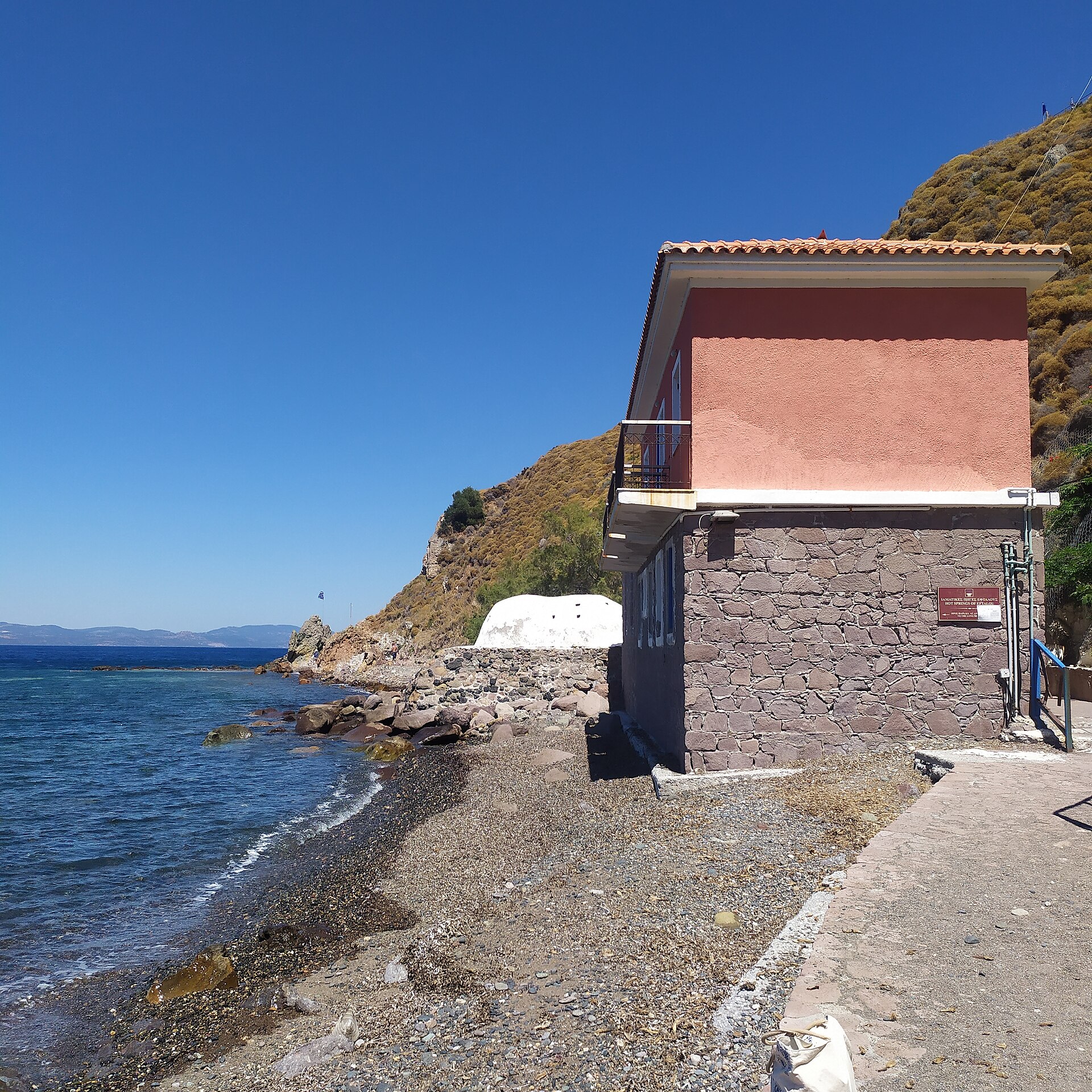
Just east of Molyvos, a domed Byzantine-era stone bathhouse sits where volcanic water surges directly into the Aegean. The old baths are an almost meditative experience: a single vaulted room, steaming water, and the sound of the sea just beyond the wall. Newer facilities next door offer temperature-controlled pools for those who prefer a gentler soak. The adjacent coastline stretches toward Golden Beach, making it easy to combine a thermal dip with a swim in cool salt water.
Thermi Baths
Λουτρά Θερμής
Overlooking the Gulf of Gera, the Thermi complex dates to the early twentieth century, though local tradition holds that the site once supported an ancient temple. It houses the largest gender-separated bathing halls on Lesvos, alongside a modern jacuzzi, a cafe, a restaurant, and direct beach access. The waters here have long been sought out for their reputed benefits to the respiratory and urinary systems as well as the joints.
Gera Hot Springs
Θερμά Γέρας
At a small stone beach along the Gulf of Gera, hot spring water seeps upward through the seabed and mingles with the cool tide. The result is an extraordinary natural phenomenon: wade in at low tide and you will feel alternating currents of warmth and chill swirling around your ankles. There are no buildings and no entrance fees — just the raw geology of a volcanic island doing what it does best.
Eressian Hammam & Spa
Χαμάμ Ερεσού
In the western village of Eressos — birthplace of Sappho — a traditional hammam offers a more curated thermal experience. Indoor and outdoor pools are fed by local spring water, while dry treatment rooms provide the classic hammam ritual of steam, scrub, and restoration. The setting is intimate, the pace unhurried, and the atmosphere distinctly Aegean.
Therapeutic Properties of the Mineral Water
The thermal waters of Lesvos are predominantly sulphurous and rich in sodium, potassium, calcium, and trace minerals carried up from deep volcanic rock. For centuries, these waters have been used to treat musculoskeletal conditions such as rheumatism and arthritis, dermatological ailments including eczema and psoriasis, and respiratory disorders like chronic bronchitis. Several springs are also traditionally recommended for urinary tract and gallbladder complaints.
While modern medicine approaches these claims with appropriate caution, the physiological benefits of sustained immersion in hot mineral water -- improved circulation, reduced muscle tension, and decreased joint inflammation -- are well documented. At the very least, an hour in these waters is a profoundly relaxing experience with few equals anywhere in the Aegean.
Planning Your Visit
Test the temperature
Some springs exceed 90°C at the source. Always check before entering and follow posted signs. Facilities with controlled pools are safest for first-time visitors.
Go early or late
The old baths at Eftalou open at 6:00 AM and again in the evening. Early morning visits are quieter and cooler, making the hot water more comfortable.
Bring water and a towel
Not all sites have full amenities. Gera Hot Springs, for instance, is entirely open-air with no facilities. Hydrate before and after soaking.
Combine with nearby villages
Polichnitos, Molyvos, and Skala Eresou are all worth exploring beyond the baths. Plan your spring visits around a broader itinerary.
Consult a doctor if needed
Extremely hot water and high mineral content may not be suitable for everyone, particularly those with cardiovascular conditions or during pregnancy.
Gallery