Ouzo, the Spirit of Lesvos
On an island where anise grows wild on the hillsides and copper stills have been firing since the 1800s, ouzo is far more than a drink. It is a daily ritual, a social contract, and the liquid soul of the Aegean.
The Ouzo Capital of Greece
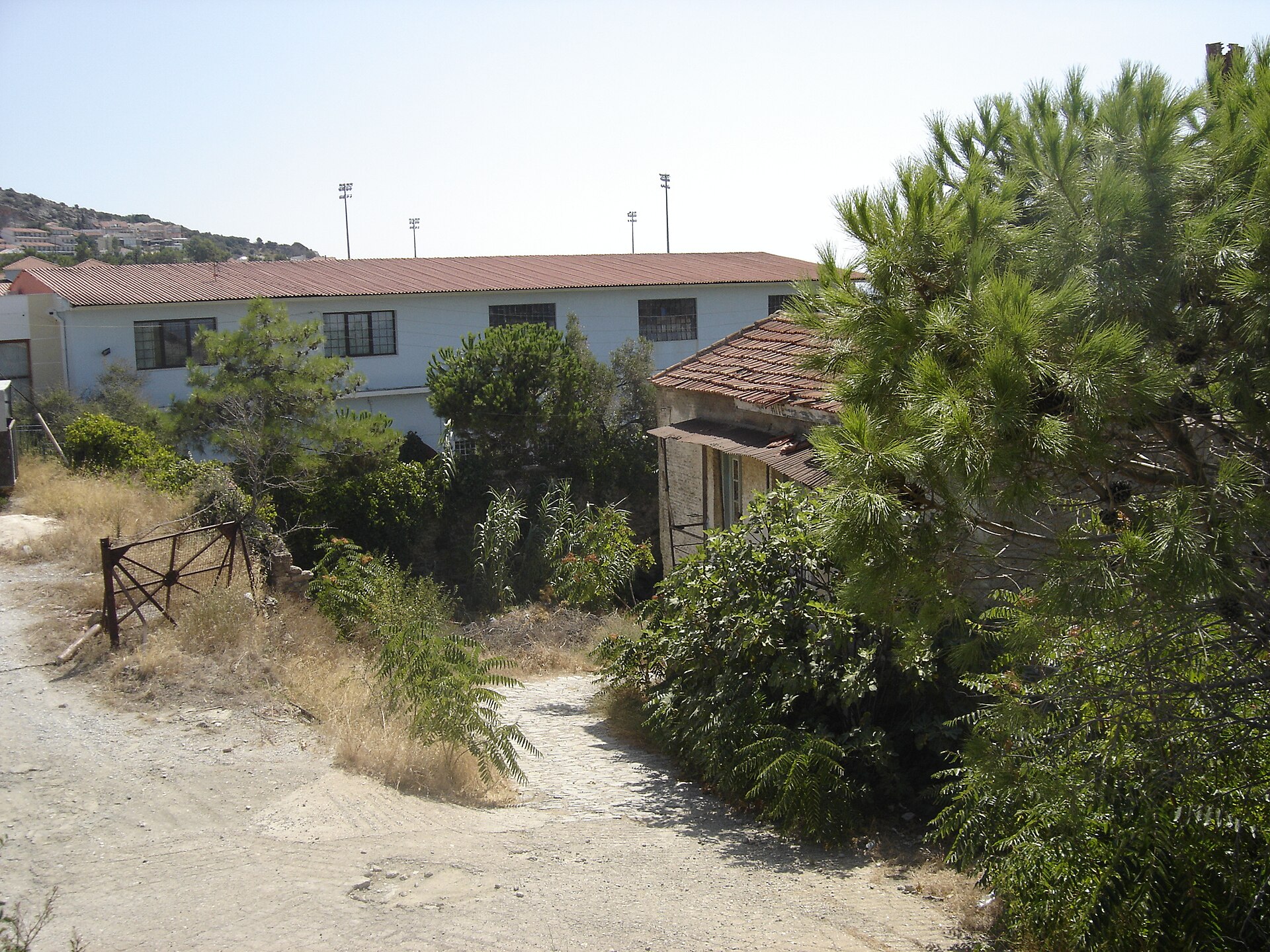
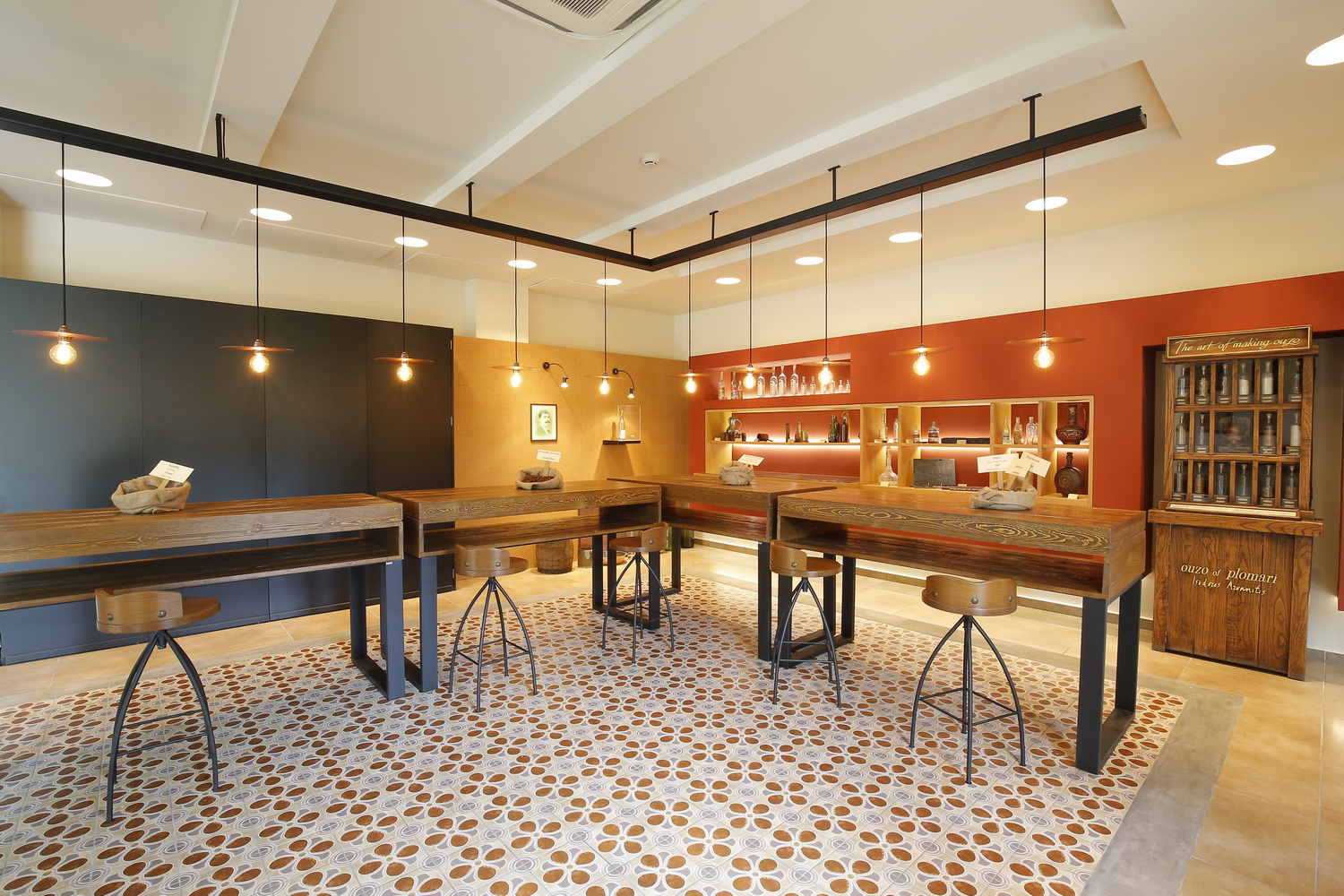
Lesvos produces more ouzo than any other place on earth. The town ofPlomari, tucked into the island's southern coast, is the undisputed epicentre -- home to over a dozen distilleries packed into a few square kilometres. But ouzo culture extends across the entire island, from the harbour-front ouzeries of Mytilini to the village kafeneia where a glass still costs a single euro.
This is not a drink you knock back. Ouzo demands time, conversation, and a table full of small plates. Understanding that rhythm is the key to understanding Lesvos itself.
How Ouzo is Made
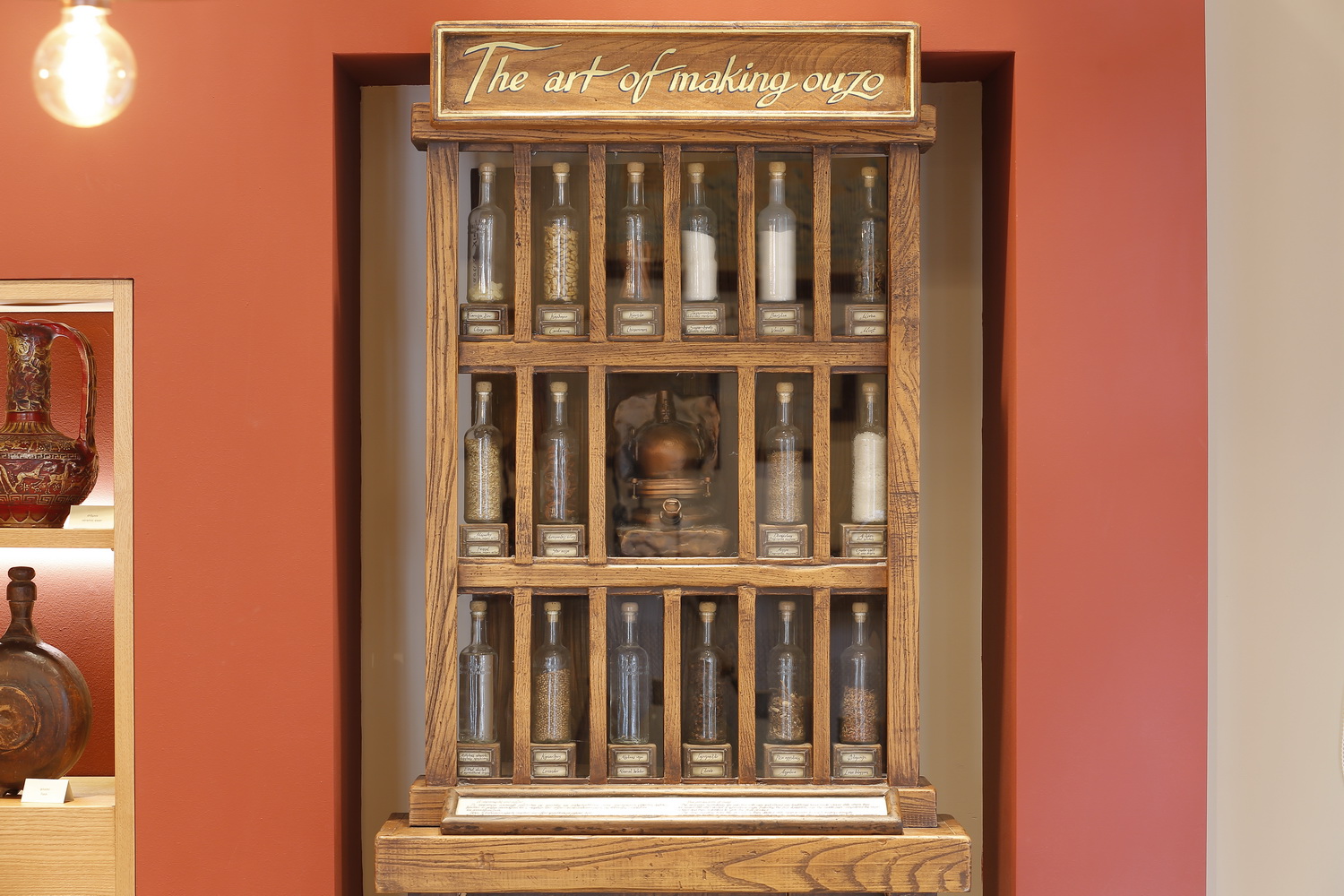
The finest ouzos carry the word apostagmeno -- 100% distilled. This distinction matters. A distilled ouzo derives all its flavour from the cooking process itself: aniseed, fennel, mastic, coriander, and other botanicals are steeped in high-proof grape alcohol, then slowly redistilled in traditional copper pot stills called kasani.
Traditional producers on Lesvos still use wood-burning fires beneath their copper stills. The slow, uneven heat is considered essential to developing the complex flavour profile that separates artisanal ouzo from industrial production. A single distillation run can take an entire day.
The critical difference between distilled and blended ouzo is sugar. Blended ouzos mix distilled spirit with flavouring compounds and often add sweeteners to mask the harshness. A properly distilled ouzo needs no added sugar -- its apparent sweetness and silky texture come entirely from the interaction of essential oils during the slow distillation process. The result is cleaner on the palate and, locals will insist, kinder the following morning.
Notable Distilleries
Barbayannis
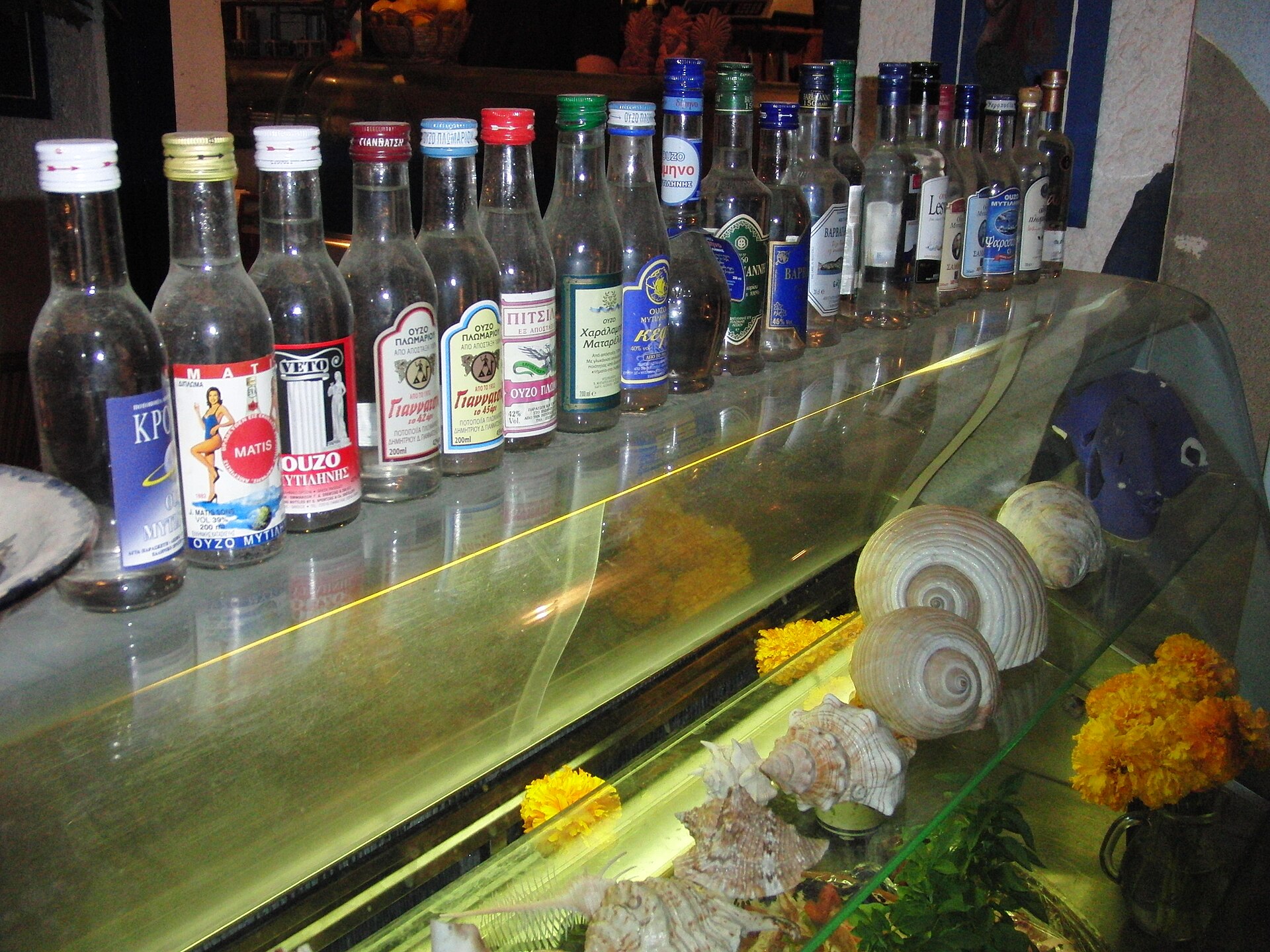
46%The heritage producer. Founded in 1860, Barbayannis is synonymous with Plomari ouzo. The blue bottle at 46% is the flagship, while the green label at 42% offers a slightly gentler introduction. Five generations of the same family have guarded the recipe.
Plomari (Isidoros Arvanitis)
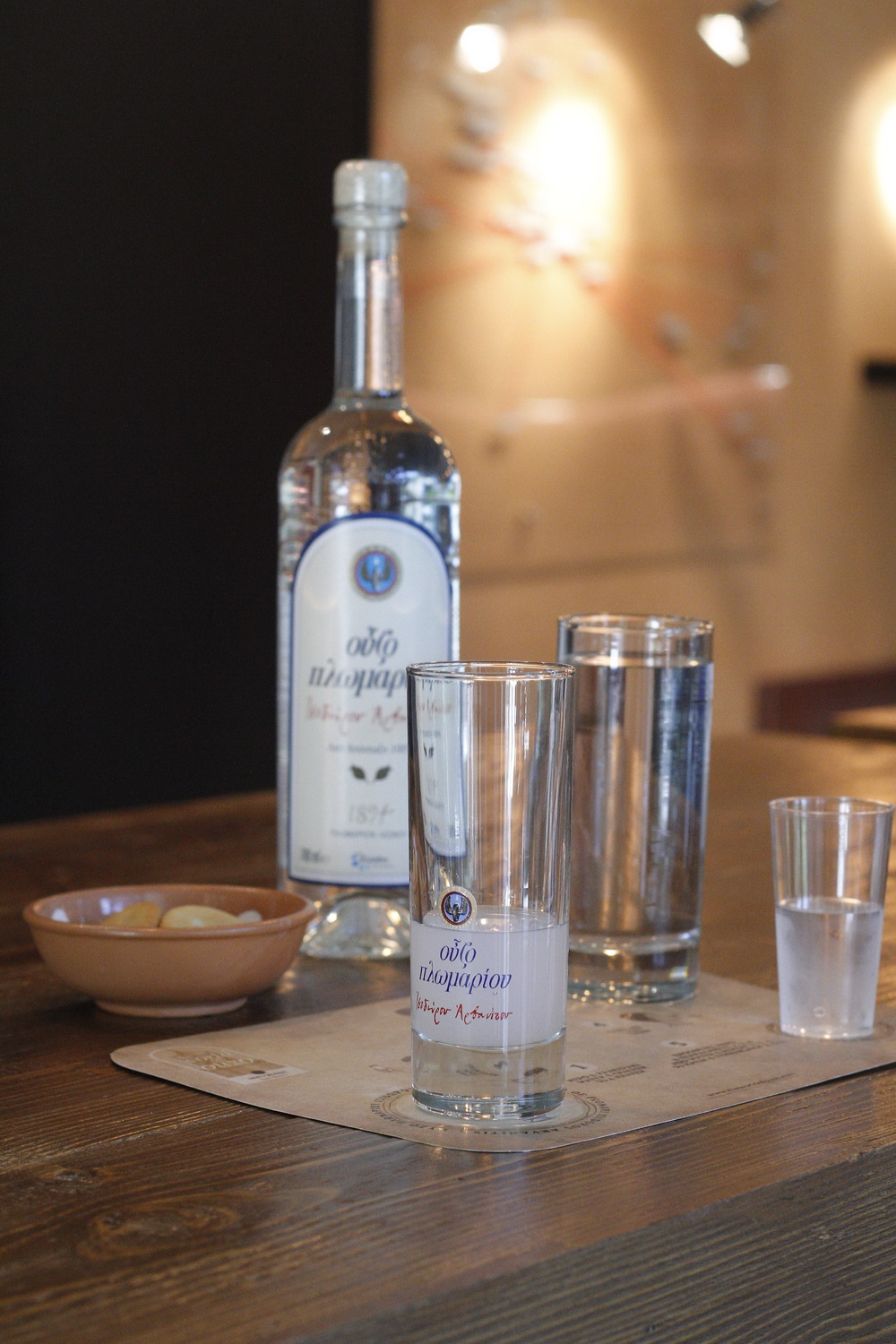
40%The first ouzo ever sealed with a cork rather than a simple cap -- a small detail that signalled serious intent. Today it is the bestselling ouzo in Greece, recognized by its distinctive tall bottle and clean, well-balanced anise character.
Giannatsi
42-45%A small-batch operation that still distils the old-fashioned way. Giannatsi produces limited quantities with pronounced anise depth. Sought out by collectors and locals who prefer intensity over smoothness.
Mini
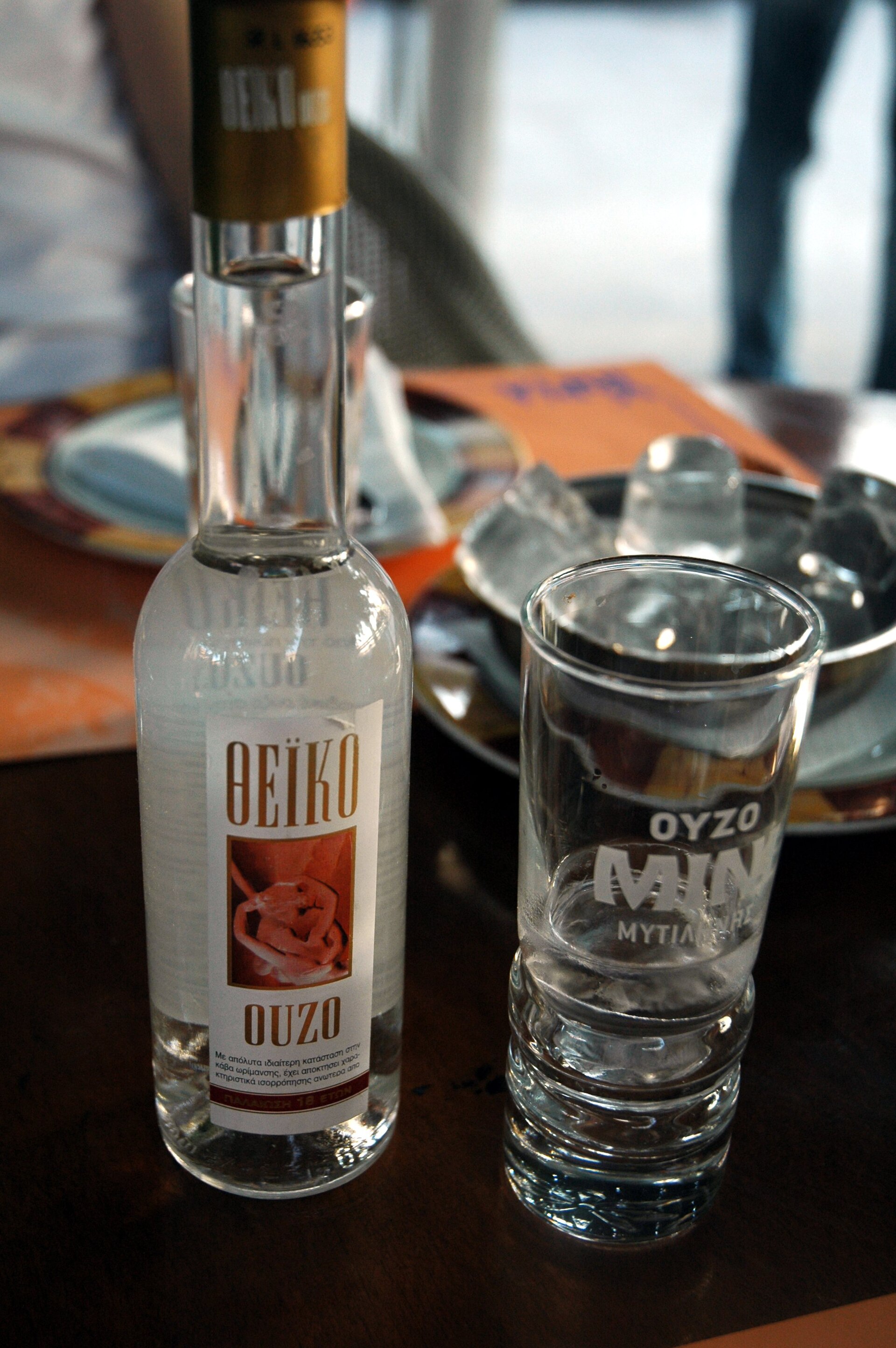
40%Mild, smooth, and deliberately approachable. Mini is often the ouzo that converts skeptics -- less aggressive on the palate, with a rounded sweetness that comes entirely from distillation rather than added sugar.
Also worth seeking out: Kronos, Mattis, Samara, Thymi, Smyrna. Lesvos has over 15 active distilleries, and most offer informal tastings if you show up during working hours.
Methymnaeos Winery
If ouzo defines the south of the island, wine defines the north. Methymnaeos is one of the most unusual wineries in Greece, producing certified organic wines from the indigenous Chidiriotiko grape -- a variety found nowhere else. The vineyards sit on volcanic soil in the hills above Molyvos, and the terroir gives the wines a distinct mineral edge that sommeliers have started paying attention to.
The winery runs daily tours through the vineyard and cellar, finishing with a tasting. It is a quieter, more contemplative counterpoint to the lively ouzo distilleries of Plomari, and well worth the detour if you are exploring the north of Lesvos.
The Art of Drinking Ouzo
Ouzo is never drunk alone and never drunk fast. It arrives at the table in a small glass alongside a carafe of cold water and, without exception, food. You add water slowly and watch the clear spirit turn milky-white -- the louche effect, caused by essential oils falling out of solution. The ratio is personal. Some pour equal parts; others barely cloud it.
The Mezedes
Sardeles pastes (salted sardines), grilled octopus, fried courgette balls, taramosalata, local cheeses. The food is not an accompaniment to the ouzo -- the ouzo is an accompaniment to the food. A proper ouzo session unfolds over hours as plates keep arriving.
Kefi
The Greek word kefi has no direct English translation. It describes a state of spiritual joy, spontaneous exuberance, and uninhibited togetherness. It is what a good ouzo table aspires to. You cannot plan kefi or manufacture it. You can only create the conditions -- good company, unhurried time, and a bottle with no bottom in sight -- and let it arrive on its own.
Where to Experience It
Cafeneon O Ermis
Over a century old and still operating at the same unhurried pace. O Ermis is a working kafeneio in the truest sense -- old men playing tavli, ouzo poured without ceremony, and mezedes that arrive without being ordered. The harbour-front setting is as authentic as it gets in Mytilini, and it remains a place where tourists are welcomed but the rhythm belongs entirely to the regulars.
Village Kafeneia
Every village on Lesvos has at least one kafeneio, and most will serve ouzo for a euro or two alongside whatever the owner felt like cooking that morning. These are not tourist establishments -- they are the living rooms of their communities. Sit down, order ouzo, and let the afternoon unfold. Plomari, Sigri, Petra, Agiassos, and Skala Eresou all have particularly good ones.
Gallery