About
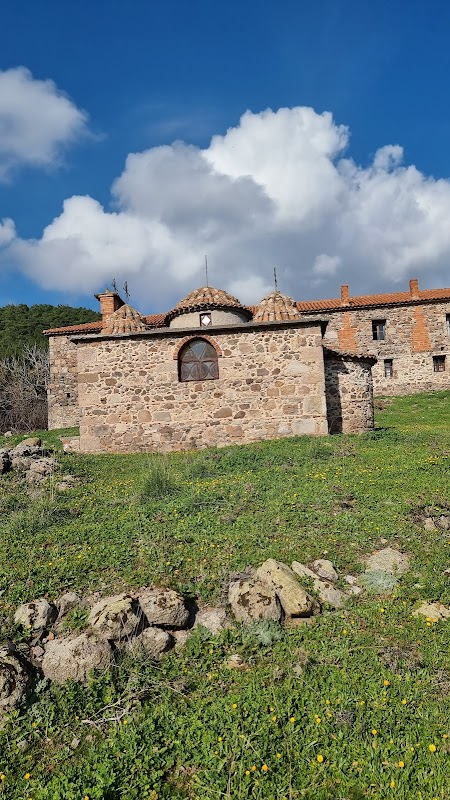
Tucked into the quiet landscape near the village of Napi in western Lesvos, the church of Agios Ioannis stands as one of the many modest yet deeply cherished Orthodox sanctuaries that punctuate the island's rural countryside. Dedicated to Saint John — most likely Saint John the Baptist, whose veneration is among the most widespread in the Greek Orthodox tradition — the church reflects the intimate scale of worship that has defined village religious life on Lesvos for centuries. Like so many of the island's rural churches, it likely follows the simple single-nave basilica form common throughout the eastern Aegean, its whitewashed walls and terracotta-tiled roof blending naturally into the surrounding olive groves and stone-terraced hillsides.
For the inhabitants of Napi and the surrounding settlements, Agios Ioannis is far more than a building — it is a living center of communal identity. The feast of Saint John the Baptist, celebrated on June 24th, traditionally draws villagers together for a panigiri, the festive gathering of liturgy, music, and shared food that has bound rural Greek communities across generations. Inside, the iconostasis would typically hold locally painted icons following the Byzantine tradition, their gold leaf and deep ochres glowing softly in candlelight, offering worshippers a visual theology passed down through centuries of Aegean devotion.
Visitors who venture off the main roads to seek out churches like Agios Ioannis are rewarded with an authentic glimpse into the spiritual fabric of Lesvos. The setting near Napi, a village that retains much of its unhurried character, offers a sense of stillness that is increasingly rare. Whether you arrive during a feast day to witness the warmth of local celebration or simply pause in the shade of the churchyard on a quiet afternoon, Agios Ioannis embodies the enduring relationship between faith, landscape, and community that gives the island so much of its soul.
Before you go
What to expect
The church sits at the edge of Napi with old olive trees for shade, its whitewashed walls quiet against the terraced hillside. Inside, the iconostasis glows in candlelight and the air carries incense — a small, unhurried space that belongs entirely to the village around it. If you arrive on June 24th for the feast of Saint John the Baptist, the churchyard comes alive with a panigiri: liturgy followed by music and shared food, the kind of celebration that has barely changed in generations.
Best time to visit
June 24th is the feast day and by far the most atmospheric time to visit; spring and early autumn are ideal for a quiet stop, with mild temperatures and the surrounding olive groves at their most peaceful.
How to get there
From Mytilene, drive north and west via the Kalloni Gulf road and continue toward the villages of the northwest interior; plan on roughly an hour to an hour and a quarter along winding rural roads to reach Napi.
Categories
Make a day of it
Places worth combining with your visit