Church (39.0866, 26.4334)
About
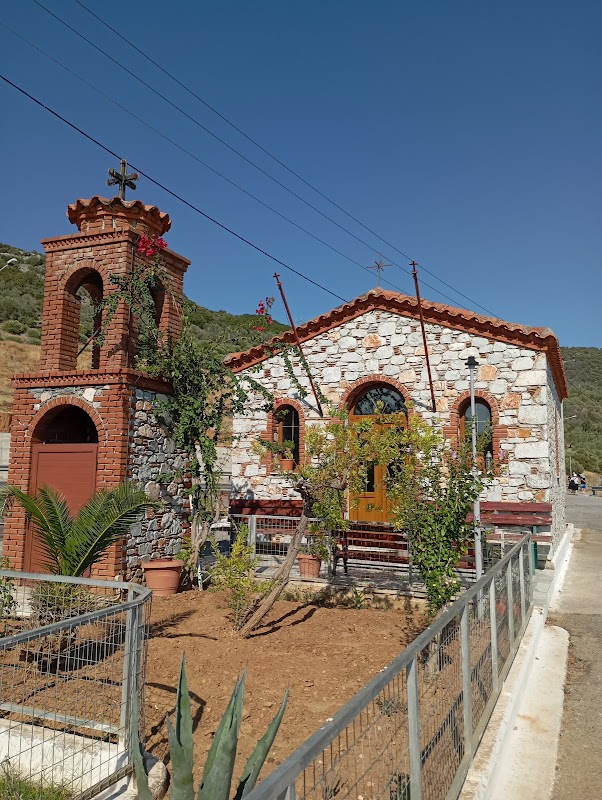
Nestled in the quiet countryside near the village of Kato Tritos in northern Lesvos, this small Orthodox church stands as a testament to the deep spiritual traditions that have shaped rural life on the island for centuries. Like so many of Lesvos's country chapels, it likely serves as both a place of worship and a focal point of community identity, its whitewashed walls and modest bell tower a familiar landmark against the surrounding olive groves and rolling hills. The Orthodox faith has been central to village life across Lesvos since Byzantine times, and churches such as this one have long served as gathering places for baptisms, weddings, name-day celebrations, and the feast days of local patron saints.
Visitors who seek out this chapel will find themselves stepping into a contemplative atmosphere characteristic of Aegean religious architecture. The interior, while modest in scale, likely follows the traditional Orthodox layout, with an iconostasis screen separating the nave from the sanctuary and icons rendered in the Byzantine tradition. Rural churches throughout Lesvos frequently house locally venerated icons, some of considerable age, passed down through generations of the same families who have worked the surrounding land. The smell of beeswax candles, the soft light filtering through small windows, and the silence of the countryside combine to create a genuinely moving experience for those who take the time to seek it out.
For travelers exploring northern Lesvos beyond the better-known coastal resorts, the church near Kato Tritos represents the kind of authentic, unhurried discovery that defines this region. The area around Tritos sits within the olive-producing heartland of the island, and combining a visit to the church with a walk through the old groves or a stop in the village itself offers a glimpse of Lesbian rural life that has changed little in its essentials over generations. If the church happens to be locked, as is common with smaller rural chapels, a respectful inquiry at a nearby home will often yield the key and a warm welcome.
Before you go
What to expect
The whitewashed walls of this small chapel emerge quietly from the olive groves surrounding Kato Tritos, and stepping inside you encounter the characteristic hush of an Aegean village church — beeswax candles, Byzantine icons, and a faint trace of incense. It is a working place of worship rather than a tourist site, which gives it an unhurried, genuinely devotional quality that larger churches rarely retain. If the door is locked, a polite knock at a nearby house will almost always produce both the key and a hospitable exchange.
Best time to visit
The chapel can be visited year-round, though spring and early autumn offer the most pleasant conditions for walking through the surrounding olive groves.
How to get there
Kato Tritos lies roughly 10–15 minutes by car from Mytilene, heading into the olive-producing interior of the island; the village is small, so the chapel is easy to locate once you arrive.