About
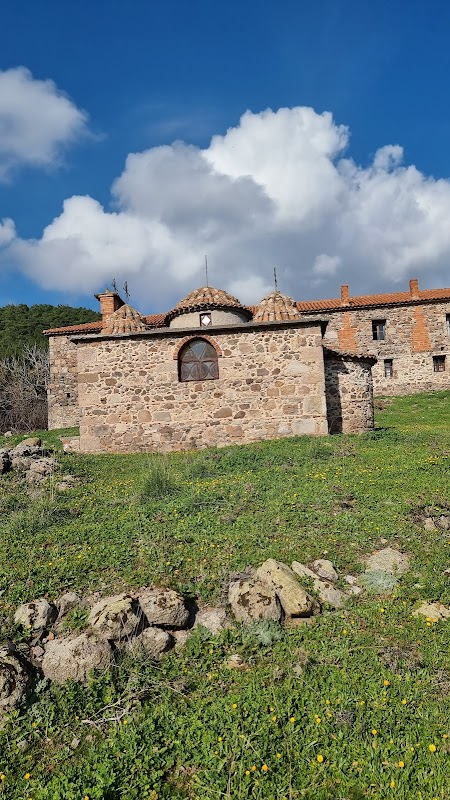
Nestled in the verdant landscape near the village of Agia Paraskevi, in the fertile Kalloni plain of central Lesvos, this Greek Orthodox church stands as a quiet expression of the island's deep religious heritage. The village itself takes its name from Saint Paraskevi, the early Christian martyr venerated throughout Greece and the Orthodox world, and churches dedicated to her are among the most beloved in the Aegean. Built in the local vernacular ecclesiastical style typical of the eastern Aegean, the structure reflects centuries of island craftsmanship, with whitewashed walls, a terracotta-tiled roof, and the characteristic bell tower that marks the rhythm of village life through its tolling.
Inside, visitors encounter the sensory world of Orthodox worship: the warm glow of oil lamps, the scent of beeswax and incense, and the richly painted iconostasis that separates the nave from the sanctuary. Devotional icons of Christ, the Theotokos, and the patron saint adorn the walls, many rendered in the Byzantine tradition with gold-leaf halos and expressions of serene gravity. Feast days draw the local community together for liturgies that begin before dawn and spill into the churchyard, where tables are laid and village life briefly suspends its ordinary pace in favor of collective celebration and memory.
For visitors, stepping inside offers more than a glimpse of architecture — it is an encounter with the living faith that has shaped Lesbian village culture for generations. Agia Paraskevi sits close to the ancient temple of Messa and the productive olive groves that define this part of the island, and the church participates in a landscape layered with meaning across millennia. Travelers are welcome to visit during daylight hours, though modest dress is expected as a mark of respect for a place that remains, above all, a house of active worship.
Before you go
What to expect
Stepping inside, you're met with the warm flicker of oil lamps, the faint sweetness of beeswax and incense, and a gilded iconostasis painted in the Byzantine tradition. The whitewashed exterior and terracotta roof blend quietly into the village streetscape — easy to pass and easy to linger at. On feast days the churchyard fills with the whole community, tables laid outside after the liturgy.
Best time to visit
Late spring and early autumn are ideal; feast days tied to Saint Paraskevi (July 26) bring the church to life with liturgy and village celebration.
How to get there
From Mytilene, drive west toward Kalloni — the journey takes roughly 40–45 minutes along the main island road. Agia Paraskevi village sits just north of Kalloni in the fertile plain; the church is in the village centre.
Details
Denomination: greek_orthodox
Categories
Photos
Make a day of it
Places worth combining with your visit