About
Nestled in the quiet countryside near the coastal settlement of Agios Fokas in eastern Lesvos, the church of St. John stands as a small but deeply cherished landmark of local Orthodox devotion. Dedicated most likely to St. John the Theologian — the beloved apostle and evangelist whose veneration runs deep throughout the Greek Orthodox world — the church follows the vernacular ecclesiastical architecture typical of rural Lesvos: whitewashed stone walls, a modest barrel-vaulted or timber-roofed interior, and a simple bell tower or hanging bell that calls the faithful across the surrounding hills. These unassuming rural churches, scattered across the island in their hundreds, are often far older than they appear, their fabric quietly rebuilt and restored by successive generations of islanders who maintained them as centers of village life.
Inside, visitors will find the intimate atmosphere characteristic of Aegean island chapels — an icon screen adorned with locally venerated icons, oil lamps casting a warm amber glow, and the faint scent of incense embedded in old stone. The feast days associated with St. John are among the most celebrated in the Orthodox calendar: the Nativity of St. John the Baptist on June 24th and the Beheading on August 29th draw worshippers from surrounding villages for candlelit liturgies, often followed by communal gatherings that blend spiritual observance with the warmth of Greek village tradition. For visitors, attending such a feast day offers a rare and genuine window into the living religious culture of rural Lesvos.
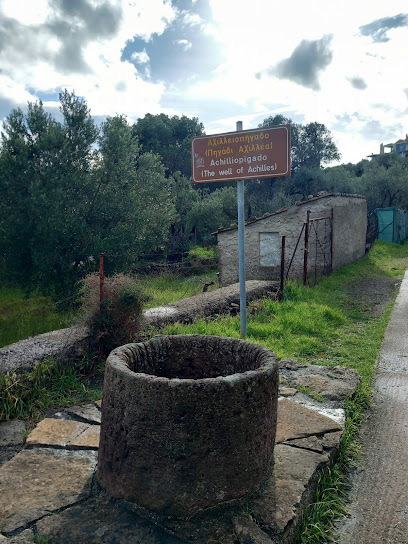
The church's setting near Agios Fokas also rewards the curious traveler willing to venture off the main roads. This part of the island retains a raw, unhurried character, with olive groves and stone-walled fields stretching toward the Aegean. St. John serves not merely as a place of worship but as an anchor of community identity — a reminder that the spiritual geography of Lesvos is as rich and layered as its natural landscape, with nearly every hilltop, crossroads, and coastal path marked by a chapel that has witnessed the island's long and complex history.
Before you go
What to expect
Stepping inside this small whitewashed chapel, you're met with the hush of old stone, the warm flicker of oil lamps, and the lingering scent of incense that seems absorbed into the walls themselves. On feast days — June 24th and August 29th — the village gathers for candlelit liturgies that spill out into the evening air, followed by the kind of communal warmth that rural Greek celebrations are built around. Outside, the surrounding olive groves and stone-walled fields give the site a quietly anchoring presence against the Aegean horizon.
Best time to visit
Late June or late August to coincide with either feast day; spring and early October offer peaceful visits with mild weather and no crowds.
How to get there
From Mytilene, follow the road south along the eastern coast toward Agios Fokas — the drive typically takes around 45 to 50 minutes, and the church sits within the village itself.
Details
Denomination: greek_orthodox
Categories
Make a day of it
Places worth combining with your visit