Chapel of Saint Alexander
About
Tucked into the quiet landscape near the village of Lafionas in northwestern Lesvos, the Chapel of Saint Alexander stands as a testament to the island's deep Byzantine and Ottoman-era Christian heritage. Like many of the small stone chapels scattered across Lesvos, it was built to serve the spiritual needs of a rural community that has long since dwindled, and today its ruined state speaks to centuries of abandonment, seismic activity, and the slow reclaiming work of the Aegean elements. Saint Alexander, venerated in the Eastern Orthodox tradition, lent his name to countless such modest sanctuaries across the Greek world, and this chapel likely served as a focal point for local feast day gatherings and the rhythms of agricultural life in its surrounding area.
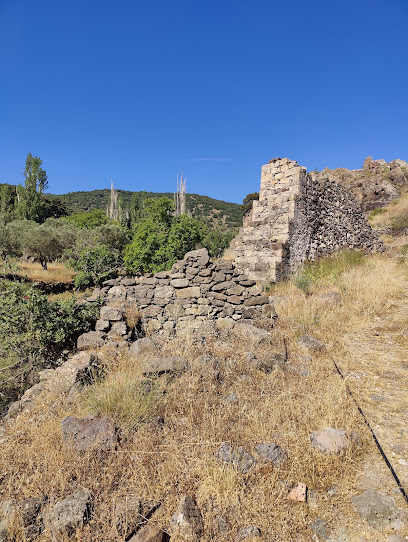
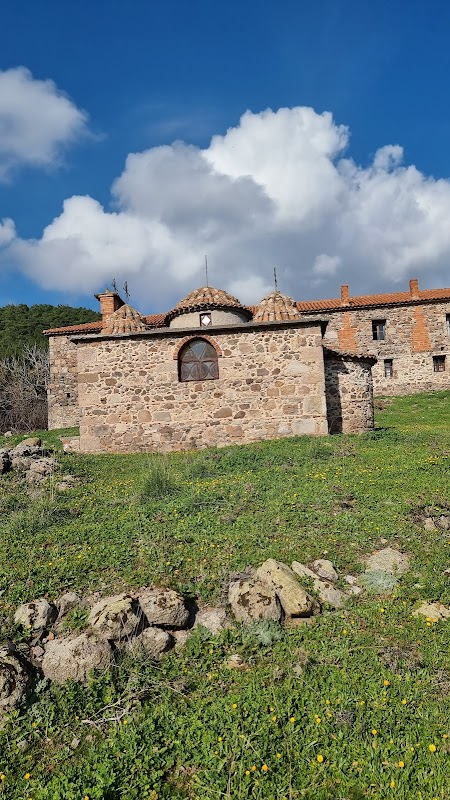
What greets visitors today are the characteristic remnants of a rubble-stone structure, its walls partially standing amid overgrown vegetation, with traces of the simple architectural vocabulary common to rural Aegean ecclesiastical buildings. The thick limestone masonry, the remnants of a modest apse oriented to the east, and fragments of worked stone suggest the care with which even isolated communities once built their places of worship. The setting itself is evocative, with the surrounding hills and the distant shimmer of the sea providing a backdrop that makes the ruin feel less like a site of loss and more like a quietly eloquent landscape feature.
For travelers exploring the less-visited north of Lesvos, the chapel offers a rewarding detour for those drawn to vernacular religious architecture and the melancholic beauty of sacred ruins. It rewards a slow, contemplative visit rather than a quick stop, inviting reflection on the generations of islanders who once gathered here. Combined with a walk through Lafionas or a drive along the scenic northern coastal roads, it forms part of a broader tapestry of Lesvos that reaches well beyond the island's famous beaches and olive groves into its layered, quietly moving human history.
Before you go
What to expect
Crumbling limestone walls rise from a tangle of wild scrub, with the ruined apse still facing east as it has for centuries — a quiet testament to a community that no longer exists. The surrounding hills and a distant glint of sea make the ruin feel less like a dead end and more like a living part of the landscape. It is a place for slow walking and unhurried looking, not a quick roadside stop.
Best time to visit
Late spring (May–June) and early autumn (September–October) offer the most comfortable conditions for exploring on foot; summer heat on the northern hills can be punishing.
How to get there
From Mytilene, drive north and then northwest toward the interior villages of the island's upper reaches; the route to Lafionas takes roughly an hour to an hour and a half on winding hill roads, and the chapel is found within or very close to the village itself.
Details
Categories
Make a day of it
Places worth combining with your visit